Vacation Rentals
The Coastal Vacation Rental Sleeper Sofa and Pull-Out Bed Turnover Protocol: Mitigating Sandy Mattress Creases, Lost Guest Belongings, and Mechanical Sand-Grit Jamming under Grand Strand Turn Pressures
A professional turnover protocol for sleeper sofas to eliminate hidden sand-grit, preserve expensive mechanical frames, and protect your Grand Strand vacation rental reviews.
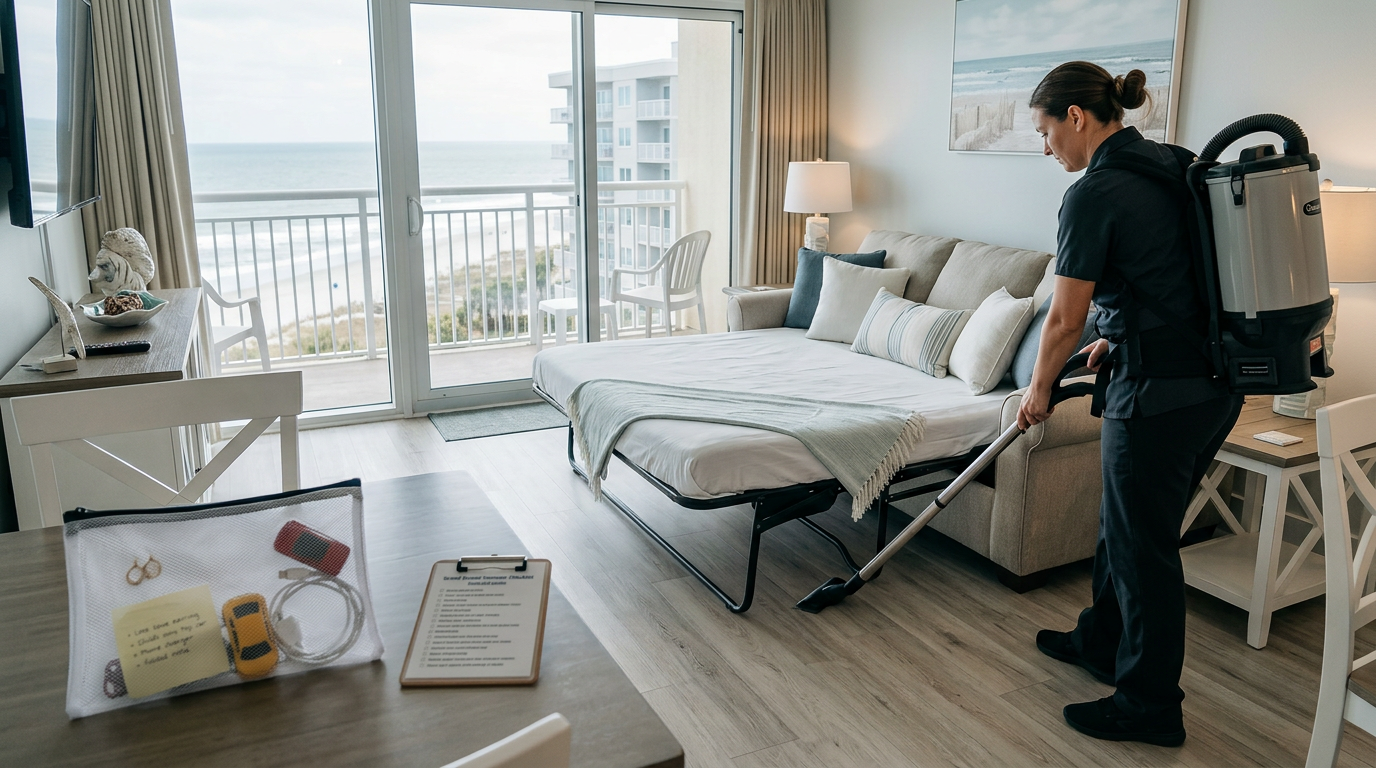
In the highly competitive Grand Strand vacation rental market, maximizing guest capacity is a key strategy for driving revenue. Pull-out sleeper sofas represent a vital amenity for accommodating larger family groups, yet they are one of the most frequently overlooked areas during high-pressure Saturday turnovers. Fine silica sand, humid sea air, and hidden organic debris can quickly collect within these folding mechanisms, leading to guest complaints and mechanical failures. Establishing a rigorous, systematic cleaning and inspection protocol is essential for preserving your furniture investments and securing five-star guest reviews.
The Physical Inspection and Debris Extraction Phase
The sleeper sofa turnover protocol must begin immediately upon the cleaning team's arrival, before any sweeping, vacuuming, or mopping of the main living area. The housekeepers must fully extend the sofa mechanism to expose the entire inner cavity and mattress. This early action prevents trapped items from being crushed or ground deeper into the frame, and it allows the technician to spot any damage before the cleaning process begins.
A commercial-grade backpack vacuum fitted with a narrow crevice tool is the most important tool for this phase. The technician must systematically vacuum along the interior perimeter of the sofa carcass, paying close attention to the fabric seams where the back cushions meet the seat deck. Coastal sand migrates easily into these tight spaces, acting as an abrasive grit that slowly saws through heavy-duty upholstery thread over time.
The deep corners of the metal frame well are notorious gathering points for loose hair, dropped coins, organic crumbs, and plastic wrappers. Vacuuming should follow a strict top-to-bottom pathway, starting from the top of the sofa back, moving down through the armrest crevices, and finishing in the open metal chassis. This systematic sweep ensures that no residual soil remains to be ground into the mattress when the bed is folded back up.
- Extend the sleeper frame fully before performing any floor-level sweeping to prevent cross-contamination.
- Use a high-suction vacuum crevice tool along all interior fabric folds and metal hinge channels.
- Inspect the rear fabric flap of the sofa backing, where sand and small toys frequently slide out of sight.
- Look for signs of dampness or liquid spills that may have leaked from the seat cushions down into the frame well.
Mitigating Mechanical Grit Jamming and Lubrication Requirements
The humid, salt-laden air of the Grand Strand is highly corrosive to the steel hinges, rivets, and springs of pull-out bed mechanisms. When fine silica beach sand mixes with this moisture, it forms an abrasive paste that jams hinges, warps support rails, and eventually renders the bed unusable. A jammed or squeaking frame frustrates guests and can lead to structural damage to the sofa's main wooden frame if forced open.
During every turnover, housekeepers must evaluate the mechanical integrity of the folding frame by opening and closing it twice. The movement should be fluid, quiet, and require moderate effort. Any grinding noises, catching, or physical resistance indicates a buildup of salt-rust or sand-grit that must be addressed before the next guest arrives.
To maintain smooth operation, property managers should implement a monthly preventive maintenance check that includes clearing the joints and applying a dry, non-greasy silicone lubricant to the pivot points. Standard wet lubricants must never be used on coastal furniture, as they act like glue, attracting sand and dust and accelerating the wear on metal bushings.
Mattress Sanitization, Salt-Damp Sweat Extraction, and Stain Mitigation
Sleeper sofa mattresses are typically thin, lightweight foam or spring systems that absorb body sweat, sunscreen lipids, and spilled beverages faster than standard mattresses. In high-humidity coastal environments, this trapped moisture creates a breeding ground for yeast, mold, and sour odors. Each turnover requires a thorough, double-sided visual and tactile inspection of the mattress substrate.
For light organic odors and general freshness, the mattress should be lightly misted with a professional, neutral-pH botanical sanitizer. This formula eliminates odor-causing bacteria without leaving behind heavy chemical scents that could irritate sensitive guests or trigger allergies. The mattress must be allowed to air-dry completely before being folded back into the sofa, as trapping moisture in a sealed metal cavity guarantees mold growth.
In the event of significant staining from bodily fluids or sweet drinks, immediate spot extraction with a professional upholstery machine is required. If the mattress cannot be thoroughly cleaned and dried during the Saturday turn window, it must be swapped with a clean, dry backup mattress from your inventory. Storing a small stock of common-size replacement mattresses in your off-site owner closet is an industry best practice.
- Inspect both sides of the mattress for yellowing, sweat rings, and biological staining during every turnover.
- Apply a fast-drying, hospital-grade botanical sanitizer to neutralize odors without soaking the foam core.
- Ensure the mattress is 100% dry before folding; never fold a damp mattress into a closed sofa cavity.
- Maintain a backup inventory of standard sleeper mattress sizes to quickly replace heavily soiled units.
The Linens, Pillows, and Protective Encasement Protocol
To meet professional hospitality standards, every sleeper sofa mattress must be protected by a high-quality, zippered, waterproof, and bedbug-proof mattress encasement. This barrier protects the mattress from spills, sand abrasion, and human dander. During the turnover, this cover must be wiped down with a sanitizing cloth and checked for physical tears or broken zippers, which must be replaced immediately.
A common operational mistake is storing the sleeper sofa with the sheets and blankets folded inside the mechanism. This practice pinches and tears the delicate linen fibers, traps damp sea air, and often prevents the metal mechanism from latching correctly. Additionally, it leaves guests wondering if the bedding was actually changed, as they cannot verify when the sheets were washed.
Instead, the turnover team must fold freshly laundered sheets, blankets, and pillows neatly and place them inside a designated, clear zipper bag or on a dedicated shelf in the master closet. Clear, professional signage should be displayed in the living room, letting guests know where to find the fresh linens and offering a brief, friendly instruction on how to safely open the sleeper mechanism.
Under-Sofa Substrate Clearing and Lost Item Verification
The floor space beneath a sleeper sofa is a notorious debris trap where dust bunnies, dropped food, and forgotten guest items gather out of sight. Because the heavy metal frame sits extremely close to the floor, standard vacuum nozzles cannot reach the center of the footprint without moving the furniture or opening the bed mechanism. A complete turnover protocol demands that this area is swept and sanitized weekly.
It is incredibly common for departing guests to drop valuable items like smartphones, wallets, jewelry, or children's toys beneath or inside the sleeper sofa frame. Finding these items during the turnover and reporting them promptly to the guest builds massive trust and often results in glowing reviews. Conversely, leaving a previous guest's discarded trash or a dirty sock for the incoming family to discover is a major cleaning failure.
For properties featuring hard flooring like luxury vinyl plank (LVP) or tile, the underlying substrate must be vacuumed and then damp-mopped with a neutral cleaner to remove sticky beverage spills and tracked-in salt-slurry. For carpeted floors, a targeted pass with a rotating vacuum brush roller pulls up deep-set sand-grit that would otherwise wear down the carpet fibers from the backing up.
Operational Time Management on High-Pressure Saturday Turnovers
Saturday turnovers along the Grand Strand are high-velocity operations, with a narrow four-hour window to clean, sanitize, and inspect multiple properties before the 4:00 PM check-in. Because sleeper sofas require extra physical steps, they are the most likely items to be rushed or bypassed by undertrained cleaning crews. To prevent this, professional cleaning partners integrate the sleeper sofa checklist into the very beginning of their cleaning sequence.
Opening the sleeper sofa and applying the sanitizing mist as the first step in the living room sequence allows the mattress maximum time to air-dry while the technician cleans the bathrooms, kitchen, and primary bedrooms. This staggered workflow ensures that no time is wasted waiting for fabrics to dry at the end of the turn, maintaining a steady, efficient cleaning pace.
Property managers must recognize that a proper sleeper sofa turn adds roughly 10 to 15 minutes of labor to a unit's cleaning time. Factoring this additional time into your housekeeping schedules and rate structures is essential. Trying to rush through these steps leads to skipped checks, dusty frames, and ultimately, costly guest complaints and platform refunds.
- Integrate the sleeper sofa opening and inspection into the very first step of the living area cleaning sequence.
- Allow at least 45 minutes of air-dry time for sanitized mattresses while other rooms are being cleaned.
- Utilize digital housekeeping checklists that require a photo of the clean, empty sofa frame before closing.
- Train staff to recognize the physical signs of mechanical wear to report issues before they cause failures.
Establishing Standard Operating Procedures (SOPs) with Your Cleaning Partner
Consistency is the absolute foundation of successful vacation rental management. To ensure that every incoming guest enjoys a flawless, hygienic experience, property owners must partner with a cleaning service that operates on written, audited standard operating procedures. This includes digital checklists, photographic verification of clean mattress surfaces, and strict quality control oversight.
At A2Z Cleaning & Linen Services, we specialize in the unique operational demands of managing high-occupancy coastal vacation rentals throughout Myrtle Beach and the Grand Strand. Our professional technicians are fully trained to execute rigorous multi-point protocols for sleeper sofas, ensuring that sand, dampness, and hidden debris are completely eliminated before your next guests arrive. We combine advanced commercial equipment with safe, effective chemistries to protect your property.
Partnering with a dedicated, professional cleaning and linen service is the most effective way to protect your physical furniture assets, streamline your Saturday operations, and elevate your rental's platform ratings. If you are ready to remove the stress from your turnover operations and ensure consistent, high-quality results, reach out to our local Grand Strand team today at 843.800.2788 to schedule a comprehensive service consultation.
Key takeaway
An uncompromised sleeper sofa turnover protocol is essential for securing five-star guest reviews and extending the lifespan of your rental furniture. By implementing a systematic approach of deep vacuuming, mechanical checks, proper sanitization, and structured linen staging, property managers can eliminate the common pitfalls of coastal wear and tear. Partnering with a professional, locally-grounded cleaning specialist like A2Z Cleaning & Linen Services ensures these high-occupancy assets are expertly maintained during the peak Saturday rush.
Keep Reading
Vacation Rentals
The Coastal Vacation Rental Smart Lock, Keypad, and Entryway Threshold Turnover Protocol: Mitigating Salt-Spray Lockout Risks, Code Wear-Patterns, and First-Impression Sand Drift under Grand Strand Saturday Turn Pressures
ReadVacation Rentals
The Grand Strand Multi-Unit PMS API Integration and Housekeeping Work Order Dispatch Standard: Automating Checklist Audits, Inventory Pulls, and Vendor Service-Level Agreements (SLAs) for Scaling Grand Strand Vacation Rental Portfolios
ReadVacation Rentals
The Coastal Vacation Rental High-Density Bunk Bed and Loft System Turnover Protocol: Mitigating Hidden Structural Detritus, Safety Rail Sand-Grit, and Ladder Fastener Checks under Grand Strand Saturday Turn Pressures
ReadReady for a spotless property?
Call 843.800.2788 or request a free quote from A2Z Cleaning & Linen Services.