Linens & Laundry
The Commercial Laundry Ozone Injection Standard: Implementing National ALM Wash-Cycle Paradigms, Thermal-Reduction Metrics, and Pathogen-Elimination Protocols in Grand Strand Hospitality Plants
Discover how commercial ozone injection transforms hospitality laundry operations, reducing energy costs, extending linen life, and meeting national bio-decontamination standards.
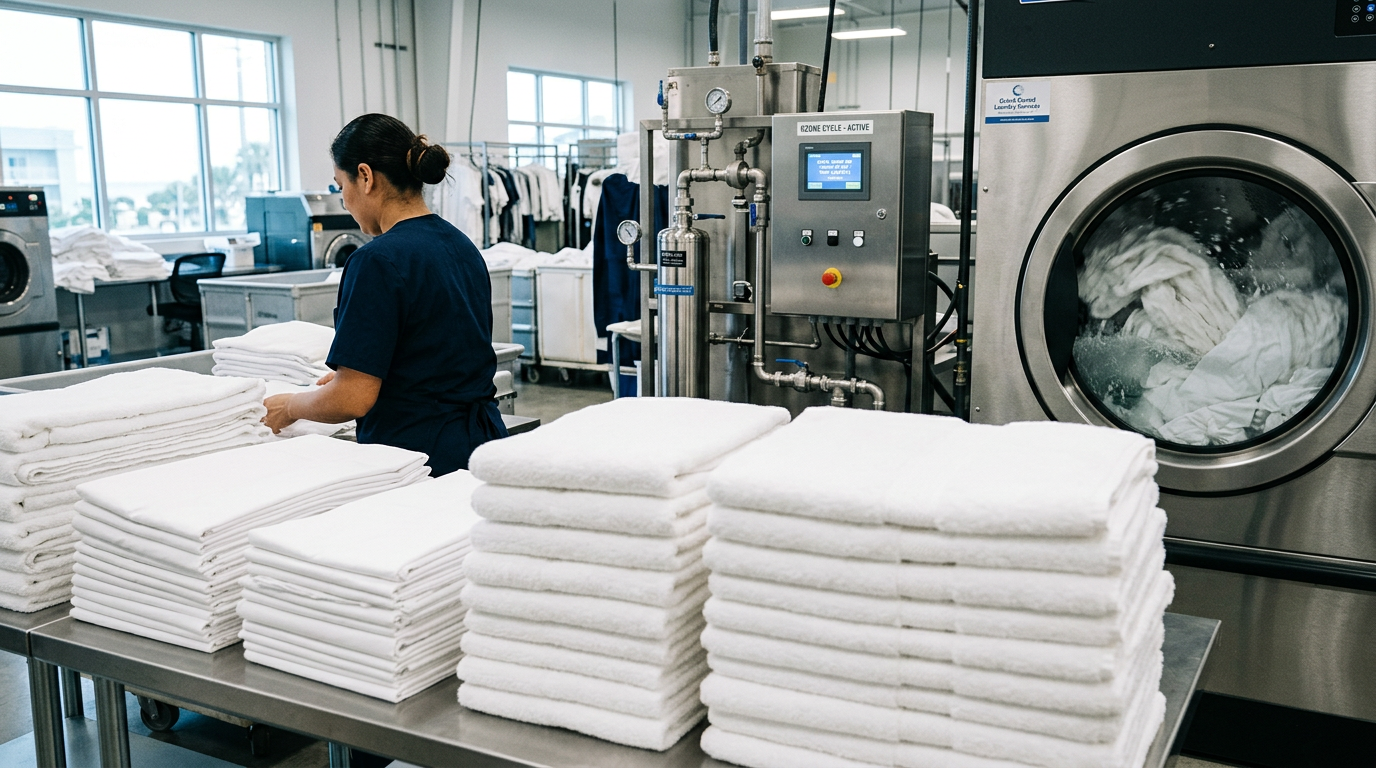
As hospitality operations across the Grand Strand scale to meet peak-season demands, the cost and environmental footprint of high-volume linen processing remain critical operational challenges. Traditional commercial laundry systems rely on high thermal energy and aggressive chemical chemistry to sanitize sheets, towels, and food-service linens. Implementing national Association for Linen Management (ALM) standards through commercial ozone injection systems offers a technically superior pathway for local operators. By shifting from high-temperature washing to low-thermal, oxygen-rich disinfection, hospitality plants can achieve exceptional sanitation while drastically extending linen lifespans and reducing utility overhead.
The Physics of Ozone Laundry: Understanding the Triatomic Oxygen Decontamination Pathway
To understand the efficiency of ozone laundry systems, commercial operators must first examine the chemistry of triatomic oxygen (O3). Unlike standard atmospheric oxygen (O2), ozone is highly unstable and possesses a powerful oxidation potential. When generated on-site and dissolved into wash water, the third oxygen atom readily detaches to oxidize organic soils, lipids, and proteins. This reactive process destabilizes soil bonds on a molecular level, allowing surfactants to suspend and flush away contaminants with unprecedented speed.
The physical introduction of ozone into wash water requires precise mechanical control, typically achieved through venturi injection or bubble diffusion systems. Maintaining a dissolved ozone concentration between 0.5 and 1.5 parts per million (ppm) within the wash cylinder is critical. At this concentration, the dissolved gas acts as a direct oxidizing agent, opening up the cotton fibers of commercial sheets and towels. This fiber-opening phenomenon allows wash water and detergents to penetrate deeper into the weave without the physical fabric abrasion associated with prolonged wash cycles.
This oxidation process functions as a highly effective, natural bleaching agent. Traditional commercial cycles rely on chlorine-based oxidizers that can yellow fabric over time when exposed to the high iron content found in many Grand Strand water supplies. Dissolved ozone prevents this chemical yellowing by oxidizing dissolved iron before it can bond with the fabric. The result is a brighter, cleaner linen profile that aligns with national hospitality standards without relying on optical brighteners.
- Ozone chemical formula: Triatomic oxygen (O3) with an oxidation potential of 2.07 volts, outperforming chlorine.
- Target dissolved concentration: 0.5 to 1.5 ppm maintained continuously throughout the wash step.
- Fiber expansion: Opens cotton loops to release trapped sand, sunscreen oils, and organic sebum.
- Iron oxidation: Mitigates local well-water mineral yellowing by neutralizing iron before fabric deposition.
The Thermal Shift: Transitioning from High-Temp Wash Cycles to Cold-Water Ozone Chemistry
Conventional commercial laundry operations rely on thermal disinfection, heating wash water to temperatures between 140 and 160 degrees Fahrenheit to activate heavy alkaline builders and chlorine bleaches. This high-temperature requirement accounts for up to 70 percent of a laundry plant's total energy consumption. Ozone chemistry, conversely, performs optimally in cold water, with maximum gas solubility and stability occurring at water temperatures below 100 degrees Fahrenheit. As water temperature rises, ozone gas rapidly escapes solution, reducing its chemical efficacy.
By transitioning to cold-water ozone cycles, commercial hospitality plants drastically reduce their natural gas or electrical consumption. This thermal shift allows facilities to bypass the intensive water-heating phase, accelerating cycle times and reducing utility costs. For a high-volume Grand Strand resort processor, this utility reduction represents a massive operational cost saving. Additionally, eliminating hot-water rinses protects delicate cotton-polyester blends from thermal shock, preventing the structural warping and fiber shrinkage common in high-temperature systems.
Furthermore, national energy efficiency studies from the Association for Linen Management (ALM) demonstrate that cold-water ozone processing reduces total rinse water volume. Because ozone breaks down soil matrices rapidly, fewer rinse cycles are required to flush chemical residues from the load. This conservation of water resources is especially critical in coastal regions, where municipal sewer surcharges and conservation incentives directly impact the bottom line of large-scale commercial operations.
- Optimal temperature threshold: Below 100 degrees Fahrenheit, maximizing gas solubility in the wash bath.
- Energy savings: Up to 80 percent reduction in water-heating energy requirements per wash cycle.
- Thermal shock mitigation: Prevents polyester fiber melting and cotton shrinkage in high-thread-count sheets.
- Water conservation: Reduces overall cycle rinses, lowering water consumption by up to 30 percent.
Oxidation vs. Chlorination: Preserving Tensile Strength and Fiber Integrity in Resort Linens
Sodium hypochlorite, or chlorine bleach, has long been the industry standard for whitening and sanitizing hospitality linens, but its chemical cost to fabric longevity is high. Chlorine works by stripping electrons from organic molecules, a process that also degrades the cellulosic chains of cotton fibers. Over repeated washes, this chemical erosion reduces the tensile strength of sheets and towels, leading to premature thinning, fraying along hem lines, and ultimate fabric failure.
In contrast, dissolved ozone oxidizes organic soils directly at a neutral-to-slightly-acidic pH level. This targeted reaction allows operators to bypass the highly alkaline environments (pH 11 to 12) required for chlorine bleach activation. Because ozone does not hydrolyze or damage cotton cellulose, the tensile strength of the fabric is preserved. National industry testing indicates that linens processed with ozone technology can withstand up to 35 percent more wash cycles before showing signs of structural failure.
For Grand Strand property managers and resort owners, this extension of linen lifespans represents a massive capital expenditure reduction. The high cost of constantly replacing sheets and bath mats damaged by harsh chlorine chemistry is mitigated. By preserving the mechanical integrity of the cotton fibers, linens retain their original loft, softness, and absorbency far longer, directly translating to higher guest satisfaction scores and fewer inventory replenishment cycles.
- Chemical pH range: Operates effectively at a neutral pH of 6.5 to 8.0, reducing fabric fiber stress.
- Linen life extension: Increases fabric longevity by 30 to 50 percent compared to chlorine bleaching.
- Tensile strength preservation: Eliminates cellulosic fiber breakdown caused by aggressive chlorine compounds.
- Absorbency retention: Keeps towel loops intact and absorbent by preventing chemical fiber thinning.
Pathogen Elimination and Bio-Decontamination: Meeting CDC and HLAC Sanitization Benchmarks
Sanitization is non-negotiable in hospitality laundry operations, particularly in high-density resort markets where rapid guest turnover is the norm. Ozone is recognized by the Centers for Disease Control (CDC) and the Healthcare Laundry Accreditation Council (HLAC) as an exceptionally powerful biocide. It destroys pathogens up to 3,000 times faster than chlorine, utilizing a process called cell lysing. The ozone molecule penetrates the outer cell wall of bacteria and viruses, disrupting the cytoplasm and rendering the pathogen inactive in seconds.
This high biological efficacy is critical for neutralizing common coastal threats, such as norovirus, mold spores, and pool-derived bacteria. Humid coastal air accelerates spore growth on damp towels left in guest rooms; ozone wash cycles neutralize these spores completely, preventing mold cross-contamination within the plant. Because ozone targets the cellular structure of microorganisms, pathogens cannot develop chemical resistance, ensuring consistent, long-term disinfection performance.
To meet national sanitization standards, ozone systems must maintain a continuous chemical concentration throughout the disinfection phase of the wash cycle. Real-time oxidation-reduction potential (ORP) sensors measure the sanitizing strength of the water in millivolts. A stable ORP reading of 700 to 800 millivolts guarantees the rapid destruction of viral and bacterial pathogens, providing hospitality clients with verified, laboratory-grade sanitation that protects guest health.
- Pathogen destruction rate: Destroys bacteria, viruses, and mold spores up to 3,000 times faster than chlorine.
- Cell lysing mechanism: Directly ruptures cell membranes, preventing cellular regeneration or resistance.
- Mold spore eradication: Neutralizes humidity-driven mildew spores on damp coastal resort towels.
- ORP monitoring: Maintains 700 to 800 mV to verify absolute sanitization under HLAC and CDC guidelines.
Chemical Reduction and pH Balancing: Optimizing Wash Chemistry for Sensitive Skin
Traditional commercial laundry wash formulas require a complex sequence of chemical injections: alkaline builders to raise pH, detergents to emulsify soils, chlorine bleach to sanitize, and acid sours to neutralize residual alkalinity. This heavy chemical load is difficult to rinse out completely, often leaving alkaline residues trapped within the fabric fibers. When guests use these linens, body heat and perspiration reactivate these residual chemicals, leading to skin irritation, itching, and contact dermatitis.
Ozone injection simplifies this chemical footprint. Because ozone functions as an outstanding soil loosener and oxidizer, the volume of alkaline builders and souring agents can be reduced by up to 50 percent. The natural pH of the wash bath remains closer to neutral, eliminating the need for heavy chemical neutralizing steps. With fewer chemicals injected into the washer, the risk of chemical carryover in the finished linen is virtually eliminated.
This chemical reduction yields a softer, more hypoallergenic finished product. Linens feel cleaner to the touch because they are free of the soapy surfactant films and chemical fragrances often used to mask chemical odors. For high-end luxury properties along the Grand Strand, offering hypoallergenic, chemically neutral linens is a powerful competitive differentiator that aligns with modern wellness trends and guest expectations.
- Alkali reduction: Lowers developer chemical requirements by 40 to 60 percent per wash formula.
- Hypoallergenic finish: Eliminates residual alkaline and sour chemicals that cause guest skin irritation.
- Surfactant optimization: Enhances detergent suspension, preventing soapy, stiff films on finished sheets.
- Natural deodorization: Destroys organic odors at the molecular level, leaving a clean, fresh-air scent.
Mechanical Engineering and Safety Controls: Ambient Monitoring, Venturi Systems, and Destruct Units
While ozone is a highly effective washing agent when dissolved in water, it is a toxic gas at room temperature if allowed to escape into the atmosphere. Consequently, implementing a professional ozone laundry standard requires robust mechanical engineering and safety controls. High-quality commercial installations utilize closed-loop venturi injection systems that dissolve ozone gas under pressure, ensuring the gas remains locked in the liquid phase throughout the cycle.
To protect plant operators, facilities must install ambient ozone monitors near the washers and generators. These sensors constantly measure ozone levels in the air, integrating directly with the emergency shut-off system of the ozone generator. Under OSHA guidelines, the permissible exposure limit (PEL) for ozone is 0.1 ppm over an eight-hour work shift. If ambient levels rise above 0.05 ppm, the system triggers local alarms; if they reach 0.1 ppm, the generator immediately de-energizes.
Additionally, physical ozone destruct units are fitted to the washer vents. These catalytic or thermal units convert any escaping ozone gas back into stable diatomic oxygen (O2) before venting it outside the facility. This comprehensive safety architecture ensures that commercial laundry plants can leverage the deep cleaning power of ozone while maintaining a secure, zero-hazard workplace environment for their laundry technicians.
- OSHA PEL compliance: Keeps ambient air levels strictly below the 0.1 ppm threshold over 8-hour shifts.
- Ambient air monitors: Multi-point sensor arrays with audible alarms and automated generator interlocks.
- Destruct units: Catalytic converters that split O3 back into stable O2 before environmental venting.
- Venturi injection: Highly efficient gas-to-liquid mass transfer systems that prevent gaseous off-gassing.
Cycle Time Optimization: Streamlining Wash-and-Dry Workflows for Peak-Season Turnovers
In peak vacation season, Grand Strand rental operations face intense time pressures, making laundry throughput a critical operational bottleneck. Traditional wash formulas are lengthy, often taking 50 to 60 minutes per load due to multiple heating, rinsing, and chemical neutralization steps. Ozone wash cycles compress these timelines by eliminating the need for separate bleaching and hot-water steps, reducing total wash times to 35 to 45 minutes.
This reduction in wash cycle duration directly increases the daily capacity of the laundry plant without requiring additional physical footprint or extra machinery. Washers can process more loads per shift, helping crews keep pace with tight checkout windows. This speed advantage is achieved without sacrificing wash quality; in fact, because ozone rinses cleaner and faster, fabric fibers are left freer of water-retaining chemical residues than in traditional cycles.
This cleaner rinse translates directly to drying cycle efficiency. Because ozone-treated cotton fibers are free of soapy surfactant coatings, they exhibit improved moisture release during the extraction phase. This lower retained moisture level means linens spend up to 20 percent less time in gas-fired dryers. Shorter drying times not only conserve fuel but also reduce the cumulative heat damage on fabrics, further extending linen life.
- Wash cycle reduction: Shortens total cycle runtimes by 15 to 25 minutes per pocket load.
- Moisture retention drop: Decreases water weight post-extraction, lowering dry times by up to 20 percent.
- Dryer fuel savings: Reduces natural gas consumption in commercial dryers by shortening dry cycles.
- Increased throughput: Maximizes daily poundage processed per machine, optimizing labor resources.
Implementing the Transition: Operational Audits, Chemical Retrofits, and Staff Training Protocols
Transitioning a commercial laundry facility to an ozone-injected platform requires a methodical operational audit. Before physical installation, water quality testing is mandatory. High levels of iron, manganese, or organic humic acids in the incoming water supply must be addressed, as ozone will instantly oxidize these minerals, leading to water discoloration and potential fabric staining if pre-filtration is not utilized.
Once water quality is verified, chemical suppliers must recalibrate the automated liquid injection pumps. The wash formulas must be programmed to align with the ozone gas delivery system, ensuring that surfactant injections occur at the precise moments of maximum dissolved oxygen concentration. A dry-run phase with test linens is typically conducted to titrate chemical levels, ensuring perfect soil removal and pH balance before processing client-owned inventory.
Finally, comprehensive staff training is essential to operational success. Laundry technicians must be trained on the physical signs of proper ozone system operation, including monitoring the dissolved ozone indicators, checking the vacuum levels on venturi loops, and responding immediately to ambient gas alarms. Empowering technicians with this technical knowledge ensures the facility operates at peak efficiency while maintaining a culture of safety and precision.
- Water quality testing: Identifies iron and hardness levels to prevent mineral oxidation staining.
- Pump recalibration: Coordinates chemical injection timing with ozone dissolution steps.
- Pilot testing: Utilizes sacrificial linen loads to titrate and perfect wash chemistry formulas.
- Technician training: Equips staff to monitor system vacuums, dissolved gas indicators, and safety alarms.
Key takeaway
Embracing the commercial laundry ozone injection standard allows hospitality operations to merge exceptional fabric sanitization with deep operational cost savings. By leveraging cold-water chemical reactions, operators protect valuable linen assets from thermal and chemical degradation while slashing utility overhead. For high-volume Grand Strand hospitality plants, this advanced technology represents the future of sustainable, high-performance linen care.
Keep Reading
Linens & Laundry
The Coastal Duvet Insert and Protector Sanitation Protocol: Managing Body-Oil Yellowing, Sand-Grit Intrusion, and Mildew Spores in Grand Strand Vacation Rentals
ReadLinens & Laundry
The Coastal Percale and Sateen Tensile Strength Preservation Protocol: Mitigating Sand-Friction Shredding, High-Alkaline Wash Rot, and Industrial Calender Scorching in Grand Strand Rental Linens
ReadLinens & Laundry
The Coastal Commercial Laundry Technician Career Pathway: Technical Skill-Validation Matrices, Thermal-Chemical Safety Certifications, and Competitive Compensation Benchmarks for Grand Strand Hospitality Plants
ReadReady for a spotless property?
Call 843.800.2788 or request a free quote from A2Z Cleaning & Linen Services.