Linens & Laundry
The Coastal Vacation Rental Premium Beach Towel Lifecycle and Inventory Preservation Protocol: Mitigating Solar Bleaching, Salt-Stiffened Loops, and Sand-Silt Fiber Abrasion in Grand Strand Laundries
Discover professional strategies to protect beach towels from sun, sand, salt, and chlorine. Learn chemistry, washing protocols, and inventory management for Grand Strand vacation rentals.
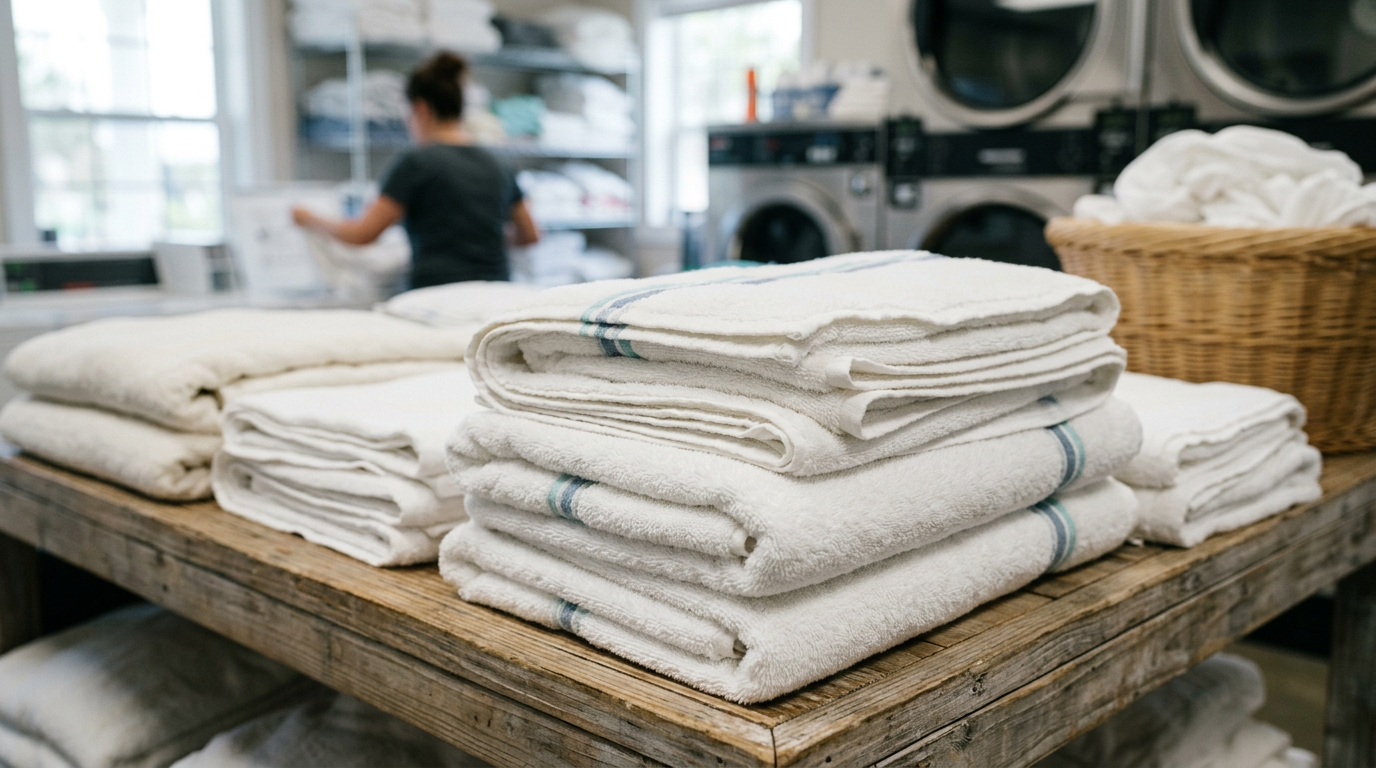
For vacation rental hosts and property managers along the Grand Strand, providing premium beach towels is a highly valued guest amenity that directly prevents the ruin of pristine white bath linens. However, beach towels are subjected to the harshest environmental elements imaginable: harsh solar UV rays, corrosive pool chlorine, abrasive quartz sand, and humid ocean salt. Without a scientifically grounded, commercial-grade laundering and inventory protocol, these expensive textile assets rapidly turn stiff, faded, thin, and foul-smelling. At A2Z Cleaning & Linen Services, we have developed a specialized preservation protocol designed to protect your investment, maintain plush softness, and optimize your inventory margins season after season.
The Mechanical Impact of Grand Strand Sand on Terry Loops
Grand Strand quartz sand is highly abrasive, featuring sharp, microscopic facets that act like tiny glass blades when trapped within the loops of cotton terry cloth. During a standard wash cycle, as the towel fibers swell with water and rub against one another under mechanical agitation, these trapped sand grains grind against the cotton yarns. This abrasive action shears the delicate micro-fibers, leading to a phenomenon known as linting, which rapidly thins the towel base, reduces overall water absorbency, and compromises the tensile strength of the fabric.
The high humidity of the Myrtle Beach coast compounds this mechanical damage by locking sand deep inside the damp fibers. Unlike dry sand, which can be easily shaken loose, salt-saturated sand clings to the cotton loops through surface tension and moisture bonding. When guests return from the beach and pile damp towels together, the salt-crusted sand dries into a hard, abrasive matrix. If these towels are loaded directly into a commercial washer without a dedicated extraction phase, the sand becomes a permanent abrasive agent throughout the wash process.
Over several turn cycles, this unaddressed sand abrasion manifests as bald spots, frayed edges, and a general stiffening of the towel fabric. The loss of loop density not only ruins the plush hand-feel that guests expect from a premium property but also accelerates the rate at which the towel tears during high-speed extraction spins. Recognizing this mechanical threat is the first step in shifting from basic domestic washing to professional-grade textile preservation.
The Sand-Extraction Shakedown and Pre-Wash Protocols
Washing sand-laden towels without a strict pre-treatment protocol is a recipe for both ruined linens and damaged commercial machinery. When heavy sand enters a commercial washing machine, it sinks to the lowest points of the drum, settling in the sump, clogging drain valves, and eroding pump seals over time. Furthermore, sand suspended in the wash water acts as sandpaper against the internal metal basket, creating microscopic burrs that snag and pull towel threads in subsequent loads.
To mitigate this, our protocol requires a dry-extraction pre-shakout phase before any water touches the fabric. Towels must be completely dried if they arrive wet, as wet sand is nearly impossible to separate from wet cotton. Once dry, the towels undergo high-impact manual shaking over a grated collection bin or are processed through a specialized dry-tumbling cycle. This dry-tumbling action opens up the compressed cotton loops, allowing gravity to pull the loosened sand down and out of the textile weave.
Only after this dry extraction step are the towels cleared for the wash cycle. Property managers who bypass this stage often wonder why their towels feel scratchy and thin after just one month of peak summer rentals. By establishing a dedicated sand-separation zone in the laundry workflow, we ensure that sand is left behind in the extraction facility rather than remaining embedded in the towel fibers.
Chemical Neutralization of Chlorine and Salt-Water Residues
Grand Strand pool waters are heavily treated with chlorine, while the Atlantic Ocean deposits high concentrations of sodium chloride onto guest beach towels. When left untreated, chlorine acts as a slow bleaching agent that strips rich colors, yellows white fibers, and chemically degrades the cotton polymer chains. Salt-water residues, on the other hand, are highly hygroscopic, meaning they continually attract moisture from our humid coastal air, keeping towels damp and prone to chemical rot even in storage.
To combat this double threat, professional wash formulas must include an "antichlor" step in the wash cycle. Antichlors, such as sodium thiosulfate, chemically neutralize residual chlorine, halting its oxidizing action before it can weaken the cotton fibers or fade vibrant cabana stripes. This is paired with a acidic rinse step, using a mild laundry sour to neutralize alkaline detergent residues and dissolve accumulated mineral salts, returning the fabric to a skin-compatible pH of 5.5 to 6.5.
A critical error in residential laundering is the heavy use of commercial fabric softeners to mask the stiffness caused by salt and chlorine. Fabric softeners work by depositing a hydrophobic silicone coating over the cotton loops, which temporarily softens the towel but completely destroys its absorbency. Our chemical protocol achieves natural softness through deep mineral extraction and fiber relaxation, preserving the towel's primary job: quickly absorbing water from the guest's skin.
Thermal Drying Management for Fiber Loft and Flexibility
The drying stage is where many premium beach towels suffer irreversible damage due to excessive heat. Residential and low-grade commercial dryers often run at sustained high temperatures to speed up cycle times during hectic Saturday turns. However, baking wet cotton towels at temperatures exceeding 160 degrees Fahrenheit scorches the delicate cellulose fibers, causing them to shrink, lose their natural elasticity, and develop a harsh, cardboard-like texture.
Our professional drying protocol utilizes precise temperature modulation, keeping the drying phase at a safe medium heat of 145 to 150 degrees Fahrenheit. The moisture level is monitored closely to prevent "over-drying," which strips the cotton of its natural bound moisture (typically around 5% to 8%). When a towel is completely desiccated, the cotton fibers become highly brittle and susceptible to breaking, leading to excessive lint production and a shorter operational lifespan.
The drying cycle must always conclude with a dedicated cool-down phase of at least ten minutes. During the cool-down, cool air is tumbled through the load, which relaxes the hot cotton fibers, locks in the natural loft of the loops, and dissipates static electricity. Towels folded immediately after a hot drying cycle without a cool-down phase will trap heat, causing the fibers to flatten and crease, which ruins the fluffy presentation guests appreciate.
Mitigating the Saturday-Turn Wet Towel Mildew Crisis
The Grand Strand's summer climate—characterized by temperatures in the high 80s and relative humidity levels often exceeding 80 percent—creates a perfect breeding ground for mold and mildew. When guests check out on a Saturday morning, they frequently leave damp, sandy beach towels piled in dark closets, unconditioned entryways, or plastic bags. Within just six to twelve hours under these conditions, fungal spores like Aspergillus and Penicillium begin to colonize the damp cotton.
This rapid microbial growth results in the dreaded "sour towel" smell, which is caused by volatile organic compounds produced by the feeding fungi. Once mold spores deeply penetrate the porous cotton fibers, standard domestic washing fails to eradicate them, resulting in odors that reactivate the moment the towel becomes damp again. To eliminate this issue during peak-turn windows, we implement a sanitization step using EPA-registered botanical sanitizers or low-temperature oxygen bleaches.
These specialized sanitizing agents destroy fungal cell walls and neutralize odor-causing bacteria without compromising the colorfastness of the towel dyes. Additionally, our field teams are trained to transport damp beach towels in ventilated mesh bags rather than sealed plastic bins. This simple logistical adjustment allows airflow to dry the linens during transport, halting mold germination before the towels even reach our high-capacity laundry facility.
Strategic Inventory Par Levels and Replacement Rotation
A common operational pitfall for Grand Strand property managers is underestimating the par levels required for beach towels. While a standard 3-par system (one in use, one in the wash, one in storage) works well for bed linens, beach towels require a 4-par or even 5-par model during the high-demand summer season. This increased buffer accounts for longer processing times, unexpected guest loss, and the high rate of physical wear and tear.
With a robust 4-par system, towels have sufficient "rest time" between guest uses. Cotton fibers that are allowed to dry completely and rest in a climate-controlled linen closet recover their natural resilience and elasticity, which significantly extends their overall lifespan. Conversely, running a tight 2-par or 3-par system forces towels through a continuous loop of rapid washing, high-heat drying, and immediate reuse, causing rapid fiber fatigue and a high failure rate.
We recommend conducting a comprehensive inventory audit at the midpoint of the tourist season. During this audit, towels showing signs of edge fraying, permanent sun-bleaching, or stubborn stains are retired from guest service. These retired assets can be repurposed as high-quality cleaning rags for maintenance staff, ensuring that your active guest inventory always represents the premium quality of your vacation rental brand.
Fabric Specification and Loss Prevention Best Practices
When purchasing beach towels for a Grand Strand rental portfolio, color and weave specifications are critical. We highly recommend selecting towels that are dyed using VAT-dyeing processes rather than standard reactive dyes. VAT dyes are chemically bonded to the cotton fibers at a molecular level, providing exceptional resistance to chlorine bleaching, saltwater degradation, and intense solar UV exposure, which keeps colors vibrant for up to three times longer.
Aesthetic patterns, such as classic cabana stripes in deep blues, teals, or warm yellows, are excellent choices because they look upscale and easily hide minor, non-organic stains that might otherwise force the premature retirement of a solid-colored towel. In terms of weight, aim for a density of 450 to 500 GSM (grams per square meter). This weight offers a luxurious, plush feel for guests while remaining light enough to wash, dry, and fold efficiently under tight Saturday-turn time limits.
To prevent inventory shrinkage, guest communication is your most cost-effective tool. Providing a designated, labeled basket for beach towels near the exit, along with clear signage explaining that white bath towels are strictly for indoor use, dramatically reduces loss. This simple prompt protects your delicate bath linens from outdoor sand damage and keeps your premium beach towels within their proper wash-and-turn loop.
Professional Commercial Integration with A2Z Cleaning & Linen Services
Managing the relentless volume of sandy, salty, and damp beach towels during a busy Grand Strand summer is an overwhelming task for in-unit laundry centers or small-scale domestic machines. Residential washers lack the water volume, mechanical G-force, and specialized chemical injection systems required to completely extract fine quartz sand and neutralize corrosive ocean salts. Attempting to process these heavy linens in-unit often results in accelerated appliance breakdown and degraded fabric quality.
By partnering with A2Z Cleaning & Linen Services, property managers gain access to a family-owned commercial laundering operation designed specifically for coastal challenges. Our high-capacity extraction washers utilize computer-controlled chemical dosing to apply exact amounts of antichlors, color-safe sanitizers, and pH-balancing sours. This scientific approach ensures that every beach towel returned to your property is hygienically clean, completely free of abrasive sand, and soft to the touch.
Outsourcing your beach towel management to our expert team eliminates a major bottleneck in your Saturday turnover workflow. Your cleaning staff can focus on detailing the home, while our prompt, reliable linen logistics handle the heavy lifting. To secure your rental portfolio’s linen quality and protect your operating margins, contact our Grand Strand team today at 843.800.2788 to establish a customized commercial laundry program.
Key takeaway
Preserving premium beach towels along the Grand Strand requires a dedicated approach that goes far beyond standard domestic washing. By implementing professional sand extraction, targeted chemical neutralization, and strategic inventory par levels, you protect your valuable textile assets and elevate the guest experience. Trust A2Z Cleaning & Linen Services to deliver the specialized care and reliable logistics your vacation rental business deserves.
Related services
Keep Reading
Linens & Laundry
The Coastal Vacation Rental White Sheet Graying and Yellowing Restoration Protocol: Mitigating Sunscreen Lipids, Iron-Rich Municipal Water, and Chemical Scorching
ReadLinens & Laundry
The Coastal Vacation Rental Pool and Cabana Towel Preservation Protocol: Mitigating Sunscreen-Bonded Yellowing, Chlorine Fiber Rot, and Peak-Season Inventory Shrinkage
ReadLinens & Laundry
The Coastal Vacation Rental Luxury Sateen and Percale Linen Preservation Protocol: Mitigating Tensile Strength Loss, Salt-Air Fiber Swelling, and Industrial Finishing Scorching
ReadReady for a spotless property?
Call 843.800.2788 or request a free quote from A2Z Cleaning & Linen Services.