Linens & Laundry
The Coastal Vacation Rental White Sheet Graying and Yellowing Restoration Protocol: Mitigating Sunscreen Lipids, Iron-Rich Municipal Water, and Chemical Scorching
Discover how to restore dingy, yellowed vacation rental sheets using professional wash chemistry designed for the Grand Strand's unique combination of sunscreen oils and iron-rich water.
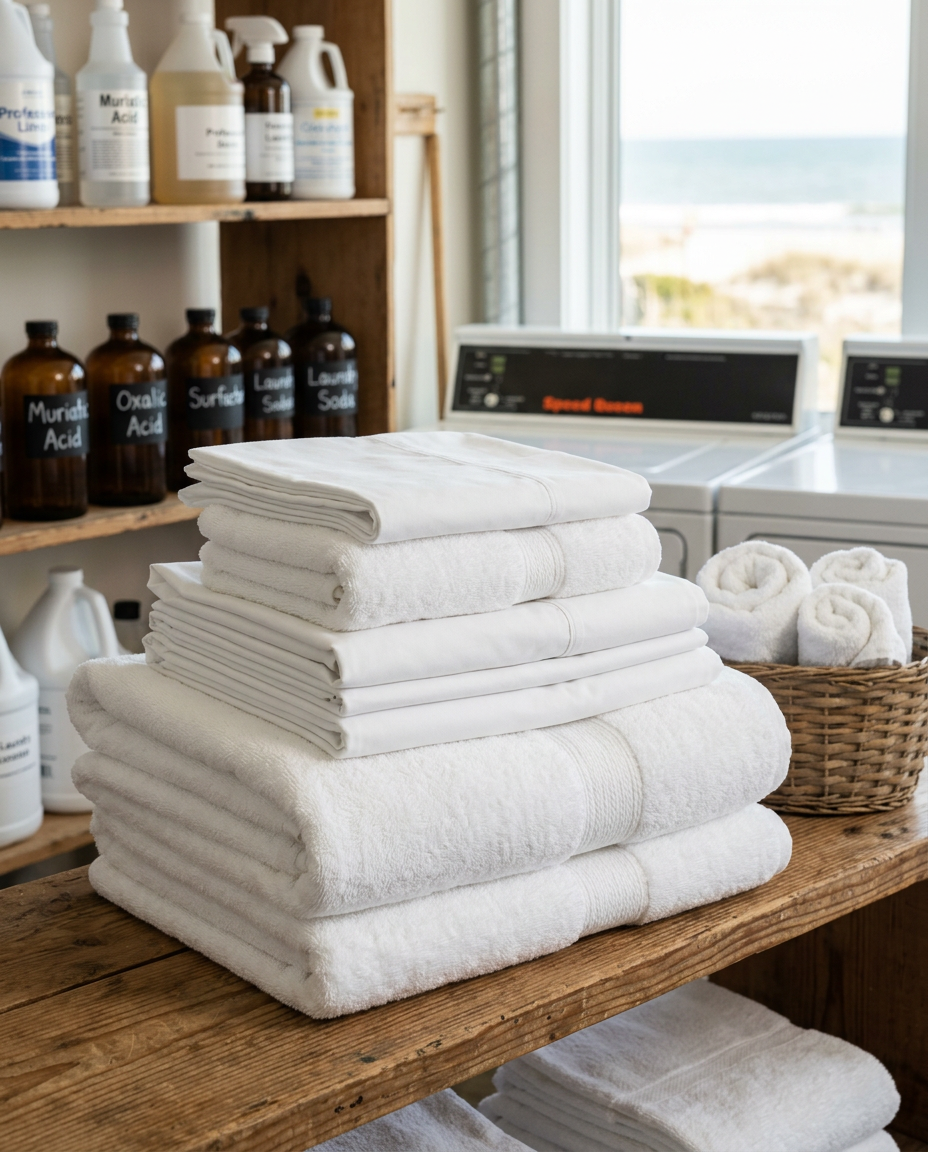
Maintaining bright, hotel-white sheets in a coastal vacation rental is an ongoing challenge for property managers and homeowners across the Grand Strand. Between heavy applications of sunscreen and the high mineral content of our local municipal water, high-quality linens can quickly turn a dull gray or a stubborn rusty-yellow. At A2Z Cleaning & Linen Services, we understand that immaculate bedding is directly tied to guest satisfaction and five-star reviews. By implementing a scientifically grounded restoration protocol, you can salvage compromised linens, extend the lifespan of your inventory, and keep your beds looking pristine year-round.
The Chemistry of Coastal Bedding Discoloration
Guests returning from Myrtle Beach's shorelines carry a heavy layer of sunscreen, sweat, and natural body lipids. When these organic substances transfer to high-quality rental sheets, they create a stubborn hydrophobic barrier. Standard household detergents fail to break down these complex lipid chains. Over multiple guest turns, these unextracted oils oxidize, attracting airborne dust and loose fibers. This chemical bonding process turns pristine white sheets into a dull, unattractive gray that compromises the perceived cleanliness of your vacation rental.
Compounding this lipid buildup is the mineral profile of the Grand Strand's municipal water systems. Our coastal water often contains elevated levels of dissolved calcium, magnesium, and iron. When these hard-water minerals interact with standard laundry detergents, they form an insoluble scum. This microscopic mineral crust attaches to the cotton and polyester fibers of your sheets. The crust acts like a magnet for soil particles, trapping them within the weave and accelerating the graying process with every wash cycle.
Furthermore, the synthetic ingredients in modern sunscreens—specifically avobenzone and oxybenzone—react aggressively when exposed to tap water and high-heat drying. These chemical compounds bond tightly to the cellulose fibers in cotton. Once dried at high temperatures, they form a highly visible, yellowish-brown stain that resists standard spot treatments. Restoring these linens requires a structured, multi-phase wash chemistry that addresses both the organic lipid load and the inorganic mineral deposits simultaneously.
The Danger of Chlorine Bleach in Hard-Water Environments
Many vacation rental owners and property managers reflexively reach for standard liquid chlorine bleach to solve graying or yellowing sheets. While sodium hypochlorite is an effective sanitizer, it is highly counterproductive in coastal laundering environments. Chlorine bleach acts as an oxidizing agent that reacts with the dissolved iron present in our local water supply. Instead of whitening the fabric, this chemical reaction precipitates the iron out of the water, literally dyeing the cotton fibers a faint, stubborn rusty-yellow.
Additionally, frequent chlorine use severely degrades the structural integrity of both pure cotton and poly-cotton blend sheets. Chlorine chemically attacks the natural cellulose polymers in cotton, weakening the yarn and causing premature thinning, fraying, and tearing along the hems and seams. This chemical wear reduces the lifespan of your linen inventory by up to fifty percent. It also strips away any original mill-applied optical brighteners, leaving the fabric looking flat and naturally cream-colored rather than a bright, crisp hotel white.
To break this destructive cycle, coastal laundries must transition away from sodium hypochlorite as their primary whitening agent. Instead, a successful restoration protocol relies on oxygen-active bleaching agents and targeted mineral chelators. These compounds isolate iron and calcium ions in the wash bath, preventing them from reacting with the fabric. By protecting the base fibers from chemical damage, you can maintain both the bright aesthetic and the physical durability of your linen assets over hundreds of turns.
The Multi-Step Lipid Extraction Wash Cycle
To successfully extract sunscreen oils and heavy body lipids, you must implement a dedicated wash formula that utilizes precise thermal and chemical controls. Standard cold or warm water washes are entirely ineffective here; lipids require high temperatures to reach their melting point. The wash cycle must begin with a hot-water flush of at least 140 to 150 degrees Fahrenheit. This thermal energy liquefies the trapped oils, allowing the cleaning chemistry to penetrate deep into the yarn structure.
During this high-temperature wash, we introduce a concentrated alkaline builder alongside a high-performance, non-ionic surfactant. Alkaline builders raise the pH of the wash water to approximately 10 or 11, which swells the cotton fibers and suspends the acidic oils. The non-ionic surfactants are specifically selected because they do not react with hard water minerals. They surround the emulsified oils and hold them in suspension, ensuring that the greasy residue is completely flushed down the drain during the rinse cycle rather than redepositing onto the sheets.
Skipping or shortening this emulsification phase guarantees that a thin film of sunscreen and skin sebum remains on the sheets. Once this damp, oil-laden fabric is transferred to a commercial tumble dryer or ironer, the heat bakes the residual lipids directly into the core of the fibers. This thermal setting makes the subsequent stains nearly impossible to remove. A proper lipid extraction cycle must run for a minimum of twelve to fifteen minutes at peak temperature to ensure complete soil release.
Targeted Mineral Stripping and Acid Souring
After removing the organic soils, the next phase of restoration focuses on stripping the accumulated mineral deposits from the fabric. This is achieved by introducing a specialized commercial laundry sour during the final rinse cycle. Laundry sours are mild acidic compounds, such as silicofluorides or organic acids, designed to neutralize any remaining alkaline detergent residues. Bringing the fabric pH back down to a skin-neutral level of 5.5 to 6.5 is essential for both guest comfort and fiber preservation.
In addition to neutralizing pH, these acidic sours act as chemical chelators that dissolve the calcium and iron crust built up from Myrtle Beach municipal water. This chemical stripping action literally dissolves the microscopic gray film coating the sheets, revealing the clean white fibers beneath. Eliminating the mineral buildup also restores the natural softness of the fabric. Without the stiff mineral crust, the sheets lose their scratchy texture, delivering that smooth, luxury hotel feel that guests associate with high-end accommodations.
Failing to use a laundry sour leaves the sheets with a high alkaline pH, which can cause skin irritation for sensitive guests. High alkalinity also reacts with the heat of commercial ironers, accelerating the yellowing of the fabric through chemical scorching. Integrating an accurate, metered sour injection into your washing process is a non-negotiable step for any rental portfolio aiming to maintain premium standards and protect their physical linen investments from premature aging.
Optical Brighteners and Oxygen-Active Bleaching
Once the sheets are thoroughly stripped of oils and minerals, we can safely apply whitening chemistry to restore their brilliant reflectivity. Instead of harsh chlorine, we utilize oxygen-active bleaching agents, such as hydrogen peroxide or sodium percarbonate, heated to at least 160 degrees Fahrenheit. Oxygen bleach works by releasing active oxygen molecules that gently break down organic stain colorants without compromising the strength of the cotton fibers. This process is highly effective at lifting residual sunscreen yellowing without degrading the textile.
To enhance this brightening effect, commercial-grade laundry formulas include optical brightening agents (OBAs). These are specialized fluorescent compounds that absorb invisible ultraviolet light and re-emit it as visible blue light. This optical trick neutralizes the natural yellow cast of raw cotton, making the sheets appear intensely white to the human eye. Because OBAs require a clean, mineral-free surface to bond correctly, they must only be applied after the lipid extraction and mineral stripping phases are complete.
Applying brighteners to dirty or mineral-crusted sheets simply locks in the grayness, creating a dull, cloudy appearance. By executing this chemistry in the proper sequence, you achieve a level of brightness that mimics brand-new linens. This meticulous attention to wash chemistry ensures that your sheets consistently meet the high visual standards expected by modern vacationers, protecting your online reviews from damaging comments about 'dingy' or 'dirty-looking' bedding.
Managing Commercial Ironer and Dryer Thermal Limits
The thermal management of sheets during the drying and finishing process plays a critical role in preventing discoloration. Commercial flatwork ironers and high-capacity tumble dryers are designed to operate at high temperatures to maximize throughput. However, if the operating temperature exceeds 320 degrees Fahrenheit, any microscopic trace of organic matter or residual detergent remaining on the sheets will scorch instantly. This scorching creates permanent, localized yellow or brown bands that ruin the linen.
To prevent thermal damage, drying temperatures must be carefully regulated based on the fabric blend. Pure cotton sheets can tolerate slightly higher heats but are prone to over-drying, which strips the natural moisture content from the fiber and makes it brittle. Poly-cotton blends are even more sensitive; excessive heat can melt the polyester microfibers, causing a permanent gray sheen and a harsh, plastic-like texture. Dryers should be set to a cooling cycle for the last three to five minutes to stabilize the fibers.
When utilizing a commercial flatwork ironer, sheets should be fed through while still slightly damp—containing approximately 15 to 20 percent residual moisture. This moisture acts as a thermal buffer, absorbing the heat of the ironer rollers and converting it to steam. This steam instantly relaxes the cotton fibers, producing a crisp, wrinkle-free finish without scorching the fabric. Proper moisture retention management not only yields a superior aesthetic but also prevents the thermal yellowing that plagues rushed laundry operations.
Calculating and Maintaining Par Levels to Prevent Laundering Fatigue
One of the most overlooked contributors to dingy linens is 'laundering fatigue' caused by inadequate inventory par levels. Many vacation rental managers operate on a tight two-par or even one-and-a-half-par inventory. This means sheets are stripped from a bed, rushed to a laundry facility, washed, dried, and returned to a bed all within a single afternoon. This frantic pace forces laundry operators to cut corners, shortening wash cycles, skipping mineral-stripping rinses, and over-heating dryers to meet tight checkout windows.
To operate a successful, high-quality linen program, a strict minimum of three par is required: one par on the guest bed, one par clean in the closet ready for the next turn, and one par in the wash or transit phase. During the peak Grand Strand summer season, moving to a four-par system is highly recommended. This extra cushion allows soiled linens to undergo the full, multi-step restoration wash cycle without disrupting the tight turnover schedules of Saturday check-ins.
Adequate par levels also allow laundered linens to 'rest' for 24 hours before being placed back on a bed. This resting period allows the cotton fibers to rehydrate naturally from the surrounding humidity, increasing their tensile strength and resistance to tearing. Investing in proper par levels directly reduces your annual linen replacement costs. It ensures your laundry team has the time required to perform the chemistry-heavy graying recovery protocols necessary to maintain spotless, five-star guest presentations.
Establishing Daily Quality-Control Inspection Protocols
Implementing a high-level wash chemistry protocol is only effective if you have a reliable quality-control system to back it up. Every laundry facility or staging area should feature a dedicated inspection station equipped with high-CRI (Color Rendering Index) LED lighting. Standard warm fluorescent lighting hides yellowing and graying, leading to unpleasant surprises once the sheets are spread across a brightly lit guest bed. Sheets must be fully unfolded and inspected under bright, neutral-white light to detect any shade drift.
Inspectors must look for early signs of graying along the center fold of the sheet and check the top third of the linen for the characteristic yellowish halo left by sunscreen and cosmetics. Any sheet that fails to meet the brightness standard must be pulled from the clean rotation and sorted into a designated 'recovery' bin. These sheets are then run through a concentrated stripping cycle, rather than being discarded or sent back to a rental property to face guest complaints.
Training your housekeeping and laundry staff to recognize these subtle color shifts before the linen leaves the facility is a cornerstone of professional property management. By establishing clear visual benchmarks and a systematic recovery process, you eliminate the risk of negative reviews regarding linen cleanliness. This systematic approach ensures that every guest who books a stay along the Grand Strand experiences the crisp, immaculate, hotel-grade bedding they expect and deserve.
Key takeaway
Do not let graying, sunscreen-stained sheets compromise your vacation rental's reputation or drain your operating budget. By transitioning to a professional wash chemistry protocol and maintaining healthy par levels, you can keep your linens looking consistently brand-new. For expert linen management and high-volume commercial laundering services across the Grand Strand, contact the family-owned team at A2Z Cleaning & Linen Services at 843.800.2788.
Related services
Keep Reading

Linens & Laundry
The Coastal Makeup and Sebum Bio-Stain Extraction Protocol: Mitigating Waterproof Cosmetics, Silicon Binding, and Hard-Water Graying in Grand Strand Rental Linens
ReadLinens & Laundry
The DHA and Bronzer Extraction Protocol: Salvaging Self-Tanner Stained Linens in Grand Strand Vacation Rentals
ReadLinens & Laundry
The Coastal Duvet Insert and Protector Sanitation Protocol: Managing Body-Oil Yellowing, Sand-Grit Intrusion, and Mildew Spores in Grand Strand Vacation Rentals
ReadReady for a spotless property?
Call 843.800.2788 or request a free quote from A2Z Cleaning & Linen Services.