Linens & Laundry
The Coastal Vacation Rental Luxury Sateen and Percale Linen Preservation Protocol: Mitigating Tensile Strength Loss, Salt-Air Fiber Swelling, and Industrial Finishing Scorching
Discover the scientific laundering protocols required to protect, wash, and iron luxury high-thread-count sateen and percale cotton linens against harsh Grand Strand coastal elements.
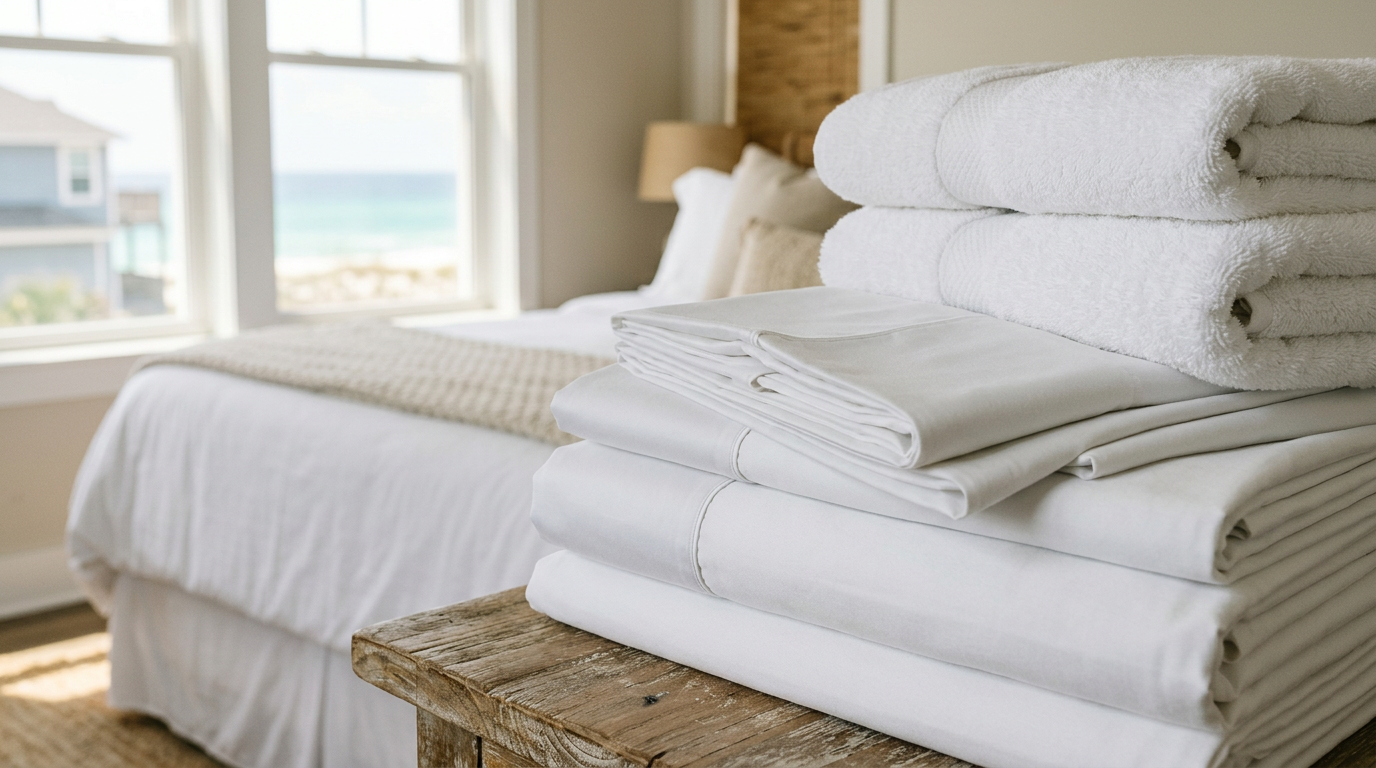
High-end vacation rental properties along the Grand Strand increasingly utilize premium, high-thread-count sateen and percale cotton linens to meet the expectations of luxury travelers. However, the coastal environment—rich in salt-saturated air, fine abrasive beach sand, and elevated relative humidity—inflicts unique physical and chemical stress on these delicate natural fibers. Standard high-volume commercial laundering processes often accelerate fabric degradation, resulting in premature thinning, fiber pilling, and scorch damage from improper heat settings. Implementing a specialized, scientifically grounded linen preservation protocol is vital for property managers and hosts seeking to protect their significant textile investments while maintaining flawless guest satisfaction.
The Chemistry of Coastal Degradation: How Salt Air and Humidity Swell Cotton Fibers
The hyper-saline maritime environment of the Grand Strand presents a silent, chemical challenge to high-thread-count, long-staple cotton bedsheets. Airborne sodium chloride particles settle onto linens during guest stays, particularly in oceanfront villas in Litchfield or North Myrtle Beach where balconies remain open to the ocean breeze. When exposed to the high relative humidity typical of South Carolina summers, these microscopic salt crystals dissolve and penetrate deep into the cotton's amorphous polymer regions. As the ambient moisture fluctuates, the salt recrystallizes within the fiber core, causing the natural cellulose walls to swell and expand unevenly.
This repetitive swelling and contracting cycles weaken the structural hydrogen bonds that hold the cotton molecules together, leading to a significant loss of tensile strength. When these compromised fibers are subjected to the mechanical agitation of a wash cycle, they fracture much more easily than protected fibers, resulting in premature linting and fiber thinning. Over time, this microscopic structural damage manifests as a rough, scratchy texture that strips the linens of their original buttery softness. Property owners often mistake this chemical degradation for natural wear, discarding expensive sheets seasons before their expected lifecycle ends.
To mitigate this salt-driven fiber expansion, high-thread-count linens require immediate stabilization during the initial flush phase of the wash cycle. Simply washing sheets in standard formulas does not strip the embedded microscopic salt crystals without first neutralizing the osmotic pressure within the wash drum. Utilizing a soft-water pre-flush at a precise, moderate temperature helps dissolve and rinse away the crystalline sodium chloride before chemical detergents are introduced. This preventive step ensures that the cotton fibers return to their relaxed, natural diameter prior to undergoing the mechanical strain of high-speed extraction.
Sateen vs. Percale: Understanding Weave Vulnerabilities Under Grand Strand Conditions
Sateen and percale weaves behave differently when exposed to the abrasive sands and high humidity of the Grand Strand. Sateen utilizes a four-over, one-under weave structure that exposes longer thread floats on the surface, giving the fabric its signature silky sheen and supple drape. However, these exposed floats are highly susceptible to snagging on beach sand particles, guest jewelry, and even rough skin. Once a single float thread is nicked or abraded, the weave begins to unravel microscopically, leading to the rapid formation of unsightly fabric pills that ruin the smooth sleeping surface.
Percale, conversely, features a traditional one-over, one-under plain weave that is inherently more durable and breathable, making it a popular choice for warm coastal climates. While percale resists pilling far better than sateen, its tight, crisp structure is highly prone to locking in deep, stubborn wrinkles when exposed to damp, salty air. If percale sheets are left in a high-humidity environment post-wash or are dried at excessively high temperatures, the fibers set in a distorted pattern. Removing these set-in wrinkles requires aggressive ironing, which exposes the cotton to destructive thermal stress that degrades the fabric.
Managing these distinct vulnerabilities requires a tailored laundry sorting protocol that separates sateen and percale linens into dedicated wash batches. Mixing these weaves in a single commercial drum leads to uneven friction, where the coarser percale fibers act as an abrasive agent against the delicate floating threads of the sateen sheets. Furthermore, because sateen is naturally heavier and retains more moisture than percale, drying them together results in either under-dried percale that harbors mold or over-dried sateen that suffers from thermal fiber fracture. Dedicated, weave-specific washing and drying parameters are essential to preserve the unique tactile characteristics of each fabric type.
- Sateen features long floating threads that provide softness but are highly vulnerable to sand-grit friction.
- Percale offers a crisp, breathable plain weave that resists pilling but easily locks in deep humidity wrinkles.
- Co-mingling weaves in commercial laundry wash drums accelerates surface friction and fiber pilling.
- Tailored drying cycles prevent the over-drying of sateen and the moisture retention of percale.
The Mechanical Threat of Embedded Sand: Micro-Abrasions and Tensile Strength Loss
Beach sand is primarily composed of quartz silica crystals, which feature extremely sharp, microscopic edges that act like tiny knives when embedded within fabric. Guests returning from the beach inevitably transfer fine sand from their skin, hair, and clothing directly onto the rental property's bed linens. During a guest's stay, the physical pressure of sleeping on the sheets forces these abrasive silica particles deep into the interstitial spaces of the yarn, where they lodge firmly between the woven threads.
When these sandy sheets are placed into a commercial washing machine, the mechanical agitation of the wash cycle slides the cotton yarns against the trapped silica crystals. This action causes thousands of microscopic cuts along the length of the long-staple cotton fibers, severely reducing their tensile strength in a single wash. Standard washing procedures fail to dislodge this deeply embedded sand, instead forcing the heavy particles to settle into the bottom of the wash drum where they continue to abrade subsequent laundry loads. Over several turns, this process results in thin spots, random tearing, and blown-out seams.
To successfully extract sand without destroying luxury fibers, a dedicated gravity-assisted pre-wash dry shake or a low-water, high-extraction pre-flush must be executed. This step opens the weave structure of the fabric while it is in a relaxed state, allowing the heavy silica particles to fall out and drop through the perforations of the washing inner cylinder. Only after this mechanical sand extraction is complete should chemical wash steps begin, ensuring that the wash liquor remains free of abrasive suspended solids that would otherwise cut the fragile cotton fibers.
Wash Chemistry Adjustments: Alkaline Balancing and Iron Mitigation in Grand Strand Water
The municipal water supply along the Grand Strand often contains elevated levels of dissolved minerals, particularly iron and manganese, along with varying levels of hardness. When untreated, hard water minerals bind to laundry detergents, forming a dulling grey scum that precipitates onto the pristine white fibers of luxury linens. Furthermore, when high-pH alkaline builders are introduced to strip body oils and sunscreens, they can react with dissolved iron to cause rapid yellowing or rust-staining on high-thread-count sheets, which ruin their aesthetic appeal.
To protect high-value cotton assets, the laundry wash chemistry must include precise water conditioning agents, such as polyphosphates or aminocarboxylic acids, to sequester dissolved minerals. The wash pH must be carefully managed, maintaining an optimal range of 9.5 to 10.5 during the main wash cycle to ensure effective soil removal without swelling the cotton fibers to their breaking point. Following the detergent steps, a dedicated souring agent must be applied in the final rinse to neutralize residual alkalinity, bringing the fabric pH down to a skin-compatible 5.5 to 6.5.
Failing to neutralize the laundry pH before drying has disastrous consequences for premium cotton. Residual alkaline salts left on the fibers will concentrate as water evaporates in the dryer or flatwork ironer, leading to chemical scorching and rapid yellowing of the fabric. This alkaline degradation permanently damages the cotton cellulose, rendering the sheets brittle and prone to tearing along the fold lines. Precise chemical titration and regular pH testing of the rinse water are mandatory components of a professional coastal linen preservation program.
- Dissolved iron and manganese in coastal water lines cause rapid yellowing and grey dinginess if unconditioned.
- Water softeners and sequestering agents isolate minerals, preventing detergent scum deposition on cotton fibers.
- Controlled pH wash cycles remove heavy organic soils without causing chemical swelling or fabric stress.
- Souring agents neutralize residual alkalinity in the rinse phase to prevent fiber scorch during heat finishing.
The Thermal-Disinfection and Drying Protocol: Preventing High-Heat Fiber Desiccation
Thermal disinfection is a non-negotiable standard in vacation rental laundering to eliminate pathogens, allergens, and viruses left behind by previous guests. However, applying excessive heat to high-thread-count cotton linens during the drying process is a primary driver of fiber desiccation and shrinkage. Cotton fibers naturally retain approximately 7% to 8% moisture, known as their regain percentage, which is essential for maintaining their flexibility and soft feel. When dryers are run too hot or too long, this essential moisture is completely baked out, causing the fibers to become extremely brittle.
Once cotton reaches a state of total desiccation, the microscopic fibers lose their natural elasticity and snap under the slightest mechanical tension, such as folding or fitted-sheet stretching. To prevent this destructive over-drying, commercial drying cycles must be strictly monitored using moisture-sensing technology. The ideal drying protocol for premium sateen and percale linens involves drying at a moderate temperature of 140°F to 150°F, and terminating the cycle when the load retains approximately 3% to 5% residual moisture.
This remaining moisture is critical, as it allows the cotton fibers to cool down safely and absorb natural humidity from the air without becoming brittle or stiff. It also facilitates a much smoother flatwork ironing process, as the residual dampness helps steam out wrinkles without requiring excessive ironer pressure or scorched-surface contact. Implementing this controlled thermal protocol significantly extends the service life of high-thread-count sheets, keeping them soft, strong, and highly resistant to tearing.
Industrial Rotary Ironing and Flatwork Finishing: Mitigating Scorching and Hem Distortion
The crisp, hotel-grade presentation that guests rave about in luxury properties is achieved through the use of industrial rotary flatwork ironers. However, these powerful machines subject damp cotton linens to high temperatures, high pressure, and mechanical pulling forces simultaneously. If the ironer's roll pressure, belt tension, or chest temperatures are incorrectly calibrated, the machine will stretch the sheets unevenly, leading to warped hems, distorted flat sheets, and ruptured stitching along the borders.
Furthermore, if the ironer chest temperature exceeds 325°F for extended periods, the cotton fibers face immediate risk of thermal scorching. Scorching does not always appear as a dark brown burn mark; more often, it manifests as a subtle, faint yellowing that dulls the brightness of white sheets and cannot be washed out. This heat damage weakens the cotton's molecular chains, creating permanent weak spots that will rip open during subsequent wash extractions or when tucked tightly under a heavy mattress during a Saturday turn.
To prevent thermal scorching and hem distortion, flatwork ironers must be meticulously maintained and operated by trained technicians. The ironer chest must be regularly cleaned and waxed with high-temperature lubricants to ensure sheets glide through smoothly without sticking or stretching. Operators must feed the linens perfectly straight along the warp thread line, ensuring that the hem stitching is parallel to the rolls to distribute tension evenly and avoid diagonal distortion that ruins the bed-making presentation.
- Rotary flatwork ironers require precise temperature controls (below 325°F) to prevent microscopic scorching.
- Incorrect belt tension and roll pressure pull cotton fibers unevenly, causing warped, distorted hems.
- Faint yellowing from excessive heat permanently weakens the cotton's molecular cellulose chains.
- Meticulous wax maintenance of the ironer chest ensures smooth glide and prevents fabric drag.
Stain Pre-Treatment and Extraction Guidelines for Luxury Long-Staple Cotton
Luxury cotton linens are constant targets for high-pigment stains, including sunscreens, makeup, coffee, and red wine. Using aggressive, high-chlorine bleaching agents to strip these stains is highly destructive to high-thread-count fabrics. Chlorine bleach works by oxidation, which non-selectively breaks down both the stain molecules and the cotton fibers themselves. Over-reliance on chlorine bleach rapidly thins the fabric, yellowing the white fibers and causing the sheets to tear under minimal pressure.
Instead, a luxury linen preservation protocol utilizes oxygen-based bleaching systems and targeted enzymatic pre-treatments. Enzymatic digesters are formulated to break down specific organic compounds, such as proteins from blood or lipids from cosmetics, without attacking the underlying cotton cellulose. For stubborn sunscreen oils containing avobenzone—which reacts with iron in the water to form bright yellow-orange rust stains—specialized acidic surfactant spotters must be applied before the sheets enter the primary wash cycle.
Once pre-treated, the linens should undergo a gentle, low-temperature extraction process rather than high-speed spin cycles that can crease and snap the damp, weakened fibers. By combining targeted chemistry with gentle mechanical action, even the most stubborn coastal stains can be successfully extracted without sacrificing the fabric's integrity. This systematic approach ensures that every sheet returned to service remains beautifully white, soft, and strong enough to withstand another high-occupancy Grand Strand guest stay.
- Chlorine bleach non-selectively destroys cotton cellulose, causing rapid fiber thinning and yellowing.
- Enzymatic pre-treatments target organic proteins and cosmetic lipids without harming natural fibers.
- Acidic surfactant spotters neutralize avobenzone sunscreen stains before they react with hard water minerals.
- Gentle extraction cycles protect damp, vulnerable cotton yarns from mechanical snapping and creasing.
Key takeaway
Preserving high-thread-count luxury linens in the Grand Strand's challenging coastal climate requires a scientific, multi-faceted approach to laundering. By managing salt-air fiber swelling, utilizing sand extraction protocols, adjusting wash chemistry, and maintaining a strict 3.0+ par level, property managers can dramatically extend the life of their textile investments. Partnering with a professional laundry service that understands these precise thermal and chemical requirements ensures your guests enjoy an uncompromisingly soft, resort-grade sleep experience.
Related services
Keep Reading

Linens & Laundry
The Coastal Vacation Rental White Sheet Graying and Yellowing Restoration Protocol: Mitigating Sunscreen Lipids, Iron-Rich Municipal Water, and Chemical Scorching
ReadLinens & Laundry
The Coastal Makeup and Sebum Bio-Stain Extraction Protocol: Mitigating Waterproof Cosmetics, Silicon Binding, and Hard-Water Graying in Grand Strand Rental Linens
ReadLinens & Laundry
The DHA and Bronzer Extraction Protocol: Salvaging Self-Tanner Stained Linens in Grand Strand Vacation Rentals
ReadReady for a spotless property?
Call 843.800.2788 or request a free quote from A2Z Cleaning & Linen Services.