Linens & Laundry
The DHA and Bronzer Extraction Protocol: Salvaging Self-Tanner Stained Linens in Grand Strand Vacation Rentals
Discover how professional laundry chemistry extracts stubborn self-tanners, bronzers, and waterproof makeup from Myrtle Beach rental linens without damaging fabric strength.
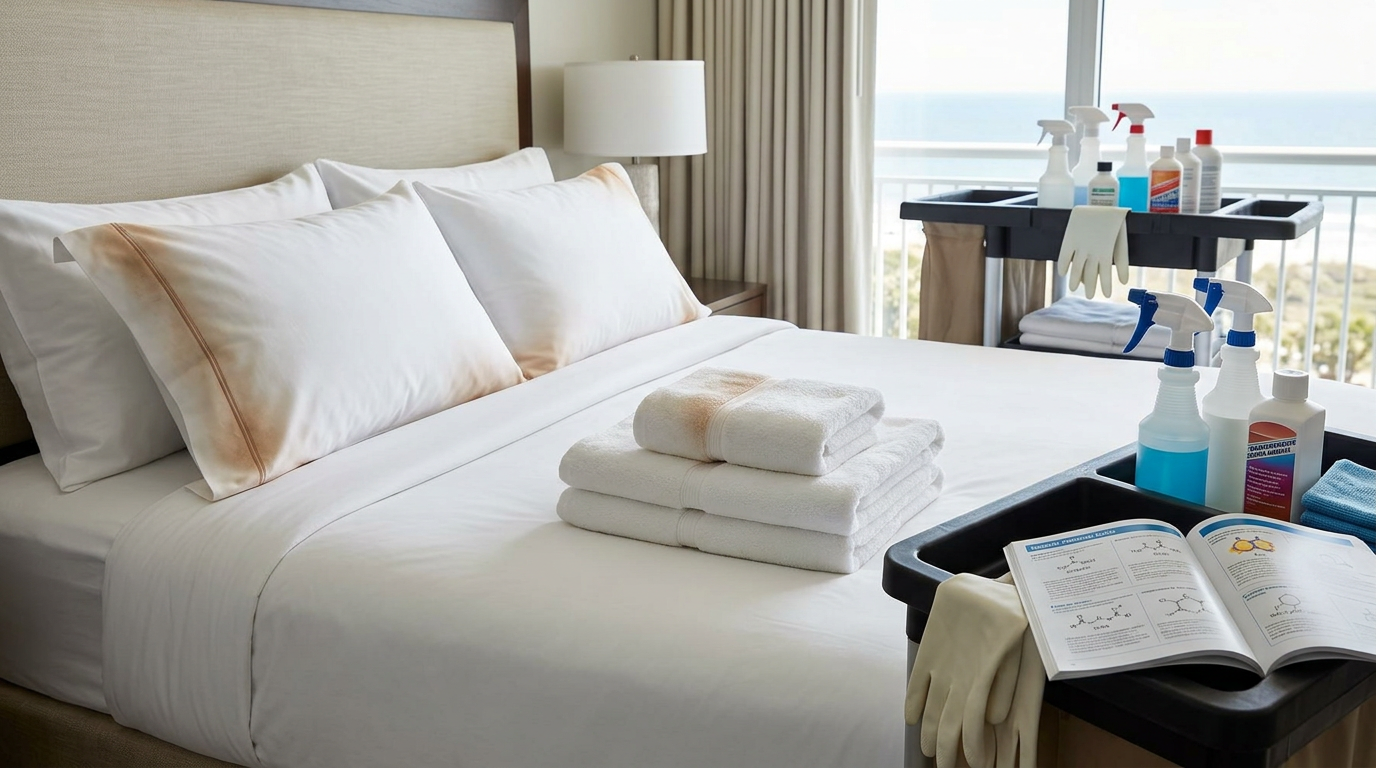
A sun-kissed glow is a hallmark of a Myrtle Beach vacation, but for rental hosts and property managers along the Grand Strand, that golden tan comes with a steep price. Self-tanning lotions, bronzers, and high-coverage cosmetic foundations frequently transfer onto pristine white sheets and pillowcases, leaving behind stubborn, orange-brown shadows. Standard wash cycles fail to lift these complex chemical compounds, resulting in thousands of dollars in prematurely discarded linens every season. At A2Z Cleaning & Linen Services, we utilize professional-grade laundry chemistry and structured wash protocols to salvage these stained fabrics, keeping your rental inventories pristine and your replacement costs low.
The Chemistry of the Beach Glow: Why Self-Tanners Bond to Cotton
The active chemical compound in most sunless tanners is dihydroxyacetone (DHA), a simple saccharide that reacts with the amino acids in dead skin cells to produce melanoidins, which mimic a natural suntan. When guests apply these products and slide into bed after a long day on the Myrtle Beach boardwalk, the friction and body heat cause the DHA and cosmetic oils to rub off. Unlike simple surface dirt or sand, DHA continues its browning chemical reaction directly within the porous cellulose fibers of cotton sheets.
To make matters more challenging, modern cosmetic bronzers and self-tanners are formulated to be highly water-resistant. Manufacturers blend pigments with heavy silicones, natural oils, and synthetic polymers designed to adhere to human skin through sweat and ocean humidity. When these compounds transfer to sheets and pillowcases, they form a hydrophobic barrier over the fibers, locking the pigments deep inside the weave of the fabric and resisting standard residential detergents.
Understanding this molecular bond is critical for successful extraction. Because self-tanners act similarly to low-temperature dyes, treating them as simple organic soil will only result in permanent staining. To successfully break the bond, laundry technicians must address both the lipid-based carriers (the oils and silicones) and the pigment-producing DHA compounds simultaneously, using targeted chemical agents rather than aggressive mechanical scrubbing.
The Chlorine Trap: Why Bleaching DHA Stains Makes Them Permanent
The most common mistake made by DIY vacation rental hosts and inexperienced cleaning crews is throwing bleach at every yellow or brown stain on a white sheet. When sodium hypochlorite (standard chlorine bleach) is applied to a linen stained with dihydroxyacetone, a destructive chemical reaction occurs. The chlorine acts as a rapid oxidizer, accelerating the browning reaction of the DHA and permanently locking the orange-brown pigment into the cotton fibers.
Once a self-tanner stain has been treated with chlorine bleach and subjected to the high heat of a commercial dryer, the chemical bond is virtually impossible to break. The fabric is effectively dyed, turning what could have been a salvageable high-quality sheet into a rag. Furthermore, excessive chlorine use degrades the tensile strength of cotton, causing the fabric to thin, yellow, and tear after only a few washes.
To preserve your inventory, chlorine bleach should be completely excluded from the initial stain extraction process. Instead, professional operations rely on pH-neutral surfactants and oxygen-based bleaching agents that gently break down the organic structure of the stain without oxidizing the DHA into a permanent orange shadow. Keeping chlorine away from your sorting bins is the first step toward reducing linen loss.
- Chlorine bleach oxidizes DHA, turning light yellow spots into permanent dark orange stains.
- Chemical reactions with chlorine weaken the natural cotton fibers, leading to premature tearing.
- Chlorine fails to emulsify the silicone and oil bases found in modern sunless bronzers.
- Oxygen-based bleaching agents protect the structural integrity of sheets while lifting cosmetic pigments.
The Pre-Treatment Inspection: Catching Stains Before the Wash
Successful stain removal is determined at the sorting table, not inside the washing machine. Once stained linens are tossed into a bulk wash with standard soiled items, the cosmetic oils can easily transfer to other sheets, compounding the problem. Sorters must inspect all sheets, pillowcases, and bath towels under bright, neutral-spectrum lighting (ideally around 5000K) to catch faint cosmetic shadows before they enter the water.
DHA and cosmetic stains typically present as faint, irregular yellow, orange, or light brown streaks, concentrated along the top hems of flat sheets, the centers of pillowcases, and the middle sections of bath towels. Sorters should look for the characteristic waxy feel of body makeup, which distinguishes it from standard dirt or food spills. These items must be immediately isolated from the general wash pile.
Once identified, these pieces are routed to a dedicated reclamation bin for pre-treatment. By keeping these highly soiled items separate, we prevent the cross-contamination of oils to clean linens and ensure that every stained piece receives the precise chemical application required to dissolve the makeup binders before any heat is applied.
The Emulsification and Release Wash Cycle
To dissolve the hydrophobic silicones and oils carrying the cosmetic pigments, the wash cycle must begin with a specialized emulsification phase. Standard household detergents lack the surfactant concentration needed to break through heavy makeup barriers. Professional laundries utilize non-ionic surfactants, which do not carry an electrical charge and are highly effective at suspending oily soils in water.
The process begins with a lukewarm flush between 95°F and 105°F. Water that is too hot will cook the proteins in bodily fluids that are often mixed with the cosmetics, while cold water will cause the silicones to harden. This flush loosens physical sand, skin flakes, and loose pigment particles, washing them down the drain before the chemical detergents are introduced into the wheel.
Following the flush, the main wash cycle introduces a highly concentrated non-ionic surfactant paired with a mild alkaline builder. The alkaline builder raises the pH of the wash water, swelling the cotton fibers and opening up the weave. This allows the surfactant to penetrate deep into the fibers, encapsulating the microscopic oil and pigment particles and holding them in suspension so they can be thoroughly rinsed away.
The Oxygen and Enzyme Alternative: Safely Brightening White Linens
Once the oil-based binders are emulsified and rinsed, any remaining cosmetic pigments must be broken down chemically. Instead of harsh chlorine, we utilize a combination of sodium percarbonate (oxygen bleach) and targeted multi-enzyme detergents. When dissolved in water heated to between 140°F and 160°F, sodium percarbonate releases hydrogen peroxide, which safely lifts organic color compounds without damaging the cotton.
To complement the oxygen bleach, specialized enzymes are introduced during the wash cycle. Lipase enzymes specifically target any residual cosmetic lipids, while protease enzymes break down the protein-based binders found in self-tanners and foundations. This enzymatic action works like microscopic scissors, cutting the complex stain molecules into smaller, water-soluble fragments that wash out during the rinse phase.
This combination of oxygen and enzymes is highly effective at restoring the bright white appearance of rental linens without compromising their longevity. Because these elements work through targeted chemical breakdown rather than aggressive oxidation, they protect the soft feel and tensile strength of your sheets, ensuring they remain comfortable for your Grand Strand guests.
The Heat Trap: Managing Dryer Temperatures to Prevent Stain Setting
The dryer is the ultimate point of no return in linen care. Even with advanced laundry chemistry, some stubborn cosmetic residues may survive the washing process. If these sheets are transferred directly to a high-heat commercial dryer or run through a flatwork ironer, any remaining DHA sugars will caramelize, and the silicone pigments will bake permanently into the fabric fibers.
To prevent this, we implement a strict post-wash inspection protocol. Wet sheets are checked by technicians as they are transferred from the washers. If any trace of a yellow or orange shadow remains, the piece is immediately redirected back to the reclamation pool for a secondary target treatment. Only completely clean linens are permitted to advance to the drying and ironing stages.
For items in the reclamation pool, low-temperature drying or air-drying is utilized during testing phases to ensure the stain has been fully extracted. Keeping dryer temperatures below 140°F for suspicious items prevents the chemical setting of cosmetics, keeping the door open for successful retreatments and keeping valuable linen stock out of the rag pile.
- High dryer heat cooks remaining cosmetic sugars and silicones directly into the cotton fibers.
- Strict post-wash inspections catch lingering shadows while the fabric is still damp.
- Retreating wet linens is highly successful; treating heat-set stains has a near-zero success rate.
- Low-temperature drying protocols protect vulnerable fabrics during the extraction process.
Implementing a Structured Linen Reclamation Loop
For vacation rental property managers handling high volumes of turnarounds in Cherry Grove, North Myrtle Beach, and Surfside, managing stained linens requires a systematic approach. A structured linen reclamation loop ensures that stained items are systematically tracked, treated, and returned to service rather than being discarded in frustration or left in units to deteriorate.
This loop begins with clear labeling and designated bins in laundry hubs. Housekeepers must be trained to separate stained linens into designated bags at the property, preventing them from being packed tightly with wet towels, which can cause mildew and dye transfer during transport. Once at the laundry facility, these bags bypass the high-speed bulk wash lines and go directly to the specialized treatment technicians.
By keeping a close eye on your reclamation metrics, you can easily calculate the return on investment of professional laundering. Property managers who partner with A2Z Cleaning & Linen Services find that reclaiming stained sheets—rather than constantly replacing them—slashes their annual linen procurement costs by up to 40%, directly boosting their bottom line.
Linen Selection Strategies: Choosing Fabrics That Fight Stains
The battle against self-tanner and makeup stains can also be fought during the purchasing phase. While 100% cotton sateen sheets offer a silky feel, their long, floating warp threads are highly delicate and prone to absorbing and trapping cosmetic pigment particles. For high-turnover Grand Strand vacation rentals, we recommend a 60/40 cotton-polyester blend in a tight percale weave.
The inclusion of high-quality polyester fibers significantly improves stain resistance. Polyester is naturally hydrophobic, meaning it does not absorb water-based self-tanners or liquid foundations as readily as natural cotton. This allows the detergent surfactants to easily wash away surface soils before they can penetrate the core of the yarn, resulting in much higher stain recovery rates.
Additionally, a 60/40 blend offers the structural strength required to withstand the high-temperature washes and alkaline chemistry used during professional stain extraction. These sheets dry faster, wrinkle less, and maintain their bright white finish through dozens of heavy-duty wash cycles, making them the most cost-effective and durable choice for busy coastal rental portfolios.
Key takeaway
Don't let self-tanner and cosmetic stains drain your rental property's profitability. By avoiding chlorine bleach, utilizing professional surfactant chemistry, and inspecting linens before they hit the dryer, you can rescue your valuable sheets and towels. Contact A2Z Cleaning & Linen Services at 843.800.2788 to protect your investment with our professional linen management and reclamation services.
Related services
Keep Reading
Linens & Laundry
The 3-Par Linen Formula: Calculating Inventory Lifespans and Industrial Wash Formulas for Grand Strand Vacation Rentals
ReadLinens & Laundry
The Sunscreen Stain Solution: Protecting Myrtle Beach Rental Linens from Orange Rust Spots
ReadLinens & Laundry
The Sunscreen Avobenzone and Chlorine Stain Extraction Protocol: Mitigating Iron-Reaction Pink Spots and Bleach-Lock Damage in Grand Strand Rental Towels
ReadReady for a spotless property?
Call 843.800.2788 or request a free quote from A2Z Cleaning & Linen Services.