Linens & Laundry
The Coastal Vacation Rental Pool and Cabana Towel Preservation Protocol: Mitigating Sunscreen-Bonded Yellowing, Chlorine Fiber Rot, and Peak-Season Inventory Shrinkage
Learn the commercial laundry chemistry and inventory management strategies required to protect pool and cabana towels from sunscreen stains, chlorine rot, and high shrinkage rates.
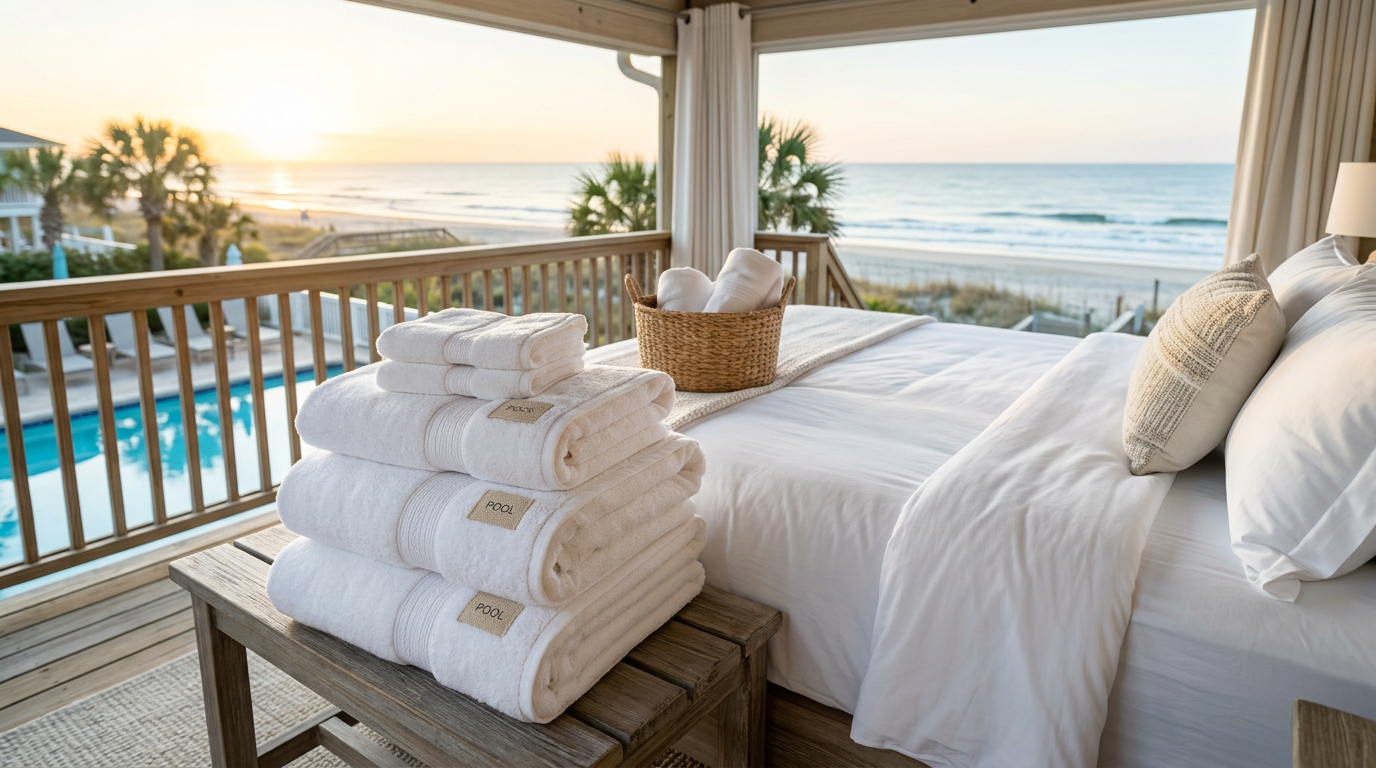
In the high-stakes world of Grand Strand vacation rentals, outdoor amenities like pools, hot tubs, and direct beach access are major selling points for guests. However, the heavy-duty towels provided for these activities face a hostile combination of chemical, environmental, and mechanical stressors that standard indoor bath towels never encounter. Without a specialized care and management protocol, property managers and hosts face skyrocketing linen replacement costs and immediate guest complaints regarding dingy, stained beach towels. Implementing an industrial-grade laundering standard and a precise inventory strategy is the only way to protect these valuable textile assets from rapid degradation.
The Unique Vulnerability of Coastal Beach and Pool Towels
Unlike white bath towels that remain in climate-controlled environments, outdoor beach and pool towels are exposed to extreme environmental conditions. On the Grand Strand, a single pool towel will regularly endure direct ultraviolet radiation, chlorinated pool water, salty ocean air, and abrasive beach sand within a single afternoon. This hostile mix breaks down cotton fibers at an accelerated rate, leaving towels stiff, faded, and physically weakened after only a few guest stays.
Mechanical damage is also highly pronounced in outdoor textiles. When guests carry damp towels to the beach, microscopic sand particles wedge deep into the cotton loops, acting like tiny saws that shred the individual cotton yarns from the inside out when the towel is sat on, shaken, or folded. This structural damage is compounded during high-speed extraction cycles in washing machines if the sand has not been thoroughly extracted beforehand.
Furthermore, pool towels are a primary vehicle for guest comfort, which means they bear the brunt of heavy sunscreen applications, body oils, and outdoor grime. This chemical load reacts poorly with traditional home laundry detergents and standard retail wash cycles, leading to permanent discoloration. Establishing a professional, chemically precise laundering routine is not an aesthetic choice; it is a structural necessity to preserve the lifetime of your inventory.
The Chemistry of Sunscreen Staining: Avobenzone, Iron, and Yellow-Orange Set-In
The most common cause of early retirement for coastal pool towels is the dreaded orange-yellow staining caused by sunscreens. The chemical culprit is avobenzone, an oil-soluble ingredient found in almost all broad-spectrum sunscreens. When avobenzone rub-off mixes with sweat and natural skin sebum, it binds tightly to the cotton fibers of the towel, leaving a virtually invisible residue that traditional wash cycles cannot lift on their own.
The real damage occurs when these sunscreen-laden towels are washed in water containing even trace amounts of dissolved iron, which is highly common in Myrtle Beach's municipal water systems and coastal aquifers. The avobenzone acts as a chelating agent, binding with the iron particles in the water to create an insoluble, synthetic rust stain that dyes the cotton fibers a bright, unsightly orange or yellow. Once this reaction occurs, standard washing actually locks the stain into the fabric.
Compounding the issue, many property owners attempt to fix these yellow stains by adding chlorine bleach to the wash wheel. This is a critical mistake, as chlorine bleach oxidizes the iron-avobenzone complex, chemically setting the orange stain permanently into the fabric matrix. Salvaging these linens requires a specialized chemical wash process that breaks the bond between the UV filters and the minerals in the wash water before any oxidizing agents are introduced.
- Avoid using standard chlorine bleach on any towels suspected of carrying sunscreen residues.
- Use a professional laundry formulation containing iron-binding chelating agents in the wash cycle.
- Ensure water systems are regularly tested and filtered to minimize dissolved iron content.
- Treat sunscreen stains with an organic acid-based rust remover during the pre-wash phase.
- Train laundry staff to spot-inspect towels for greasy patches before they enter high-heat dryers.
Mitigating Chlorine Rot and Salt-Air Fiber Degradation
Chlorine is highly effective at sanitizing resort swimming pools, but it is incredibly destructive to natural cotton fibers. When guests wrap themselves in pool towels, the chlorinated water is absorbed deep into the cotton yarns. If those towels are left to sit in a warm, humid utility room or a plastic guest hamper before laundering, the water evaporates, leaving concentrated chlorine residues behind to slowly eat away at the cotton cellulose.
This chemical degradation, known as chlorine rot, manifests as a progressive loss of tensile strength, causing the towel to rip, fray at the hems, or shed excessive lint during drying. In addition to chemical rot, salt water introduces sodium chloride crystals into the fibers. As these salt crystals dry, they harden into sharp, microscopic geometric shapes that physically cut the delicate cotton loops whenever the fabric is bent or compressed.
To halt both chemical and mechanical degradation, the laundering process must include a neutralization step. Professional operations utilize an "antichlor" agent in the early stages of the wash cycle to chemically neutralize active chlorine residues. This step, combined with high-volume flushing to dissolve and rinse away abrasive salt crystals, ensures that the cotton fibers retain their natural strength, flexibility, and absorbency over hundreds of wash cycles.
The Wash Chemistry Standard for Pool and Cabana Towels
To combat sunscreen, salt, and pool chemicals simultaneously, commercial laundry operations must implement a highly structured, multi-step wash formula. The cycle begins with a low-water flush at lukewarm temperatures to wash away loose sand and surface salt without setting any oil-based stains. This is followed by an alkaline break step, which raises the pH of the wash water to swell the cotton fibers and release trapped grease, sunscreen oils, and sweat.
Next, a high-performance, non-ionic surfactant is introduced to emulsify the heavy sunscreen polymers and oils, suspending them in the wash water so they can be drained away. For bleaching and sanitization, oxygen-based bleaches like hydrogen peroxide are used instead of chlorine. Oxygen bleach is highly effective at sanitizing textiles and brightening colors at temperatures above 140 degrees Fahrenheit, without damaging the cotton fibers or fading bright cabana stripes.
The final step in the wash formula is the souring phase. A liquid laundry sour is injected during the final rinse to neutralize any remaining alkaline chemistry and bring the fabric's pH back down to a skin-friendly level of 5.5 to 6.5. This pH correction is essential to prevent skin irritation for the guests, eliminate hard-water mineral graying, and keep the towel fibers soft and pliable without relying on fabric softeners, which coat fibers and reduce absorbency.
VAT-Dyeing vs. Pigment-Dyeing: Sourcing Durable Cabana Linens
The durability of a pool towel is heavily determined long before it ever reaches a washing machine. When sourcing cabana-striped or solid-colored pool towels for Grand Strand properties, understanding the dyeing method is critical. Cheaply made retail towels are often pigment-dyed, meaning the color is applied only to the surface of the yarns. These pigments quickly scrub off under the friction of sand and bleach out when exposed to pool chemicals.
For commercial rental durability, properties should exclusively source VAT-dyed towels. VAT-dyeing is a complex chemical process where the dye is infused directly into the molecular structure of the cotton fiber under reducing conditions, then oxidized to lock the color permanently inside. VAT-dyed linens can withstand repeated exposure to chlorine, sunshine, and commercial oxygen bleaches without fading or running, ensuring that bright blue or yellow cabana stripes stay sharp.
In addition to the dye method, look closely at the fiber composition. While 100% ring-spun cotton provides the softest feel for guests, a poly-cotton blend (such as 86% cotton and 14% polyester) in the ground weave offers superior structural longevity. In these blends, the face loops remain 100% cotton for high absorbency, while the underlying structural polyester warp yarns prevent the towel from shrinking unevenly, warping, or tearing along the selvedge edges.
- Only purchase pool and cabana towels that are explicitly labeled as VAT-dyed.
- Look for a high-quality double-needle stitched hem to prevent unravelling along the edges.
- Select a blend with a polyester ground weave to prevent uneven shrinkage and warping.
- Avoid pure pigment-dyed retail towels, which fade dramatically after less than ten washes.
- Partner with a supplier that offers commercial-grade, weight-consistent rental pools.
Calculating Peak-Season Par Levels and Theft/Loss Buffers
Of all the linens in a vacation rental inventory, pool and beach towels experience the highest rate of shrinkage. Guests regularly lose them at the beach, leave them poolside, use them to clean up messy spills in vehicles, or pack them into their luggage by mistake. Operating on a tight or poorly calculated par level during the peak Myrtle Beach summer season will inevitably lead to mid-week shortages and operational bottlenecks.
To maintain seamless operations, a strict 4-par inventory system is the standard recommendation for professional vacation rental management. This means for every pool towel slot allocated to a property (such as 8 towels for an 8-guest villa), you must stock 4 identical towels. This distributes the inventory evenly: 1 par in the guest's hands, 1 par dirty and in transit, 1 par clean and stocked in the linen closet, and 1 par sitting in reserve at the laundry plant.
For oceanfront properties with high guest counts or properties featuring private backyard pools, we recommend moving to a 5-par system. This extra buffer accounts for the rapid daily reuse of towels by guests who swim multiple times a day. To manage this inventory effectively, property managers should perform a complete physical count of all pool towels every 30 days during the peak season, allowing them to replenish missing stock before the shortage impacts guest reviews.
Storage, Sand-Extraction, and Folding Protocols for Rapid Turnover
Managing the physical handling of dirty pool towels on tight Saturday turnarounds requires operational precision. Damp, sandy towels piled in hot, unventilated cleaning vans or plastic bags will quickly cultivate mold and mildew in our humid coastal climate. Cleaners must collect soiled pool towels in separate, heavy-duty ventilated bins and transport them to the washing facility as quickly as possible to prevent permanent mildew stains.
Before any pool towel enters a washing machine, it must undergo a dry sand-extraction process. Running sandy towels directly through a wet wash cycle is disastrous; the water binds the sand to the wet cotton loops, trapping grit inside the fabric and transferring it to other linens in the load. Furthermore, sand acts as a highly destructive abrasive inside commercial laundry machinery, wearing out water seals, clogging drainage valves, and scoring the wash drums.
Once clean and thoroughly dried, towels should be folded using a standardized technique. For pool and cabana towels, a tight, uniform roll (known as the resort roll) is highly recommended over a traditional flat fold. Rolled towels are highly wind-resistant on outdoor lounge chairs, take up less space in linen closets, and immediately signal to incoming guests that their outdoor amenities have been prepared to a professional hospitality standard.
- Store and transport soiled towels in breathable, heavy-duty mesh bins to prevent mildew.
- Perform a dry shake-out or dry tumble cycle to remove sand before washing.
- Train housekeeping staff on the standardized 'resort roll' fold for neat presentation.
- Keep clean outdoor towels completely separated from indoor bath linens during transit.
- Inspect towels under bright lighting to catch and discard frayed or stained inventory.
Key takeaway
Preserving the quality and lifespan of pool and cabana towels along the Grand Strand requires an understanding of wash chemistry, fiber construction, and inventory controls. By implementing the correct stain-extraction protocols and maintaining a healthy 4-par or 5-par inventory, property managers can deliver pristine outdoor linens that elevate the guest experience. For professional linen management and high-grade laundering services that protect your textile investments, contact A2Z Cleaning & Linen Services at 843.800.2788.
Related services
Keep Reading

Linens & Laundry
The Coastal Hotel-Grade Zippered Mattress Encasement Laundering Protocol: Mitigating Polyurethane Membrane Delamination, Salt-Air Zipper Corrosion, and Sand-Abrasion Failures in Grand Strand Rentals
ReadLinens & Laundry
The TRSA Hygienically Clean Hospitality Standard: Implementing Industrial Wash Chemistry, Bio-Burden Testing, and Soil-to-Clean Separation in Myrtle Beach Commercial Laundries
ReadLinens & Laundry
The Coastal Makeup and Sebum Bio-Stain Extraction Protocol: Mitigating Waterproof Cosmetics, Silicon Binding, and Hard-Water Graying in Grand Strand Rental Linens
ReadReady for a spotless property?
Call 843.800.2788 or request a free quote from A2Z Cleaning & Linen Services.