Linens & Laundry
The Coastal Vacation Rental Self-Tanner and DHA Stain Extraction Protocol: Mitigating Bronzer Bonding, High-Heat Ironer Setting, and Grade-B Downgrades in Grand Strand Linens
Learn how to protect your vacation rental sheets from permanent self-tanner stains. This guide covers commercial washing formulas, high-heat ironer risks, and par-level safety math.
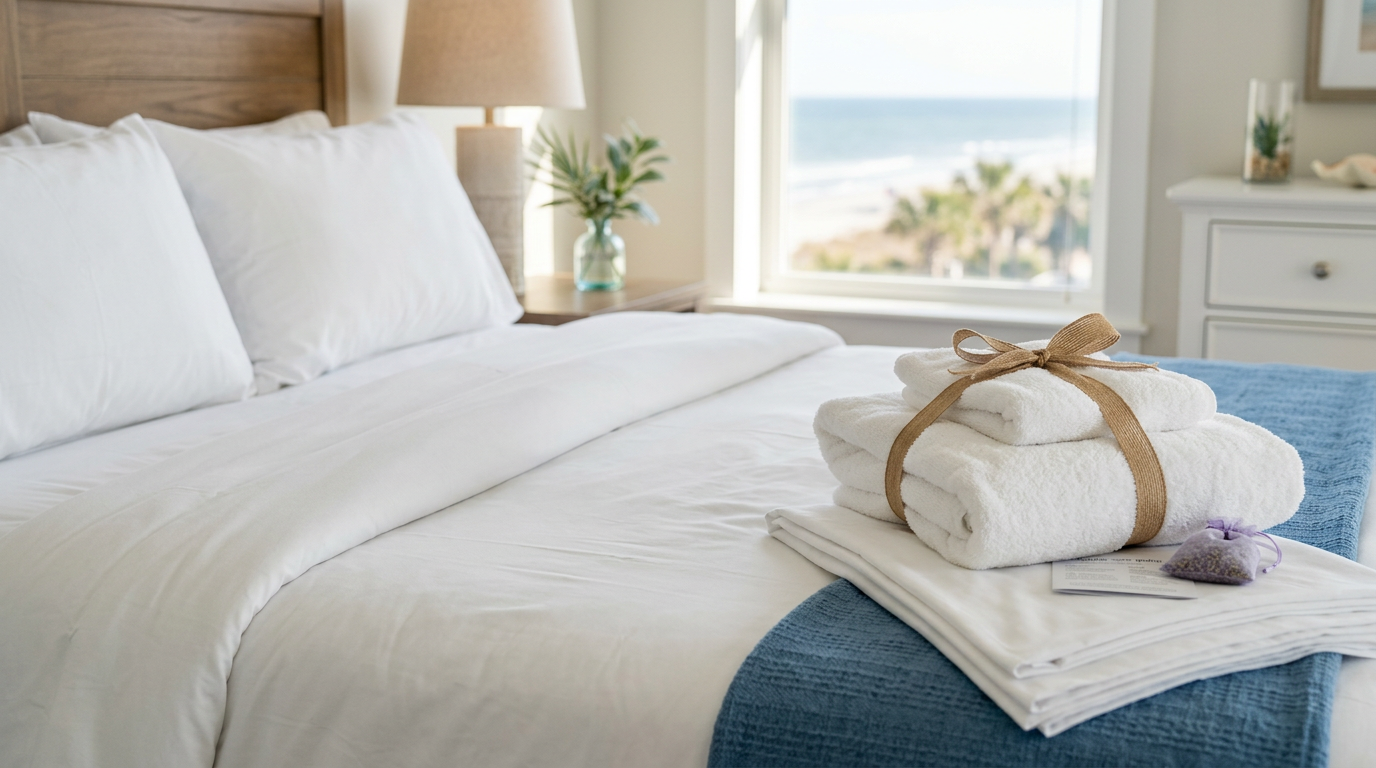
Along the Grand Strand, summer brings a surge of beach weddings, prom weekends, and sun-seeking tourists who rely on self-tanning products and spray tans to achieve a quick bronze glow. For vacation rental owners and property managers, this aesthetic trend presents a major operational headache: bright orange and brown stains on pristine white cotton-polyester sheets. The active ingredient in these self-tanners, dihydroxyacetone (DHA), reacts chemically with fabric fibers in ways that standard residential laundry cycles cannot easily resolve. Left untreated, these oils and dyes bond permanently with the fabric, forcing costly sheets out of rotation and destroying your linen investment.
The Chemistry of DHA Transfer on Coastal Cotton-Poly Linens
To effectively combat self-tanner stains, it is essential to understand the chemical agent at play: dihydroxyacetone (DHA). DHA is a simple carbohydrate that reacts with the amino acids in human dead skin cells to darken the skin surface. When a guest applies self-tanner or receives a professional spray tan and then lies down on rental bed sheets, a combination of body heat, friction, and Grand Strand humidity causes the product to transfer from their skin directly into the textile fibers.
On cotton-polyester blend sheets, this transfer is particularly challenging. While cotton fibers are highly absorbent and pull the liquid DHA deep into the core of the yarn, polyester fibers absorb the oil-based carriers, bronzers, and synthetic pigments that accompany the self-tanner. This dual-action absorption means the stain is not merely sitting on the surface; it is chemically and physically bound to two entirely different fiber types, requiring a multi-phased washing strategy to fully release.
Furthermore, our coastal humidity acts as an environmental catalyst. High humidity levels prevent the self-tanner from drying completely on the skin, maintaining a semi-liquid state that transfers far more readily during the night. If the linen remains damp in a humid housekeeping bag before laundering, the DHA can migrate further through the fibers, spreading the stain and making extraction significantly more difficult once the sheets arrive at the laundry facility.
The High-Heat Ironer Trap: Why Standard Wash Formulas Lock in DHA Stains
The absolute worst enemy of self-tanner removal is premature heat exposure. In professional laundry operations, wet linens are routinely fed through flatwork ironers operating at temperatures between 300 degrees and 350 degrees Fahrenheit to achieve that crisp, high-end resort finish. However, if a sheet containing even trace amounts of DHA or bronzer oils enters this high-heat ironer, a rapid chemical reaction occurs.
Under intense heat, the sugars in the DHA undergo a Maillard reaction—similar to the browning of food—which permanently caramelizes the stain into the cotton fibers. Simultaneously, the polyester fibers in the blend reach their glass transition temperature, softening just enough to seal the synthetic pigments inside the plastic matrix. Once this double-binding occurs under the pressure and heat of the ironer, the stain becomes permanent, and no amount of chemical re-washing will ever extract it.
When these baked-in orange shadows appear, the sheet is instantly ruined for premium guest use. It must be downgraded to a Grade-B linen, used only for cleaning rags, or discarded entirely. To prevent this severe financial loss, commercial laundry operators and vacation rental hosts must implement strict sorting and washing protocols that identify and treat these stains before any high-heat drying or ironing takes place.
Sorting and Pre-Treatment Protocols at the Soil Sort Line
Preventing permanent stains starts at the very beginning of the laundry process: the soil sort line. Laundry technicians must be trained to scan every single flat sheet, fitted sheet, and pillowcase under bright, high-CRI lighting during the sorting phase. Standard ambient room light is rarely sufficient to catch faint yellow-orange self-tanner smudges, which can easily blend into the natural shadows of bundled fabric.
Any linen showing the telltale copper, bronze, or orange-brown discoloration must be physically segregated from the standard wash loads immediately. Mixing DHA-stained sheets with clean, unstained laundry in a standard high-capacity wash wheel can lead to cosmetic dye bleeding, where the suspended oils transfer to other items in the bath, turning a single stained sheet into a dozen ruined pieces.
Technicians should pay close attention to specific high-contact zones. On pillowcases, self-tanner usually concentrates along the opening edges and the center third where the guest's face and neck rest. On flat and fitted sheets, the top hem—where guests pull the sheets up to their chin—and the middle-to-lower third of the bed are the primary zones for transfer. Flagging these zones during sorting ensures they receive the targeted chemical pre-treatment they require.
The Chemical Wash Formula for DHA Extraction
To successfully extract self-tanner from cotton-poly sheets, the wash cycle must be precisely engineered with the correct chemistry, water temperatures, and mechanical action. The cycle begins with a lukewarm flush at 100 degrees to 110 degrees Fahrenheit. Water that is too hot at this stage will set the sugars, while cold water will not adequately loosen the oily carrier agents in the bronzer.
Next, the wash cycle requires a high-surfactant emulsifying builder. A non-ionic surfactant is highly effective at breaking down the synthetic oils and silicone bases used in modern self-tanners, lifting them off the polyester fibers and suspending them in the wash water. This is paired with an alkaline booster to swell the cotton fibers, allowing the surfactant to penetrate deep into the weave where the stubborn DHA is trapped.
For bleaching and stain removal, sodium percarbonate (oxygen bleach) is preferred over sodium hypochlorite (chlorine bleach). Chlorine bleach can chemically react with certain components in self-tanners, turning them a permanent yellow-gray, and it weakens the fibers of cotton blends over time. Operating the main wash step at 140 degrees to 145 degrees Fahrenheit for at least 12 minutes provides enough thermal energy to activate the oxygen bleach without risking thermal shock or setting the sugars.
- Initial Flush: 3 minutes at 100-110°F to rinse loose cosmetic pigments and topical oils.
- Alkaline & Surfactant Wash: 12 minutes at 140-145°F to break down silicone carriers and swell fibers.
- Oxygen Bleach Injection: 8 minutes at 145°F using sodium percarbonate to oxidize the organic DHA compound.
- Thorough Rinses: Three distinct 2-minute rinses, progressively dropping temperature to prevent thermal fabric shock.
- Souring Step: A final rinse with a mild commercial laundry sour to neutralize residual alkalinity and stabilize fabric pH to 5.5-6.5.
Mitigating the Ironer: QC Inspection and Re-Wash Routing
Even with an advanced chemical wash cycle, some heavy self-tanner stains may not fully release on the first pass. This makes the post-wash, pre-ironer inspection station the ultimate defense line for your linen inventory. Feeder operators standing at the flatwork ironer must be trained to inspect every sheet as they feed it into the machine.
If an operator spots a lingering orange shadow, they must immediately bypass the ironer. They should drop the damp sheet into a designated re-wash cart rather than letting it pass through the heated rollers. This simple step requires active operational discipline, especially during the high-pressure Saturday turnaround windows common in Myrtle Beach, but it is the single most effective way to save costly sheets from permanent heat-setting.
Sheets in the re-wash cart are routed to a specialized soak program. This involves a concentrated bath of warm water, heavy-duty surfactants, and oxygen bleach, where they soak for several hours to break down the remaining residue. Once this deep-cleaning soak is complete, the linens are run through a standard wash cycle again, inspected once more, and only sent to the ironer when they are completely pristine.
Par Level Protections and Buffer Inventory Math for Bronzer Peak Seasons
The operational reality of self-tanner stain extraction is that it takes time. When sheets must be sorted out, pre-treated, soaked, and re-washed, they cannot be returned to service on a standard, same-day turnover schedule. To prevent housekeeping delays and avoid shorting your properties, you must adjust your inventory par levels to account for this seasonal re-wash lag.
During the peak Grand Strand wedding and summer tourist seasons, we recommend property managers operate at a minimum of a 4-par linen inventory (four complete sets of sheets and pillowcases per bed). In a standard schedule, one set is on the bed, one is in the owner's closet as a backup, one is dirty from the departing guest, and one is at the laundry facility. When self-tanner extraction cycles are added, that fourth par provides the essential buffer needed to keep turnovers moving.
If you operate on a tight 2-par or 3-par system, any sheet held back for a deep-soak re-wash immediately breaks the supply chain. This forces housekeepers to wait for clean laundry, delaying guest check-ins and hurting reviews. By modeling a seasonal 'spoilage and re-wash rate' of 10% to 15% into your inventory mathematics, you ensure that your properties always have a fresh, spotless set of sheets ready to go.
Education and Guest Communication Strategies for Vacation Rental Hosts
While professional laundering is your primary line of defense, prevention at the property level can significantly reduce the volume of stained linens. Property managers and hosts can implement strategic guest education to minimize self-tanner damage without sounding accusatory or dampening the vacation experience.
One of the most effective methods is providing dedicated, dark-colored 'tanning towels' or 'makeup cloths' in the bathrooms. Clearly labeled, high-quality black or charcoal-gray linens give guests a safe alternative to use after applying self-tanners, lotion, or heavy makeup. When guests see a beautifully presented dark towel specifically designated for this purpose, they are far less likely to wipe excess product onto your premium white bath towels and sheets.
Additionally, a gentle note in your welcome book or digital guest guide can make a major difference. A polite reminder requesting that guests allow self-tanners to dry completely before bed, or that they use the provided dark linens, sets a standard of care for the property. This small step balances hospitality with proactive asset protection, helping to keep your white sheets bright and beautiful all season long.
Key takeaway
Self-tanner and DHA stains do not have to spell the end for your premium vacation rental sheets. By implementing a strict pre-wash sorting process, avoiding high-heat ironers on stained items, and maintaining a healthy 4-par inventory, you can protect your investments and keep your linens sparkling white. For expert commercial-grade stain extraction and linen management on the Grand Strand, call A2Z Cleaning & Linen Services at 843.800.2788.
Related services
Keep Reading
Linens & Laundry
The Sunscreen Avobenzone and Chlorine Stain Extraction Protocol: Mitigating Iron-Reaction Pink Spots and Bleach-Lock Damage in Grand Strand Rental Towels
ReadLinens & Laundry
The Benzoyl Peroxide and Active Cosmetic Damage Mitigation Protocol: Protecting Grand Strand Rental Linens from Chemical Bleaching and Graying
ReadLinens & Laundry
The Coastal Vacation Rental Pool and Cabana Towel Preservation Protocol: Mitigating Sunscreen-Bonded Yellowing, Chlorine Fiber Rot, and Peak-Season Inventory Shrinkage
ReadReady for a spotless property?
Call 843.800.2788 or request a free quote from A2Z Cleaning & Linen Services.