Linens & Laundry
The Benzoyl Peroxide and Active Cosmetic Damage Mitigation Protocol: Protecting Grand Strand Rental Linens from Chemical Bleaching and Graying
Discover how active skincare ingredients chemically strip and stain vacation rental linens, and implement our professional protocols to protect your inventory.
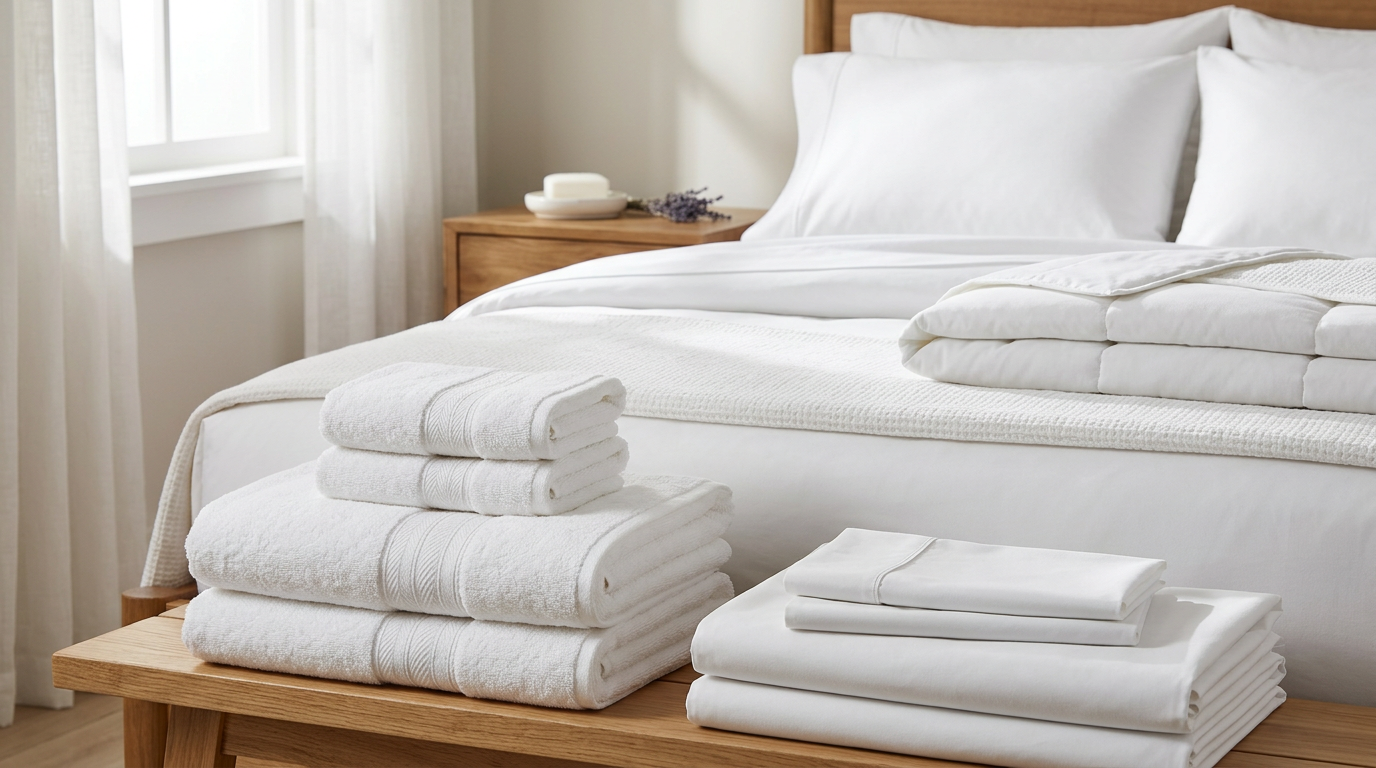
For vacation rental owners along the Grand Strand, maintaining a pristine linen inventory is a constant battle against coastal elements, sand, and heavy guest turnovers. However, some of the most destructive forces in a rental bathroom do not come from the beach, but from the guests' vanity bags. Active cosmetic ingredients, particularly benzoyl peroxide and anti-aging retinoids, cause irreversible chemical bleaching and graying on standard retail towels and sheets. Understanding the chemistry behind this damage and implementing industrial mitigation protocols is essential for protecting your linen investment and keeping your property guest-ready.
The Chemistry of Cosmetic Bleaching in Coastal Rentals
Benzoyl peroxide is the primary culprit behind mysterious orange, pink, or white spots on colored bath towels and sheets in Grand Strand rentals. This active ingredient, found in millions of over-the-counter acne treatments and facial washes, acts as a powerful, slow-release bleaching agent that activates when wet. When guests dry their faces or bodies after applying these creams, the chemical transfers directly to the fabric fibers, setting off a quiet chemical reaction that ruins standard retail linens.
Unlike organic dirt or body oils, benzoyl peroxide does not just stain the cotton—it permanently strips the dye from the fabric. The damage is often completely invisible when the towel is damp, meaning turnover cleaners might easily miss it during a quick inspect-and-fold. The chemical reaction manifests dramatically during the commercial wash and dry cycle, where the combination of hot water, alkaline detergents, and high dryer heat accelerates the oxidation, leaving bright orange or bleached-white patches.
Salicylic acid and retinol-based anti-aging serums present a different operational challenge, often causing localized graying, yellowing, and rapid fiber degradation. The high humidity of the Myrtle Beach climate keeps these oily residues damp on the fabric longer, allowing them to attract airborne dust, sand-grit, and lint. Once dried in a commercial dryer, these chemical residues bake into the cotton fibers, creating permanent gray or yellow shadows that cannot be removed by standard wash formulas.
The Indanthrene and Vat-Dye Standard for Colored Terry
To combat chemical bleaching, vacation rental owners in North Myrtle Beach and Surfside Beach must look beyond standard retail towels. Retail linens are typically piece-dyed, meaning the finished cotton towel is dipped in dye. This superficial coloring is highly susceptible to chemical stripping and will bleach out the first time it encounters an active skincare ingredient.
Instead, professional properties require vat-dyed or indanthrene-dyed colored terry products. Vat-dyeing involves infusing the cotton yarn with dye in a reduced chemical state before it is woven into towels. This advanced process creates an incredibly strong molecular bond that resists bleaching from chlorine, benzoyl peroxide, and heavy commercial wash cycles.
While vat-dyed pool and bath towels carry a higher initial acquisition cost, their operational lifespan in a high-turnover Grand Strand rental is up to three times longer. They resist the patchy bleaching that forces hosts to discard standard towels after only two or three guest stays. Investing in commercial-grade, bleach-resistant colored terry immediately stabilizes linen replacement costs and keeps your bathrooms looking professional.
- Piece-dyed towels: High risk of instant orange spot bleaching from acne creams.
- Vat-dyed towels: Chemically bonded dyes that resist bleaching agents.
- Indanthrene dyes: Engineered to withstand extreme industrial washing conditions without losing color.
- Fading resistance: Maintains rich coastal tones despite constant exposure to sun, salt, and cosmetics.
Decoupling Makeup Removers from Main Bath Linens
One of the most effective structural interventions is providing dedicated makeup removal cloths to guests. When guests are faced with pristine white bath towels, they will inevitably use them to wipe off waterproof mascara, heavy liquid foundations, and chemical skincare. Providing a clear, dark-colored alternative removes the temptation to use high-value white bath linens.
These dedicated cloths should be dark grey, navy, or black, and explicitly embroidered with the word "Makeup" or "Makeup Remover." Using indanthrene-dyed black cotton ensures that the residue from acne creams or acidic toners used during the makeup removal process will not leave unsightly orange blotches on these dark cloths.
Placement is key to guest compliance and behavioral shift. Rather than folding these cloths in the standard towel stack where they can be overlooked, display them on the bathroom vanity next to the sink in a small basket or tray. Pairing them with complimentary individual makeup remover wipes further protects your primary linen investment, steering guests away from using your premium plush bath sheets.
The Low-pH Wash Formula for Cosmetic Residue Neutralization
Standard domestic washing machines and retail laundry detergents are poorly equipped to handle the heavy chemical residues left by modern skincare products. At A2Z Cleaning & Linen Services, we process Grand Strand hospitality linens using multi-stage commercial wash formulas designed to neutralize active cosmetic compounds before they can damage the fabric fibers.
The neutralization process begins with a precise flush cycle to remove loose surface residues, followed by an alkaline wash that breaks down the lipids and synthetic oils in cosmetic creams. We then introduce a mild acid wash, or "sour" cycle, to bring the pH of the linens back to a neutral 6.0 to 6.5, which prevents skin irritation and stabilizes the fabric chemistry.
High-heat drying must be strictly avoided until all chemical residues are thoroughly extracted from the wash. Drying a towel that still contains active benzoyl peroxide or sunscreen residues will permanently set the stain or complete the bleaching reaction. Our industrial dryers operate with precise temperature controls and cool-down phases to protect tensile strength and prevent heat-setting of chemical residues.
- Alkaline wash cycle: Safely emulsifies synthetic oils and cosmetic binders.
- Sour/Acid cycle: Lowers pH to neutralize active ingredients and prevent yellowing.
- No high-heat drying on active stains: Prevents permanent chemical setting of cosmetic residues.
- Surfactant flushes: Safely extracts silicone-heavy foundations and waterproof mascara.
Inventory Par Strategy for High-Risk Cosmetic Damage
Managing a successful rental portfolio along the Grand Strand requires an inventory buffer that accounts for inevitable chemical damage. A strict 3-par system—one par in the guest room, one par clean in the owner's closet, and one par in the wash—is the absolute minimum required to prevent operational bottlenecks when linens must be pulled for treatment.
For properties that feature colored accents, such as deep blue pool towels or grey hand towels, we recommend maintaining a 4-par inventory. This extra cushion allows your cleaning and linen service provider the necessary time to run specialized salvage wash cycles on stained items without delaying the afternoon check-in window.
This inventory strategy protects your property managers from making hasty, sub-optimal decisions. When pars are too thin, cleaners are forced to put slightly stained or chemically bleached towels back on the racks just to complete the turn. A robust par system ensures only flawless, professionally processed linens reach your incoming guests, preserving your high review scores.
The Guest Communication Blueprint for Skincare Awareness
Protecting your linens does not require sending aggressive or demanding messages to your guests. Instead, simple, friendly, and visual communication inside the bathroom can dramatically reduce linen damage. A small, professionally printed sign placed on the vanity can gently educate guests on how to protect the property's premium amenities.
The messaging should be framed around guest comfort and convenience rather than rules and penalties. For example, a note reading, "Please enjoy our premium bath linens. For makeup removal and skincare products, we have provided dedicated dark cloths on the vanity to ensure your products do not discolor our plush white towels," works incredibly well.
This approach frames the dedicated makeup cloths as an extra amenity rather than a restriction. When guests feel that the host has thought of their specific needs—such as providing high-quality, skincare-friendly cloths—they are much more likely to respect the property and use the designated linens correctly, reducing replacement costs.
- Positive framing: Emphasize guest comfort and the luxury of dedicated amenities.
- Clear placement: Place signs and dark cloths directly on the vanity, not hidden in cabinets.
- Provide alternatives: Always supply makeup wipes alongside the dedicated cloths.
- No threatening language: Avoid warnings about deposit forfeits, which can hurt guest reviews.
Salvage vs. Loss Assessment Protocols
Not all chemically altered linens are lost causes, but identifying which items can be saved requires a standardized inspection protocol. During the sorting process at our commercial facility, linens are inspected under high-output lighting to identify localized bleaching, graying, or synthetic oil buildup that requires specialized treatment.
If a white towel exhibits yellowing from salicylic acid or graying from clay masks, it enters our recovery loop for targeted oxygen-based bleaching and surfactant baths. However, if a colored towel shows fiber thinning or bright orange patches from benzoyl peroxide, the dye has been permanently stripped, and the towel must be retired from service.
Retired linens should be systematically downcycled or discarded to protect your brand image. At A2Z Cleaning & Linen Services, we help Grand Strand owners track their linen loss rates, providing clear data on when to retire faded inventory and when to transition to more resilient, commercial-grade fabrics that withstand the demands of coastal tourism.
Key takeaway
Active cosmetics like benzoyl peroxide will ruin standard linens, but implementing vat-dyed terry, dedicated makeup cloths, and professional low-pH wash formulas preserves your inventory. Partnering with a commercial specialist like A2Z Cleaning & Linen Services at 843.800.2788 ensures your rental linens stay bright, soft, and completely free of chemical damage.
Related services
Keep Reading
Linens & Laundry
The Sunscreen Avobenzone and Chlorine Stain Extraction Protocol: Mitigating Iron-Reaction Pink Spots and Bleach-Lock Damage in Grand Strand Rental Towels
ReadLinens & Laundry
The 3-Par Linen Formula: Calculating Inventory Lifespans and Industrial Wash Formulas for Grand Strand Vacation Rentals
ReadLinens & Laundry
The Commercial Laundry Ozone Injection Standard: Implementing National ALM Wash-Cycle Paradigms, Thermal-Reduction Metrics, and Pathogen-Elimination Protocols in Grand Strand Hospitality Plants
ReadReady for a spotless property?
Call 843.800.2788 or request a free quote from A2Z Cleaning & Linen Services.