Linens & Laundry
The Sunscreen Avobenzone and Chlorine Stain Extraction Protocol: Mitigating Iron-Reaction Pink Spots and Bleach-Lock Damage in Grand Strand Rental Towels
Learn how to eliminate stubborn pink sunscreen stains and chlorine yellowing in rental towels using advanced commercial laundry chemistry tailored for Myrtle Beach water conditions.
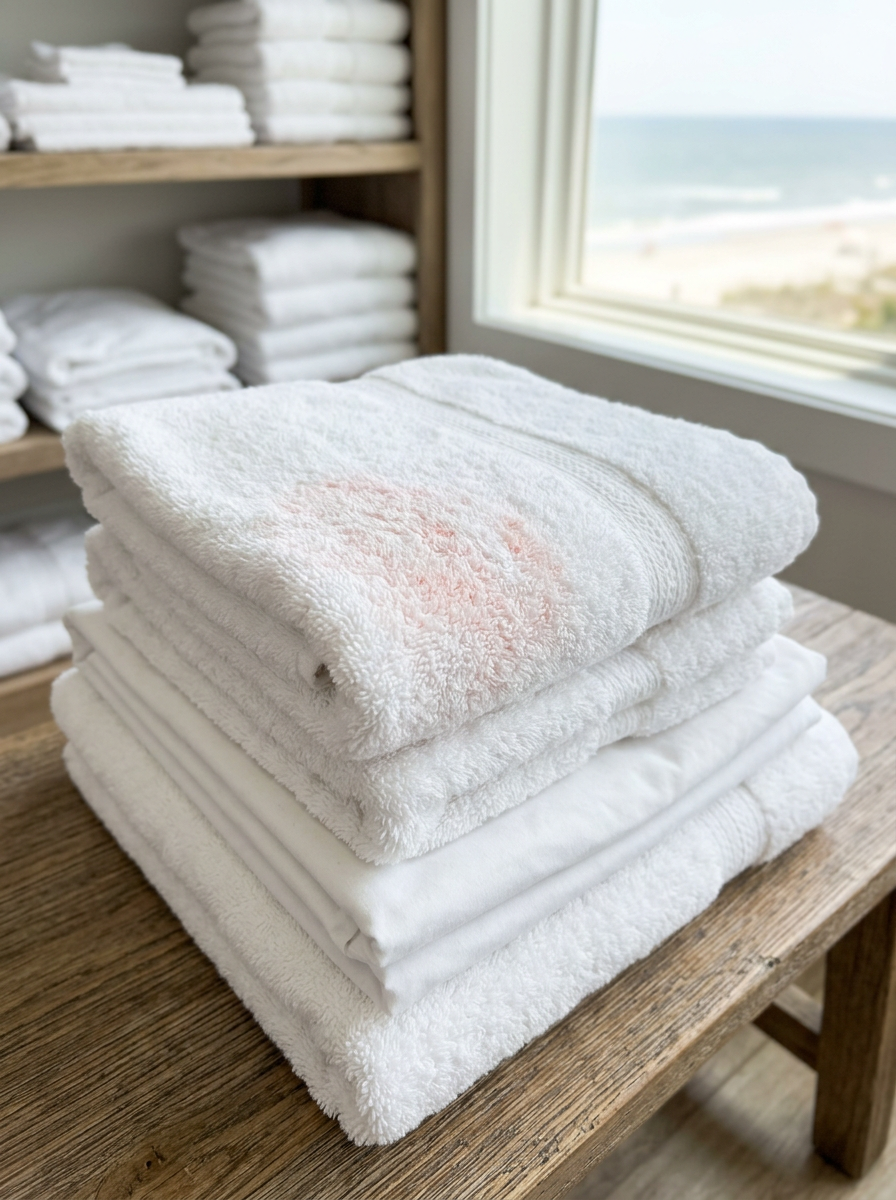
Every summer, thousands of vacationers flock to the Grand Strand, packing heavy-duty sunscreens to protect themselves against the intense South Carolina sun. While essential for skin health, these modern sunscreens present a silent, chemical threat to high-end resort and rental towels. When active ingredients like avobenzone come into contact with local coastal water during the wash cycle, they trigger a complex chemical reaction that ruins white linens. Understanding the unique chemistry of these stains, and avoiding common laundering mistakes, is the key to preserving your inventory and protecting your bottom line.
The Chemical Catalyst: Why Sunscreen and Grand Strand Municipal Water Create Pink Rust Stains
The primary culprit behind the mysterious pink and orange stains on vacation rental towels is avobenzone, a common oil-soluble ingredient found in broad-spectrum sunscreens. When guests dry off, trace amounts of sunscreen rub off onto the cotton fibers. While invisible at first, the real trouble begins when these soiled towels are placed into a commercial or residential washing machine.
Myrtle Beach and the surrounding Grand Strand municipal water systems contain trace levels of dissolved minerals, particularly iron. When the avobenzone on the fabric binds with the iron dissolved in the wash water, a chemical reaction known as chelation occurs. This reaction essentially creates an organic iron-complex pigment, which is chemically identical to rust, turning the white cotton fibers a stubborn, bright pink or rusty orange.
Unlike organic soil or grease, this mineral-organic bond cannot be broken by ordinary household detergents or simple mechanical agitation. The stain is not merely sitting on top of the fabric; it has chemically bonded to the cellular structure of the cotton. Treating this as a standard cosmetic stain will fail to release the pigment, leading to prematurely discarded linens and escalating replacement costs.
The Chlorine Bleach Trap: How Standard Disinfection Solidifies Sunscreen Discoloration
When confronted with pink or yellowed towels, many property managers and housekeepers instinctively reach for sodium hypochlorite, commonly known as chlorine bleach. In standard residential cleaning, bleach is the go-to agent for whitening and sanitizing. However, when applied to avobenzone-iron complex stains, chlorine bleach acts as a powerful oxidizing catalyst that permanently locks the stain into the fabric.
The chemical reaction between chlorine bleach and the iron-avobenzone complex oxidizes the iron molecules, deepening the pink color to an aggressive, rust-like orange-brown. This reaction bonds the pigment even more tightly to the cotton fibers, essentially dyeing the towel. Once an avobenzone stain has been bleached and then subjected to the high heat of a commercial dryer, the chemical bond is virtually impossible to break.
To preserve linen assets, laundry operations must establish strict policies that forbid the use of standard chlorine bleach on any towels suspected of carrying sunscreen residue. Instead, laundry technicians must look to oxygen-based bleaches or specialized acidic souring agents that can break the metallic bond without causing oxidation. Educating your turn crews on this distinction is the first line of defense against permanent linen damage.
The Chelating Wash Protocol: Breaking the Iron-Avobenzone Chemical Bond
To successfully lift an avobenzone-iron stain, the laundry process must utilize chemistry that reverses the chelation process. This requires the introduction of specialized rust removers or laundry sours containing oxalic acid, citric acid, or sodium hydrosulfite. These acidic agents work by stripping the iron ions away from the avobenzone molecule, dissolving the rust pigment and allowing it to be suspended in the wash water.
The treatment cycle should begin with a thorough flush to remove loose sand and surface oils, followed by a wash cycle using a non-ionic surfactant. Unlike anionic detergents, non-ionic surfactants are highly effective at emulsifying the oily lipid carriers used in sunscreen formulas. Once the oils are broken down, the acidic chelating agent is introduced during the wash or rinse cycle to target the locked-in iron particles.
The pH of the wash bath during the souring phase must be carefully monitored, ideally targeting a range of 5.5 to 6.0. This slightly acidic environment neutralizes residual alkalinity from prior detergent cycles and allows the chelating agents to perform optimally. Once the iron bonds are broken, the dissolved minerals must be thoroughly rinsed out before any finishing chemicals or heat are applied to the load.
- Avoid anionic detergents which can interfere with the emulsification of sunscreen oils.
- Utilize oxalic acid or sodium hydrosulfite-based sours to target the iron-avobenzone bond.
- Maintain a wash bath pH of 5.5 to 6.0 during the specialized souring phase.
- Ensure multiple deep rinses to flush out dissolved minerals before drying.
- Never run stained items through a high-heat dryer cycle before verifying stain release.
Pool Towel Chlorine Neutralization: Preventing Fiber Degradation and Chemical Yellowing
Grand Strand vacation rentals often feature vibrant, colored pool towels that are exposed to high concentrations of chlorine from resort and private swimming pools. Over the course of a busy summer season, residual chlorine builds up within the cotton fibers. When these towels are washed and dried without neutralizing the chlorine, the heat of the dryer causes the chemical to degrade the cellulose fibers.
This chemical degradation manifests as progressive fiber thinning, fraying along the hems, and a distinct dingy yellowing of white stripes or borders. To prevent this premature wear, commercial laundry systems must incorporate an "anti-chlor" step in the wash cycle. This step utilizes sodium thiosulfate or sodium bisulfite to chemically neutralize the active chlorine molecules remaining in the fabric.
Neutralizing the chlorine not only prevents yellowing and fabric degradation but also eliminates the chemical odors that guests find off-putting. Protecting the physical integrity of your pool towels ensures they remain soft and absorbent, extending their useful lifespan by up to fifty percent. This specialized treatment is a cornerstone of hotel-grade laundering that standard residential machines simply cannot replicate.
Temperature and Wash Cycle Parameters for Sunscreen-Heavy Loads
Managing water temperature is critical when laundering linens heavily soiled with coastal sunscreens and body oils. If the wash water is too cold, the oily carrier ingredients in the sunscreen will remain solid, trapping the avobenzone and sand within the weave of the towel. Conversely, if the initial water temperature is too hot, it can denature and bake in any organic proteins from sweat or bodily fluids.
The optimal protocol starts with a lukewarm pre-wash flush at approximately 90°F to 100°F to loosen surface sand, salt, and organic soils. This is followed by a high-temperature main wash cycle reaching 140°F to 150°F. This thermal level is necessary to melt the complex synthetic waxes and oils used in water-resistant sunscreens, allowing the surfactants to fully emulsify and lift them from the fibers.
Additionally, the wash cycle must feature high-extraction spin steps between rinses. High-extraction spins physically force the water, suspended oils, and chemical residues out of the tight terry-cloth loops. Without adequate extraction, the emulsified sunscreen oils will simply settle back onto the towels during the rinse cycle, leading to progressive graying and the return of the avobenzone-iron reaction in subsequent washes.
Par-Level Protection: Factoring Stain-Salvage Cycle Times Into Rental Inventory Management
Implementing a specialized stain-salvage protocol requires time, labor, and dedicated wash cycles. In the high-volume, fast-paced environment of Myrtle Beach summer turnovers, attempting to run salvage washes on same-day check-outs will inevitably cause operational bottlenecks. To manage this challenge successfully, property managers must maintain appropriate linen par levels.
A par level refers to one complete set of linens required to outfit a rental property. While a 3-par inventory (one set on the beds/in baths, one set in the closet, and one set in the laundry) is standard, properties dealing with high summer occupancy and heavy sunscreen use benefit greatly from a 4-par inventory. This extra cushion ensures that stained towels can be pulled from rotation for specialized treatment without delaying the turnover crew.
Holding back stained items for a dedicated, low-speed salvage run allows laundry technicians to apply the precise chemical contact times required for chelating sours to work. It also prevents the temptation to rush the process or use destructive chlorine bleach just to meet a tight check-in deadline. Proper par-level management is ultimately an investment that reduces long-term linen acquisition costs.
- A 3-par linen inventory is the bare minimum for professional vacation rental management.
- A 4-par inventory provides the operational cushion needed for advanced stain salvage.
- Isolating stained linens prevents bottlenecking the immediate property turnover.
- Dedicated salvage runs allow for the extended dwell times needed for acidic sours to work.
- Adequate par levels reduce the pressure to use destructive chlorine bleach.
Sorting and Pre-Treatment Workflow for Grand Strand Turnover Crews
The success of any technical laundry protocol depends heavily on the initial sorting and handling steps performed by field staff. When housekeeping crews strip a property during a turn, they must inspect the towels for visible pink, orange, or yellow discoloration. Stained items should never be baled tightly with clean or damp linens, as this can transfer oils and set stains through pressure.
Field crews should be equipped with dedicated, color-coded bags specifically for stained or damaged linens. Separating these items at the property ensures they bypass the standard wash line at the laundry facility and are routed directly to the salvage station. This prevents the stained towels from accidentally undergoing a standard chlorine bleach wash, which would permanently lock in the avobenzone discoloration.
At the laundry facility, technicians should group these isolated linens by stain type and fabric color. White towels requiring iron-chelation therapy are kept separate from colored pool towels requiring anti-chlor treatment. By establishing this clear, disciplined workflow from the guest bedroom to the commercial wash deck, property managers can drastically reduce linen loss and maintain a consistently high standard of guest presentation.
Key takeaway
Combating sunscreen and chlorine stains requires moving past basic household washing techniques and embracing precise, hotel-grade chemistry. By replacing harsh chlorine bleach with targeted chelating agents and maintaining healthy inventory par levels, you can salvage costly linens and keep your rentals looking pristine. For expert commercial laundry support and linen management along the Grand Strand, contact A2Z Cleaning & Linen Services at 843.800.2788.
Keep Reading
Linens & Laundry
The Benzoyl Peroxide and Active Cosmetic Damage Mitigation Protocol: Protecting Grand Strand Rental Linens from Chemical Bleaching and Graying
ReadLinens & Laundry
The DHA and Bronzer Extraction Protocol: Salvaging Self-Tanner Stained Linens in Grand Strand Vacation Rentals
ReadLinens & Laundry
The Sunscreen Stain Solution: Protecting Myrtle Beach Rental Linens from Orange Rust Spots
ReadReady for a spotless property?
Call 843.800.2788 or request a free quote from A2Z Cleaning & Linen Services.