Home Cleaning
The Cost of Clean Grout: DIY Pitfalls, Professional Extraction, and Product Safety for Grand Strand Tile Floors
Learn the real costs, chemical safety risks, and operational differences between DIY grout cleaning and professional restorative extraction for Grand Strand tile floors.
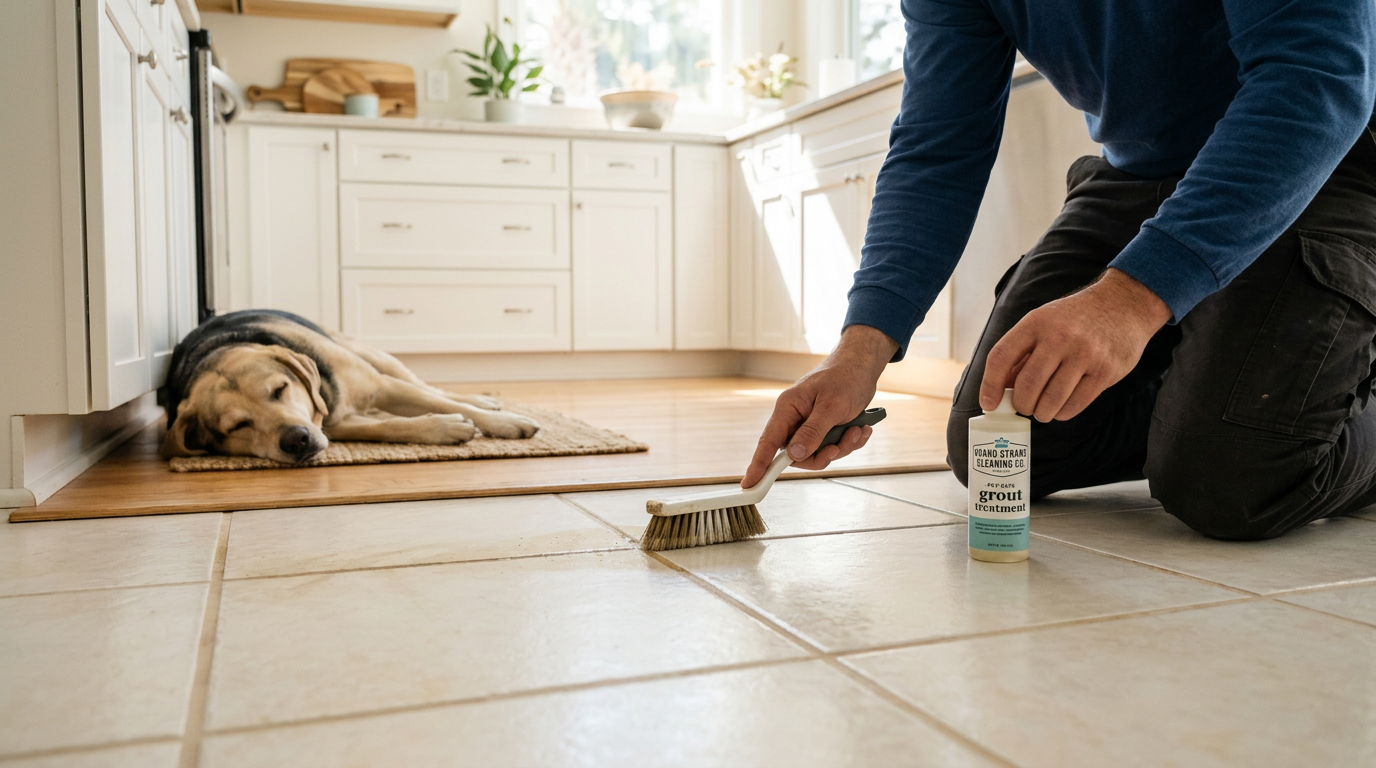
Tile flooring is a staple of Grand Strand homes, valued for its ability to handle tracked-in beach sand, coastal moisture, and heavy foot traffic. However, the porous nature of cement-based grout means that over time, these lines inevitably darken and harbor deep-seated residues. While many homeowners attempt aggressive DIY remedies, understanding the balance between chemical safety, physical effort, and professional extraction is key to protecting your flooring investment. If your floors are losing their original brightness, knowing the chemistry of grout care can help you make an informed decision for your home.
The Anatomy of Coastal Grout Degradation
Grand Strand homes feature extensive tile flooring to combat the constant influx of coastal sand, but the grout between these tiles is highly vulnerable. Grout is a mixture of cement, water, and sand, making it highly porous and susceptible to absorbing moisture from our high humidity. Over time, microscopic channels within the grout capture dirt, spills, and salty coastal air, which slowly yellows or darkens the lines.
Sand tracked in from Myrtle Beach shorelines acts as a powerful abrasive underfoot. As people walk across the tile, sand grains grind against the surface, scraping away the protective sealant applied during installation. Once this sealer is compromised, raw grout is directly exposed to moisture and dirt, turning every footstep into an opportunity for deep-seated staining.
Traditional mopping often exacerbates this issue rather than solving it. When a homeowner mops a tile floor, the mop head acts like a squeegee, pulling dirt off the flat ceramic surface and depositing the suspended soil directly into the lower-lying grout channels. As the dirty water evaporates, the concentrated dirt and soap residues remain trapped deep within the grout's pores.
The Chemistry of DIY Grout Cleaners: Risks and Pitfalls
Many homeowners turn to aggressive DIY cleaning agents like vinegar, lemon juice, or heavy retail acid washes to brighten their floors. While these acidic mixtures initially remove stains by eating away a microscopic layer of the grout, they cause permanent structural damage. Continuous acid exposure degrades the Portland cement binder in the grout, making it chalky, brittle, and prone to crumbling out of the joints over time.
Another common mistake is the over-application of household chlorine bleach. Bleach is an excellent disinfectant, but it does not remove physical soil or grease; instead, it simply oxidizes organic stains, leaving the dirt behind. Furthermore, repeated use of concentrated bleach weakens the grout structure and can strip the color dyes from tinted grout, resulting in an uneven, splotchy appearance across your living space.
Combining household chemicals presents severe safety hazards, especially in poorly ventilated coastal bathrooms and laundry rooms. Mixing bleach with acidic cleaners or ammonia releases toxic chlorine or chloramine gas, which can cause immediate respiratory distress. For safe DIY spot cleaning, homeowners should stick to pH-neutral tile cleaners or mild alkaline solutions, applying them with a soft-bristled brush rather than stiff wire brushes that gouge the grout.
The True Cost Breakdown: DIY vs. Professional Services
Evaluating the financial difference between DIY and professional grout restoration requires looking beyond the raw cost of materials. A homeowner attempting a DIY deep clean must purchase specialized alkaline cleaners, neutralizers, high-quality grout sealers, detail brushes, and possibly rent a walk-behind floor scrubber. This initial investment in supplies easily ranges from $150 to $300, not including the physical toll of spending hours scrubbing on hands and knees.
Professional tile and grout cleaning on the Grand Strand typically ranges from $0.75 to $2.00 per square foot, depending on the size of the area, tile size, and the level of soil build-up. Smaller tiles, like mosaic or subway tile, require more labor due to the high density of grout lines. While the upfront cost is higher than DIY, professional treatment achieves a level of deep cleaning that retail products simply cannot match.
The hidden cost of DIY efforts lies in the risk of permanent damage. Using the wrong chemicals can etch natural stone tiles like travertine or marble, requiring thousands of dollars in professional stone restoration or tile replacement. Additionally, poor DIY sealing can trap moisture under the sealant, causing a hazy, milky appearance that is incredibly difficult and expensive to strip and correct later on.
- Commercial-grade neutral pH and alkaline tile cleaners ($30 - $60)
- Heavy-duty grout scrub brushes with extension poles ($20 - $40)
- Professional-grade penetrating sealer or color sealer ($45 - $90)
- Rental of a walk-behind floor scrubber or motorized brush ($60 - $120 per day)
- Safety equipment including heavy-duty knee pads, safety glasses, and chemical-resistant gloves ($30 - $50)
What Is Restorative Extraction? The Professional Method
Restorative extraction is the industry-standard professional method for reclaiming soiled tile and grout. Unlike traditional mopping or scrubbing, this process utilizes specialized truck-mounted or high-powered portable machines. The equipment combines pressurized hot water—typically heated to between 180 and 220 degrees Fahrenheit—with continuous high-vacuum suction, ensuring that water is extracted the exact instant it makes contact with the floor.
The process begins with the application of a specialized alkaline pre-treatment formulated to break down grease, body oils, and accumulated dirt. Technicians then use a mechanical counter-rotating brush machine to agitate the solution deep into the grout pores. Once the soil is emulsified, the high-pressure extraction tool washes the surface and vacuums the dirty slurry directly into a waste tank in the service vehicle.
This method offers distinct physical advantages over DIY scrubbing. The extreme heat of the water naturally sanitizes the floor and melts away greasy residues without requiring harsh, volatile chemicals. Because the water is instantly extracted, there is no risk of moisture pooling in the subfloor or baseboards, which is a major concern in our humid coastal environment where mold thrives.
The Role of Grout Sealing (Clear vs. Color Sealers)
Once grout is thoroughly cleaned and dried, it must be sealed to protect its porous structure from future staining. Clear penetrating sealers absorb directly into the grout, filling the microscopic voids without changing the appearance or texture of the tile. This barrier repels water- and oil-based liquids, giving homeowners a window of time to wipe up spills before they penetrate and cause permanent stains.
For grout lines that suffer from permanent, uneven staining or shade variations, a color sealer is an excellent alternative. Color sealing involves applying a durable, epoxy-based coating directly over the clean grout lines. This process not only restores a uniform, brand-new color to the floor but also creates an entirely non-porous surface that is exceptionally easy to clean and highly resistant to moisture.
Homeowners must understand that sealing is not a permanent shield. High-traffic areas and harsh cleaning chemicals will eventually wear down the sealer, requiring reapplication every one to three years. Testing your sealer is simple: drop a few drops of water onto a clean grout line; if the water beads up, the sealer is active, but if it sinks in and darkens the grout, it is time to reapply.
Critical Questions to Ask a Grand Strand Tile Cleaning Company
Vetting a local Grand Strand cleaning company is essential to ensure they have the proper training and equipment to handle your specific flooring material. Homeowners should first ask what type of extraction equipment the company uses and whether their technicians are certified in hard surface cleaning. Avoid companies that use standard carpet cleaning wands on tile, as these do not have the containment skirts needed to prevent dirty water overspray.
Next, ask about their chemical neutralizing process. If a company applies a strong alkaline pre-treatment to break up soil but fails to rinse the floor with a neutralizing agent, a sticky, high-pH residue will remain on the tile. This residue acts like a magnet for dirt, causing the floor to re-soil incredibly fast after they leave, defeating the purpose of a professional service.
Finally, inquire about their insurance coverage and experience with natural stone. Many modern coastal homes feature travertine, slate, or marble floors alongside ceramic tiles. These natural stones are highly acid-sensitive; applying a standard tile cleaner to marble will instantly etch and dull the polished finish. A reputable company will walk you through their product safety data sheets and explain their customized approach for your specific floor type.
- Do you use truck-mounted hot water extraction or portable low-pressure systems?
- Are your technicians certified in hard surface restoration and tile identification?
- What chemical neutralizers do you use after applying alkaline cleaning solutions?
- Do you offer clear penetrating sealers or epoxy color sealers, and what are their warranties?
- How do you protect baseboards, stainless steel appliances, and adjacent hardwood floors during the cleaning process?
Environmental and Pet Safety in Hard-Surface Cleaning
Product safety is a paramount concern for coastal families, particularly those with crawling toddlers or ground-level pets who spend their time directly on the floor. Many retail grout cleaners contain volatile organic compounds (VOCs) and synthetic fragrances that linger in indoor air long after the cleaning is finished. These chemicals can irritate sensitive airways and paws, causing unnecessary discomfort.
Professional extraction minimizes these chemical risks by utilizing highly controlled application methods and thoroughly rinsing the surface. Because the extraction process vacuums away nearly one hundred percent of the applied cleaning agents along with the dirt, there is virtually no chemical residue left behind on the tile or grout. This leaves the home immediately safe for pets and children once dry.
Additionally, selecting a service provider that uses eco-friendly, biodegradable cleaning agents protects our delicate coastal ecosystem. Myrtle Beach's local waterways, estuaries, and marine life can be impacted by harsh chemical runoff from residential properties. Choosing low-toxicity, professionally applied agents ensures your home is beautifully maintained and thoroughly sanitized without contributing to environmental degradation through improper chemical disposal.
Long-Term Maintenance: Keeping Your Floors Clean Between Deep Cleans
Maintaining your tile floors between professional deep cleanings does not require harsh chemicals; in fact, simplicity is key to extending the life of your grout sealer. The most crucial step in a coastal home is daily dry-mopping or vacuuming with a hard-floor setting to remove abrasive sand grains before they can grind down the sealer. Left unattended, sand will wear away your protection in a matter of months.
When wet cleaning is necessary, use a flat microfiber mop pad instead of a traditional string mop, which merely pushes dirty water into the grout lines. Dampen the microfiber pad with a neutral-pH tile cleaner diluted according to the manufacturer's instructions. Neutral cleaners do not leave a sticky surfactant film behind, keeping your floors clean longer and preserving the chemical integrity of the grout sealer.
Address spills immediately by blotting them with a clean microfiber cloth rather than wiping, which can spread the liquid across a larger area of grout. If a localized stain begins to develop, scrub gently with a soft-bristled brush using a mixture of baking soda and water. This mild, non-acidic abrasive paste will lift the stain without damaging the surrounding grout structure or stripping your protective sealer.
Key takeaway
Maintaining the integrity and appearance of your home's tile floors requires understanding the delicate chemistry of cement-based grout. While routine dry-sweeping and neutral-pH mopping are excellent for daily upkeep, true restorative cleaning is best achieved through specialized high-pressure professional extraction. For expert tile care and safe, deep-extraction cleaning tailored to coastal homes, contact the professionals at A2Z Cleaning & Linen Services at 843.800.2788.
Keep Reading
Home Cleaning
The Coastal Low-Level Window and Glass Viewing Zone Decontamination Protocol: Mitigating Toddler Handprints, Dog-Nose Sebum Slurry, and Humid Pollen-Sand Adhesion in Grand Strand Family Homes
ReadHome Cleaning
The Coastal Pet-Crate and Indoor Dog-Bed Restoration Protocol: Mitigating Humid Yeast Biofilms, Dander Reservoirs, and Urine-Ammonia Interactions in Grand Strand Homes
ReadHome Cleaning
The Luxury Coastal Estate Cleaning Specialist: Advanced Surface Certifications, Behavioral Interview Protocols, and Premium Compensation Architectures for Grand Strand Estates
ReadReady for a spotless property?
Call 843.800.2788 or request a free quote from A2Z Cleaning & Linen Services.