Home Cleaning
The Cost of Restoring Coastal Frameless Glass Shower Enclosures: Mitigating Hard-Water Mineral Crust, Silica Etching, and Metal Hinge Oxidation in Grand Strand Homes
Discover the true costs, safety hazards, and technical steps to restore and maintain etched frameless shower glass in Myrtle Beach homes, plus how to choose between DIY and professional care.
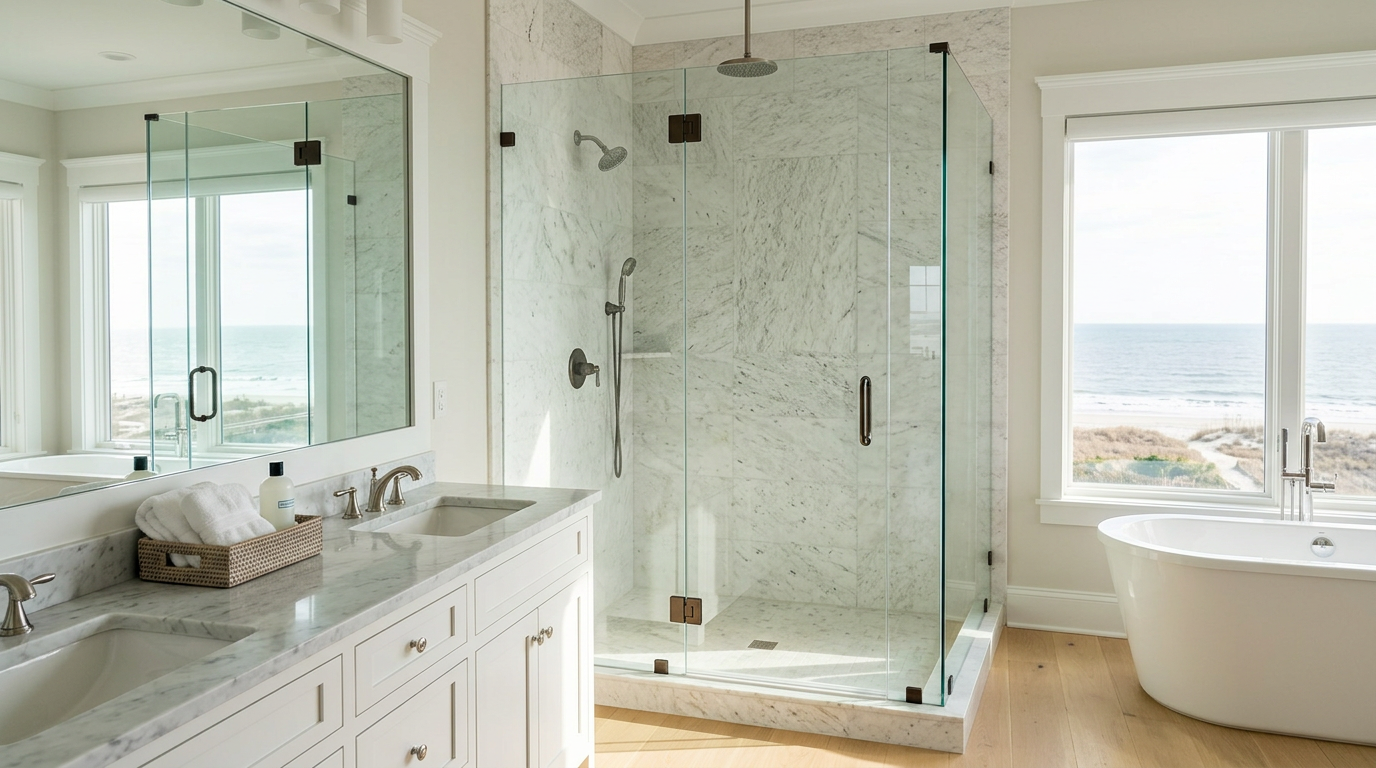
Grand Strand municipal water combined with humid, salt-laden coastal air creates a challenging environment for frameless glass shower enclosures. What begins as a collection of simple water spots can rapidly transition into chemical silica etching, which permanently degrades the structural appearance of the glass. Homeowners must understand the clear distinction between surface mineral deposits and irreversible structural damage to protect their home assets. This article outlines the real costs of glass restoration, safety profiles of cleaning agents, practical DIY limits, and key technical questions to ask a professional cleaning service in Myrtle Beach.
The Chemistry of Coastal Glass Damage: Hard-Water Scale vs. Permanent Silica Etching
Grand Strand municipal water, while safe to drink, carries a high concentration of dissolved minerals like calcium and magnesium. When combined with the salty, humid air characteristic of coastal South Carolina, these minerals react quickly in the bathroom environment. Every shower releases water droplets that cling to the glass. As the moisture evaporates in our humid climate, it leaves behind a concentrated crust of mineral deposits that bond tightly to the glass substrate, initiating a process that is far more complex than simple dirt accumulation.
When these hard-water minerals remain on the glass for extended periods, they do not just sit on top of the surface. Glass is surprisingly porous at a microscopic level, containing tiny pockets where minerals can lodge. Over time, the chemical alkaline compounds in soap scum, body oils, and minerals react with the silica in the glass. This chemical reaction, known as silica etching, physically alters the glass structure, leaving a dull, milky-white haze that cannot be wiped away with standard glass cleaners.
Understanding the difference between surface mineral scale and structural silica etching is critical for Grand Strand homeowners. Surface scale can be dissolved with mild, targeted acids because the minerals are still sitting on top of the glass sheet. Once silica etching occurs, however, the glass itself has been physically damaged and microscopically pitted. Recognizing this progression early is the key to preserving your bathroom assets, as catching the damage during the mineral-scale phase prevents the need for invasive, expensive glass restoration techniques.
The Cost of Neglect: Professional Restoration vs. Replacement Pricing
Neglecting a frameless glass shower enclosure in our coastal environment quickly leads to steep financial consequences. Homeowners who ignore the growing white haze often find themselves facing complete enclosure replacement. In the Myrtle Beach area, purchasing and professionally installing a high-quality, custom frameless glass shower enclosure typically ranges from $1,500 to upwards of $4,000, depending on the glass thickness, panel size, and hardware configuration. This is a significant capital expense that can easily be avoided with timely maintenance.
In contrast, professional chemical and mechanical restoration of heavily oxidized glass is a far more economical alternative. A specialized restoration service for an etched frameless shower generally costs between $250 and $800. This process involves stripping the mineral crust, polishing out the microscopic surface etching with rotary machinery, and applying a new protective sealant. While more expensive than a standard house cleaning visit, restoration rescues the existing glass and extends its useful life by years, keeping high-quality materials out of local landfills.
The most cost-effective path is a proactive, professional maintenance cleaning program coupled with daily homeowner care. Having a qualified local cleaning service routinely deep-clean the glass with safe, mineral-dissolving agents every two to four weeks prevents the chemical bonding that leads to permanent etching. By allocating a modest amount for routine maintenance, Grand Strand property owners protect their luxury bathroom investments and ensure their showers retain the crystal-clear aesthetic that modern coastal home designs demand.
The DIY Approach: Safe Household Methods and Low-Risk Tools
For light, early-stage mineral deposits, homeowners can safely perform maintenance using simple household ingredients and low-risk techniques. Distilled white vinegar, which contains mild acetic acid, is highly effective at breaking down calcium carbonate bonds. To use this method, spray a warm solution of equal parts white vinegar and water onto the glass panels, allowing it to sit for ten to fifteen minutes. This dwell time is crucial, as it gives the mild acid enough time to chemically break down the mineral crust without dry-scrubbing.
When agitating the surface, the choice of cleaning tool is just as important as the cleaning solution itself. Homeowners should exclusively use non-abrasive white nylon scrub pads or dedicated microfiber cloths. These materials are soft enough to avoid scratching the glass while providing enough friction to lift dissolved minerals. You must completely avoid green scouring pads, steel wool, or abrasive kitchen sponges, as these contain materials like silicon carbide or metals that are harder than glass and will leave permanent swirl marks.
Another safe DIY alternative is a warm citric acid solution, which can be made by mixing two tablespoons of cosmetic-grade citric acid powder into a spray bottle of warm water. Citric acid is an exceptional chelating agent that binds to metal ions and minerals, making them water-soluble and easy to rinse away. Always finish the cleaning process by thoroughly rinsing the glass with clean water and drying the surface completely with a high-quality squeegee or clean microfiber towels to prevent new spots from forming.
- Mix equal parts warm white vinegar and water in a spray bottle for standard maintenance.
- Use only non-abrasive white nylon pads to physically agitate stubborn spots without scratching.
- Allow a 10-to-15-minute dwell time for acid solutions to dissolve mineral bonds chemically.
- Avoid green kitchen scrub pads, steel wool, and pumice powders at all costs.
- Rinse completely with clean water and squeegee dry to prevent evaporation spots.
The Limits of DIY: When Home Remedies Fail and Machine Buffing is Required
There comes a point where household remedies and standard manual scrubbing are no longer effective. When the mineral scale has converted into a thick, calcified crust, or when the underlying glass has suffered true silica etching, spray-on vinegars will simply slide off without making a visible difference. If you have thoroughly applied mild acids multiple times and the dry glass still exhibits a rough texture and a cloudy, milky haze, the damage has penetrated below the surface and requires professional-grade mechanical restoration.
Professional glass technicians resolve deep etching through mechanical polishing using specialized variable-speed rotary machines and dense felt pads. They utilize high-purity cerium oxide polishing compounds, which act as a micro-abrasive to gently shave down the damaged outer micro-layer of the glass, restoring a perfectly flat, optically clear surface. This process requires precise pressure control, consistent moisture application, and specialized machinery to avoid creating optical distortion, uneven glass thickness, or generating excessive friction heat that could shatter the tempered safety glass.
Attempting to replicate this mechanical polishing process as a DIY project is highly discouraged for homeowners. Standard drills equipped with consumer polishing kits lack the precise torque controls and speed stability required for flat-glass restoration, often resulting in deep swirls, gouges, or catastrophic glass failure. Furthermore, tempered shower glass is under internal tension; improper heat distribution from localized friction can trigger spontaneous shattering, presenting a severe safety hazard and resulting in an immediate, costly emergency replacement situation.
Product Safety and Environmental Hazards in the Bathroom Space
When addressing stubborn hard-water spots, product safety must be a primary consideration for Grand Strand families. Many retail bathroom cleaning products marketed for quick scale removal contain harsh mineral acids, such as hydrochloric, phosphoric, or sulfamic acids. While these chemicals dissolve calcium deposits rapidly, they present severe respiratory and dermal hazards. Using these volatile acids in the tight, enclosed space of a residential bathroom can quickly lead to toxic fume inhalation, throat irritation, and chemical burns on unprotected skin.
Beyond personal safety risks, aggressive acid cleaners pose a significant threat to adjacent bathroom materials. Strong acid overspray can instantly etch and permanently ruin natural stone floor tiles like marble, travertine, or slate, which are highly sensitive to low-pH substances. Additionally, run-off from these chemical cleaners can damage tile grout, breaking down the cementitious binders and causing the grout to crumble, discolor, and lose its water-resistance, ultimately leading to expensive subfloor moisture issues.
A safer, more responsible approach involves using eco-friendly, plant-derived chelating agents and mild organic acids. Lactic, gluconic, and citric acids offer exceptional mineral-dissolving performance without generating hazardous fumes or posing severe environmental risks. These biodegradable formulations are safer for family members, pets, and the home's indoor air quality. When professional-grade, low-toxicity products are applied with proper dwell times and techniques, they achieve pristine, spotless results without compromising home health or damaging adjacent luxury building materials.
The Vulnerability of Frameless Hardware: Salt-Air Corrosion and Hinge Preservation
While glass panels are the most visible component of a frameless shower, the structural hardware holding them in place is equally vulnerable to coastal elements. Frameless enclosures rely on heavy-duty metal hinges, clamps, and brackets, usually made of solid brass that is plated with chrome, nickel, or matte black finishes. The humid, salt-laden air of the Grand Strand accelerates galvanic corrosion, a process where metals degrade rapidly when exposed to moisture and airborne salts.
The risk to hardware is compounded by the use of aggressive chemical cleaners on the glass. When strong acid solutions are sprayed onto glass panels, they inevitably run down or drift onto the metal hinges and mounting clamps. These acidic compounds attack the protective clear lacquer or electroplated finish on the hardware. Once this protective barrier is compromised, the underlying metal begins to oxidize, resulting in unsightly green copper carbonate blooms, pitting, rust, and ultimately, stiff, noisy, or seized hinge mechanisms.
To preserve your shower hardware and ensure structural safety, clean these metal components with pH-neutral soap and warm water rather than harsh glass cleaners. After every cleaning session, dry the hinges and clamps completely with a soft microfiber cloth to prevent water from pooling inside the hinge plates or around the mounting screws. If your hardware features moving mechanical joints, applying a tiny drop of silicone-based, non-corrosive lubricant once or twice a year will keep the internal springs working smoothly and resist moisture penetration.
What to Ask a Myrtle Beach Cleaning Company Before Hiring for Glass Restoration
When hiring a professional cleaning or restoration service in the Myrtle Beach area, homeowners must ask specific, targeted questions to ensure their delicate fixtures are handled safely. First, ask the company whether they perform chemical stripping, mechanical polishing, or both. A truly professional technician should inspect your glass first and explain whether your issue is surface scale or subsurface silica etching, as this determines whether mechanical rotary polishing with cerium oxide is required to safely restore the clarity.
Second, ask how the service technicians protect the surrounding finishes during the cleaning and polishing process. Your provider should detail their masking protocol, including how they cover and seal adjacent natural stone, decorative tile grout, and metal hardware to prevent chemical exposure. If they do not have a clear plan to protect marble or travertine flooring from acid runoff, they do not possess the necessary training to safely work in luxury Grand Strand homes.
Finally, verify the company's insurance coverage and service guarantees specifically concerning flat-glass restoration. Glass is highly susceptible to cracking under mechanical pressure, which is why A2Z Cleaning & Linen Services uses certified techniques and carries comprehensive liability insurance. Ensure any company you choose is fully insured for this specific technical service and ask if they offer a warranty or a protective hydrophobic coating application as part of their package to keep your newly polished glass protected.
- Do you use mechanical rotary polishing with cerium oxide or only chemical wash agents?
- What masking protocols do you implement to protect adjacent natural stone and grout?
- Are your technicians specifically trained and insured for flat-glass mineral restoration?
- Does your service package include the application of a hydrophobic protective sealant?
- What specific guarantees do you offer against glass scratching or structural breakage?
Long-Term Prevention: Protective Barriers and Daily Coastal Maintenance
Once your frameless glass shower enclosure has been restored to optical clarity, taking immediate preventative steps will keep it looking pristine for years. The single most effective long-term solution is applying a professional-grade hydrophobic polymer or nano-ceramic coating to the clean glass. These coatings fill the microscopic pores of the glass sheet, creating an ultra-smooth, water-repellent barrier. Instead of clinging to the glass and evaporating, water droplets bead up and slide off, taking minerals, salt, and soap residues with them.
In addition to protective coatings, establishing a daily maintenance habit is vital in our humid Grand Strand climate. Keeping a high-quality, flexible rubber squeegee inside the shower and spending thirty seconds wiping down the glass after every use will eliminate 95% of the standing water that leads to mineral build-up. This simple, daily habit takes virtually no effort but completely halts the calcification process, ensuring your shower stays beautifully clear between professional cleanings.
Lastly, schedule routine maintenance cleanings with a reputable local service provider to stay ahead of the coastal weather cycle. A professional visit every two to four weeks ensures that any minor mineral scale that sneaks past your squeegee is safely dissolved using commercial-grade, eco-safe chelating agents before it can react with the glass and cause permanent silica etching. This small investment in preventive maintenance preserves your bathroom's luxury appeal and protects your home's resale value.
Key takeaway
Restoring frameless shower glass from hard-water and salt-air damage requires a careful balance of chemical science and mechanical expertise. If you are ready to restore your home's frameless glass shower enclosures to crystal clarity, contact the local specialists at A2Z Cleaning & Linen Services today at 843.800.2788 for safe, high-performance maintenance and professional restoration solutions across the Grand Strand.
Keep Reading
Home Cleaning
The Coastal Pet-Crate and Indoor Dog-Bed Restoration Protocol: Mitigating Humid Yeast Biofilms, Dander Reservoirs, and Urine-Ammonia Interactions in Grand Strand Homes
ReadHome Cleaning
The Coastal Modular Foam Play-Couch Decontamination Protocol: Managing Sand-Grit, Pet Dander, and Humidity-Trapped Spills in Grand Strand Homes
ReadHome Cleaning
The Coastal Under-Table and Highchair Spill Zone Decontamination Protocol: Mitigating Humid Organic Crumb Rot, Pet Saliva Biofilms, and Child-Safe Allergen Control
ReadReady for a spotless property?
Call 843.800.2788 or request a free quote from A2Z Cleaning & Linen Services.