Coastal Living
The Cost of Restoring Coastal Leather Furniture: Mitigating Salt-Air Mildew, Sand Abrasion, and Sun-Bleaching in Grand Strand Homes
Learn the real costs, DIY risks, product safety guidelines, and professional vetting strategies for restoring and protecting fine leather furniture in the high-humidity Grand Strand environment.
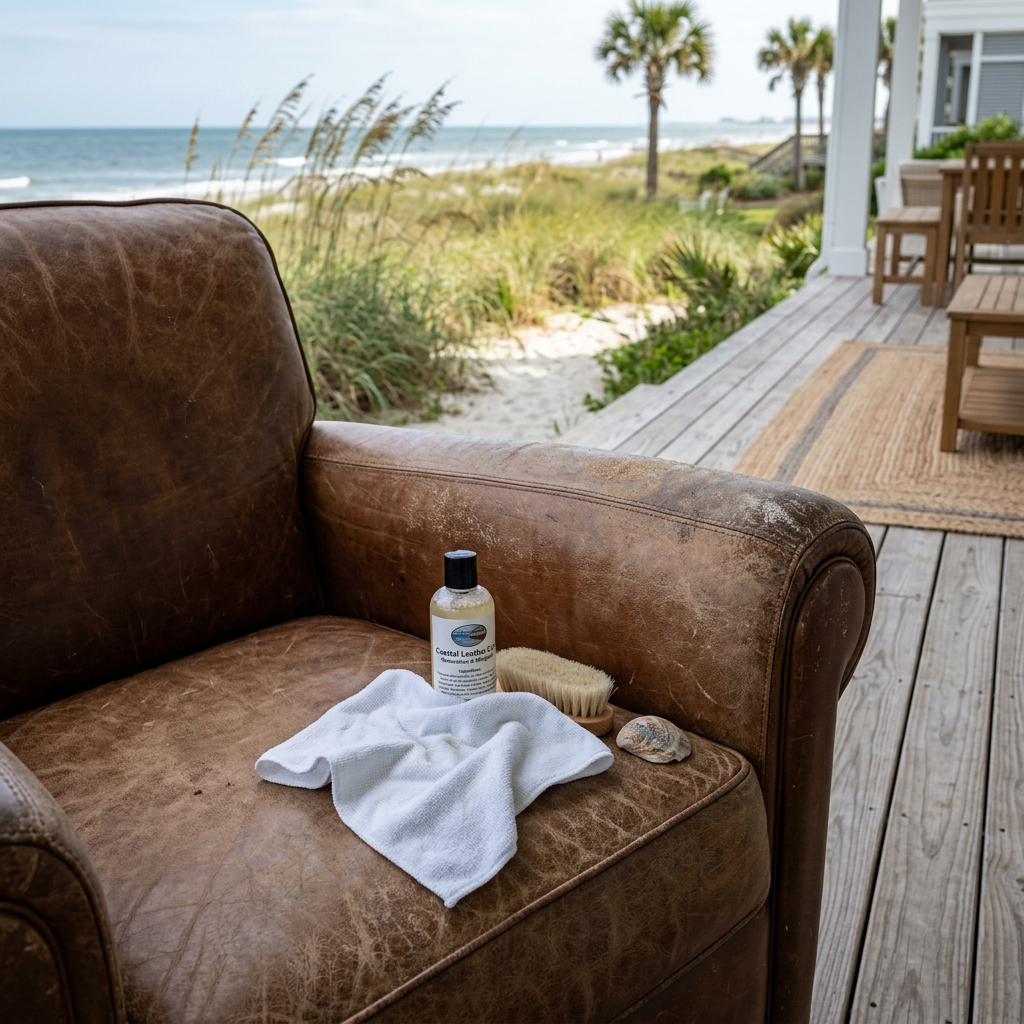
Owning leather furniture along the Grand Strand brings an undeniable sense of coastal luxury, but our unique environment presents steep challenges for these organic hides. The combination of abrasive beach sand, intense salt-air, and soaring relative humidity can quickly turn a premium leather sofa into a dry, cracked, or mold-ridden liability. Understanding how these coastal elements damage leather is the first step toward preserving your valuable home investments. This guide outlines the real costs of restoration, critical product safety parameters, DIY boundaries, and how to hire a qualified specialist in Myrtle Beach.
The Coastal Chemistry of Leather Degradation: Salt, Sand, and Humidity
Coastal Grand Strand homes present a unique and hostile environment for fine leather furniture. Ambient salt-air contains microscopic sodium chloride particles that settle onto furniture surfaces, drawing out the natural moisture and essential oils trapped within the leather's porous collagen fiber network. Over time, this moisture depletion causes the leather fibers to shrink, stiffen, and eventually crack under physical pressure.
Compounding this moisture loss is the region's intense relative humidity, which regularly exceeds sixty percent during the summer months. When leather is stripped of its protective natural oils by salt-air, the open pores absorb airborne moisture, creating a damp, nutrient-rich substrate. This environment is highly conducive to the growth of fungal spores, transforming high-end aniline or semi-aniline leather into a breeding ground for surface mold and deep-seated mildew that ruins backing fabrics and foam cushions.
Finally, fine beach sand carried indoors by ocean breezes or on guest clothing acts as a continuous abrasive agent. As people sit and move on the furniture, these tiny, sharp silica crystals grind against the leather's delicate protective topcoat. This mechanical friction slowly wears away the polyurethane sealant, leaving the raw pigment and underlying hide completely exposed to sweat, body oils, and liquid spills that cause dark, permanent staining.
Identifying the Damage: Spores, Scratches, and Sun-Fading
Recognizing the early indicators of coastal leather degradation is critical for preventing permanent structural failure. One of the most common early signs is a pale, hazy white film that resembles dust but reappears shortly after wiping. This film is often a combination of salt efflorescence—where dissolved minerals migrate to the surface—and early-stage white mold, which thrives on the organic proteins in the leather hide.
Micro-scratches caused by sand abrasion present as a dull, matte texture in high-use areas such as the seat cushions and armrests. When viewed under bright, low-angle light, these areas lose their original sheen and feel rough to the touch rather than smooth and supple. Left unaddressed, these microscopic abrasions turn into deep fissures, allowing body oils and cosmetic creams to penetrate and darken the leather.
Sun-fading and UV damage manifest as uneven color loss, particularly on surfaces facing oceanfront windows or sliding glass doors. Direct ultraviolet radiation breaks down the chemical bonds of the aniline dyes, leading to a dry, brittle feel and a washed-out appearance. Once the dye is bleached, the leather loses its elasticity, making it highly susceptible to tearing along the stitched seams under normal weight.
The Real Costs of Professional Coastal Leather Restoration
Restoring damaged leather in the Myrtle Beach area requires specialized labor and materials, reflecting a range of professional pricing. A standard professional deep cleaning and conditioning service for a leather sofa typically ranges from $250 to $450, depending on the leather type and soil level. This process extracts embedded sand, sanitizes surface mold, and restores lost moisture using pH-balanced, professional-grade lipid replenishers.
If the furniture requires mold remediation due to deep spore penetration, prices generally increase by $150 to $300. This specialized process requires HEPA-vacuuming, botanical sanitization, and controlled drying environments to ensure spores are eradicated without drying out the hide. For high-humidity coastal homes, skipping this step means the mold will simply return within weeks.
Full color restoration, which includes repairing scratches, matching dyes, and reapplying a protective coastal-grade topcoat, ranges from $600 to $1,500. While these costs may seem substantial, they represent a fraction of the investment required to replace high-quality leather furniture, which often costs upward of $4,000 to $8,000 for premium coastal estates.
- Professional Deep Cleaning and Conditioning: $250 - $450 depending on furniture size
- Deep-Seated Mold and Mildew Remediation: $150 - $300 additional cost
- Minor Scratch and Scuff Repair: $200 - $400
- Full Color Restoration and Protective Topcoat Reapplication: $600 - $1,500
DIY vs. Professional Restoration: Where to Draw the Line
Homeowners can easily manage basic, routine upkeep of their leather furniture without professional intervention. Safely vacuuming cushions with a soft-brush attachment to remove abrasive sand and wiping surfaces with a damp, distilled-water microfiber cloth are highly effective preventative steps. Performing these tasks weekly stops sand and salt from settling deep into the grain and seams.
However, when issues progress beyond light surface dust, DIY efforts can easily ruin the hide. Homeowners should never attempt to dye leather, patch deep cracks, or treat heavy mold infestations themselves. These tasks require precise chemistry, matching color pigments, and controlled applications that cannot be achieved with retail repair kits, which often peel and crack within months of application.
Professional intervention is also necessary when the leather's protective topcoat has worn away, leaving a dry, suede-like texture. Professionals use specialized HVLP spray systems to apply flexible, breathable acrylic or polyurethane topcoats that bind chemically with the leather. Trying to paint or seal this at home with retail products usually seals in moisture, accelerating dry rot from the inside out.
Chemical and Product Safety: Avoiding Toxic and Damaging Cleaners
The market is flooded with leather care products, many of which contain ingredients that are highly destructive to furniture in coastal environments. Homeowners must avoid products containing silicone, which creates an artificial, non-breathable shine on the surface. While silicone makes the leather look polished initially, it seals the pores, trapping coastal humidity inside and leading to rapid internal rot.
Traditional saddle soaps and high-alkaline cleaners are equally hazardous for fine home furniture. Developed for heavy tack leather like saddles, these soaps are far too harsh for delicate upholstery leather, stripping away its essential acidic pH balance. When leather's natural pH of 4.5 to 5.0 is disrupted by alkaline cleaners, the fibers weaken, causing the surface to peel and crack.
For safe cleaning, professional restoration specialists use surfactant-based, pH-balanced cleaners free of harsh solvents, alcohols, or ammonia. Following the cleaning phase, they apply specialized fatliquors—natural oils suspended in water—that penetrate deep into the corium layer. This restores flexibility without leaving a sticky, greasy residue that would attract sand and airborne coastal dust.
- Silicone-Based Polishes: Seals leather pores, trapping humidity and causing rot.
- Alkaline Saddle Soaps: Strips natural acidic pH, leading to peeling and cracking.
- Rubbing Alcohol and Vinegar: Dries out natural lipids and alters color dyes.
- Aerosol Dusting Sprays: Leaves a sticky residue that attracts abrasive beach sand.
Crucial Questions to Ask a Myrtle Beach Restoration Specialist
Vetting a local service provider requires asking targeted, technical questions to ensure they understand the complexities of coastal leather care. Homeowners should ask, "What specific cleaning chemistry do you use, and is it pH-balanced for upholstery leather?" A qualified technician should immediately explain that they use neutral or slightly acidic cleaners rather than alkaline household soaps.
Another critical question is: "How do you identify and treat mold and mildew spores within the leather grain?" The specialist should outline a clear containment protocol, including HEPA-vacuuming to capture dry spores and applying specialized, non-bleaching sporicides. If a company suggests using standard chlorine bleach or vinegar, they lack the training needed to protect your delicate leather assets.
Finally, ask about their experience with dye matching and topcoat selection for coastal environments. Ask, "Do you use water-based polyurethane topcoats with UV inhibitors?" High-quality coastal restorers use advanced finishes designed to withstand intense sunlight and salt-air exposure. Ensure they offer a clear warranty on their color matching and finish adhesion to protect your investment.
- What specific cleaning chemistry do you use, and is it pH-balanced?
- What is your step-by-step protocol for extracting mold and mildew?
- Do your dyes and topcoats contain built-in UV blockers for coastal sun?
- Are your technicians certified in professional leather repair and restoration?
Proactive Preventative Maintenance for Grand Strand Leather Assets
Protecting your leather furniture between professional cleanings requires a structured approach to managing your indoor coastal environment. Keeping indoor relative humidity levels strictly between forty and fifty percent is the single most effective way to prevent mold growth. Running a properly sized dehumidifier alongside your central air conditioning system ensures the air remains dry enough to discourage spore germination.
To mitigate UV fading and heat damage, install low-emissivity (Low-E) window films or high-quality solar shades on any oceanfront windows. These barrier systems block up to ninety-nine percent of harmful ultraviolet rays without obstructing your beautiful ocean views. Minimizing direct sun exposure prevents the leather's natural oils from baking off, preserving its original color and supple feel.
Establish a weekly routine of vacuuming the crevices and seams of your furniture using a soft upholstery brush attachment. This prevents abrasive beach sand from building up in the tight folds, where it can easily wear away structural stitching. Wipe the leather down monthly with a clean microfiber cloth slightly dampened with distilled water to neutralize airborne salt residues before they can penetrate the hide.
Key takeaway
Protecting your coastal leather investment requires balancing consistent home maintenance with timely professional intervention. For expert help restoring faded, dry, or mold-damaged leather furniture in your Grand Strand home, contact the professional team at A2Z Cleaning & Linen Services today at 843.800.2788.
Keep Reading
Coastal Living
The Cost of Restoring Coastal Natural-Fiber Rugs: Mitigating Humidity-Driven Rot, Sand-Grit Fiber Shredding, and Water-Staining in Grand Strand Homes
ReadCoastal Living
The Coastal Family Bath and Pet-Wash Station Decontamination Protocol: Mitigating Humid Mildew, Sand-Clay Cling, Pet-Wash Hair Clogs, and Child-Safe Disinfection in Grand Strand Homes
ReadCoastal Living
The Coastal Mini-Split and PTAC Evaporator Coil Decontamination Protocol: Mitigating Mold Spores, Salt-Damp Dust Loading, and Botanical Disinfection in Grand Strand Homes
ReadReady for a spotless property?
Call 843.800.2788 or request a free quote from A2Z Cleaning & Linen Services.