Coastal Living
The Cost of Restoring Coastal Outdoor Performance Fabrics: Mitigating Salt-Air Mildew, Sunscreen Sebum, and Chemical-Stripping Damage in Grand Strand Homes
Discover the real costs, risks, and restoration methods for high-end outdoor cushions in Myrtle Beach. Learn how to safely clean performance fabrics without ruining their protective finishes.
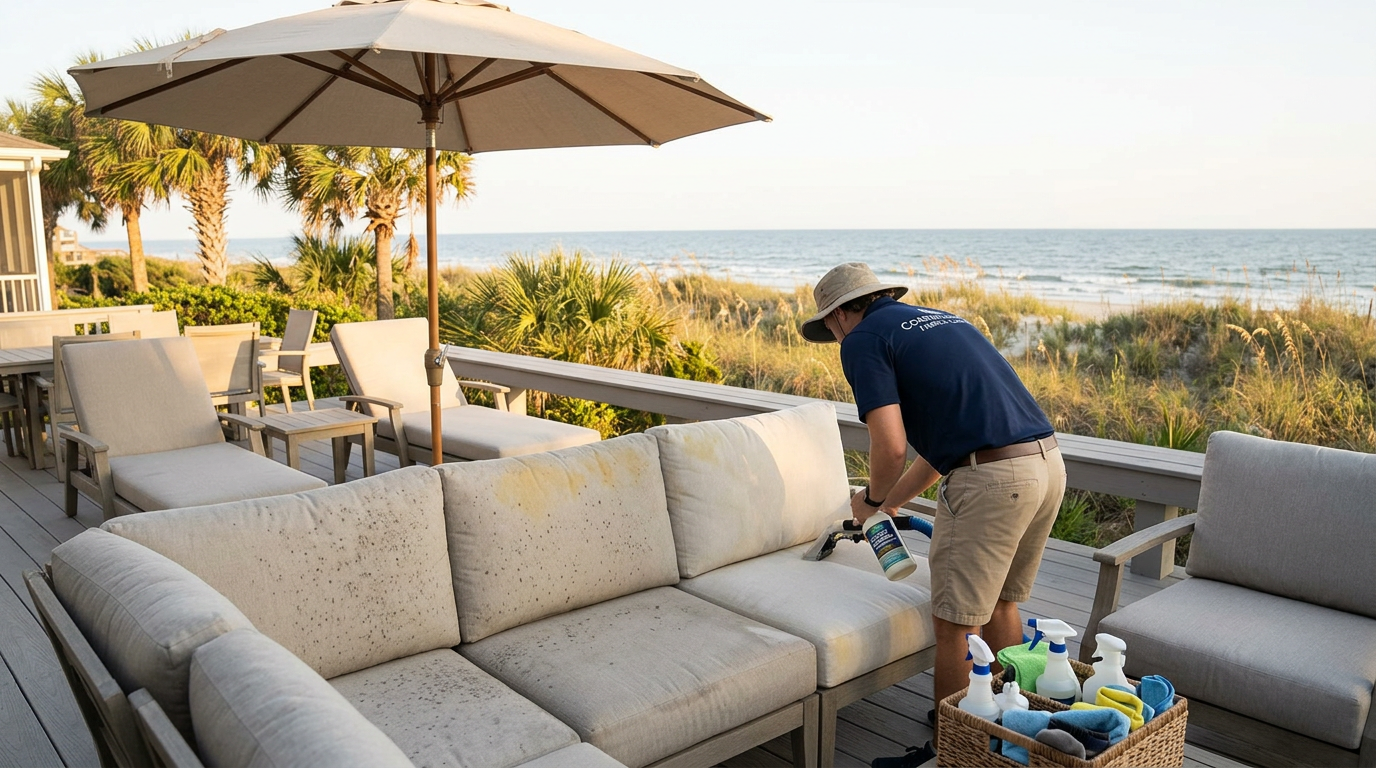
Oceanfront balconies and poolside patios along the Grand Strand represent the pinnacle of coastal living, but they also subject high-end outdoor furniture to an incredibly hostile environment. Performance fabrics like solution-dyed acrylics and olefins are engineered to withstand the elements, yet they frequently fall victim to a destructive combination of salt-damp air, sand-grit friction, and organic sunscreen oils. Many homeowners inadvertently ruin these expensive textiles by using aggressive DIY cleaning methods, leading to premature replacement costs. Understanding how to safely clean, restore, and protect these specialized outdoor textiles is essential for maintaining the comfort and value of your Grand Strand outdoor living spaces.
The Coastal Microclimate vs. Performance Fabrics
The Grand Strand's unique coastal environment presents a year-round challenge for outdoor textiles. High relative humidity and salt-laden sea breezes create a sticky microfilm on outdoor cushions, which acts as a magnet for fine windblown quartz sand and airborne pollen. While high-performance fabrics are naturally resistant to rot, this accumulated surface grit works its way deep into the woven fibers with every seat compression, acting like sandpaper that slowly shears the synthetic filaments from the inside out.
To compound the problem, the heavy use of sunscreens, tanning lotions, and body oils transfers synthetic lipids and organic sebum directly onto the fabric. These oils do not evaporate; instead, they sink into the weave and form a stubborn, water-resistant barrier. This organic film becomes a primary food source for mold and mildew spores, which thrive in our warm, humid Myrtle Beach summers, rapidly transforming pristine patio cushions into unsightly, black-spotted health hazards.
Over time, untreated organic soils and salt crusts cause the fabric to lose its breathability and pliability. What was once a soft, comfortable lounging surface becomes stiff, abrasive, and prone to cracking under prolonged ultraviolet exposure. Standard rain showers cannot wash away these deeply embedded oil-and-sand matrices, meaning a structured, chemically safe decontamination process is required to restore the material to its original state.
The Chemistry of Damage: How DIY Mistakes Ruin Outdoor Textiles
Faced with heavy mildew staining, many homeowners resort to using high-pressure power washers to clean their outdoor furniture. This is one of the most destructive mistakes possible, as high-pressure water streams blast directly through the woven fibers, tearing the delicate sewing threads and blowing apart the seams. Furthermore, this intense pressure forces water deep into the inner polyurethane foam or dacron cushion cores, trapping moisture inside and ensuring long-term mold growth.
Another common DIY error is the misuse of household chlorine bleach. While solution-dyed acrylics can tolerate highly diluted bleach, excessive concentrations or prolonged exposure will permanently degrade the fabric's engineered fibers and strip the factory-applied durable water-repellent (DWR) finish. Once this protective fluorocarbon barrier is stripped away, the fabric absorbs water like a sponge, making it highly susceptible to future staining and rapid organic colonization.
Additionally, using improper cleaning agents such as acidic bathroom cleaners, ammonia, or heavy-duty household degreasers can permanently alter the chemistry of synthetic fibers. These harsh agents break down the polymer chains in acrylic and olefin textiles, causing them to fade, fray, and lose their tensile strength. Safe restoration requires precise, neutral-to-slightly-alkaline chemistry designed specifically to break down organic oils without compromising the underlying synthetic structure.
The Cost Breakdown: Professional Restoration vs. Replacement
Investing in premium outdoor performance furniture is a significant financial commitment, with mid-to-high-end outdoor sofa and sectional cushion sets easily costing between $1,200 and $4,000 to replace. Purchasing cheap, off-the-shelf replacement cushions is rarely a viable option, as they seldom fit custom designer frames properly, lack high-density draining foam, and fade to a dull gray within a single coastal summer season.
By contrast, professional deep cleaning, extraction, and fabric re-treatment typically cost between $250 and $600 for a complete, multi-piece patio set. This restorative service not only removes deeply embedded sand and dark mildew spots but also includes the critical re-application of a commercial-grade fluorocarbon protector to restore water and oil repellency. This small investment effectively resets the fabric's lifecycle, delaying expensive replacement costs by several years.
When calculating the true return on investment, homeowners must also consider the cost of labor and specialized materials required for proper DIY maintenance. Buying high-quality, fabric-safe cleaning solutions, soft-bristled specialty brushes, and premium marine-grade fluorocarbon protectant sprays can easily run upwards of $100. When combined with the hours of physical labor required to scrub and dry the cushions safely, professional restoration emerges as the most efficient and cost-effective choice.
DIY Mitigation Protocols: Safe Maintenance Practices
While deep restoration is best left to professionals, homeowners can significantly extend the lifespan of their outdoor performance fabrics with simple, routine maintenance. The first line of defense is dry soil removal, which should be performed at least once a week during the active season. Simply use a soft-bristled utility brush or a hand-held vacuum cleaner to sweep away dry sand, pollen, and dust before they can sink deeper into the weave.
For light spot cleaning, mix one-fourth cup of mild, neutral-pH dishwashing liquid with one gallon of lukewarm water. Dip a soft sponge or microfiber cloth into the solution and gently wipe down the stained areas, letting the soap mixture soak into the fabric for ten to fifteen minutes to emulsify surface oils. Avoid using stiff wire brushes or highly abrasive scrubbing pads, which will fuzz the synthetic fibers and ruin the fabric's appearance.
The rinsing phase is the most critical step of any DIY cleaning attempt. Use a standard garden hose with a gentle spray nozzle to thoroughly flush out all soap residue, as dried soap acts as a sticky magnet for dirt and airborne mold spores. Once fully rinsed, tilt the cushions upright on their zipper seams in a well-ventilated, sunny area to allow water to drain freely and dry completely.
Professional Extraction and Restoration: What the Experts Do
Professional textile restorers use specialized, low-pressure hot water extraction systems that safely flush out deeply embedded soils without damaging delicate synthetic weaves. These commercial extraction tools operate at controlled temperatures under 120 degrees Fahrenheit, which is warm enough to melt tough sunscreen lipids and body oils, yet cool enough to prevent shrinking or warping of acrylic and olefin fibers.
Rather than relying on harsh scrubbing, professional technicians apply specialized, eco-safe surfactants designed specifically for synthetic outdoor textiles. These advanced emulsifiers penetrate the weave, surround individual sand particles and organic oil droplets, and suspend them in solution so they can be completely extracted. This advanced process removes the deep-seated organic biofilms that simple surface scrubbing cannot reach.
The final, crucial step in the professional restoration process is the uniform re-application of a commercial-grade fluorocarbon protective finish. Because years of use and cleaning wear down the original factory barrier, this step is essential to restore the cushion's water-beading performance. The newly applied protective layer repels water, blocks sunscreen oil penetration, and makes future surface spot cleaning significantly easier for the homeowner.
Crucial Questions to Ask a Professional Cleaning Company
When hiring a cleaning service to handle your expensive outdoor performance cushions, it is vital to vet their technical expertise. Start by asking if their technicians are specifically trained in cleaning solution-dyed acrylics, olefins, and outdoor performance brands. A simple 'one-size-fits-all' carpet cleaning approach will ruin outdoor fabrics, so verify that they use dedicated, low-pressure upholstery tools rather than aggressive carpet cleaning wands.
Next, ask about their specific protocol for drying the inner cushion cores. A reputable company should explain how they extract excess moisture and position the cushions to facilitate rapid, complete drying to prevent interior mildew growth. If a company suggests pressure washing your cushions or leaving them flat on the ground to dry in the humid coastal air, seek service elsewhere.
Finally, always ask if the re-application of a fluorocarbon-based fabric protector is included in their service package or if it is billed as an add-on. Since deep extraction cleaning strips away remaining surface protectants, applying a fresh protective barrier is not optional—it is a mandatory step for maintaining fabric performance and preventing rapid re-soiling in our harsh coastal environment.
- Do your technicians hold IICRC certifications in upholstery and fabric cleaning?
- What specific temperature and pressure limits do you use on outdoor performance fabrics?
- Do you use neutral-pH emulsifiers, or do you rely on harsh bleach-based solutions?
- How do you ensure the interior polyurethane foam cores are dried thoroughly after extraction?
- Is the re-application of a fluorocarbon-based protective finish included in your quote?
Product Safety: Choosing Environmentally and Material-Safe Cleaners
Because outdoor furniture is cleaned on open balconies, decks, and patios, chemical runoff is a major environmental concern along the Grand Strand. Harsh chemical cleansers can drip through deck floorboards, damaging expensive landscaping below and entering local storm drains that empty directly into our coastal wetlands, salt marshes, and ocean waters. Using biodegradable, phosphate-free cleaners is essential to protect our local ecosystem.
In addition to environmental safety, material safety must be a primary consideration when choosing cleaning products. Many commercial degreasers emit volatile organic compounds (VOCs) that are hazardous to inhale in humid conditions and can degrade nearby building materials. Safe, modern cleaning chemistry relies on botanical surfactants and oxygenated cleaning agents that break down into harmless oxygen and water, leaving no toxic residues behind.
Furthermore, avoiding high-alkaline products ensures the safety of pets and children who will use the outdoor furniture soon after cleaning. Residual high-alkaline chemicals trapped in cushion fibers can cause skin irritation, redness, and chemical burns when activated by sweat or moisture. Professional restorers prioritize highly rinsable, neutral-pH cleaning agents to guarantee that your outdoor living spaces remain safe for the entire family.
Preserving the Restored Finish: Post-Cleaning Protective Measures
Once your outdoor cushions have been professionally cleaned and protected, implementing simple preventative habits will keep them looking pristine for a long time. Investing in custom-fit, breathable, high-quality furniture covers is the single most effective way to shield your fabrics from bird droppings, tree sap, and the intense UV rays that characterize Myrtle Beach summers. Always ensure the cushions are completely dry before applying covers to avoid trapping moisture.
When the summer season ends, store your clean, dry cushions in a climate-controlled indoor space, garage, or sealed storage bin. Leaving cushions exposed to the cold, damp winter winds of the Grand Strand leads to slow moisture accumulation, which can trigger mold growth even on protected fabrics. If winter storage space is limited, store the cushions vertically on their edges rather than stacking them flat.
Lastly, establish a strict house rule against placing wet, chlorinated pool towels or salty ocean swimwear directly on the dry cushions. Chlorine and ocean salt residues transfer easily to synthetic fibers, acting as abrasive agents and stripping away the protective fluorocarbon finishes. Keeping a stash of clean, dry beach towels handy for lounging will preserve the pristine look and soft feel of your restored outdoor furniture.
Key takeaway
Maintaining the beauty and longevity of your Grand Strand outdoor performance fabrics requires specialized care, gentle chemistry, and regular preservation of their water-repellent finishes. By avoiding high-pressure washing and harsh DIY chemicals, you can protect your investment and enjoy a clean, healthy outdoor living space. For expert, material-safe restoration of your home's outdoor textiles, contact A2Z Cleaning & Linen Services at 843.800.2788.
Keep Reading

Coastal Living
The Cost of Restoring Coastal Leather Furniture: Mitigating Salt-Air Mildew, Sand Abrasion, and Sun-Bleaching in Grand Strand Homes
ReadCoastal Living
The Cost of Restoring Coastal Natural-Fiber Rugs: Mitigating Humidity-Driven Rot, Sand-Grit Fiber Shredding, and Water-Staining in Grand Strand Homes
ReadCoastal Living
The Coastal Family Bath and Pet-Wash Station Decontamination Protocol: Mitigating Humid Mildew, Sand-Clay Cling, Pet-Wash Hair Clogs, and Child-Safe Disinfection in Grand Strand Homes
ReadReady for a spotless property?
Call 843.800.2788 or request a free quote from A2Z Cleaning & Linen Services.