Coastal Living
The Cost of Restoring Coastal HDPE and Polywood Outdoor Furniture: Mitigating Deep-Grain Mold Biofilms, Sunscreen Yellowing, and Material-Safe Chemistry in Grand Strand Homes
A consumer-education guide on restoring premium HDPE and Polywood outdoor furniture, covering deep-grain mold, sunscreen stains, restoration costs, DIY safety, and hiring local specialists.
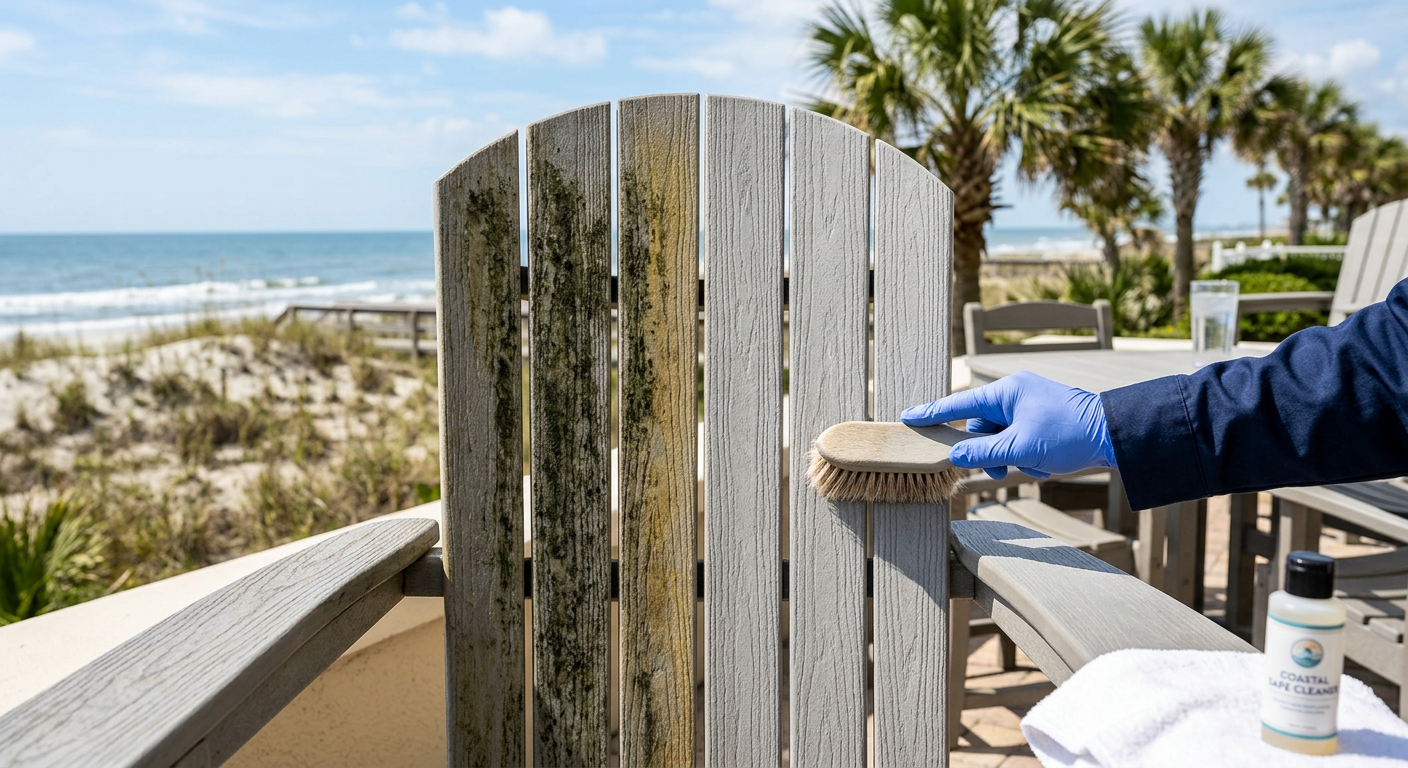
Coastal homeowners along the Grand Strand love High-Density Polyethylene (HDPE) outdoor furniture, commonly known as Polywood, for its durability against harsh Atlantic salt spray and intense sun. However, the textured, wood-like grain of this premium synthetic lumber is highly prone to trapping humid mold biofilms, stubborn sunscreen oils, and micro-sand grit. Over time, these contaminants degrade the material's vibrant color, leaving a hazy, darkened film that standard pressure washing cannot safely resolve. This guide provides a detailed look at the true costs, material-safe chemistry, and professional standards required to restore your outdoor furniture investments.
The Unique Vulnerability of HDPE Lumber in the Grand Strand Marine Environment
HDPE furniture is often marketed as completely maintenance-free, but Grand Strand homeowners quickly discover that coastal humidity and wind-borne salt spray change the equation. The textured finish designed to mimic natural wood grain creates microscopic crevices. In our subtropical climate, these crevices trap airborne pollen, mold spores, and fine sand-grit. When dew settles overnight, it activates these organic particles, leading to deep-seated fungal colonization that thrives in the humid coastal heat.
Unlike smooth plastics, the embossed grain of premium HDPE cannot simply be wiped clean once mold takes root. The fungal hyphae penetrate the superficial texture, anchoring themselves against wind and rain. This results in the characteristic dark, speckled staining that ruins the clean aesthetic of white, sand, or pastel-colored outdoor dining sets. If left untreated, these biological films become slick, unsafe, and highly resistant to standard household detergents.
Salt-air exposure adds another layer of complexity. As salt water evaporates from the furniture's surface, it leaves behind microscopic sodium chloride crystals that act like an abrasive sandpaper under daily use. When guests sit on salt-crusted chairs, their movement grinds these crystals into the soft plastic surface. This friction creates micro-abrasions that harbor even more organic debris, accelerating the staining cycle and dulling the manufacturer's original UV-inhibiting sheen.
High-Density Polyethylene Structural Degradation: Sunscreen, Sebum, and Salt-Film Dynamics
While HDPE is highly resistant to moisture, it is vulnerable to organic solvents and heavy oils. Sunscreens, tanning lotions, and natural skin sebum are prime culprits for permanent discoloration along armrests and headrests. These oils contain complex chemical compounds, such as avobenzone, which bond aggressively with the synthetic polymers of the furniture. When exposed to direct sunlight, these bonded oils undergo a photochemical reaction, turning a stubborn yellow or orange.
Once sunscreen oils penetrate the textured surface, they act as an adhesive for atmospheric dust and beach sand. This creates a tacky, dark residue that resists water and normal dish soap. Homeowners who try to scrub these areas with abrasive pads often end up scratching the soft plastic, permanently altering the surface texture. Once the surface is mechanically damaged, it becomes nearly impossible to keep clean without professional-grade polymer conditioners.
The accumulation of salt film also alters the thermal properties of the furniture. Salt-crusted dark gray or navy Polywood chairs absorb and retain more solar heat, making them uncomfortably hot during Myrtle Beach summers. This localized heat retention can slightly soften the polymer matrix over several seasons, making it even more susceptible to indentation, warping, and deep-set staining from hot spilled foods or heavy physical impacts.
DIY vs. Professional Restoration: Tooling, Pressure Safety, and Chemistry
Many homeowners attempt to restore their Polywood using a high-pressure residential power washer. This is one of the most common and expensive DIY mistakes. High-pressure streams exceeding 1,500 PSI can easily carve deep, permanent gouges into the relatively soft HDPE material. Once the polymer surface is torn by excessive pressure, the structural integrity of the outer skin is lost, creating a rough, frayed texture that acts like a sponge for dirt and mold.
Professional restoration relies on chemical emulsification rather than raw, destructive mechanical force. Professionals use low-pressure soft-washing techniques, applying targeted sanitizing solutions that break down the organic binders of mold and sunscreen at the molecular level. This approach safely lifts contaminants out of the textured grain without risking gouges, splinters, or surface fraying. It protects the manufacturer's warranty and preserves the smooth, comfortable feel of the furniture.
Furthermore, DIY efforts often rely on harsh household bleach or abrasive scouring powders like chlorinated cleansers. These chemicals can degrade the UV stabilizers embedded within the plastic, leading to accelerated fading and brittleness when exposed to the intense Grand Strand sun. Professional-grade restorers use pH-balanced, polymer-safe surfactants and oxygen-based bleaches that thoroughly sanitize the material without stripping its integrated protective coatings or causing environmental damage to surrounding coastal landscaping.
Eco-Toxicology and Coastal Runoff: Product Safety Near Sensitive Ecosystems
In the Grand Strand, outdoor furniture is often positioned directly over sensitive coastal ecosystems, such as maritime lawns, sandy dunes, or tidal creeks. Standard DIY cleaning solutions containing high concentrations of chlorine bleach, phosphates, or non-biodegradable surfactants can wash directly into these environments. This runoff can kill non-target coastal vegetation, alter soil pH, and harm delicate aquatic life in adjacent marshes or retention ponds.
Professional cleaning companies must adhere to strict environmental standards, selecting biodegradable and eco-friendly chemistries designed to break down rapidly into harmless components. These botanical or oxygenated agents are highly effective against mold and organic grease but carry zero risk of environmental bioaccumulation. Responsible technicians also utilize runoff containment or neutralization protocols when working near sensitive water bodies or prized landscape installations, ensuring absolute safety for local flora and fauna.
Product safety also extends to the human and pet occupants of the home. Harsh chemical residues left behind on outdoor chairs can cause contact dermatitis, skin irritation, or respiratory issues, especially for young children and pets who touch the furniture and then ingest the residue. Professional extraction processes involve thorough, low-pressure rinsing steps that eliminate all chemical residues, leaving behind a neutral, clean, and perfectly safe surface for bare skin contact.
Realistic Cost Breakdown of Professional Polywood Restoration Services
Understanding the pricing models for professional HDPE restoration helps homeowners budget accurately and avoid low-ball quotes that often result in damaged furniture. Typically, professional service companies price restoration work based on the type and size of the furniture pieces, the severity of the organic staining, and the accessibility of the property. Simple cleanings are more affordable, while heavy restoration of long-neglected furniture requires deep chemical extraction and specialized polymer detailing.
While these costs may seem higher than renting a DIY pressure washer for a weekend, the value lies in asset preservation and time saved. A professional crew can completely restore a massive 10-piece outdoor set in a few hours using specialized equipment, whereas a homeowner might spend a grueling weekend damaging their furniture and landscaping. When balanced against the replacement cost of a quality Polywood set—which can easily exceed $3,000 to $6,000—professional restoration is a highly cost-effective preservation strategy.
- Standard Maintenance Wash (Light dirt and dust): $30 to $60 per chair, and $100 to $200 per dining table.
- Deep Chemical Restoration (Heavy mold and salt film): $75 to $150 per chair, depending on grain depth and staining severity.
- Sunscreen and Oil Extraction Detail (Targeted armrest and headrest stain lifting): $50 to $90 per localized area.
- Polymer Protective Sealant Application (Post-cleaning UV barrier and gloss restoration): $20 to $45 add-on per piece.
- On-Site Property Minimums: Most local professional teams require a minimum service call fee of $150 to $250 to cover transport and setup.
What to Ask a Local Cleaning Professional Before Booking
Not all cleaning service providers understand the unique material properties of HDPE lumber. When vetting local Grand Strand cleaning companies, homeowners should ask highly specific questions to ensure their expensive outdoor assets are in safe, experienced hands. Asking about their equipment, chemical selections, and damage-prevention protocols will quickly separate high-quality exterior restoration specialists from amateur pressure-washing operations.
A reputable company will readily name their polymer-safe, eco-friendly surfactant packages and explain how they control pressure settings. Furthermore, you want to ensure that if a technician accidentally oversprays a sensitive flowerbed or damages a custom furniture piece, the company has the formal coverage and professional integrity to make it right without out-of-pocket costs to you.
- What maximum water pressure (PSI) do you use on HDPE furniture, and do you offer low-pressure soft-wash methods?
- Are the chemical surfactants you use safe for local coastal runoff and sensitive landscaping?
- How do you treat deep-set yellow sunscreen and body oil stains on white or light-colored Polywood?
- Does your liability insurance policy explicitly cover physical damage to high-end residential outdoor furniture?
- Do you offer a satisfaction guarantee if mold or dark spots remain in the textured grain after the initial cleaning?
Post-Restoration Preventative Care and Maintenance Protocols
Once your HDPE furniture has been professionally restored to its original luster, establishing a simple, proactive maintenance routine will extend the life of the restoration and prevent rapid mold re-colonization. The easiest preventative measure is to rinse the furniture with clean, fresh water from a garden hose after heavy coastal storms or high-wind days. This simple step washes away abrasive salt crystals and airborne organic debris before they can settle into the textured grain.
Additionally, prompt cleanup of sunscreen spills, tanning oils, and greasy food dropped during outdoor dining is critical. Keep a mild, pH-neutral soap (like dish soap) and a soft-bristled nylon brush nearby for quick spot-cleaning. Gently agitating the soapy water into the grain and rinsing it clean immediately will prevent the oils from bonding with the polymer and turning yellow under the sun's intense UV rays.
For seasonal storage or periods of non-use, especially during the damp winter months in Myrtle Beach, using breathable, high-quality furniture covers is highly recommended. Ensure the furniture is completely dry before covering it to avoid trapping residual humidity, which can create a greenhouse effect that accelerates mold growth. If covers are not an option, storing the furniture in a shaded area or tilting the chairs forward to prevent water from pooling on the seats will dramatically reduce seasonal staining.
Key takeaway
While HDPE and Polywood furniture offer exceptional durability for Grand Strand homes, they are highly vulnerable to deep-grain mold, salt abrasions, and sunscreen discoloration. Utilizing professional soft-washing chemistry is essential to safely restore these high-value assets without risking permanent high-pressure damage. By investing in seasonal professional maintenance and simple preventative care, you can preserve the comfort, beauty, and value of your outdoor living spaces for years to come.
Keep Reading
Coastal Living
The Cost of Restoring Coastal Outdoor Performance Fabrics: Mitigating Salt-Air Mildew, Sunscreen Sebum, and Chemical-Stripping Damage in Grand Strand Homes
ReadCoastal Living
The Coastal Sliding Glass Door Track and Weep-Hole Decontamination Protocol: Mitigating Mold Bio-Sludge, Wind-Driven Allergens, and Chemical Runoff in Grand Strand Homes
ReadCoastal Living
The Cost of Restoring Coastal Outdoor Shower Enclosures: Managing Algae Biofilms, Salt-Water Scale, and Material-Safe Chemistry in Grand Strand Homes
ReadReady for a spotless property?
Call 843.800.2788 or request a free quote from A2Z Cleaning & Linen Services.