Coastal Living
The Cost of Restoring Coastal Glass Baluster and Cable Railing Systems: Mitigating Salt-Etch Haze, Cable Oxidation, and Safe Upkeep in Grand Strand Homes
Understand the real costs, DIY limits, and professional safety standards for restoring salt-etched glass balustrades and corroded cable railings in Grand Strand homes.
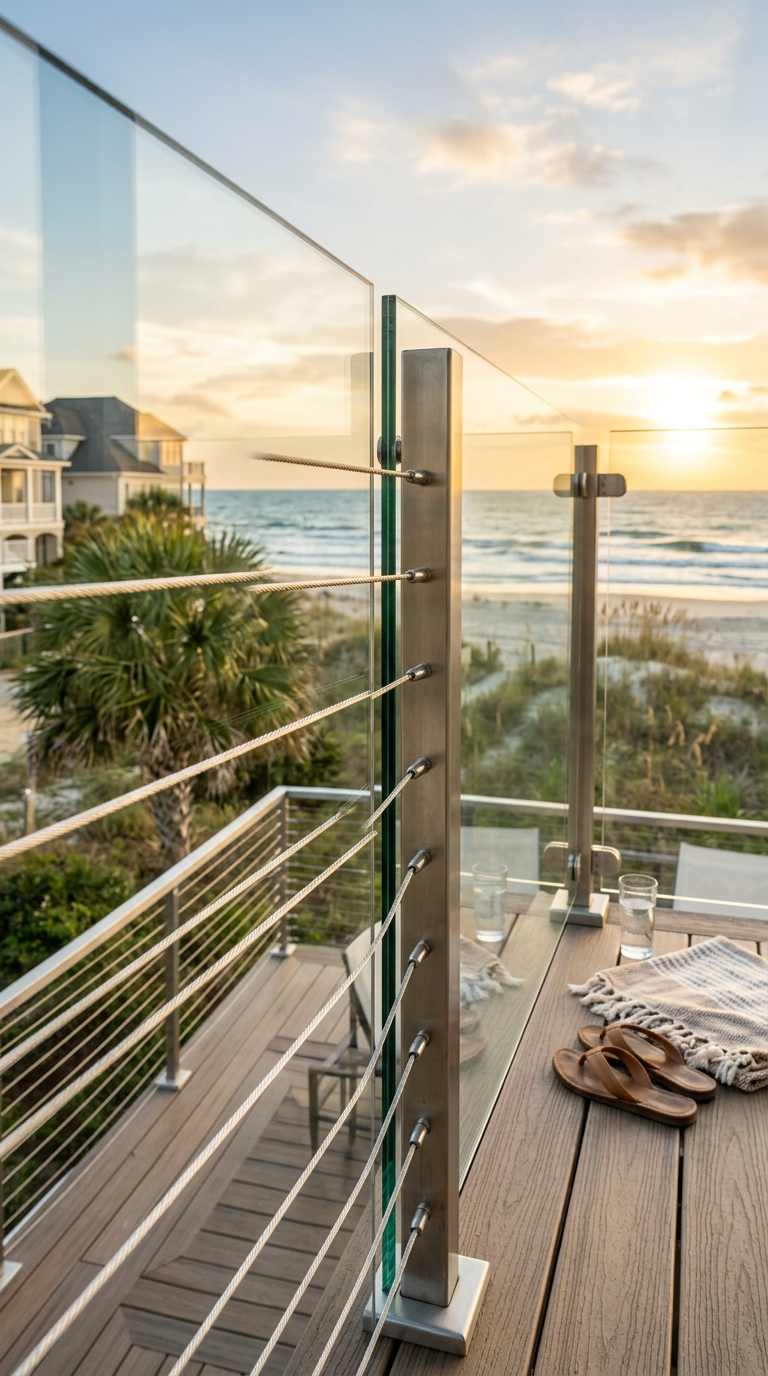
Elevated coastal homes along the Grand Strand, from Cherry Grove to Pawleys Island, rely on glass balustrades and marine-grade cable railings to preserve sweeping ocean and marsh views. However, the relentless combination of airborne salt spray, intense UV exposure, and fine sand-grit quickly degrades these high-end architectural features, leaving glass hazy with mineral etching and metal cables dulled by rust. Homeowners frequently struggle to balance the cost of specialized professional restoration with the safety risks of DIY chemical applications near delicate coastal ecosystems. This guide provides a clear, consumer-first roadmap detailing restoration costs, safety criteria, and how to select a qualified service provider.
The Threat of Salt-Air Etching and Metal Oxidation on Coastal Views
Glass and metal seem highly durable, but the micro-climate of the Grand Strand is incredibly hostile to these materials. Wind-driven salt spray deposits sodium chloride on glass surfaces, which reacts with solar heat and moisture to create a chemically alkaline environment. If left untreated, this alkaline film microscopically etches the glass, turning a temporary white haze into permanent, rough-textured physical damage that ruins the view and compromises structural clarity.
Simultaneously, the stainless steel cables—often rated as marine-grade 316 stainless—still experience crevice corrosion and tea-staining when salt crystals nestle into the braided strands. This moisture-retaining salt layer starves the metal of oxygen, disrupting its self-healing chromium oxide layer and leading to structural weakening. Standard household window cleaners and basic pressure washing are completely ineffective against this specialized chemical bond, requiring advanced restoration protocols to address.
The dynamic interaction between salt and sun means that preventive washings must be performed before the chemical bond becomes permanent. When salt water evaporates on a glass surface, the remaining sodium crystals bond with the silica in the glass, initiating a chemical process called ion exchange. Once this exchange occurs, simple detergents can no longer lift the cloudiness, and mechanical or specialized chemical polishing becomes the only viable path to restoration.
DIY vs. Professional Restoration: Where to Draw the Line
Many Grand Strand homeowners attempt to tackle hazy glass and tea-stained cables as a weekend DIY project, often with regrettable results. Retail glass cleaners rely on light surfactants that cannot dissolve baked-on mineral silica bonds, leading frustrated homeowners to use abrasive scrub pads. This physical abrasion scratches the glass substrate, permanently capturing more dirt and scattering light to make the glass look even cloudier over time.
On the metal front, using off-the-shelf steel wool or stiff wire brushes to scrub rust off cables is a critical mistake. These tools leave behind microscopic carbon steel particles embedded in the stainless steel surface, which rapidly oxidize and accelerate catastrophic rust formation across the entire railing system. Once carbon contamination occurs, the cables require labor-intensive chemical stripping or complete replacement to resolve.
Professional technicians utilize specialized optical-grade cerium oxide polishing compounds, non-scratch white pads, and dedicated metal passivating acids like citric or phosphoric acid formulations. These chemical systems dissolve the mineral scale and restore the metal's natural protective barrier without causing physical or chemical damage to the underlying structures, keeping views crystal clear and structurally sound.
Understanding the Costs of Glass and Cable Railing Restoration
The cost to restore coastal glass and cable systems along the Grand Strand varies significantly based on the level of existing damage, total linear footage, and ease of access. For glass balustrades requiring mineral spot removal, deep acid washing, and machine polishing, professional rates typically range from $15 to $35 per linear foot, or up to $75 per panel for multi-stage restoration.
Cable railing restoration, which involves hand-detailing braided stainless steel, applying passivating agents, and buffing out tea-stains, generally runs between $12 and $25 per linear foot of railing. If the cables require complete dismantling, mechanical tensioning adjustments, or replacement of corroded swage fittings alongside the deep cleaning, costs can escalate as specialized rigging tools are required.
While these upfront costs may seem substantial compared to a standard house wash, they are a fraction of the actual replacement expense. High-quality tempered glass panels and marine-grade stainless cable systems cost thousands of dollars to purchase and install on elevated decks; regular professional restoration protects this critical financial investment and prevents premature structural failure. Investing in targeted restoration ensures safety compliance while maintaining the aesthetic appeal and market value of your beachside property.
Key Questions to Ask When Hiring a Coastal Restoration Specialist
Not all cleaning companies in the Myrtle Beach area are equipped to handle the delicate chemistry of glass and metal restoration. When interviewing potential service providers, homeowners should ask: "What specific chemical agents do you use to dissolve salt-crust and passivate stainless steel?" A company relying solely on high-pressure water or standard chlorine bleach should be avoided, as these methods do not address the root chemical issues and can cause long-term damage.
Another critical question is: "How do you protect surrounding building materials and landscaping from chemical overspray?" Many effective glass restoration acids can etch nearby aluminum window frames, strip the finish off custom wooden decks, or kill delicate coastal flora below the balcony. A qualified technician will explain their precise masking, neutralization, and wash-down protocols designed to safeguard your home.
Finally, always verify their insurance and safety protocols, asking: "Do your technicians use OSHA-compliant fall-protection harnesses when working on multi-story exterior balconies?" Restoring glass balustrades from the exterior often requires working at significant heights, and proper liability coverage is essential to protect you as a property owner. Do not hesitate to request proof of worker's compensation and liability insurance before signing any contract.
- What chemical formulas do you use to dissolve salt-crust without scratching glass?
- Are your technicians certified in substrate protection and fall safety protocols?
- Do you provide a written warranty against rapid re-etching and immediate tea-staining?
- How do you neutralize acid runoff to protect coastal landscaping and waterways?
- Can you provide local Grand Strand references for glass balustrade and metal cable restoration?
Chemical and Product Safety Near Coastal Waterways
Environmental safety is a paramount concern for Grand Strand properties, particularly those situated directly on salt marshes, tidal creeks, or the oceanfront. Runoff from cleaning chemicals can directly impact sensitive local marine life, shellfish beds, and coastal water quality. Conventional heavy-acid cleaners, such as hydrofluoric acid, are highly toxic and present severe environmental and personal safety hazards that should never be introduced to our delicate coastal ecosystem.
Reputable local restoration companies prioritize biodegradable, eco-safe formulations that leverage organic acids like citric, sulfamic, or oxalic acid. These agents effectively break down mineral scale and metal oxides without leaving persistent toxic residues that can wash into the surrounding soil or coastal water. These products are safe for the environment while delivering professional-grade cleaning power that rivals harsher synthetic chemicals.
Technicians should also employ physical containment protocols, such as using absorbent drop cloths, neutralizer rinses, and vacuum extraction systems when working over open water or sensitive landscaping. This prevents chemical run-off from entering the local ecosystem while still delivering highly effective glass and metal restoration results that meet local environmental regulations. Ensuring the cleaning company uses safe, responsible practices is essential for preserving the natural beauty of Myrtle Beach and surrounding coastal areas.
The Restoration Process: What to Expect from a Professional Visit
A professional glass and cable restoration service begins with a thorough inspection of the structural integrity of the railing system. Technicians check for loose glass clamps, compromised gaskets, and slipping cable tensioners before any cleaning begins, ensuring the system can safely withstand the cleaning process. This preliminary audit protects your property from water intrusion and structural failure during the cleaning process.
Next, the team performs a deep pre-rinse to remove abrasive surface sand and loose salt-crust, preventing these particles from scratching the glass during the scrub phase. They then apply targeted chemical restoration agents, utilizing low-speed rotary polishers with specialized optical-grade pads to lift stubborn mineral deposits without clouding the pane. This precise combination of chemistry and mechanics restores clarity.
For the metal components, passivating gels are meticulously brushed into the cable braids and hardware fittings, left to dwell, and then neutralized and thoroughly rinsed. The final step involves applying a hydrophobic protective sealant to the glass and a marine-grade corrosion inhibitor to the metal, forming a durable barrier against future salt accumulation and weather damage.
Preventive Maintenance: Extending the Life of Your Restored Railings
Once your glass and cable systems have been professionally restored to a crystal-clear finish, implementing a consistent preventive maintenance routine is crucial for extending the life of the treatment. Homeowners should perform a low-pressure fresh-water rinse of all exterior glass and metal components at least once every two weeks, especially after high-wind coastal storms that carry heavy salt-spray.
Avoid using automated sprinkler systems that spray hard well-water or municipal water directly onto the glass, as this introduces high levels of calcium and magnesium that rapidly recreate the etched mineral scale. If sprinklers cannot be adjusted, install a water softener or apply a defensive hydrophobic barrier coating to redirect water droplets away from the glass.
Additionally, apply a high-quality polymer glass sealant or ceramic coating twice a year to maintain a slick, hydrophobic surface that sheds water and salt before they can bond. This simple step keeps your views pristine and extends the interval between professional deep restoration visits, saving you money over time and protecting your valuable Grand Strand property assets from premature wear.
Key takeaway
Restoring coastal glass and cable railings requires specialized chemical knowledge, safe ecological practices, and precise mechanical polishing. Investing in professional restoration preserves your expansive Grand Strand views and protects high-value architectural installations from permanent salt damage. For expert assistance with your home's exterior glass, metal, and deep cleaning needs, contact A2Z Cleaning & Linen Services at 843.800.2788.
Keep Reading

Coastal Living
The Cost of Restoring Coastal Outdoor Shower Enclosures: Managing Algae Biofilms, Salt-Water Scale, and Material-Safe Chemistry in Grand Strand Homes
ReadCoastal Living
The Cost of Restoring Coastal Woven Wood and Bamboo Shades: Mitigating Salt-Damp Mildew, Fiber Fraying, and Tension-Cord Failures in Grand Strand Homes
ReadCoastal Living
The Cost of Restoring Coastal HDPE and Polywood Outdoor Furniture: Mitigating Deep-Grain Mold Biofilms, Sunscreen Yellowing, and Material-Safe Chemistry in Grand Strand Homes
ReadReady for a spotless property?
Call 843.800.2788 or request a free quote from A2Z Cleaning & Linen Services.