Coastal Living
The Cost of Restoring Coastal Outdoor Shower Enclosures: Managing Algae Biofilms, Salt-Water Scale, and Material-Safe Chemistry in Grand Strand Homes
Discover the costs, chemical requirements, and safety protocols for restoring coastal outdoor showers. Learn how to safely remove algae and salt scale without damaging your wood or vinyl.
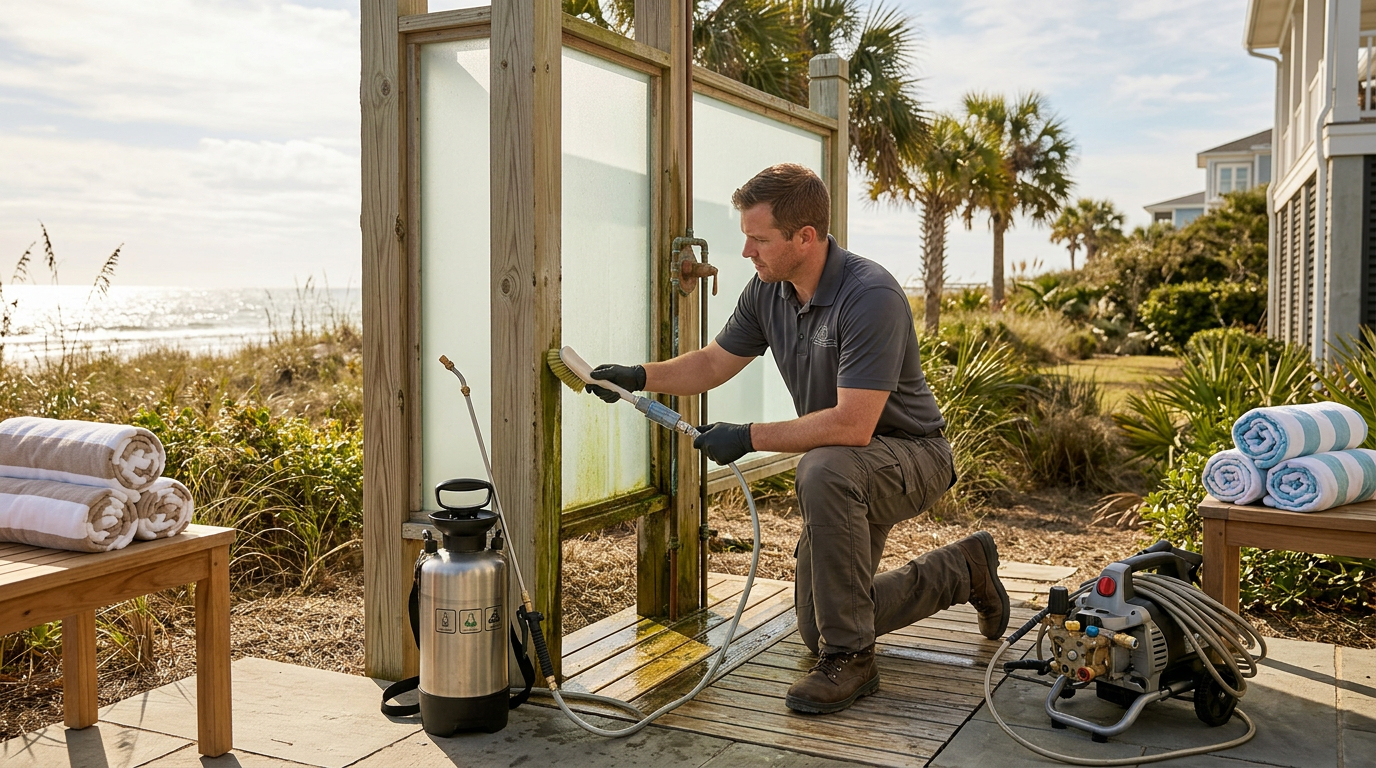
In our humid Grand Strand climate, an outdoor shower is more than a coastal luxury; it is a vital defense line keeping sand, salt, and sunscreen out of your home. However, the combination of constant moisture, organic bather waste, and intense South Carolina sunshine creates a perfect breeding ground for destructive biological growth and mineral scale. Restoring these high-use exterior enclosures requires highly specific chemistry and careful calibration of pressure to avoid ruining expensive cedar, teak, or PVC vinyl substrates. This guide breaks down the true costs of professional restoration, safe chemical protocols, and how to evaluate local service providers to protect your coastal investment.
The Coastal Outdoor Shower Microenvironment: Algae, Salt-Air Scale, and Body Soils
The outdoor shower enclosure on the Grand Strand operates under a constant barrage of environmental and biological stressors. Ocean breeze carries high concentrations of atmospheric salt, which settles on the walls and fixtures of the shower. When combined with the hard well water or municipal water used in external plumbing, a dense, crusty layer of calcium carbonate and sodium chloride forms. This mineral scale is highly porous, acting like a structural sponge that traps moisture and organic debris against the enclosure surfaces.
Compounding this mineral accumulation is the steady deposition of organic bather waste. Every rinse-off deposits skin flakes, body oils, hair, and heavy chemical sunscreens containing avobenzone or zinc oxide onto the walls and floor. These organic compounds form a sticky, water-resistant biofilm. This biofilm provides an abundant food source for black mold spores, mildew, and green chlorophyte algae, which thrive in our high heat and relative humidity, turning a beautiful outdoor retreat into an unsightly, slippery health hazard.
Left untreated, this biological and mineral slurry does more than look uninviting; it actively degrades the structural integrity of your enclosure. Algae and mold root systems penetrate the microscopic pores of wood and vinyl, trapping moisture inside the material. This trapped water accelerates rot in cedar and teak, causes yellowing and embrittlement in PVC, and corrodes copper or brass plumbing fixtures. Complete restoration requires breaking down this complex biofilm layer by layer without degrading the underlying building materials.
Material-Specific Restoration Chemistry: Cedar, Teak, PVC Vinyl, and Stainless Steel
Restoring an outdoor shower is not a one-size-fits-all cleaning task; using the wrong chemical on a specific material can cause permanent structural damage. Natural wood enclosures, such as western red cedar or premium teak, are highly sensitive to harsh high-pH cleaners like liquid chlorine bleach. While bleach may temporarily turn the wood white, it degrades the natural lignin fibers, causing the wood to become fuzzy, soft, and prone to rapid splintering. Instead, wood requires oxygenated bleaches or sodium percarbonate solutions paired with mild surfactant packages to lift organic stains safely.
Once wood is cleaned of biological growth, it must undergo a neutralizing and brightening step. Applying an oxalic acid-based brightener restores the natural pH of the timber, neutralizing any alkaline residues and reversing the dark gray weathering caused by UV exposure. This step opens up the wood grain, preparing it to accept a breathable, mildew-resistant protective sealer. Skipping this acidification phase ensures that any newly applied stain or sealer will fail to adhere properly, peeling away within a single coastal season.
Conversely, PVC vinyl and composite enclosures require a different chemical approach. Vinyl is highly resilient to moisture but susceptible to chemical burning and scratching. Abrasive scouring powders or aggressive solvents will strip the protective UV-inhibiting topcoat, leaving the vinyl dull and highly prone to yellowing under the intense Myrtle Beach sun. For these synthetic materials, professionals use specialized low-sodium hypochlorite solutions blended with foaming agents that cling to vertical surfaces, breaking down stubborn mold and sunscreen oils without physical abrasion.
Metal plumbing fixtures, including outdoor showerheads, mixing valves, and foot washes, demand their own restoration protocol. The atmospheric salt-air combined with hard water causes heavy scale and green copper oxide corrosion. Acidic compounds like phosphoric or sulfamic acid are applied carefully to dissolve the mineral scale without etching the underlying stainless steel, brass, or copper. Specialized metal sealers are then hand-applied to provide a hydrophobic barrier against ongoing salt-air attack.
DIY Restoration vs. Professional Intervention: Risk Assessment
Many Grand Strand homeowners attempt to restore their outdoor showers as a weekend DIY project, often armed with a consumer-grade pressure washer purchased from a local home improvement box store. This is where the most common and expensive property damage occurs. A standard pressure washer generating over 2,000 PSI can easily gouge natural cedar, shear the tongues off tongue-and-groove boards, and crack brittle PVC vinyl panels. Once wood fibers are blown out by excessive pressure, the surface cannot be sanded smooth again easily, often requiring complete board replacement.
Furthermore, DIY efforts often fail because they rely solely on mechanical force rather than chemical efficiency. Blasting algae with high pressure without neutralizing the microscopic root systems simply spreads the active spores across your deck and siding. Within three to four weeks, the mold and algae return with greater density, utilizing the newly gouged wood pores to anchor themselves deeper. Professionals utilize a technique known as 'soft washing,' which uses highly specialized pumps to apply chemical solutions at low, garden-hose pressures (under 150 PSI), letting chemistry do the heavy lifting.
Safety is another critical factor when comparing DIY to professional restoration. Safely handling concentrated sodium percarbonate, oxalic acid, and professional-grade algaecides requires specialized personal protective equipment (PPE), including respirators and chemical-resistant eyewear. Additionally, managing the runoff from these chemicals requires professional training to prevent killing the expensive ornamental turf, palms, and coastal plantings that typically surround outdoor shower installations.
The True Cost of Professional Outdoor Shower Restoration
The cost of professional outdoor shower restoration on the Grand Strand varies based on the enclosure size, material type, accessibility, and the severity of biological colonization. A standard three-sided PVC vinyl enclosure with moderate algae growth typically costs between $200 and $450 to restore. This service includes a low-pressure sanitizing wash, manual scrubbing of stubborn sunscreen residues along the splash zones, hand-cleaning the interior plumbing fixtures, and applying an anti-static, UV-blocking protectant to the vinyl panels.
Natural wood enclosures (cedar, redwood, or teak) require significantly more labor, specialized chemistry, and drying time, which is reflected in the pricing. A professional multi-step wood restoration—including biological extraction, chemical neutralizing, wood brightening, and the application of a high-end, breathable, mildew-resistant clear or tinted sealer—ranges from $450 to $950. Larger double-stall enclosures with integrated changing rooms, bench seating, and elevated foot-wash stations can run from $1,000 to $1,800 depending on the complexity of the woodwork.
Additional cost factors include the state of the hardware and the drainage system. If the plumbing fixtures are heavily calcified and require detailed chemical descaling, or if the floor drainage slats must be individually removed, hand-sanded, and treated, expect an additional $75 to $200 in labor. While these prices represent a significant upfront investment, they pale in comparison to the cost of completely replacing a custom cedar enclosure, which can easily exceed $4,000 to $8,000 in today's coastal construction market.
Environmental Runoff and Water-Table Safety in Coastal Zones
Grand Strand communities—from the maritime forests of Pawleys Island to the sandy dunes of Cherry Grove—sit atop a highly sensitive, shallow water table. Because outdoor showers are designed to drain directly into the ground through gravel beds, sand, or drainage slats, any chemicals applied to them immediately enter the local soil ecosystem. Using high-toxicity domestic cleaning products, concentrated chlorine bleach, or non-biodegradable surfactants can devastate nearby coastal landscaping, poison shallow root systems, and contaminate local marshlands.
Professional environmental technicians understand this delicate balance and follow strict containment and chemical selection protocols. At A2Z Cleaning & Linen Services, we prioritize biodegradable, EPA-approved botanical sanitizers and oxygen-based bleaching agents that naturally break down into harmless water and oxygen within hours of application. These products effectively kill target mold, mildew, and algae without leaving persistent toxic residues in your soil or harming local wildlife.
Furthermore, professional crews utilize pre-wetting techniques to protect adjacent landscaping. By thoroughly saturating surrounding grass, shrubs, and ornamental plants with fresh water before and during the cleaning process, a protective water barrier is created around the root systems. This prevents the plants from absorbing any overspray or chemical runoff. Once the restoration is complete, a final neutralizing rinse is applied to the soil, ensuring the pH of your garden beds remains perfectly balanced.
Critical Vetting Questions to Ask Your Grand Strand Cleaning Specialist
When hiring a company to restore your coastal outdoor shower, it is critical to vet them thoroughly to ensure they possess the specialized knowledge required for coastal property care. Many standard landscaping or pressure-washing businesses offer exterior cleaning as an add-on service but lack the training to handle delicate natural wood or high-grade PVC. Asking targeted, technical questions will quickly help you distinguish between an amateur operator and a true coastal restoration expert.
Start by asking about their specific pressure and chemical protocols. If a company tells you they use a standard pressure washer to blast away algae from your cedar enclosure, thank them for their time and hang up. You want to hear terms like 'soft washing,' 'low-pressure chemical application,' and 'oxygenated wood brighteners.' Ensure they understand the difference between sodium hypochlorite (best for vinyl) and sodium percarbonate (best for natural wood), and ask how they intend to neutralize wood pH post-cleaning.
Additionally, verify their insurance coverage and environmental liability policies. A legitimate company serving the Myrtle Beach area should carry comprehensive general liability insurance, workers' compensation, and be fully prepared to explain their landscaping protection plan. A professional specialist will confidently outline their pre-wetting protocols, runoff containment methods, and confirm that all solutions used are biodegradable and safe for coastal sandy soils.
- What specific PSI range do you plan to use on my wood or vinyl enclosure?
- Do you use oxygen-based bleaching agents and pH-neutralizing brighteners on natural wood?
- How do you protect my surrounding landscaping, palm trees, and sandy soil from chemical runoff?
- Can you provide proof of active general liability and workers' compensation insurance?
- Do you offer post-cleaning preventative treatments, such as breathable wood sealers or mold inhibitors?
- Are your field technicians trained in OSHA standards and material-safe coastal chemistry?
The DIY Inter-Season Maintenance Protocol for Grand Strand Homeowners
While professional deep cleaning and chemical restoration are recommended once or twice a year, implementing a simple, proactive maintenance routine can dramatically extend the lifespan of your enclosure. The most effective step you can take is to rinse the interior walls and floor with fresh water from a garden hose after every heavy weekend of beach use. This simple act washes away salt-spray residue, loose sand, and sticky sunscreen films before they have the opportunity to dry, crystallize, and bind to the surfaces.
Keep a long-handled, soft-bristled nylon deck brush handy near your outdoor shower. Once a week, spend three minutes gently sweeping loose sand and organic debris out of the drainage slats and away from the baseboards. Sand acts like coarse sandpaper underfoot, grinding away protective finishes on wood and scratching vinyl surfaces, which creates perfect micro-grooves for algae to take root. Never use wire brushes or stiff-bristled metal brushes, as these will gouge the substrate and leave behind iron particles that rust and leave dark black stains on wood.
Lastly, address hard-water mineral spots before they calcify into stubborn scale. Keeping a simple squeegee inside the shower and wiping down vinyl panels or metal fixtures after the last rinse of the day can reduce mineral buildup by up to eighty percent. If you notice early signs of mineral cloudiness on your hardware, spraying the fixtures with a mild, fifty-fifty solution of organic white vinegar and water, letting it sit for five minutes, and rinsing it clean will safely dissolve calcium deposits without damaging the metal's protective plating.
Key takeaway
Restoring a coastal outdoor shower requires specialized, material-safe chemistry and low-pressure techniques to prevent permanent wood and vinyl damage. Partnering with a trained, locally grounded professional like A2Z Cleaning & Linen Services ensures your outdoor oasis is safely sanitized, structurally preserved, and ready for Grand Strand summer fun. Call us today at 843.800.2788 to schedule your professional property assessment.
Keep Reading
Coastal Living
The Coastal Sliding Glass Door Track and Weep-Hole Decontamination Protocol: Mitigating Mold Bio-Sludge, Wind-Driven Allergens, and Chemical Runoff in Grand Strand Homes
ReadCoastal Living
The Cost of Restoring Coastal Porch Beadboard and Soffits: Algae Chemistry, Substrate Safety, and Professional Vetting for Grand Strand Homeowners
ReadCoastal Living
The Cost of Restoring Coastal Sliding Glass Door Tracks: Sand-Grime Extraction, Lubrication Chemistry, and Vetting Myrtle Beach Professionals
ReadReady for a spotless property?
Call 843.800.2788 or request a free quote from A2Z Cleaning & Linen Services.