Coastal Living
The Cost of Restoring Coastal Glass Balustrades, Pool Fences, and Windbreaker Panels: Mitigating Salt-Scale Etching, Silica Bonding, and Coating Preservation in Grand Strand Homes
Discover the costs, science, and safety of restoring coastal glass balustrades and pool surrounds in Myrtle Beach. Learn when to DIY versus hiring a professional.
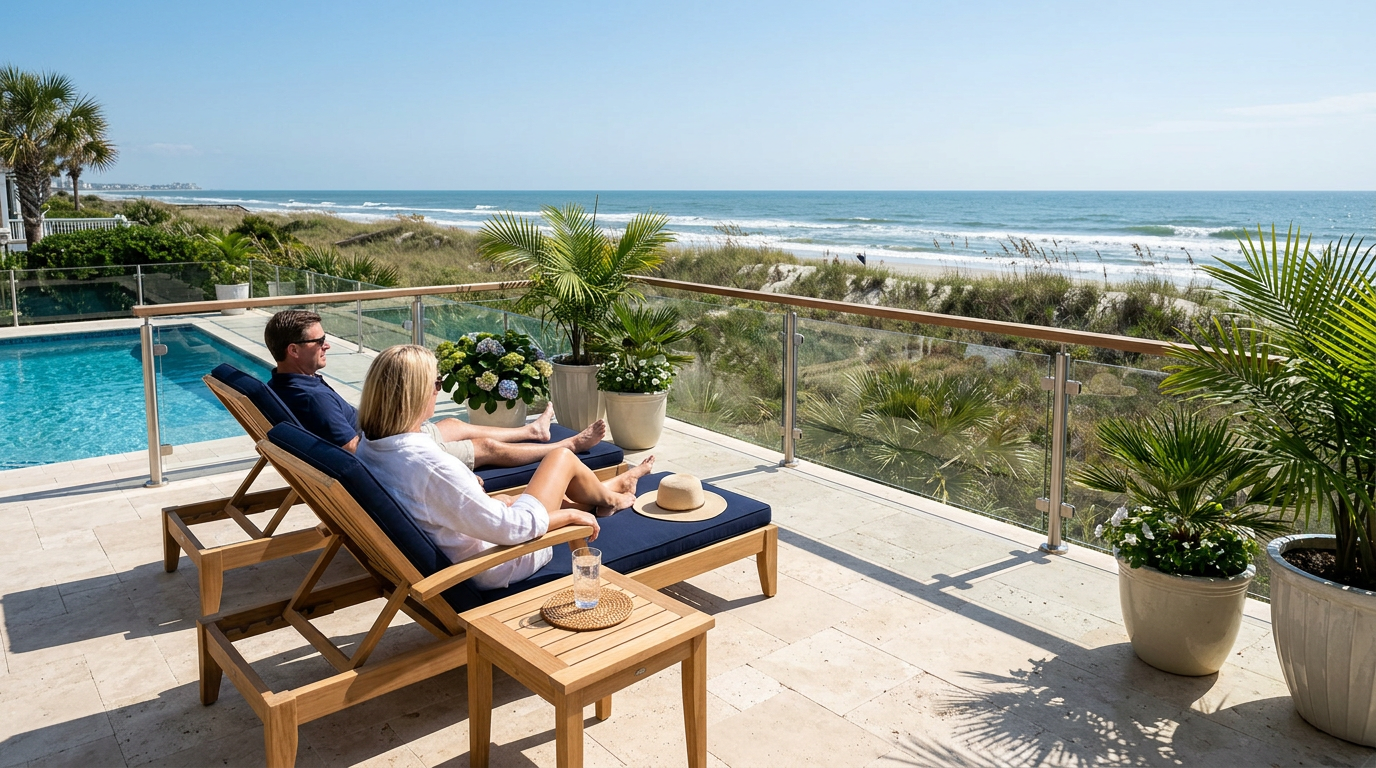
Oceanfront homes along the Grand Strand boast stunning Atlantic views, often framed by beautiful glass balustrades, pool surrounds, and windbreaker panels. However, the relentless combination of sea spray, high winds, and baking sun quickly leaves these architectural features covered in a stubborn, cloudy white crust. This isn't just an aesthetic nuisance; it is a chemical attack that can permanently etch and ruin your glass investment. Understanding the costs of professional restoration, the limits of DIY cleaning, and the chemical safety of restoration products is key to preserving your home’s value and views.
The Science of Coastal Glass Corrosion: Why Salt and Silica Bond to Grand Strand Railings
Coastal glass balustrades and windbreaker panels face a relentless environmental assault along the Grand Strand. When salt spray from the ocean lands on glass, the water evaporates, leaving behind microscopic sodium chloride crystals. These crystals do not simply sit on the surface; they act as a magnet for humidity, pulling moisture from the damp coastal air to create a highly alkaline, corrosive brine. Over time, this brine chemically attacks the silica structure of the glass, leading to microscopic pitting and a permanent white haze.
Compounding this issue is the mineral-heavy splash-back from swimming pools and hard municipal water used for nearby landscape irrigation. Calcium, magnesium, and silica minerals bond directly to the already pitted glass, creating a layered, cement-like scale. When baked by the intense South Carolina summer sun, this mineral scale undergoes a process called calcification, fusing deeply into the glass pores. Standard household glass cleaners are completely powerless to dissolve these tough chemical bonds, turning what looked like a simple cleaning task into a complex restoration challenge.
Finally, airborne sand-grit blown during seasonal storms acts as a microscopic sandblaster against these compromised glass surfaces. The fine quartz sand particles lodge into the micro-pits caused by chemical etching, creating tiny physical scratches that refract light and worsen the cloudy appearance. Once the surface smooth-coat of the glass is breached, the degradation accelerates rapidly. This transforms clear ocean views into frosted, unsightly barriers that diminish your home's curb appeal and long-term resale value.
The Cost of Professional Restoration: Price Ranges, Factors, and Local Benchmarks
Professional glass restoration along the Grand Strand typically ranges from $20 to $45 per linear foot, depending on the severity of the etching and accessibility. For a standard 40-foot oceanfront balcony, homeowners can expect a professional restoration project to cost between $800 and $1,800. If the glass has suffered severe physical scratching from sand-grit and requires multi-stage mechanical polishing with cerium oxide to level the surface, prices can increase to $60 or more per linear foot.
Accessibility is a major driver of overall restoration costs for multi-story Myrtle Beach properties. Second- and third-story balconies require specialized scaffolding, safety harnesses, or boom lifts to safely treat the exterior face of the glass panels. These rigging requirements and safety protocols can add flat mobilization fees ranging from $300 to $700 to the total invoice. Understanding these logistical challenges helps homeowners evaluate professional quotes realistically.
Additionally, the structural layout of your balustrades directly affects the labor hours required. Frameless glass panels with exposed, polished edges require meticulous hand-detailing around stainless steel spigots or standoffs to prevent metal corrosion and chemical trapping. Framed or semi-framed systems, while easier to clean in the center, demand careful tape-masking of aluminum powder-coated frames to prevent chemical staining, which adds prep time and material costs to the job.
- Standard restoration of light etching: $20 to $30 per linear foot.
- Deep mechanical polishing for heavy mineral scale and scratches: $40 to $65 per linear foot.
- High-elevation rigging or boom lift mobilization fees: $300 to $700 flat rate.
- Frameless hardware detailing: Adds $50 to $150 per balcony section depending on spigot count.
- Application of a professional-grade protective hydrophobic coating: $10 to $20 per linear foot.
DIY Glass Cleaning vs. Professional Glass Restoration: Understanding the Limits
Many Grand Strand homeowners attempt to tackle cloudy glass using household vinegar, store-bought window sprays, or heavy abrasive scrub pads. While mild household acids like white vinegar can dissolve light, fresh calcium spots, they are powerless against baked-on silica scale or deep chemical etching. Relying too heavily on acidic DIY mixtures without immediate, thorough neutralization can actually degrade the surrounding metal hardware, rubber gaskets, and mounting anchors.
The biggest risk of DIY attempts is the use of inappropriate abrasives. Homeowners often reach for green kitchen scrub pads, pumice stones, or coarse steel wool in frustration. These materials are harder than or equal to the hardness of glass, meaning they will leave thousands of microscopic scratches across the panel. Under the afternoon sun, these micro-abrasions create a blinding glare and provide an even rougher surface for salt and mineral deposits to cling to in the future.
Professional restoration, by contrast, relies on controlled mechanical leveling. Specialists use variable-speed rotary polishers equipped with rare-earth cerium oxide slurry or specialized felt pads. This process microscopically "flows" and polishes the glass surface, leveling out light scratches and chemical pits without compromising structural integrity. It is a highly technical skill that balances heat, pressure, and moisture to avoid thermal shock, which could otherwise shatter tempered safety glass.
Chemical Safety and Product Selection: Protecting Your Family, Landscaping, and Pets
Product safety is a primary concern during coastal glass restoration. Some commercial restoration products contain hydrofluoric or sulfamic acids, which are highly effective at dissolving silica but pose severe health and environmental hazards. Hydrofluoric acid can cause deep, painful chemical burns that damage bone tissue, and it releases toxic fumes. For residential use, especially near living spaces and coastal waterways, these harsh chemicals should be strictly avoided.
Furthermore, runoff from strong acidic cleaners can decimate the delicate landscaping beneath your balconies and decks. Grand Strand favorites like palm trees, hydrangeas, oleanders, and sea oats are highly sensitive to soil pH shifts caused by chemical wash-offs. Professional restorers use neutralizers and containment mats to ensure that any cleaning agents are safely captured or neutralized to a safe, neutral pH of 7 before they ever reach your lawn or coastal sandy soil.
When choosing or approving products for your home, look for biodegradable, phosphate-free chelating agents and cerium-oxide-based polishing compounds. These ingredients mechanically restore the glass luster without releasing toxic vapors or leaving persistent chemical residues that could harm pets, children, or local marine life. Safety first ensures a crystal-clear view without compromising your coastal sanctuary.
What to Ask a Grand Strand Restoration Specialist Before Hiring
When screening local cleaning and restoration companies for glass balustrade work, it is essential to ask highly specific technical questions to protect your investment. First, ask: "What is your process for neutralizing acidic cleaning agents before rinsing them onto my landscaping or pool deck?" A qualified professional will immediately explain their use of sodium bicarbonate neutralizers or active containment barriers, rather than simply rinsing chemicals into the soil.
Second, inquire about their insurance coverage and technician certifications: "Do your technicians carry specific liability coverage for high-elevation exterior glass restoration, and are they trained in using mechanical rotary polishers on tempered safety glass?" Standard house-washing insurance policies often exclude high-elevation glass polishing or damage to specialized glazing, so verifying this coverage protects you from costly accidental breakage.
Finally, ask about their post-restoration sealing options: "Do you apply a commercial-grade hydrophobic sealant after polishing, and what is the realistic lifespan of that coating under direct Grand Strand UV and salt-spray exposure?" If a company promises a lifetime warranty on exterior coatings without annual maintenance, proceed with caution. Genuine coastal coatings require specific care and periodic reapplication to remain effective against constant salt-air exposure.
- Ask about the neutralization and containment plan for chemical runoff.
- Verify specific liability insurance for high-elevation glass and mechanical polishing.
- Inquire about the exact brand and chemistry of the hydrophobic sealant used.
- Request references for other oceanfront properties they have successfully restored in the area.
- Confirm whether they hand-detail the metal spigots and hardware to prevent corrosion.
The Role of Protective Hydrophobic Coatings: Prevention and Cost-Benefit Analysis
Once glass balustrades are restored to optical clarity, applying a professional hydrophobic (water-repelling) coating is the single most important step to prevent re-etching. These advanced nano-coatings chemically bond with the silica in the glass, filling the microscopic pores to create an ultra-smooth, hydrophobic barrier. Water droplets are forced to bead up and roll off, taking salt and dirt particles with them before they can dry and bond to the surface.
The cost of applying a professional hydrophobic coating typically ranges from $10 to $20 per linear foot when added to a restoration service. While this increases the upfront project cost, it drastically reduces long-term maintenance costs and extends the lifespan of the glass. Uncoated glass in oceanfront Grand Strand locations may require professional restoration every two to three years, whereas a properly coated surface can easily go five to ten years with only basic rinsing.
When evaluating coatings, distinguish between temporary consumer spray-on sealants and professional-grade covalent-bonding nanotechnology. Consumer sprays are easily stripped away by the abrasive action of wind-blown sand and alkaline salt spray, often lasting only a few weeks. Professional-grade nano-coatings are highly resistant to UV degradation and physical abrasion, making them a far more cost-effective choice for harsh coastal environments.
A Proactive Monthly Maintenance Protocol for Homeowners
To maximize your investment and keep your coastal glass crystal clear between professional visits, homeowners should implement a gentle, proactive maintenance routine. The absolute golden rule of coastal glass care is to never clean dry glass. Always rinse the panels thoroughly with clean, fresh water from a garden hose first to wash away abrasive sand grains and loose salt crystals, preventing scratches during the wiping phase.
After rinsing, wash the glass using a soft microfiber wand and a bucket of warm water mixed with a few drops of pH-neutral, biodegradable dish soap or a dedicated glass-safe surfactant. Avoid using hard well water for this step; if possible, use filtered or soft water to prevent leaving mineral deposits behind. Gently squeegee the water off using a high-quality brass or stainless steel squeegee with a fresh rubber blade, working from top to bottom.
To finish, use a dry, clean waffle-weave microfiber cloth to wipe the edges and any remaining droplets around the metal hardware. By establishing this quick, chemical-free routine once or twice a month, you prevent salt crusts and pool chemicals from remaining on the glass long enough to initiate the etching process, preserving your breathtaking Grand Strand views for years to come.
Key takeaway
Restoring coastal glass balustrades from salt-scale etching is a highly technical task that balances mechanical polishing, chemical safety, and long-term prevention. While DIY cleaning is suitable for weekly maintenance, reversing baked-on mineral damage requires professional expertise and high-performance hydrophobic nano-coatings. For expert care and restoration of your Grand Strand coastal glass features, contact the family-owned team at A2Z Cleaning & Linen Services at 843.800.2788.
Keep Reading
Coastal Living
The Cost of Restoring Coastal Exterior Light Fixtures and Lanterns: Mitigating Salt-Air Oxidation, Glass Etching, and Safe Electrical Upkeep in Grand Strand Homes
ReadCoastal Living
The Coastal Family Orthopedic Pet Bed, Indoor Dog Crate, and Washable Travel Mat Decontamination Protocol: Mitigating Humid Sebum-Saturated Odors, Sand-Flea Larvae Risks, and Child-Safe Botanical Sanitization in Grand Strand Homes
ReadCoastal Living
The Cost of Restoring Coastal Outdoor Kitchens: Mitigating Salt-Air Stainless Pitting, Stone Etching, and Food-Grease Bonding in Grand Strand Homes
ReadReady for a spotless property?
Call 843.800.2788 or request a free quote from A2Z Cleaning & Linen Services.