Coastal Living
The Cost of Restoring Coastal Outdoor Kitchens: Mitigating Salt-Air Stainless Pitting, Stone Etching, and Food-Grease Bonding in Grand Strand Homes
Discover the costs, safety protocols, and professional methods required to restore and protect your luxury outdoor kitchen from the harsh Myrtle Beach salt air and coastal sun.
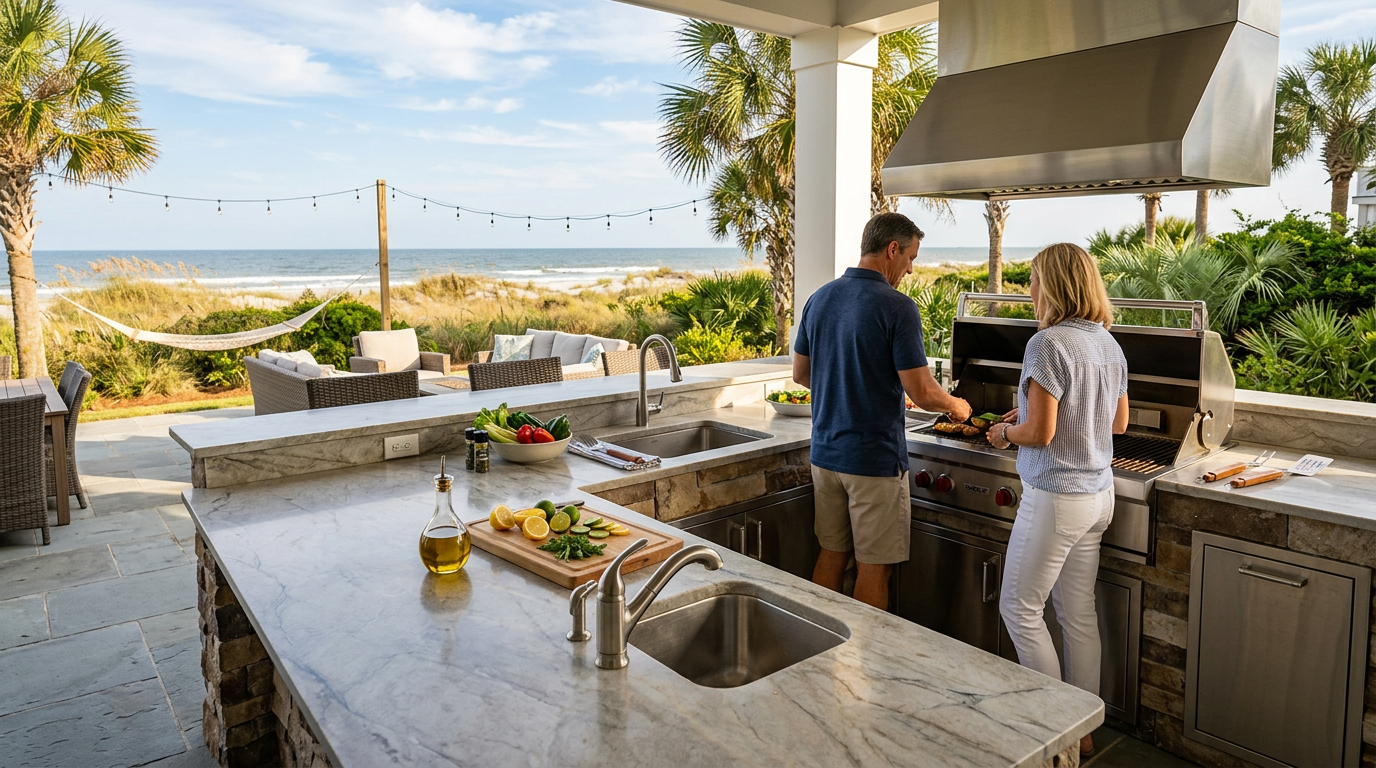
Outdoor kitchens are the crown jewels of Grand Strand backyards, offering the perfect space for entertaining against the backdrop of our coastal breezes. However, the very elements that make Myrtle Beach living so desirable—salty air, relentless humidity, and intense UV rays—are highly destructive to premium outdoor cooking materials. From pitted stainless steel grills to etched, sun-bleached granite countertops, these luxury investments require specialized care to survive the coastal climate. This guide breaks down the true costs, safety protocols, and professional methods required to restore and protect your outdoor culinary oasis.
The Coastal Corrosion Calculus: How Salt Air and Sun Degrade Outdoor Kitchen Materials
Many Grand Strand homeowners invest heavily in outdoor kitchens to enjoy our beautiful climate, only to watch their expensive stainless steel and premium granite dull within a few short seasons. The combination of airborne salt spray from the Atlantic and high humidity creates an aggressive electrochemical environment. When sodium chloride settles on stainless steel, it breaks down the protective chromium oxide layer, initiating a process known as pitting corrosion. Without prompt intervention, these tiny black or brown pits structurally compromise the metal, turning a luxury feature into an eyesore.
Simultaneously, the intense Carolina sun degrades the protective sealers on granite and stone countertops. Ultraviolet rays break down chemical bonds in standard topical sealers, leaving the stone vulnerable to moisture intrusion, food stains, and organic mold growth. Once the sealer fails, acidic coastal rain and salty air penetrate the porous stone, causing micro-fissures and a dull, chalky appearance. This combination of salt-air exposure and sun damage requires a specialized restoration approach that standard indoor cleaning routines simply cannot address.
The problem is further compounded by high-heat cooking grease. During summer barbecues, atomized cooking oils and animal fats settle onto nearby metal and stone surfaces. Under the baking Myrtle Beach sun, these lipids polymerize, transforming into a sticky, amber-colored varnish. This polymerized grease acts like a magnet, trapping abrasive salt crystals and moisture directly against the substrates. This accelerates both the oxidation of the steel and the staining of the stone, creating a stubborn, layered deposit that is incredibly difficult to remove safely.
DIY Maintenance vs. Professional Restoration: Where to Draw the Line
Keeping a coastal outdoor kitchen in pristine condition requires a clear understanding of what you can safely handle yourself and when you need to call in a professional. Homeowners can easily manage daily and weekly maintenance tasks. Regularly wiping down surfaces with clean, fresh water and a mild, pH-neutral dish soap is highly effective at removing fresh salt deposits and superficial cooking grease. Utilizing breathable, high-quality covers when the kitchen is not in use also provides excellent baseline defense against the elements.
However, once you notice physical changes in the surfaces, such as rough rust spots, deep pitting, dark grease buildup that resists scrubbing, or a cloudy haze on your granite, DIY methods are no longer sufficient. Professional restoration is required to mechanically polish out metal pits, chemically passivate the stainless steel, and hone the stone surfaces back to their original luster. Attempting to address these advanced issues without professional training and specialized equipment often leads to permanent, expensive damage.
A common DIY mistake we see along the Grand Strand is the use of abrasive steel wool or harsh household chemicals like bleach and ammonia. Steel wool leaves tiny carbon steel particles embedded in the stainless steel surface, which quickly rust and accelerate the destruction of the underlying metal. Acidic cleaners or aggressive scrubbing pads can instantly etch granite and scratch metal finishes, turning a minor restoration job into a total replacement scenario. Knowing when to step back preserves both your sanity and your outdoor kitchen's value.
The True Cost of Professional Outdoor Kitchen Restoration in the Grand Strand
When planning a professional restoration, understanding the local cost structure helps you set a realistic budget. For a standard outdoor kitchen in the Myrtle Beach area—typically featuring a built-in grill, a small under-counter refrigerator, and ten to fifteen linear feet of stone countertop—a professional cleaning, rust removal, and sealing service generally ranges from $450 to $950. This tier of service addresses moderate salt-air scaling, minor stainless steel pitting, deep grease extraction, and stone resealing.
For outdoor kitchens suffering from severe corrosion, deep pitting, or heavily stained and etched stone, a comprehensive restoration is required. This advanced process involves multi-stage mechanical honing of the stone, specialized metal grain-matching, chemical passivation, and the application of marine-grade protective coatings. These intensive projects typically cost between $1,200 and $2,400, depending on the size of the kitchen and the severity of the damage. While this represents a significant investment, it is a fraction of the cost of replacing high-end outdoor appliances and stone countertops.
When evaluating these costs, homeowners must consider the long-term financial benefits. Replacing a ruined built-in grill and damaged granite can easily exceed $10,000 to $15,000 when factoring in plumbing, electrical, and masonry labor. Investing in professional restoration every few years not only maintains the aesthetic appeal and market value of your property but also extends the operational lifespan of your outdoor appliances by a decade or more, making it a highly cost-effective home maintenance decision.
- Basic Clean & Seal ($450 - $950): Best for minor salt film, light grease, and routine stone sealing.
- Moderate Restoration ($950 - $1,500): Addresses visible rust pitting, light stone etching, and deep metal polishing.
- Advanced Reconstruction ($1,500 - $2,400+): Involves multi-stage stone honing, metal passivation, and marine-grade protective barriers.
- Replacement Cost Comparison: Restoration typically costs only 10% to 15% of complete outdoor kitchen replacement.
Chemical and Product Safety: Selecting the Right Compounds for Food-Contact Surfaces
Safety must be the primary consideration when restoring any space where food is prepared and consumed. Many industrial-strength rust removers and degreasers contain highly toxic chemicals, such as hydrofluoric acid or heavy solvents, which leave dangerous residues on grill grates, prep counters, and sinks. A reputable restoration company will always prioritize food-safe, biodegradable chemistries that effectively break down coastal grime without posing health risks to your family, guests, or pets.
Furthermore, our coastal geography means that runoff from patio cleaning can easily migrate into nearby lawns, sandy soils, and local Grand Strand waterways. Using harsh, non-biodegradable chemicals can harm local landscaping and delicate coastal ecosystems. Professional technicians utilize specialized containment strategies and eco-friendly chelating agents that capture rust and grease at the molecular level, ensuring that wash water can be safely managed without environmental damage.
When discussing product safety, look for companies that use botanical degreasers and NSF-certified cleaning compounds. These specialized products are specifically labeled for use in food processing areas and do not leave behind volatile organic compounds (VOCs) or toxic chemical films. Once the restoration is complete, all food-contact surfaces should undergo a final clean-water rinse and sanitation step, leaving the kitchen completely safe for your next backyard cookout.
Essential Questions to Ask a Coastal Restoration Contractor
Before hiring any company to restore your luxury outdoor kitchen, it is critical to ask the right qualifying questions. Start by asking about their specific experience with marine environments and coastal salt-air remediation. An indoor cleaning company may not understand the unique challenges of salt pitting and solar UV degradation. A qualified contractor should be able to explain the exact science of why your stainless steel is rusting and detail their specific process for reversing it.
Next, inquire about the type of stone sealers they utilize. Ask specifically if they use solvent-based penetrating impregnators designed for exterior use, rather than cheap, water-based topical sealers. Topical sealers quickly peel and yellow under the harsh Myrtle Beach sun, whereas professional-grade penetrating sealers bond with the stone's internal structure, providing deep protection without altering the slip resistance or trapping moisture beneath the surface of the granite.
Finally, ask about their metal passivation process. Passivation is a chemical treatment that restores the corrosion-resistant chromium oxide layer on stainless steel. If a contractor simply polishes the surface with oil or WD-40, the rust will return within weeks. A true professional uses specialized citric or phosphoric acid formulations to strip free iron from the steel's surface, allowing the protective oxide layer to reform naturally and defend the metal against future salt-air attacks.
- Do you use food-safe, NSF-certified products on cooking and food prep surfaces?
- What is your process for chemically passivating stainless steel to prevent future rust?
- Do you use exterior-grade penetrating stone sealers or topical coatings?
- Are your cleaning technicians fully insured and trained specifically in coastal material restoration?
The Step-by-Step Professional Restoration Protocol: What to Expect
A professional outdoor kitchen restoration is a meticulous, multi-stage process that begins with thorough preparation. Technicians start by masking off surrounding areas, including wood decks, pavers, landscaping, and electrical outlets, to protect them from moisture and cleaning agents. They then apply a high-foaming, botanical degreaser to the entire kitchen, letting it dwell to break down polymerized grease, pollen, and environmental soot before performing a low-pressure, hot-water rinse.
Once the grease is removed, technicians focus on metal restoration. They use specialized abrasive pads, moving strictly in the direction of the metal's factory grain, to mechanically erase rust pits and surface scratches. Next, a chemical passivation gel is applied to the stainless steel. This gel dissolves microscopic iron particles on the surface, leaving behind a clean chromium-rich layer that reacts with oxygen to form a highly durable, self-healing barrier against coastal salt air.
The final phase focuses on the stone countertops. Technicians use professional polishing machines with diamond-infused pads to hone away etched spots, hard-water mineral rings, and sun-bleached layers. Once the stone's natural color and clarity are restored, they apply a premium, UV-stable penetrating sealer. This sealer is allowed to cure, and the entire kitchen receives a final, food-safe sanitizing wipe down, leaving the space looking brand new and ready for immediate use.
Proactive Homeowner Prevention: Extending the Life of Your Restored Space
After investing in a professional restoration, implementing a simple, proactive maintenance routine will keep your outdoor kitchen looking beautiful for years to come. The most important step is to rinse the kitchen with fresh water weekly, especially after windy days when salt spray is heavy. Using a soft microfiber cloth and a mild, pH-neutral dish soap to gently clean the surfaces prevents salt crystals from binding to the metal and stone, stopping corrosion before it starts.
When covering your outdoor kitchen, always choose high-quality, breathable covers. Cheap plastic tarps or non-breathable vinyl covers trap humidity and condensation underneath, creating a damp greenhouse effect that accelerates rust and mold growth on stone grout lines. Look for covers with built-in mesh vents that allow air to circulate freely while keeping direct rain, leaves, and bird droppings off your investment.
Finally, be mindful of what touches your countertops. Acidic foods and liquids—such as lemon juice, tomatoes, vinegar, and red wine—can quickly etch even sealed stone if left to sit. Always use cutting boards, clean up spills immediately, and avoid placing hot pots or grill grates directly onto the stone surface. By combining professional-grade restoration with simple weekly care, your Grand Strand outdoor kitchen will remain a stunning and functional centerpiece for outdoor entertaining.
Key takeaway
Your coastal outdoor kitchen is a significant investment that requires specialized, marine-grade care to survive the Grand Strand's salty, humid air. By choosing food-safe professional restoration over risky DIY chemical experiments, you can preserve the beauty and structural integrity of your stone and steel for a fraction of the replacement cost. For professional assistance protecting your home's outdoor culinary space, contact A2Z Cleaning & Linen Services at 843.800.2788.
Keep Reading
Coastal Living
The Cost of Restoring Coastal Natural Stone Tile and Grout: Mitigating Salt-Air Etching, Sand-Grit Erosion, and Acidic DIY Damage in Grand Strand Homes
ReadCoastal Living
The Cost of Restoring Coastal Stainless Steel Outdoor Kitchens: Mitigating Salt-Air Tea-Staining, Pitting Corrosion, and Polymerized Grease in Grand Strand Homes
ReadCoastal Living
The Coastal Family Screened Porch, Pet Door Flap, and Indoor-Outdoor Transition Rug Decontamination Protocol: Mitigating Humid Pollen-Pet Sebum Binding, Sand-Silt Wear, and Child-Safe Botanical Care in Grand Strand Homes
ReadReady for a spotless property?
Call 843.800.2788 or request a free quote from A2Z Cleaning & Linen Services.