Coastal Living
The Cost of Restoring Coastal Natural Stone Tile and Grout: Mitigating Salt-Air Etching, Sand-Grit Erosion, and Acidic DIY Damage in Grand Strand Homes
Discover the true costs of natural stone restoration in Myrtle Beach, the chemical risks of DIY cleaning hacks, and how to safely protect travertine, marble, and slate from harsh coastal elements.
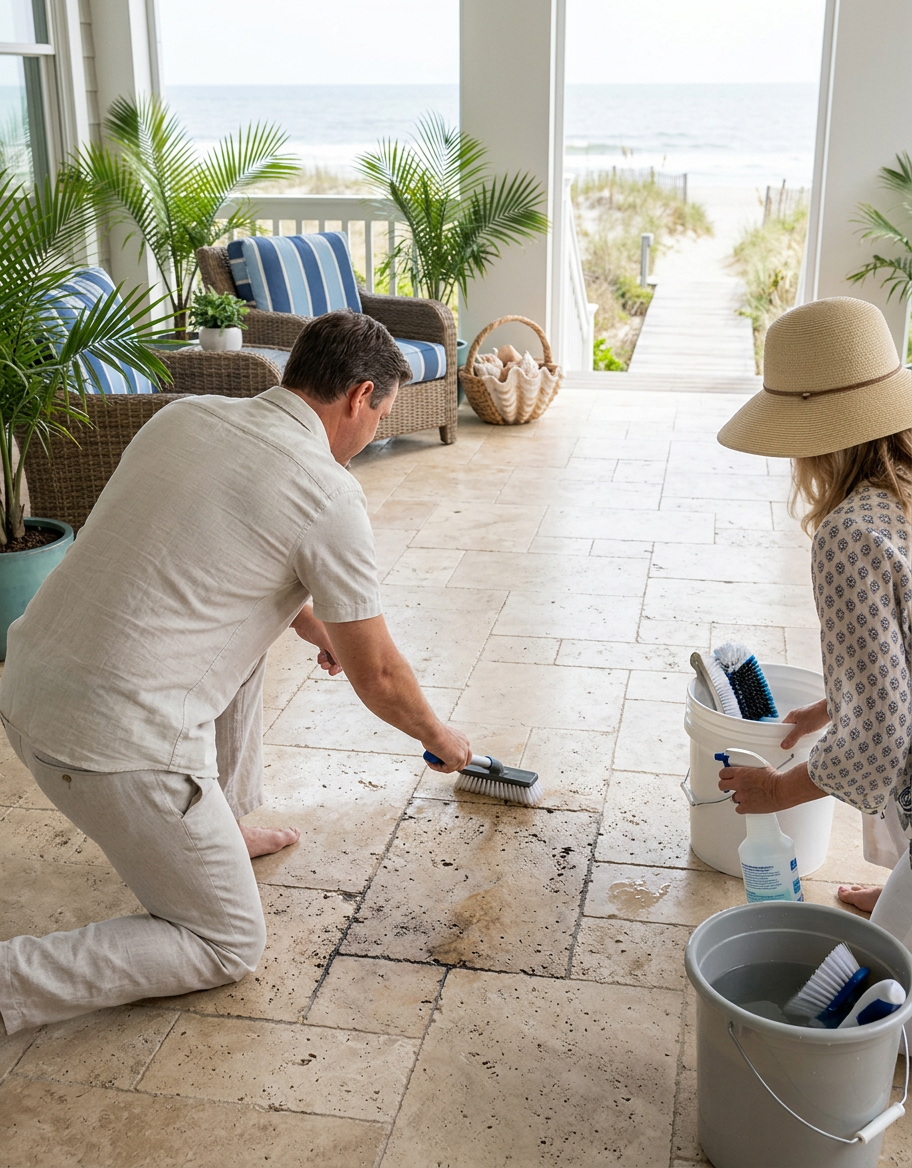
Natural stone flooring—such as travertine, slate, and marble—adds undeniable coastal elegance to Grand Strand homes, but the local environment poses unique threats to these premium surfaces. From wind-blown silica sand tracking across Pawleys Island entryways to salt-laden humidity settling on polished marble in North Myrtle Beach, coastal elements constantly compromise stone integrity. Compounding these natural threats is a widespread consumer misunderstanding of stone chemistry, leading many homeowners to ruin their investments with acidic DIY remedies. This guide provides a clear, cost-oriented roadmap for maintaining, restoring, and protecting your coastal natural stone surfaces while avoiding expensive repair mistakes.
The Coastal Threat Matrix: How Salt, Sand, and Humidity Compromise Natural Stone
Natural stone tiles are inherently porous, functioning like hard sponges that absorb moisture and airborne contaminants. In our Grand Strand coastal environment, high relative humidity carries microscopic salt crystals deep into the stone's capillary pores. When the humidity drops or indoor air conditioning dries the tile, these salt crystals recrystallize and expand. This process, known as subflorescence, exerts immense internal pressure within the stone, eventually causing spalling, micro-flaking, and surface pitting that ruins polished finishes.
Compounding the salt threat is the continuous influx of fine beach sand, which acts as a heavy-duty abrasive underfoot. Sharp silica particles are tracked into coastal entryways, kitchens, and living areas from local beaches. As family members and guests walk across these areas, the sand acts like sandpaper, grinding down protective sealers and scratching the soft calcium carbonate structures of travertine, marble, and limestone. Once the surface is scratched, dirt and moisture penetrate even deeper, accelerating staining and degradation.
Grout lines are equally vulnerable to our coastal climate, often serving as breeding grounds for mold and mildew. The porous cementitious grout used in many older Grand Strand homes easily absorbs moisture and organic debris. Over time, the combination of coastal humidity and microscopic salt deposits weakens the chemical bonds of the grout, causing it to crumble, discolor, and pull away from the tile edges, leaving the subfloor vulnerable to water intrusion.
Restoration Cost Realities: Maintenance Cleaning vs. Professional Refinishing
Understanding the financial differences between routine professional maintenance and deep physical restoration is essential for Grand Strand homeowners budgeting for property care. A standard professional deep cleaning of natural stone tile and grout—which typically involves a specialized alkaline cleaner, agitation, and high-pressure hot water extraction—ranges from $1.50 to $3.00 per square foot. This process effectively removes embedded dirt, oily residues, and surface stains but cannot repair scratches, chips, or chemical etch marks.
When the stone’s surface is physically damaged, scratched, or heavily etched, a complete mechanical restoration is required. This technical process utilizes progressive grits of diamond-impregnated pads attached to heavy floor machines to grind down the damaged surface and rebuild the polish. Professional diamond honing and polishing costs significantly more, typically ranging from $5.00 to $11.00 per square foot, depending on the severity of the damage, the hardness of the stone, and the accessibility of the space.
Grout restoration and repair introduce additional variables to the final invoice. Patching cracked grout, replacing missing sections, or applying a specialized color sealer to protect and unify the appearance of stained grout lines adds between $2.00 and $5.00 per linear foot. While these upfront restoration costs can seem substantial, they represent a fraction of the cost of completely removing and replacing a damaged natural stone floor, which frequently exceeds $35 to $50 per square foot in the Myrtle Beach region when labor and materials are factored in.
- Basic Professional Tile & Grout Deep Clean: $1.50 to $3.00 per square foot.
- Professional Diamond Honing, Polishing, and Lippage Removal: $5.00 to $11.00 per square foot.
- Grout Repair, Color-Sealing, and Joint Stabilization: $2.00 to $5.00 per linear foot.
- Full Floor Replacement (Demolition, Subfloor Prep, New Stone, and Install): $35.00 to $50.00+ per square foot.
Safe DIY Maintenance: Daily Protocols for Coastal Homeowners
The most effective way to limit restoration costs is to implement a strict, stone-safe daily maintenance routine that addresses our specific coastal challenges. The absolute first line of defense is dry soil removal. Instead of vacuuming with a hard brush bar, which can scratch soft stones like travertine, homeowners should use a high-quality microfiber dust mop daily to collect fine beach sand before it can be ground into the surface by foot traffic.
For damp mopping, select a specialized pH-neutral stone cleaner formulated specifically for natural surfaces. These concentrated cleaners safely emulsify soils without leaving behind a dulling residue or stripping away protective sealers. Dilute the cleaner with warm water according to the manufacturer's instructions, and use a clean microfiber mop head rather than a traditional cotton string mop, which tends to redeposit dirty water back into the porous grout joints.
To protect your high-traffic entryways, place high-quality walk-off mats both outside and inside all exterior doors. These mats should have a non-slip backing that does not contain plasticizers, which can bleed into and stain natural stone over time. Encourage family members and guests to remove their shoes upon entry, drastically reducing the volume of abrasive silica sand and salt residues introduced to your home's stone flooring.
Evaluating Product Safety: Penetrating Impregnators vs. Topical Coatings
Choosing the correct sealer for natural stone in a high-humidity coastal environment is critical for preserving both the stone's appearance and structural health. Topical sealers, which create a physical film or barrier on top of the stone, should generally be avoided on natural stone flooring. These coatings block the stone's natural pores, trapping moisture and salt vapor underneath the film. In the humid Grand Strand climate, this trapped moisture leads to a cloudy, white haze under the sealer, a condition known as efflorescence, which eventually causes the topical coat to peel and flake.
Instead, homeowners should insist on high-quality penetrating impregnating sealers. These products use fluorochemical or silicone technology to penetrate beneath the stone's surface, lining the pores with hydrophobic and oleophobic polymers. This allows the stone to remain breathable, letting moisture vapor escape while actively repelling liquid water, body oils, and food spills. Impregnators do not alter the slip resistance or gloss of the stone, keeping the surface natural and safe.
When selecting a penetrating sealer, look for solvent-based formulas for maximum durability, though water-based options are safer for indoor air quality and have lower VOC profiles. Always ensure the product is labeled food-safe if applying it to kitchen countertops or outdoor bar areas. Properly applied premium impregnators will protect natural stone for three to five years, though high-traffic Grand Strand coastal rentals may require annual reapplication in heavy-use zones.
When to Call the Professionals: Recognizing True Stone Damage
Knowing when to transition from DIY care to professional intervention can save Grand Strand homeowners thousands of dollars in irreversible damage. If your stone tiles look hazy or dull even after a thorough cleaning with a pH-neutral solution, the sealer has likely worn away, and the stone has suffered micro-abrasions from sand. This loss of clarity cannot be corrected with retail cleaners or DIY polishing powders, which often contain hidden acids that only worsen the problem.
Deep scratches, gouges, or chipped tile corners (known as spalling) are also clear indicators that professional help is needed. A stone restoration specialist can color-match polyester or epoxy resins to fill holes, chips, and cracks, seamlessly blending the repairs with the natural veining of the stone before grinding them flush. Similarly, if your grout is crumbling, falling out, or showing signs of deep mold that resists gentle scrubbing, professional extraction and regrouting are necessary to prevent structural water damage.
Finally, if you notice localized discoloration or darkening of the stone, especially around toilets, showers, or exterior sliding glass doors, you are likely dealing with moisture intrusion or "shadowing." This occurs when water penetrates deep beneath the tile, carrying dissolved minerals upward. A professional stone technician can use specialized moisture meters and poultice treatments to draw out the trapped moisture and mineral salts safely, preventing permanent stone rot.
What to Ask a Stone Restoration Company: Vetting Local Contractors
Not all cleaning companies possess the specialized training and equipment required to handle natural stone. When hiring a contractor in the Myrtle Beach area, always ask if they carry specific certifications from recognized industry bodies, such as the Natural Stone Institute or the IICRC (Institute of Inspection, Cleaning and Restoration Certification). A qualified stone technician should be able to explain the exact mineral makeup of your specific stone and tailor their chemistry accordingly.
Inquire about the specific mechanical processes they intend to use on your floors. Be wary of any contractor who proposes using high-pressure truck-mounted cleaning systems without first inspecting the integrity of your grout, as excessive pressure can easily blow out aged or weakened grout joints. Ask if they use diamond abrasive pads for honing and polishing, and request a detailed explanation of their dust-containment systems, as dry-grinding stone creates hazardous silica dust that must be mitigated with wet-shaving methods or HEPA-filtered vacuum extraction.
Finally, request a written contract that details the exact sealers and cleaning agents they plan to apply. Ask about the warranty provided on their sealers, especially in high-humidity coastal applications, and confirm that they carry adequate liability insurance specifically covering natural stone restoration. A reputable local service provider, such as the team at A2Z Cleaning & Linen Services, will gladly provide transparent answers, detailed process explanations, and clear maintenance guidelines to ensure your stone remains a stunning asset for years to come.
- Are your technicians specifically certified in natural stone care by the IICRC or the Natural Stone Institute?
- Do you use wet-diamond honing methods to control crystalline silica dust inside the home?
- Can you provide a precise chemical breakdown of the sealers you plan to use, ensuring they are breathable, penetrating impregnators?
- How do you protect adjacent surfaces, such as baseboards, stainless steel appliances, and wood transitions, during the polishing process?
Key takeaway
Natural stone tile is a significant investment that requires specialized, chemistry-aware maintenance to withstand the harsh Grand Strand coastal elements. By avoiding acidic DIY cleaning products, committing to daily dry sand removal, and partnering with certified stone professionals for periodic deep care, Myrtle Beach homeowners can protect their stone’s integrity and avoid premature, high-cost replacements. For professional stone evaluation and maintenance, contact the experts at A2Z Cleaning & Linen Services at 843.800.2788.
Keep Reading

Coastal Living
The Cost of Restoring Coastal Stainless Steel Outdoor Kitchens: Mitigating Salt-Air Tea-Staining, Pitting Corrosion, and Polymerized Grease in Grand Strand Homes
ReadCoastal Living
The Cost of Restoring Coastal Natural-Fiber Rugs: Jute, Sisal, and Seagrass Cleaning Chemistry and Professional Vetting for Grand Strand Homeowners
ReadCoastal Living
The Coastal Family Washable Sofa Slipcover and Accent Cushion Decontamination Protocol: Mitigating Humid Sand-Grit Infusion, Pet Sebum Odors, and Child-Safe Botanical Care in Grand Strand Homes
ReadReady for a spotless property?
Call 843.800.2788 or request a free quote from A2Z Cleaning & Linen Services.