Coastal Living
The Cost of Restoring Coastal Stainless Steel Outdoor Kitchens: Mitigating Salt-Air Tea-Staining, Pitting Corrosion, and Polymerized Grease in Grand Strand Homes
Learn the costs, chemistry, and safety of restoring coastal stainless steel outdoor kitchens in Myrtle Beach. Discover how to protect your high-value investment from salt-air corrosion.
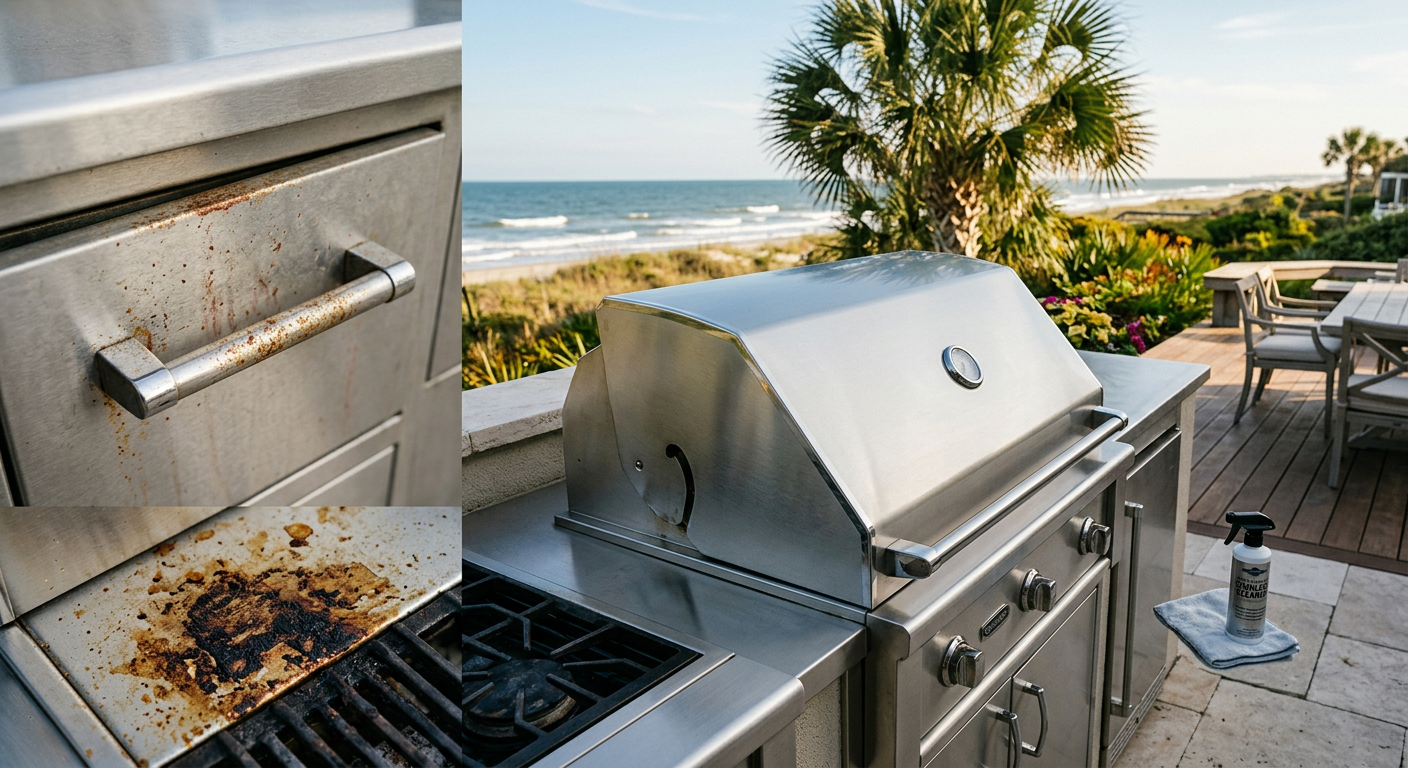
Outdoor kitchens are a hallmark of Grand Strand luxury, offering the perfect venue for entertaining along the salt marshes, tidal creeks, and oceanfront properties of Myrtle Beach. However, the relentless combination of high humidity, airborne sodium chloride, and intense subtropical heat quickly turns pristine stainless steel into a rusted, pitted eyesore. Understanding the specialized science of coastal stainless steel restoration is crucial for protecting these high-value outdoor investments. This consumer guide breaks down the actual costs of restoration, delineates safe DIY tactics from professional-grade intervention, and explains how to vet local specialists to preserve your outdoor living space.
The Chemistry of Coastal Stainless Steel Degradation
Stainless steel relies on a microscopic, self-healing chromium oxide passive layer to resist rust. In the high-salinity environment of the Grand Strand, airborne salt particles settle on this surface, absorbing atmospheric moisture to form a highly corrosive electrolyte solution. This solution breaks down the protective chromium oxide layer faster than it can reform, exposing the raw iron beneath to oxygen and initiating "tea-staining"—an unsightly brown cosmetic rust.
If tea-staining is left unaddressed, the corrosion deepens from cosmetic staining into localized structural damage known as pitting. Pitting occurs when chloride ions penetrate microscopic imperfections in the metal, creating tiny, self-accelerating acidic chambers that eat cavities directly into the steel. This is particularly aggressive in lower-grade stainless steels, such as 304 grade, which is commonly used in residential outdoor kitchens, whereas marine-grade 316 stainless steel contains molybdenum to better withstand this localized chemical attack.
Compounding this chemical breakdown is the presence of polymerized, high-heat cooking grease. When grease is baked onto a hot grill surface and subsequently exposed to salty, humid coastal air, it creates a hybrid bio-chemical crust. This crust traps moisture and salt directly against the metal surface, starving the steel of the oxygen it needs to rebuild its passive chromium layer, which accelerates subsurface pitting and permanent structural degradation.
The Cost Matrix of Restoration vs. Replacement
Replacing a premium outdoor kitchen setup in the Myrtle Beach area is an expensive undertaking. High-end built-in grills, marine-grade stainless cabinetry, and custom stone enclosures regularly range from $15,000 to over $45,000, depending on the layout and appliance specifications. When salt-air corrosion degrades these units, homeowners often assume total replacement is the only viable path to restore aesthetic and functional standards.
In contrast, professional deep restoration of a severely oxidized, tea-stained outdoor kitchen typically costs between $1,200 and $3,500. This pricing varies based on the total square footage of the metal surfaces, the depth of the pitting corrosion, and the complexity of the appliance disassembly required to access hidden joints. Restoration not only saves up to 90 percent of replacement costs but also preserves the surrounding stone and masonry from the damage of a full demolition.
When evaluating these costs, homeowners must consider the long-term value of professional passivation. A basic cleaning simply removes visible rust, leaving the vulnerable metal open to rapid re-oxidation within weeks. True professional restoration includes chemical passivation and the application of marine-grade ceramic or polymer sealants, which extends the service life of the existing stainless steel by several years and maximizes the return on your initial luxury outdoor kitchen investment.
DIY Mitigation: What Homeowners Can Safely Attempt
Homeowners can successfully manage light, early-stage tea-staining using non-abrasive household techniques. Applying a thick paste of baking soda and water, or utilizing mild commercial cleaning agents like Bar Keepers Friend (which contains oxalic acid), can effectively dissolve superficial iron oxide without scratching the metal. Always rub these mixtures strictly in the direction of the metal's grain using a non-metallic, white nylon scrub pad to prevent micro-scratching.
However, DIY attempts often fail—or cause permanent damage—when improper tools and chemicals are introduced. Steel wool, brass wire brushes, and abrasive sandpapers should never be used, as they imbed microscopic carbon steel particles into the stainless steel, sparking rapid, aggressive galvanic corrosion. Furthermore, household bleach or any cleaner containing chlorine must be strictly avoided; chlorine is a halogenous chemical that rapidly destroys the chromium oxide layer, accelerating pitting corrosion.
When rust has progressed to deep pitting, or when polymerized grease has bonded with salt crusts into a hard, black lacquer, DIY methods reach their physical limits. Attempting to scrape away these deep deposits with metal putty knives or harsh household degreasers will scratch the substrate and strip remaining protective finishes. At this stage, professional restoration is required to safely dissolve the contamination without compromising the mechanical integrity of the luxury appliance.
- Oxalic acid-based paste cleansers: Safely dissolves surface rust without scratching the underlying metal grain.
- White nylon scrub pads: Provides gentle mechanical agitation without embedding rust-causing carbon steel fibers.
- Steel wool and brass brushes (Avoid): Microscopic metal fragments left behind will cause aggressive galvanic corrosion.
- Chlorine-based bleach (Avoid): Destroys the chromium oxide layer instantly, initiating deep and permanent pitting.
- Hydrofluoric acid cleaners (Avoid): Highly toxic, dangerous to handle, and will permanently etch surrounding stone and glass.
The Professional Restoration Protocol: Passivation and Correction
Professional technicians employ a multi-phase chemical and mechanical process designed to restore the metal's molecular defense system. First, the surfaces are thoroughly degreased using industrial, pH-neutral bio-solvents to strip away caramelized cooking oils. Once the bare metal is exposed, technicians apply specialized, gelled chelating agents—often based on phosphoric or citric acid—to chemically dissolve the iron oxides within the microscopic pits without attacking the healthy underlying steel.
After the rust is chemically extracted, the metal undergoes mechanical correction to eliminate superficial scratches and restore a uniform grain. Technicians use sequence-graded abrasive pads and specialized polishing compounds to blend the surface back to its original luster. This step requires precise hand-eye coordination and consistent pressure; improper mechanical polishing can create heat friction that distorts the grain or warps thin-gauge stainless steel panels.
The final, critical phase of professional restoration is chemical passivation. Technicians apply a highly concentrated citric acid or nitric acid solution to strip free iron from the surface, leaving behind a high concentration of chromium. This chromium reacts instantly with atmospheric oxygen to form a dense, uniform, and highly durable chromium oxide passive barrier. This barrier is then sealed with a hydrophobic marine-grade ceramic coating to repel salt-laden moisture and prolong the restored finish.
Chemical Safety and Environmental Protections in Coastal Zones
Cleaning outdoor kitchens along the Grand Strand requires strict adherence to environmental safety protocols, as these structures are often located adjacent to sensitive ecosystems. Runoff containing harsh acids, strong alkalines, or heavy metals can easily enter local stormwater drains, lawns, and nearby marshlands or tidal creeks. Professional restoration teams utilize localized containment strategies, such as absorbent booms and vacuum extraction systems, to capture all chemical rinsate before it touches the soil.
Product safety is equally critical for the family and pets who share the outdoor living space. Many off-the-shelf industrial rust removers contain hydrofluoric acid, an extremely toxic chemical that poses severe risks to human health and can permanently etch nearby glass railings or stone countertops. Homeowners should demand that any service provider uses biodegradable, VOC-compliant, and non-fuming citric acid-based chelating agents that deliver high-performance rust removal without toxic off-gassing or bioaccumulative environmental hazards.
In addition to chemical safety, physical protections must be established for adjacent materials. High-strength restoration acids can chemically etch natural stone countertops, bleach pool deck sealers, and corrode aluminum fasteners. Professional teams mask all surrounding granite, travertine, or wood cabinetry with heavy-duty polyethylene sheeting and acid-resistant tapes. This meticulous prep work ensures that the aggressive cleaning agents target only the compromised stainless steel, preventing costly collateral damage to the rest of your outdoor kitchen.
Critical Questions to Ask a Grand Strand Restoration Specialist
Before hiring a company to restore your high-end outdoor kitchen, it is vital to verify their technical expertise in coastal metal metallurgy. Ask the contractor if they perform chemical passivation as part of their restoration workflow. If they reply that they simply "polish out the rust" with a standard metal cleaner, they lack the technical understanding required to prevent the immediate return of tea-staining in our high-salinity Grand Strand climate.
Inquire about the specific chemistry they intend to use around your home and its safety profile for surrounding ecosystems and materials. Ask: "Can you provide the Safety Data Sheets (SDS) for the rust removers and passivation acids you will use, and how will you protect my natural stone countertops and lawn from runoff?" A qualified professional will readily explain their containment protocols and demonstrate a clear plan to protect your landscaping, pets, and hardscapes.
Finally, request details regarding their insurance coverage and warranty policies. A reputable specialist operating along the Grand Strand should carry comprehensive commercial general liability insurance that specifically covers chemical restoration work. Ask what kind of post-restoration warranty or maintenance program they offer; because of our intense coastal environment, a quality provider should stand behind their protective sealants and offer structured, recurring maintenance options to keep the metal protected year-round.
- Does your restoration process include chemical passivation to rebuild the chromium oxide layer?
- Can you provide the Safety Data Sheets (SDS) for the chemicals you will use on my property?
- What containment protocols do you use to prevent chemical runoff into my lawn or nearby waterways?
- How do you protect surrounding natural stone countertops and outdoor structures from chemical etching?
- Do you carry comprehensive commercial general liability insurance that specifically covers chemical metal restoration?
Preventive Maintenance Protocols to Avoid Future Failure
Once your outdoor kitchen has been professionally restored and passivated, implementing a disciplined, recurring maintenance routine is the key to preventing the return of destructive rust. The most effective defense is a simple weekly wash with warm water and a mild, dye-free dish soap to strip away accumulated salt crusts and airborne pollutants. Always rinse the surfaces thoroughly with clean, fresh tap water and dry them completely with a clean microfiber cloth to prevent hard-water mineral spotting.
Investing in high-quality, breathable outdoor covers is another vital step in protecting your stainless steel assets. Avoid cheap, non-breathable vinyl covers that trap rising ground moisture and humid air inside, creating a highly destructive greenhouse effect that accelerates corrosion. Choose covers made from high-performance, water-resistant, yet vapor-permeable fabrics like Sunbrella, and ensure they fit securely to prevent high wind gusts from rubbing the fabric abrasively against the metal corners.
For homes located directly on the oceanfront or tidal marshes of the Grand Strand, applying a sacrificial protective barrier every four to six weeks provides an extra layer of security. Specialized marine wax or high-purity mineral oil can be buffed lightly onto clean, dry stainless steel surfaces to repel water and airborne salt particles. This sacrificial layer intercepts the corrosive elements, keeping them from contacting the passive chromium oxide layer and significantly extending the intervals between deep professional cleanings.
Budgeting for Ongoing Maintenance and Longevity
Managing a coastal home requires realistic budgeting for preventative maintenance rather than waiting for catastrophic material failures. For luxury outdoor kitchens in the Myrtle Beach region, establishing an annual maintenance budget of $400 to $800 is highly recommended. This budget covers the cost of premium marine-grade cleaning supplies, high-end breathable covers, and occasional professional inspections or minor re-passivation touch-ups before cosmetic tea-staining can transform into destructive structural pitting.
This proactive financial strategy yields substantial long-term savings by maximizing the lifespan of your outdoor appliances. A well-maintained 304 or 316-grade stainless steel grill and cabinet setup can easily last fifteen to twenty years, even in an oceanfront environment. Conversely, a neglected system in the same location can degrade beyond the point of safe restoration in as little as three to five years, forcing an early, highly disruptive, and incredibly costly replacement project.
Ultimately, partnering with a professional service provider like A2Z Cleaning & Linen Services (phone: 843.800.2788) for seasonal or bi-annual deep maintenance audits takes the guesswork out of coastal asset protection. By delegating the complex chemical monitoring, passivation upkeep, and deep-clean cycles to trained specialists, Grand Strand homeowners can enjoy their outdoor living spaces with absolute peace of mind, knowing their high-value investments are chemically protected against the relentless coastal elements.
Key takeaway
Restoring and passivating your coastal stainless steel outdoor kitchen is a highly cost-effective alternative to early replacement in the harsh Grand Strand environment. Partnering with a specialized team ensures your luxury investment remains structurally sound, visually pristine, and chemically protected for years to come.
Keep Reading

Coastal Living
The Cost of Restoring Coastal Natural-Fiber Rugs: Jute, Sisal, and Seagrass Cleaning Chemistry and Professional Vetting for Grand Strand Homeowners
ReadCoastal Living
The Coastal Mini-Split and PTAC Evaporator Coil Decontamination Protocol: Mitigating Mold Spores, Salt-Damp Dust Loading, and Botanical Disinfection in Grand Strand Homes
ReadCoastal Living
The Coastal Family Car Seat and Beach Stroller Decontamination Protocol: Mitigating Sand-Silt Wear, Spilled Organic Biofilms, and Salt-Air Mildew in Grand Strand Homes
ReadReady for a spotless property?
Call 843.800.2788 or request a free quote from A2Z Cleaning & Linen Services.