Coastal Living
The Coastal Family Bunk Bed, Loft Bed Ladder, and Under-Bed Storage Decontamination Protocol: Mitigating Humid Hair-Felting, Sand-Grit Seam Pockets, and Child-Safe Botanical Sanitization in Grand Strand Homes
A deep-dive guide to sanitizing coastal family bunk beds, tackling gravity-fed sand drift, pet hair static, high humidity mattress seams, and safe botanical cleaning.
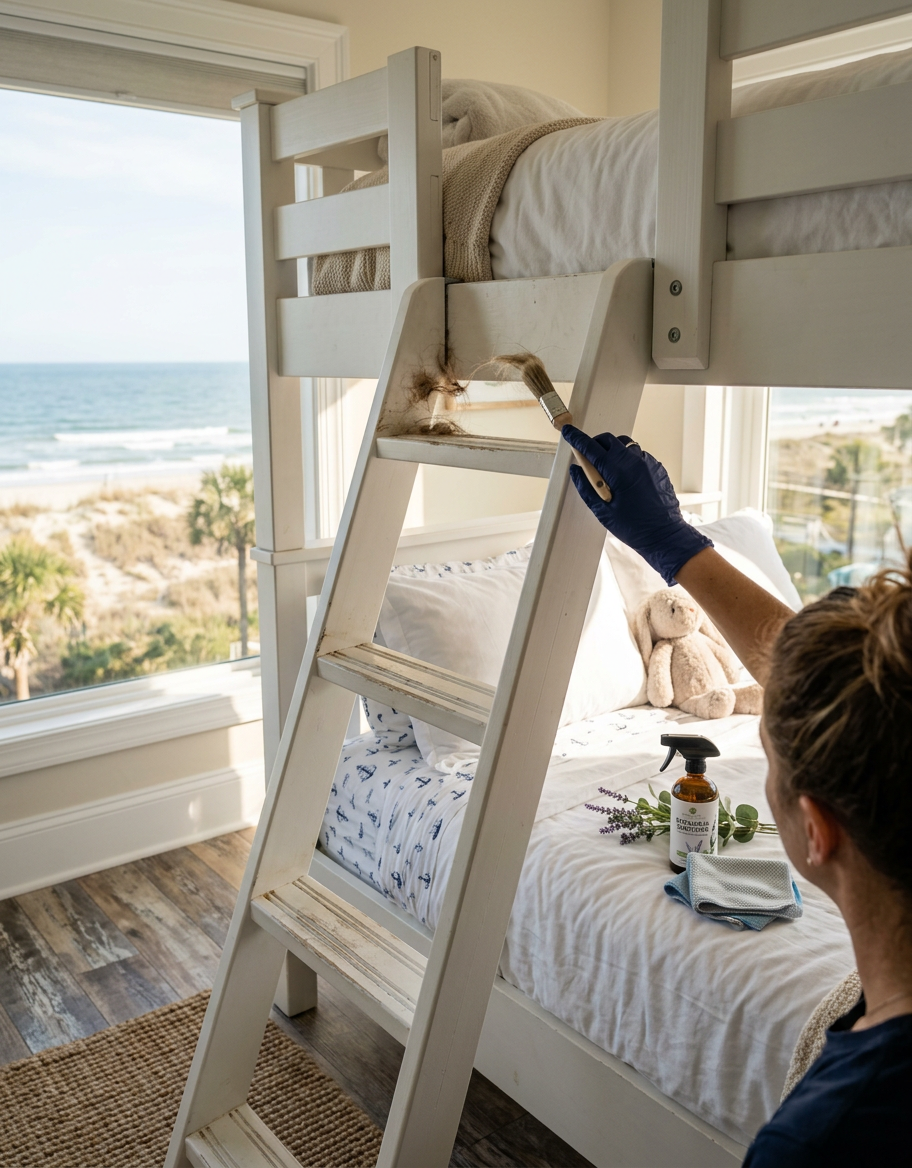
Bunk beds and loft systems are beloved space-saving features in active Grand Strand households, yet they present highly specific cleaning challenges when subjected to coastal elements. Our local humidity, combined with beach sand, pet dander, and active children, turns multi-tier sleeping structures into complex allergen traps. Standard housekeeping often overlooks the gravity-fed migration of debris from top bunks to bottom bunks and the stagnant air zones under bed frames. This guide outlines a professional, child-safe protocol to keep your family's multi-level sleeping spaces hygienic, fresh, and allergen-free.
The Anatomy of Coastal Bunk Bed Contamination: Sand, Pet Hair, and Humidity
Coastal bunk beds are space-saving lifesavers for busy Grand Strand families, but their multi-tiered architecture presents a unique cleaning challenge. The high humidity of Myrtle Beach binds airborne dust, pet dander, and fine beach sand into a stubborn residue that clings to vertical wooden slats, metal frames, and guardrails. Because hot air rises, the upper bunks remain in the warmest zone of the bedroom, accelerating sweat-induced moisture buildup in mattresses. Meanwhile, pet hair drifts downward, settling into the joints and crevices of the lower bunk structure.
When family pets share the home, their hair and skin dander become statically charged, sticking to the undersides of the top bunk slats. This creates a hidden reservoir of allergens directly above the lower sleeping space. Kids climbing up and down shake these particles loose, sending a steady shower of debris onto the bottom mattress. Over time, this cycle creates an environment ripe for dust mites and mold spores, which thrive in our local relative humidity levels that often exceed 60 percent.
Managing this microenvironment requires a systematic approach that looks beyond simple sheet changes. Standard dusting often just relocates these allergens into the air column where they can irritate sensitive airways. To protect children with allergies or asthma, families must implement a decontamination protocol that neutralizes static cling, extracts embedded sand, and controls biological growth. This guide outlines how to manage these multi-level sleeping systems safely using botanical, child-friendly methods.
The Downward Sand-Grit Drift: Addressing Top-to-Bottom Bunk Fallout
One of the most frustrating aspects of multi-tier beds is the gravity-assisted migration of beach sand and grit. Children returning from our local beaches inevitably carry fine silica sand in their hair, clothing, and skin. Even after a thorough bath, residual sand particles find their way into the upper bunk's bedding. Every movement on the top mattress works these abrasive granules through the weave of the sheets and down through the gaps in the supportive wooden slats or metal mesh platform below.
This grit lands directly on the lower pillow and mattress cover, creating an abrasive sleeping surface that can irritate delicate skin and ruin fine fabrics. If left unchecked, sand accumulation in the lower bed frame's joint pockets can wear down the protective lacquer or paint of the bed itself. The rubbing of wood against wood with abrasive sand sandwiched in between can cause structural squeaks and damage the integrity of the furniture over several seasons.
To mitigate this downward drift, families should install a physical, washable barrier between the upper bed support slats and the lower bunk. A tightly woven, fire-retardant mattress protector or a fitted canvas deck cover can be zipped or fastened directly over the bottom of the upper bunk slats. This catches falling debris before it reaches the lower bed, making weekly maintenance as simple as removing and washing this barrier.
Ladder Rungs and Guardrails: Eliminating Sticky Handprints, Pet Sebum, and Pathogens
Ladder rungs and guardrails are the primary touchpoints of any bunk bed system, subjected to constant contact from sticky fingers, sunscreen residues, and natural skin oils (sebum). In a pet-friendly Grand Strand household, dogs and cats often rub against the lower ladder rungs and corner posts, leaving behind oily sebum coats that act like a magnet for airborne dust and pet hair. This creates a grimy, dark layer that is both unsightly and unsanitary for young children grasping the rungs.
Wooden ladders are especially susceptible to absorbing these oils, which can degrade the finish and make the wood feel tacky or slippery. Metal ladders, while less absorbent, can develop micro-scratches from beach sand stuck to bare feet, creating tiny crevices where bacteria and mold can colonize. Because children frequently touch these areas before putting their hands near their eyes or mouths, sanitizing these handholds is a critical health priority.
Cleaning these surfaces requires a solution that dissolves stubborn grease and sunscreen without leaving chemical residues that could harm a climbing child. Avoid harsh petroleum-based polishes or slick waxes, which create immediate slip hazards on ladder rungs. Instead, use a damp microfiber cloth infused with a mild, botanical degreaser to restore traction and remove buildup safely.
- Wipe ladder rungs daily with a damp microfiber cloth to remove sand-grit and skin oils.
- Avoid oil-based wood polishes that leave a slick, hazardous film on stepping surfaces.
- Inspect guardrail brackets weekly to ensure no loose sand has compromised the safety fasteners.
- Sanitize high-touch joints with thyme-oil or citric-acid-based botanical disinfectants.
- Use a soft-bristled brush to clear accumulated pet hair from the grain of unfinished wooden rungs.
High-Humidity Mattress Seams and Bed Bug/Allergen Prevention
Bunk bed mattresses are highly vulnerable to the moisture-trapping effects of coastal living. Because bunk beds are often tucked into corners or placed flush against exterior walls to maximize floor space, air circulation around the mattresses is severely restricted. This stagnation allows sweat, damp swimwear moisture, and humid air to pool along the deep welts and seams of the mattress, creating localized damp spots that foster mold.
These humid seams are also the primary hiding places for dust mites and bed bugs, which thrive in warmth and moisture. To protect your children's respiratory health, every bunk bed mattress should be encased in a high-quality, zippered, waterproof, and bed-bug-proof protector. These encasements seal off the seam pockets, preventing allergens, pet dander, and moisture from penetrating the core fibers of the mattress.
During your weekly laundry routine, take a moment to inspect the seams of these protectors. Wipe down the zippered tracks with a botanical sanitizing spray to remove any salt-crust or dust buildup. Ensuring these barriers remain intact is your family's first line of defense against the invisible allergen reservoirs that frequently cause nighttime coughing and congestion in young children.
Child-Safe Botanical Chemistry: Avoiding Harsh VOCs in Tight Sleeping Quarters
When cleaning a confined multi-tier bed system, the choice of cleaning chemistry is paramount. Standard chemical cleaners containing bleach, ammonia, or synthetic fragrances release volatile organic compounds (VOCs) that linger in the tight spaces of bunk beds. Because children sleeping in bunk beds are physically close to the ceiling (where warm air and vapors accumulate) or tucked into the enclosed space of a bottom bunk, they are highly exposed to these airborne irritants.
Exposure to harsh chemical residues can trigger asthma attacks, irritate sensitive skin, and disrupt sleep quality. For a safe yet effective clean, families should turn to botanical-based disinfectants and cleaners. Formulations containing active plant ingredients like thymol (derived from thyme oil) or citric acid provide industrial-grade sanitizing power without leaving toxic residues or releasing irritating fumes. These natural solutions break down pet sebum and sticky residues safely.
At A2Z Cleaning & Linen Services, we prioritize these non-toxic, eco-friendly botanical solutions for our residential clients. Ensuring that the surfaces where your children sleep, breathe, and play are free from harsh chemical residues is a core part of our commitment to Grand Strand families. You can achieve professional-grade hygiene using products that are entirely safe for your toddlers and pets alike.
Step-by-Step Weekly Family Turn Protocol for Multi-Tier Beds
To keep a busy Grand Strand household running smoothly, a structured weekly maintenance protocol for bunk beds is essential. Begin by stripping all linens from both top and bottom bunks, placing them directly into the laundry to prevent the spread of dust and hair. Always work from top to bottom; dusting or vacuuming the lower bunk first is counterproductive, as cleaning the upper bunk will inevitably shower debris onto the surfaces below.
Next, utilize a vacuum equipped with a HEPA filter and a specialized upholstery brush attachment. Carefully vacuum the entire upper mattress protector, paying special attention to the seams, before moving down to the frame, slats, and ladder. Once the upper level is clear of loose sand and pet hair, replicate the process on the lower bunk and the under-bed floor space. This top-down sequence ensures that no migrating debris escapes extraction.
After vacuuming, damp-wipe all hard surfaces with your child-safe botanical sanitizer. Focus heavily on ladder rungs, safety rails, and the headboard zones where handprints and pet oils collect. Allow all surfaces to air dry completely—utilizing a ceiling fan or dehumidifier to speed up the process in our humid climate—before dressing the beds with fresh, clean linens.
- Strip all bedding from the top bunk first, folding sheets inward to trap loose sand.
- Vacuum upper mattress seams and support slats using a HEPA-filter upholstery tool.
- Clean ladder rungs and handrails with a botanical sanitizer to dissolve oily residues.
- Clear out under-bed drawers, vacuuming the tracking channels and structural frame.
- Wipe down walls adjacent to the bunk bed to remove static-cling pet hair and dust.
- Dress the beds only after all wooden and metal components are dry to the touch.
Professional Restoration: When to Call the Grand Strand Deep-Cleaning Experts
Despite regular weekly cleaning, there are times when the cumulative effects of coastal humidity, heavy sand tracking, and pet dander require professional intervention. Over several seasons, fine sand can migrate deep into wood joints, and microscopic mold spores can colonize the unfinished underside of wooden slats. When musty odors persist despite your best efforts, or if your child's allergy symptoms flare up indoors, a deep restorative cleaning is necessary.
Professional cleaning services possess the specialized extraction equipment and EPA-approved botanical sanitizers needed to neutralize deeply embedded contaminants. Deep-extraction vacuums can draw out microscopic allergens from mattress seams that standard residential vacuums leave behind. Furthermore, professional teams can systematically treat hard-to-reach joint pockets and under-bed tracks, restoring your family’s sleeping quarters to a pristine, hygienic state.
If you find yourself overwhelmed by the demands of maintaining a busy, active household in the Myrtle Beach area, help is close at hand. The expert team at A2Z Cleaning & Linen Services is always ready to assist with deep cleaning, seasonal restorations, and routine maintenance tailored to coastal families. Contact us at 843.800.2788 to schedule a professional cleaning that keeps your home safe, fresh, and healthy for your loved ones.
Key takeaway
Maintaining multi-tier bunk beds in a coastal climate requires a top-down, methodical approach that addresses gravity-fed sand drift and static pet hair. By utilizing high-efficiency HEPA vacuums and child-safe botanical sanitizers, Grand Strand families can protect their children from respiratory irritants while preserving their wooden and metal frames. For deep restorative cleanings that penetrate tough joints and hidden under-bed cavities, trust A2Z Cleaning & Linen Services to keep your home healthy.
Keep Reading
Coastal Living
The Coastal Family Bath and Pet-Wash Station Decontamination Protocol: Mitigating Humid Mildew, Sand-Clay Cling, Pet-Wash Hair Clogs, and Child-Safe Disinfection in Grand Strand Homes
ReadCoastal Living
The Coastal Family Orthopedic Pet Bed, Indoor Dog Crate, and Washable Travel Mat Decontamination Protocol: Mitigating Humid Sebum-Saturated Odors, Sand-Flea Larvae Risks, and Child-Safe Botanical Sanitization in Grand Strand Homes
ReadCoastal Living
The Coastal Family Screened Porch, Pet Door Flap, and Indoor-Outdoor Transition Rug Decontamination Protocol: Mitigating Humid Pollen-Pet Sebum Binding, Sand-Silt Wear, and Child-Safe Botanical Care in Grand Strand Homes
ReadReady for a spotless property?
Call 843.800.2788 or request a free quote from A2Z Cleaning & Linen Services.