Coastal Living
The Coastal Family Bath and Pet-Wash Station Decontamination Protocol: Mitigating Humid Mildew, Sand-Clay Cling, Pet-Wash Hair Clogs, and Child-Safe Disinfection in Grand Strand Homes
Keep your Grand Strand home's busiest wash zones pristine and safe with our deep-dive guide to managing sand-clay soils, pet hair clogs, and humid mildew using child-safe methods.
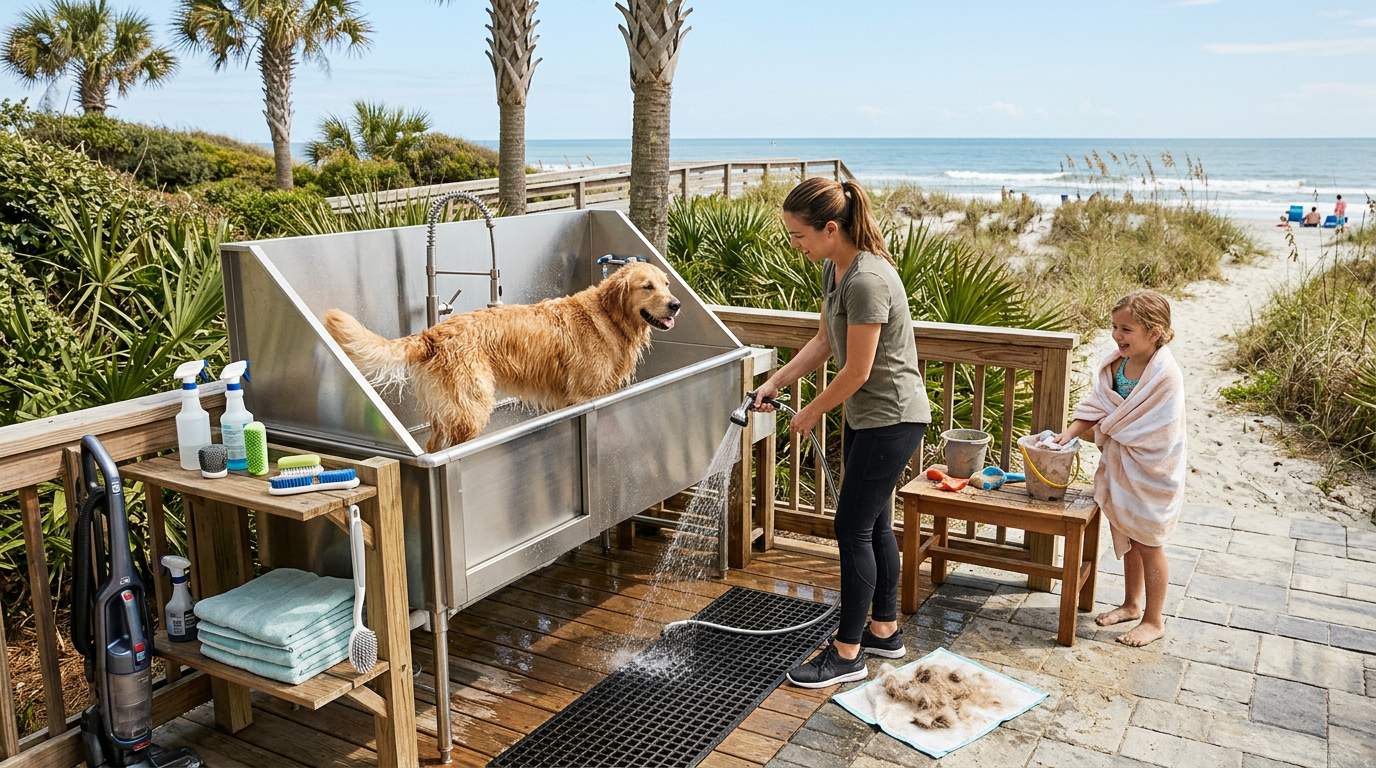
Setting the scene, Grand Strand families know the chaotic reality of returning from a day at Cherry Grove Beach or the local dog park. Kids covered in salty sand and dogs coated in marsh mud head straight for the family bathroom or dedicated pet-wash station to clean up. Without a structured decontamination protocol, these high-humidity zones quickly transform into breeding grounds for mold, stubborn sand-silt dams, and airborne pet allergens. This guide delivers a practical, non-toxic, and highly effective cleaning framework designed specifically for active coastal households.
The Grand Strand Coastal Wash Zone Challenge: Humidity, Sand, and Organic Soils
Active families along the Grand Strand understand how quickly a coastal lifestyle can impact home hygiene. High relative humidity in the Myrtle Beach area, often hovering above 70% in the warmer months, prevents bathroom surfaces from drying efficiently. When moist air is trapped in a room frequently used for bathing sandy children and muddy dogs, it creates an ideal microclimate for fungal growth. Spores of mold and mildew find a perfect home on damp tile grout, shower curtains, and corners, leading to chronic musty odors and airborne allergens that can aggravate childhood asthma.
Compounding this moisture issue is the physical nature of Grand Strand beach sand and coastal clay. Unlike soft, rounded inland dirt, beach sand consists of sharp, microscopic silica particles that act like sandpaper under friction. If left to settle on acrylic tubs, porcelain basins, or fiberglass shower enclosures, this sand-grit will scratch the protective gel coat or glaze. Once these surfaces are microscopically etched, they become highly susceptible to holding onto dirt, iron stains, and organic oils, making subsequent cleanings far more difficult for busy parents.
Finally, we must account for the organic binders that hold these soils to our bathroom surfaces. Children's bubble baths, body washes, and natural pet sebum—the protective oil secreted by a dog's skin—combine with sloughed-off skin cells and pet hair to form a sticky biofilm. This film acts like a magnet for fine sand, bonding it firmly to horizontal surfaces. Normal rinsing with water cannot dissolve this greasy matrix, meaning families must adopt a targeted, material-safe chemical approach to break down these stubborn binders effectively.
Preventing the Dreaded Sand-Silt Plumbing Blockage
Bathroom plumbing is built to channel water and fine, water-soluble particles, not coarse sand and dense pet undercoats. When coastal families wash sandy children and double-coated dogs in the same tub, a hazardous mixture enters the waste lines. Sand is highly dense and settles at the lowest point of the plumbing system—the P-trap. When hair from shedding pets wraps around this heavy sediment, it creates a tough, concrete-like plug that standard home plungers cannot easily dislodge, leading to slow drains and backups.
To protect your home's waste lines, a multi-stage filtration strategy is absolutely necessary. Replace standard pop-up drain stoppers with high-efficiency, stainless-steel mesh strainers designed to catch particles down to the millimeter. During pet baths, place an additional silicone hair-catcher over the drain to trap fine undercoat fibers before they can bond with the sand-silt slurry. This dual-barrier method prevents the vast majority of physical debris from ever entering your plumbing, saving you from expensive emergency drain-cleaning visits.
Even with premium strainers, some fine sand and organic oils will inevitably slip into the plumbing. Establish a weekly drainage flush routine using non-corrosive, pipe-safe agents rather than aggressive chemical drain openers that can damage PVC pipes. Pour one cup of baking soda down the drain, follow it with two cups of warm distilled white vinegar, and let it fizz for fifteen minutes. Finish by running hot tap water for three to five minutes to wash away any remaining loose sand and organic buildup.
Targeting Pet-Dander and Sebum Biofilms Without Harsh Chemistry
Ocean water and marsh mud trigger a natural defense mechanism in a dog's skin, prompting it to produce excess sebum. This waxy lipid helps waterproof their coat but leaves a heavy, greasy residue on tub basins and shower walls during washdowns. If left untreated, this sebum oxidizes and releases a distinct, pungent wet-dog odor that permeates the entire bathroom. Because children's skin is highly sensitive, parents must clear this residue without resorting to harsh, volatile synthetic deodorizers.
Many commercial surface cleaners rely on heavy synthetic fragrances and harsh quaternary ammonium compounds to mask odors and kill bacteria. However, these chemicals leave behind sticky residues that can irritate a child's skin and trigger respiratory issues when inhaled in an enclosed shower space. A safer, highly effective alternative is to use natural, plant-based surfactants and enzymes that specifically target lipid bonds. These green cleaning agents break down the waxy sebum, making it easy to wipe away without releasing toxic VOCs.
To neutralize stubborn, lingering odors on bathroom walls and ceilings, look to basic kitchen science rather than chemical aerosol sprays. Mix a solution of equal parts warm water and distilled white vinegar with a few drops of child-safe lavender or lemon essential oil. Lightly mist the walls, ceiling, and shower curtain after the bath, then wipe down with a clean microfiber cloth. This mild acid naturally neutralizes alkaline odor molecules, leaving the room smelling clean, fresh, and safe for family use.
Mitigating Humidity-Driven Mold and Mildew in Kids' Bath Zones
The combination of heat, moisture, and organic nutrients makes Grand Strand bathrooms prime real estate for mold and mildew. Fungal spores can germinate in as little as twenty-four to forty-eight hours on damp surfaces. For households with young children, chronic mold exposure can lead to persistent coughing, nasal congestion, and skin rashes. Managing humidity is therefore a critical safety measure, requiring parents to look beyond surface cleaning to control the overall indoor environment.
Proper mechanical ventilation is your first line of defense against humidity-driven fungal growth. Always run the bathroom exhaust fan during baths and showers, and leave it running for thirty minutes post-bath to pull humid air out. If your bathroom lacks a high-quality fan or has poor airflow, consider placing a small, energy-efficient dehumidifier in the room. Keeping the relative humidity below 50% halts mold reproduction and ensures that freshly cleaned surfaces can dry completely between uses.
When mold spots do appear on grout or caulking, avoid reaching for harsh chlorine bleach, which only bleaches the pigment of the mold while leaving the microscopic roots intact. Instead, spray the affected area with undiluted 3% food-grade hydrogen peroxide. Let it bubble for ten minutes to naturally oxidize the mold and sanitize the surface without emitting toxic fumes. Gently scrub the area with a soft brush, rinse with warm water, and wipe completely dry.
The Daily Post-Beach Rinse-Down and Sand-Extraction Workflow
Keeping a busy coastal bathroom clean requires a structured, daily maintenance routine that stops sand and hair at the door. Trying to clean up a week's worth of accumulated beach grime and dog dander all at once is exhausting and ineffective. By dividing the process into quick, sequential steps, you can keep the wash zone sanitary, odor-free, and ready for use with minimal daily effort.
The workflow begins before anyone steps into the tub. Use a clean, dry microfiber towel to wipe away loose sand from dry legs, paws, and beach toys outside the bathroom. Once inside, utilize a handheld showerhead with a variable spray pattern to rinse downward, driving sand and hair toward the drain strainer. This focused rinsing prevents water and grit from splashing onto upper walls and mirrors, containing the mess to the tub basin.
Immediately after the bath is complete, use a silicone squeegee to clear water and residues from the walls and tub floor, directing everything toward the filtered drain. Finish the daily routine by wiping down high-touch fixtures, faucet handles, and nearby wall surfaces with a dry microfiber cloth to eliminate standing water and soapy droplets. Taking these extra ninety seconds to dry the splash zones removes the moisture reservoir that mold spores and dust mites require to colonize your family's primary wash space.
- Dry brushing: Always brush dry sand off kids and pets on the porch or deck before they enter the bathroom.
- Handheld rinsing: Use a flexible handheld shower attachment to control water flow and keep sand-laden water contained.
- Mesh filtration: Ensure the drain strainer is clear of hair before starting the rinse to prevent water from pooling.
- Squeegee sweep: Pull moisture off tile walls and glass surrounds immediately to prevent hard-water scale and mold.
- Towel dry: Wipe fixtures dry with a microfiber cloth to eliminate damp micro-environments where bacteria thrive.
Cleaning and Decontaminating Bath Toys and Pet-Wash Accessories
Bath toys and dog grooming brushes are often overlooked sources of bacterial contamination and mold growth. Plastic squeeze toys, in particular, easily trap dirty soapy water inside their hollow interiors. Over time, this dark, damp environment fosters a slimy film of bacteria and black mold. When children squeeze these toys, they release contaminated water back into the bath, exposing sensitive skin, eyes, and mouths to harmful pathogens.
To safely sanitize these items without exposing your family to harsh residues, establish a bi-weekly deep-cleaning routine for all bath accessories. Fill a clean basin or sink with warm water and add one cup of food-grade hydrogen peroxide or distilled white vinegar. Submerge all plastic toys, dog brushes, and shampoo bottles in the solution, allowing them to soak for thirty minutes. This natural sanitizing bath effectively neutralizes bacteria, mold, and waxy soap scum without chemical off-gassing.
Proper drying and storage are critical to keeping these toys clean after they have been sanitized. Never store wet toys or pet brushes in solid plastic bins or dark corners where water can collect. Instead, use a suspended, breathable mesh bag or a wire basket that allows air to circulate freely from all sides. This setup ensures that water drains away quickly and surfaces dry completely, preventing the re-establishment of slimy biofilms.
Allergy-Friendly Laundering of Bath Mats and Pet Towels
Bath mats, towels, and pet blankets are major hubs for dust mites, pet dander, and mold spores in humid coastal environments. Standard quick-wash cycles often fail to remove the heavy concentration of organic matter and microscopic sand embedded in these thick fabrics. When damp towels hang in a humid bathroom for too long, they quickly develop sour, musty odors caused by bacteria feeding on leftover skin cells and moisture.
To maintain a healthy, allergy-friendly home, always wash pet towels and family bath mats in separate loads from your personal linens and clothing. This separation prevents the transfer of coarse pet hair, dander, and outdoor allergens like grass pollen onto your bed sheets and everyday garments. Shake out all mats and towels thoroughly outdoors before placing them in the washing machine to release trapped beach sand and loose hair.
Use a hot water cycle (at least 130 degrees Fahrenheit) along with an unscented, hypoallergenic laundry detergent to effectively kill dust mites and sanitize fabrics. Avoid commercial fabric softeners and dryer sheets, which leave a synthetic, waxy coating on textile fibers. This coating reduces towel absorbency, traps bacteria and moisture within the weave, and can irritate sensitive skin, especially on young children and pets prone to allergies.
Restoring and Sealing Bathroom Grout Against Coastal Soils
Tile grout is highly porous, meaning it acts like a hard sponge that readily absorbs dirty water, pet oils, and fine sand. In a busy coastal bathroom, unsealed grout lines quickly turn grey or brown as organic grime and silt settle deep into the cement. Once these contaminants penetrate the surface, they become nearly impossible to remove with standard mopping or light scrubbing, turning the grout into a permanent home for mold.
Restoring dirty grout requires a deep-cleaning method that lifts embedded soil without damaging the tile or releasing harsh chemical fumes. Mix sodium percarbonate (oxygen bleach powder) with warm water to create a thick paste, and apply it directly to the grout lines. Let the paste sit for fifteen minutes to release active oxygen bubbles that lift dirt, then scrub gently with a soft nylon brush. Rinse thoroughly with clean water and wipe dry.
Once your grout is clean and completely dry, protect it from future coastal damage by applying a water-based penetrating sealer. This sealer fills the microscopic pores in the grout, creating an invisible, hydrophobic shield that repels water, sand-grit, and greasy pet sebum. Spills and muddy water will bead up on top of the grout rather than soaking in, allowing you to clean the entire zone with a simple wipe-down.
Key takeaway
Maintaining a clean, allergy-friendly wash zone amidst the sand, mud, and humidity of the Grand Strand is entirely achievable with the right daily habits and non-toxic products. By protecting your plumbing and using child-safe ingredients, you create a healthy space where your kids and pets can clean up safely. For deep restoration or to keep your home pristine year-round, contact A2Z Cleaning & Linen Services at 843.800.2788.
Keep Reading

Coastal Living
The Coastal Family Car Seat and Beach Stroller Decontamination Protocol: Mitigating Sand-Silt Wear, Spilled Organic Biofilms, and Salt-Air Mildew in Grand Strand Homes
ReadCoastal Living
The Coastal Kids' Toy Bin and Beach-to-Playroom Asset Decontamination Protocol: Mitigating Humid Saliva Biofilms, Pet-Dander Adhesion, and Sand-Friction Scratches in Grand Strand Homes
ReadCoastal Living
The Coastal Portable Air Purifier and HEPA Filter Restoration Standard: Mitigating Salt-Damp Dust Loading, Mold-Spore Colonization, and Botanical Cleaning Alternatives in Grand Strand Homes
ReadReady for a spotless property?
Call 843.800.2788 or request a free quote from A2Z Cleaning & Linen Services.