Coastal Living
The Coastal Family Screened Porch, Pet Door Flap, and Indoor-Outdoor Transition Rug Decontamination Protocol: Mitigating Humid Pollen-Pet Sebum Binding, Sand-Silt Wear, and Child-Safe Botanical Care in Grand Strand Homes
Discover how to safely clean Grand Strand screened porches, pet doors, and transition rugs to eliminate sticky dander, sand-grit, and pollen using child-safe and pet-friendly methods.
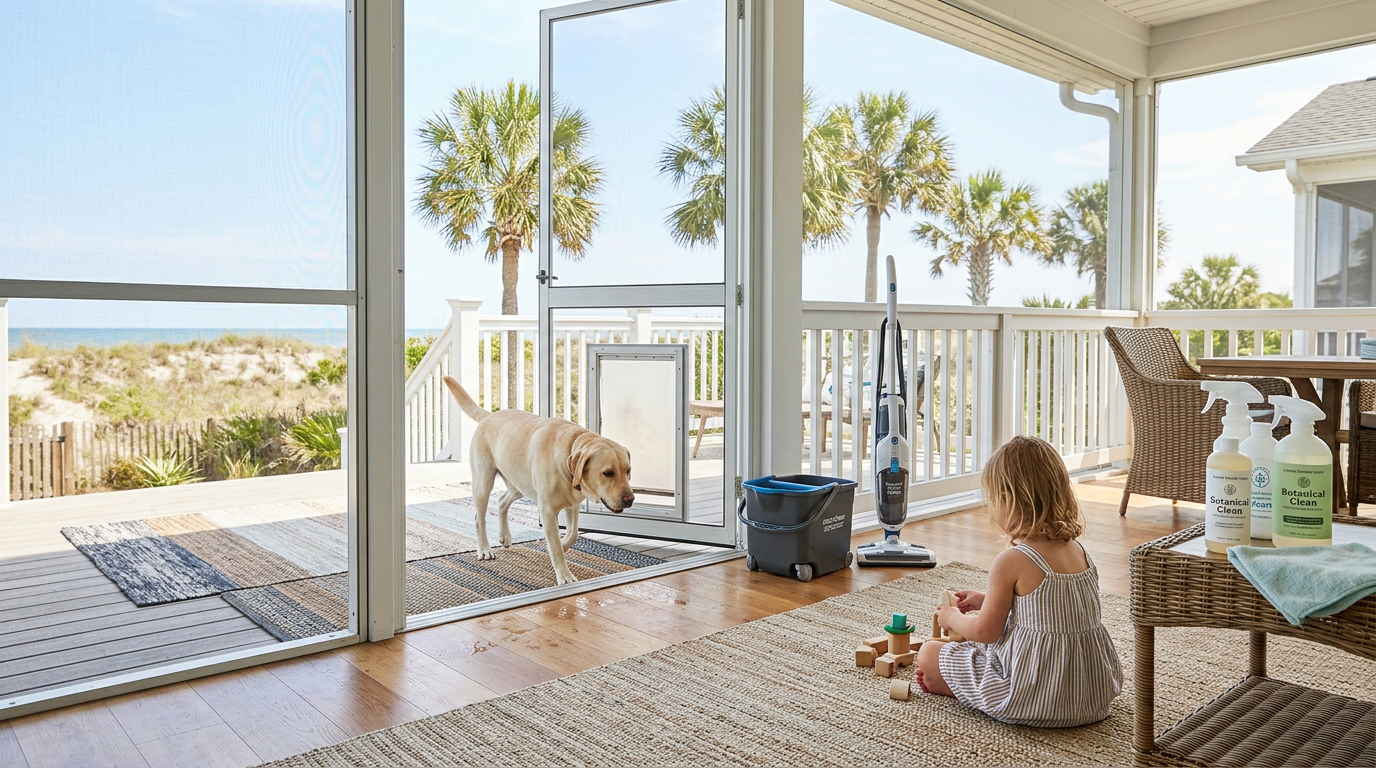
For families on the Grand Strand, a screened porch is the ultimate indoor-outdoor living space where children play and pets lounge. However, this high-traffic transition zone also acts as a primary collector for airborne pollen, damp salt spray, fine beach sand, and pet dander. Over time, these elements combine to form a sticky, abrasive film on screens, pet door flaps, and transition rugs. Implementing a specialized, child-safe, and pet-friendly decontamination protocol is essential for preserving your home's hygiene and protecting your family's respiratory health.
The Anatomy of Grand Strand Indoor-Outdoor Transition Points: Why Screened Porches and Pet Doors Trap Contaminants
Grand Strand screened porches are the heart of coastal family living, bridging the gap between sandy yards and conditioned indoor spaces. However, this transition zone acts as a primary landing strip for coastal pollutants. The combination of dense maritime forest pollen, fine beach sand, and high humidity creates a sticky environment. When you add domestic pets and busy children to this equation, these high-traffic thresholds quickly accumulate complex bio-burdens that standard household dusting cannot resolve.
Pet doors and Lanai entryways are particularly susceptible to this environmental compounding. As pets pass through flexible flaps, their coats deposit skin lipids, dander, and outdoor moisture directly onto the vinyl surfaces. Meanwhile, children running barefoot from the yard onto the porch track in abrasive quartz sand-grit and soil microbes. This mixture is pressed into the fibers of transition mats, creating a stubborn, layered soil profile that compromises indoor air quality.
Failing to manage these transition zones allows allergens to migrate deep into your home's interior rooms. Every time a sliding glass door opens, draft currents pull airborne dander, dried pollen, and salt dust into carpeted living areas. By understanding the mechanical and environmental forces at play on your screened porch, you can implement targeted sanitation protocols that protect both your children's respiratory health and your flooring investments.
The Pollen-Sebum Matrix: Understanding the Chemistry of Sticky Coastal Dust on Porch Furniture and Screens
The unique challenge of coastal porch cleaning lies in what our technicians call the pollen-sebum matrix. During spring and summer along the Grand Strand, pine and oak pollen settles on every horizontal and vertical surface. When this microscopic powder mixes with natural pet sebum—the protective oils found on dog and cat fur—and high ambient humidity, it undergoes a physical transformation. It changes from a dry dust into a sticky, microscopic paste that adheres to screen mesh and outdoor furniture.
Airborne salt spray further complicates this matrix by attracting and holding moisture from the air, a process known as hygroscopicity. This damp, salty residue acts as a binder, locking pet hair and dander into fabrics, screens, and flooring grooves. Standard dry sweeping or vacuuming only smears this mixture, driving it deeper into porous surfaces. Removing it requires specialized, pH-neutral solutions that break down the organic lipid bonds without damaging delicate coastal finishes or leaving chemical residues.
For families with young children who play directly on porch floors, this sticky accumulation is more than an aesthetic nuisance. It is a concentrated allergen reservoir that can trigger asthma and skin sensitivities. When kids sit on the floor or touch contaminated screens, they absorb these combined residues. Addressing this requires a precise balance of physical agitation and non-toxic, botanical emulsifiers to safely lift the soil matrix away from substrates.
The Decontamination and Deep Cleaning Protocol for Flexible Pet Door Flaps and Magnetic Screens
Flexible pet door flaps, whether heavy vinyl, rubber, or magnetic screens, are highly concentrated contact zones. As a dog or cat pushes through, their snout, ears, and back slide across the material, transferring oils and saliva. These organic binders then capture windblown sand and pollen. Within weeks, the flap darkens with a grimy film that is a breeding ground for bacteria and yeast, emitting a stale, musty odor at child-eye level.
To decontaminate these surfaces safely, begin by isolating the flap from direct sunlight to prevent cleaning agents from drying too quickly. Spray both sides of the vinyl flap with a plant-derived surfactant or a diluted isopropyl alcohol solution. Avoid harsh bleach or ammonia-based cleaners, which can degrade the UV-resistant properties of the flexible vinyl, causing it to yellow, crack, and harbor even more pathogens in micro-fissures.
Use a non-scratch microfiber sponge to agitate the surface, paying close attention to the magnetic strips and weather-stripping channels where grit accumulates. Wipe the loosened grime away with a clean, damp microfiber cloth, then dry the flap completely with a lint-free towel. Regular sanitization of this specific threshold not only eliminates odors but also prevents the transfer of environmental contaminants directly onto your children's hands as they open the main door.
- Inspect the pet flap monthly for micro-fissures and cracks that trap bacteria.
- Avoid using abrasive scouring pads that scratch vinyl and create permanent soil traps.
- Clean the surrounding door frame and sliding tracks to remove gritty build-up.
- Ensure magnetic closure strips are free of rust-inducing salt crusts.
Revitalizing Screened Porch Indoor-Outdoor Transition Rugs: Extracting Salt-Grit and Embedded Pet Hair
Indoor-outdoor transition rugs are engineered to withstand moisture, but their tight polypropylene or woven polyester fibers excel at trapping sand and pet hair. When humid air enters the porch, these fibers soften slightly, allowing sharp sand grains to wedge deep into the backing. Walking on these rugs grinds the sand against the fibers, causing premature wear and shearing while trapping pet hair beneath a canopy of coarse grit.
To restore these rugs, start with a dual-motor vacuum equipped with a brush roll that can be adjusted for height. Slow, deliberate passes are essential to allow the mechanical agitation to lift the heavy sand particles to the surface. For woven rugs, vacuuming both the face and the reverse side is highly recommended, as gravity often pulls fine silt through the weave onto the porch floor beneath.
For deep decontamination, use a low-moisture extraction method rather than a high-pressure soak. Wetting a transition rug excessively on a humid Grand Strand day can trap moisture underneath, leading to mold growth on the subfloor. Apply a child-safe, enzyme-based encapsulating cleaner that targets pet dander and urine proteins. Agitate with a soft-bristle deck brush to break up the bonded soil, then extract the moisture using a high-water-lift vacuum system.
- Vacuum the underside of transition rugs to remove hidden sand dunes.
- Use a rubber squeegee tool to pull stubborn, embedded pet hair from flat-weave rugs.
- Treat pet accidents immediately with enzyme-based formulas to prevent odor binding.
- Hang rugs to dry in a shaded, high-airflow area to prevent UV color fading.
Safe and Effective Botanical Disinfection for High-Contact Pet and Child Play Areas on Porches
When selecting cleaning agents for family transition zones, chemical safety is paramount. Toddlers and pets spend significant time on or near the floor, making them vulnerable to chemical residues. Conventional disinfectants containing quaternary ammonium compounds or synthetic fragrances can irritate sensitive skin and paws. They can also contribute to poor indoor air quality when tracked inside on bare feet or pet pads.
Botanical disinfectants powered by thymol—a naturally occurring component of thyme oil—provide a highly effective alternative. These formulas are EPA-registered to eliminate common pathogens, including mold spores and bacteria, without requiring a rinse step. They are completely safe for contact immediately after drying, ensuring your toddlers can crawl on the screened porch without exposure to toxic synthetic residues or chemical off-gassing.
Emulsifying agents derived from coconut, soy, and corn sugars are also excellent for breaking down tough pet grease. These natural surfactants lift the soil from the floor surface, allowing it to be easily wiped away. When dealing with dried mud, pet saliva, or spilled kid drinks on the porch, these botanical solutions offer high performance without compromising the health of your household.
Mitigating Screen Mesh Allergens: Washing Away Salt Crust, Dander, and Mildew Spores
Screen mesh is a highly efficient filter, but instead of trapping dust safely in a canister, it holds it in the open air. In our coastal climate, salt-damp mesh attracts airborne dander, mold spores, and pollen, forming a gray, crusty barrier. This build-up blocks fresh breezes and releases a cloud of microscopic allergens into the air with every gust of wind, directly affecting family members sitting nearby.
Cleaning porch screens requires a gentle touch to avoid stretching or tearing the fiberglass mesh. Begin by vacuuming the screens using a soft brush attachment, starting from the top and working downward. This removes loose dust, cobwebs, and dried pollen before moisture is introduced, which would otherwise turn the dry dust into a muddy slurry that clogs the screen openings.
Next, wash the mesh using a microfiber mitt dipped in warm water mixed with a few drops of mild, pH-neutral botanical soap. Gently scrub both sides of the screen in circular motions to dissolve salt crusts and pet dander. Rinse the screen with a low-pressure garden hose nozzle, directing the spray outward to push the dirty water away from the porch interior, then allow them to air-dry completely.
Establishing a Weekly Maintenance Cadence for High-Traffic Coastal Family Transition Zones
Maintaining a healthy, allergy-friendly transition zone requires a structured weekly routine. Consistency is key to preventing sand-grit from migrating from the porch into your interior living spaces. Designate a specific day to vacuum transition rugs, wipe down pet doors, and shake out exterior doormats. This simple discipline prevents the accumulation of the sticky pollen-sebum matrix, making deep-cleaning sessions much easier and faster.
Incorporate a dry-dusting step for porch baseboards, window sills, and furniture frames using electrostatic cloths. These cloths attract and hold pet hair and dust rather than scattering them into the air where they can settle elsewhere. Pay special attention to the corners where pet hair naturally drifts due to air currents, as these areas quickly become allergen hubs if left unattended.
Finally, establish a "shoes-off" policy at the screened porch threshold for both kids and adults. Providing a designated storage bin or cubby on the porch encourages family members to leave their sandy footwear outside. This single habit can reduce the amount of outdoor soil and pesticides entering your home by up to eighty percent, protecting your indoor air quality.
- Vacuum transition rugs twice weekly during high-pollen seasons.
- Wipe the pet door flap with botanical wipes every Wednesday and Saturday.
- Use electrostatic dusters on outdoor ceiling fan blades to capture pet hair.
- Shake out exterior door mats away from the porch entry door.
Professional Restoration vs. DIY Maintenance: When to Call the Grand Strand Specialists
While regular weekly maintenance keeps daily dust and hair at bay, professional deep cleaning is essential to address deeply embedded contaminants. Over time, salt-damp air and microscopic sand work their way deep into porous surfaces that standard household equipment cannot reach. Professional extraction systems use balanced water temperature, controlled pressure, and high-volume extraction to safely draw out compacted soil without damaging your porch materials.
At A2Z Cleaning & Linen Services, we specialize in restoring Grand Strand homes to the highest sanitary standards. Our experienced team uses advanced botanical chemistries and specialized low-moisture extraction techniques specifically tailored for coastal environments. We understand how to break down the sticky pollen-sebum matrix safely, leaving your screened porch, rugs, and transition zones fresh, clean, and perfectly safe for your children and pets.
If your family's favorite outdoor living space has become a source of musty odors, embedded sand, or seasonal allergy flare-ups, let us help you reclaim it. Contact A2Z Cleaning & Linen Services today at 843.800.2788 to schedule a professional deep cleaning. Our family-owned company is dedicated to providing warm, expert, and reliable care for homeowners and property managers throughout Myrtle Beach and the Grand Strand.
Key takeaway
Keeping your Grand Strand screened porch and pet thresholds clean requires understanding how humidity, sand, and pet hair bind together. By adopting child-safe botanical cleaning methods and establishing a consistent maintenance routine, you can protect your family from allergens and keep your home fresh. For a thorough, professional restoration of your transition zones, contact A2Z Cleaning & Linen Services at 843.800.2788.
Keep Reading
Coastal Living
The Coastal Screened-Porch Playroom and Pet Haven Decontamination Protocol: Mitigating Humid Pet-Hair Adhesion, Pollen Allergens, and Sand-Grit Build-Up in Grand Strand Homes
ReadCoastal Living
The Coastal Family Bath and Pet-Wash Station Decontamination Protocol: Mitigating Humid Mildew, Sand-Clay Cling, Pet-Wash Hair Clogs, and Child-Safe Disinfection in Grand Strand Homes
ReadCoastal Living
The Coastal Kids' Toy Bin and Beach-to-Playroom Asset Decontamination Protocol: Mitigating Humid Saliva Biofilms, Pet-Dander Adhesion, and Sand-Friction Scratches in Grand Strand Homes
ReadReady for a spotless property?
Call 843.800.2788 or request a free quote from A2Z Cleaning & Linen Services.