Coastal Living
The Coastal Screened-Porch Playroom and Pet Haven Decontamination Protocol: Mitigating Humid Pet-Hair Adhesion, Pollen Allergens, and Sand-Grit Build-Up in Grand Strand Homes
Keep your Myrtle Beach screened porch safe for kids and pets with our child-friendly, low-moisture botanical cleaning protocol for screens, floors, toys, and cushions.
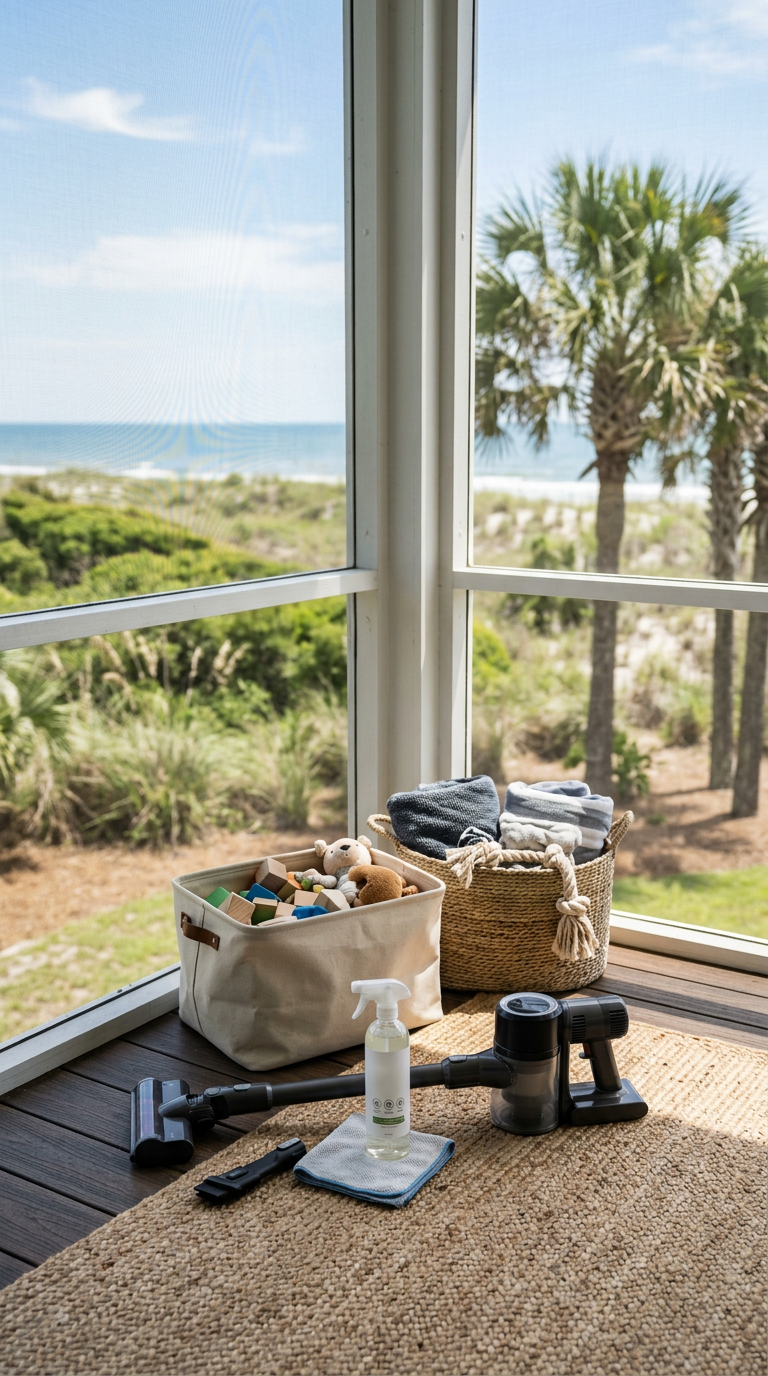
Screened porches are the crown jewel of Grand Strand family homes, serving as the perfect bridge between indoor comfort and the coastal breeze. However, when these spaces double as children's playrooms and pet lounges, they quickly collect a stubborn mix of humid salt air, pet dander, fine sand, and botanical pollen. This guide details a professional-grade, child-safe, and pet-friendly decontamination protocol designed to keep your screened porch healthy and clean. By implementing these expert-vetted techniques, Myrtle Beach families can maintain a safe environment for bare paws and crawling knees without relying on harsh chemicals.
The Porch Playroom Microclimate: Humidity, Dander, and Sand Synergy
The high relative humidity of the Grand Strand, which routinely exceeds 80% during the summer months, creates a unique environmental challenge for screened-in spaces. When fine beach sand and airborne pet dander collide with this damp air, they form an electrostatic bond that clings to screen mesh, floorboards, and play surfaces. This sticky layer of coastal grime acts as a magnet for outdoor pine and oak pollen, turning your porch into an active allergen reservoir.
Children and pets spend a significant amount of time playing close to the floor, making them highly vulnerable to these trapped allergens. Standard dry sweeping merely kicks these microscopic particles back into the air, allowing them to settle on kids' toy bins, pet beds, and soft furnishings. Over time, spilled snacks, pet saliva, and humid air can encourage mold spores to colonize these surfaces, creating an unhealthy environment if left unmanaged.
Traditional household cleaners and chlorinated bleaches are not suitable for spaces where young children crawl and pets lick their paws. The residual volatile organic compounds (VOCs) from these heavy chemicals linger in semi-enclosed porch areas, causing respiratory irritation for both kids and animals. A targeted, low-moisture, botanically based approach is required to break down organic proteins and lift heavy soils without leaving behind toxic chemical residues.
The Dry Soil Extraction Stage: High-Efficiency Static Capture
The first and most critical rule of porch decontamination is to never apply liquid cleaners to dry, sandy soils. Fine coastal sand, when mixed directly with liquid, creates an abrasive mud that grinds into flooring finishes and screen fibers. Begin your cleaning process by removing all portable toys, floor cushions, and pet gear from the porch to expose the entire floor surface and the lower wall structures.
Utilizing a high-efficiency particulate air (HEPA) vacuum, systematically clean the entire porch from top to bottom, starting with the ceiling rafters and moving down. Use a soft brush attachment on the baseboards, door frames, and the bottom tracks of screen panels where pet hair naturally accumulates. Vacuum in slow, overlapping, cross-hatch patterns to pull deep-seated sand out of floorboard cracks and concrete pores.
For stubborn pet hair clinging to outdoor area rugs or low-pile turf, employ a rubber squeegee rake prior to vacuuming the floor. The rubber blade creates static friction that pulls embedded hair out of the fibers without damaging the synthetic weaves. Once the dry soils are completely extracted, you have prepared a clean, sand-free canvas for safe, low-moisture liquid sanitization.
- Remove all toys, pet beds, and decorative items to prevent cross-contamination.
- Vacuum from the highest rafters downward using a certified HEPA-filter vacuum.
- Use a rubber squeegee rake to loosen static-bound pet hair from rugs and turf.
- Clean baseboards and screen tracks with a soft brush attachment to prevent scratching.
- Vacuum in dual-direction overlapping strokes to extract deep-seated coastal sand.
Deep-Cleansing Porch Screens and Frames Without Damage
Screen mesh acts as a giant filter, trapping salt, pollen, and pet dander carried by the coastal breeze. Over time, kids' sticky handprints and dog-nose oils create dark, grimy spots on the lower screen panels that block fresh air. Cleaning these screens requires a delicate touch to avoid stretching the mesh or pulling the screen spline out of its structural channels.
Mix a mild solution of warm water and a few drops of plant-derived, fragrance-free dish soap or castile soap in a clean bucket. Working from the top of each screen panel down, gently wash the mesh using a soft-bristled microfiber car wash mitt. This gentle lifting action removes organic oils, pollen grains, and salty crusts without releasing clouds of dust into your family's outdoor living space.
Rinse the screens thoroughly using a clean, damp microfiber cloth or a low-pressure garden hose nozzle set to a gentle mist. Avoid using high-pressure washers, as extreme water velocity can shred screens, damage wood frames, and force moisture deep into your home's exterior walls. Allow the screens to air-dry completely before moving any furniture or toys back into the area.
Child-Safe and Pet-Friendly Floor Sanitization
Porch flooring—whether painted wood, sealed concrete, or outdoor tile—endures constant contact from bare feet and animal paws. Traditional floor cleaners often contain synthetic fragrances and chemical compounds that can irritate sensitive skin and cause paw dermatitis. For a truly safe clean, utilize a pH-neutral, botanically derived enzyme cleaner or a mild castile soap solution.
Dip a microfiber flat mop into your cleaning solution, wringing it out until it is damp but not dripping wet. Mop the floor in structured paths, starting from the furthest corner and working toward the exit door to avoid stepping on clean zones. The microfibers will trap remaining micro-particulates, while the natural surfactant lifts stubborn pet sebum and dried mud.
For porous concrete or brick pavers, a soft-bristled scrub brush may be necessary to agitate high-traffic areas where pets lounge. Once washed, perform a final rinse with plain water using a clean microfiber mop head to ensure no soapy residue remains. This prevents the floor from becoming sticky, which would otherwise attract new sand and dirt rapidly.
- Select a pH-neutral, botanical, or enzyme-based floor cleaner free of synthetic dyes.
- Wring out your microfiber flat mop thoroughly to avoid pooling water on wood substrates.
- Work in sections from the furthest corner of the porch toward the exit door.
- Use a soft-bristled brush on porous grout lines and concrete to lift embedded oils.
- Rinse the floor with a clean, water-only microfiber mop to eliminate sticky residues.
Decontaminating Toys, Pet Gear, and Play Bins
Kids' plastic toys, play tables, and pet chew toys kept on the porch are prone to accumulating a layer of sticky grit. Humid air mixes with saliva, creating a film where bacteria and mold can thrive. Sanitizing these items regularly is essential to prevent oral transmission of germs to toddlers and pets.
Submerge small, water-safe plastic toys in a solution of warm water and food-grade citric acid or distilled white vinegar. Let them soak for fifteen minutes to dissolve mineral scale, sand crusts, and biological films naturally. Scrub crevices with a dedicated soft toothbrush, then rinse them with clean running water and dry them in the sun.
For larger items like plastic play kitchens, slides, or pet crates, wipe them down with a botanical disinfecting spray. Look for EPA-registered, thyme-oil-based disinfectants that kill pathogens without leaving toxic chemical residues behind. Wipe the surfaces dry with clean microfiber cloths, ensuring no wet pockets remain in cup holders or structural joints.
Managing Moisture and Spills on Porch Upholstery
Outdoor fabrics like Sunbrella are engineered to resist moisture, but they are still susceptible to organic staining. Spilled juice, milk, and wet pet dander can seep into cushion seams, leading to hidden mildew colonies. Prompt attention to spills is critical to preventing permanent discoloration and sour odors in the humid Grand Strand climate.
Blot wet spills immediately with a clean, dry towel to absorb the moisture before it penetrates the cushion core. For spot cleaning, mix a teaspoon of eco-friendly laundry detergent with warm water and gently agitate the stained area with a soft sponge. Avoid aggressive scrubbing, which can wear down the protective water-repellent coating of the fabric.
If cushions feature removable covers, wash them on a gentle cycle with cold water and a hypoallergenic, scent-free detergent. Always air-dry the covers, as high heat in a dryer can shrink the fabric and compromise its weatherproofing. Ensure the inner foam cores are completely dry before reassembling the furniture to prevent musty odor build-up.
Airflow Optimization and Preventive Maintenance Routines
Managing humidity and airflow is your first line of defense against mold and allergen build-up on a screened porch. If your porch is equipped with ceiling fans, run them on a low speed to maintain consistent air movement. This constant circulation prevents damp air from settling on cool surfaces, speeding up the drying process after humid coastal mornings.
Position heavy-duty, washable walk-off mats at both the exterior entrance and the door leading into the main house. These mats should have a rubber backing to prevent slipping and a stiff texture to scrape sand from paws and shoes. Wash these mats weekly in hot water to remove trapped dander, sand, and outdoor allergens before they migrate indoors.
Check the weather stripping and door sweeps around the porch entry doors monthly to ensure they are sealing tightly. Gaps allow pollen, pests, and extra humidity to leak into the space, undermining your cleaning efforts. A well-sealed porch keeps the outdoor elements out while maintaining a safe zone for your family's daily play.
Professional Deep-Cleaning Milestones for Grand Strand Families
While regular family maintenance keeps daily grime at bay, the coastal climate eventually demands a deep restorative clean. Fine sand can settle deep into wood pores and grout lines, while microscopic dander can build up in overhead rafters. A professional deep clean once or twice a year restores the space to a pristine, hygienic state.
Professional teams possess specialized low-moisture extraction equipment and hot-water extraction tools that safely flush out deeply embedded soils. They can clean high rafters, ceiling fan blades, and exterior screen frames that are difficult and dangerous to reach on residential ladders. This thorough servicing significantly extends the lifespan of your porch materials and outdoor furniture.
For families in Myrtle Beach looking to restore their outdoor living spaces, A2Z Cleaning & Linen Services provides specialized care. Our team uses pet-safe, child-friendly protocols to deep-clean screened porches, removing sand, dander, and pollen safely. Contact us at 843.800.2788 to schedule your seasonal porch restoration and enjoy a cleaner, healthier coastal home.
Key takeaway
Maintaining a clean, safe screened porch in the humid Myrtle Beach climate requires a systematic approach to sand, dander, and pollen. By using child-safe, botanical cleaning methods and extracting dry soils first, you protect your family and pets from harsh chemicals and persistent allergens. For a deep, restorative clean that reaches every rafter and screen fiber, trust the local experts at A2Z Cleaning & Linen Services.
Keep Reading

Coastal Living
Managing the Wet-Dog and Sandy-Foot Transition: Child-Safe, Pet-Friendly Entryway and Mudroom Decontamination in Grand Strand Homes
ReadCoastal Living
The Coastal Kids' Toy Bin and Beach-to-Playroom Asset Decontamination Protocol: Mitigating Humid Saliva Biofilms, Pet-Dander Adhesion, and Sand-Friction Scratches in Grand Strand Homes
ReadCoastal Living
The Cost of Restoring Coastal Natural-Fiber Rugs: Mitigating Humidity-Driven Rot, Sand-Grit Fiber Shredding, and Water-Staining in Grand Strand Homes
ReadReady for a spotless property?
Call 843.800.2788 or request a free quote from A2Z Cleaning & Linen Services.