Coastal Living
Managing the Wet-Dog and Sandy-Foot Transition: Child-Safe, Pet-Friendly Entryway and Mudroom Decontamination in Grand Strand Homes
Learn how to establish a child-safe, pet-friendly transition zone to manage sand, pet dander, and high humidity in your Myrtle Beach home's entryway.
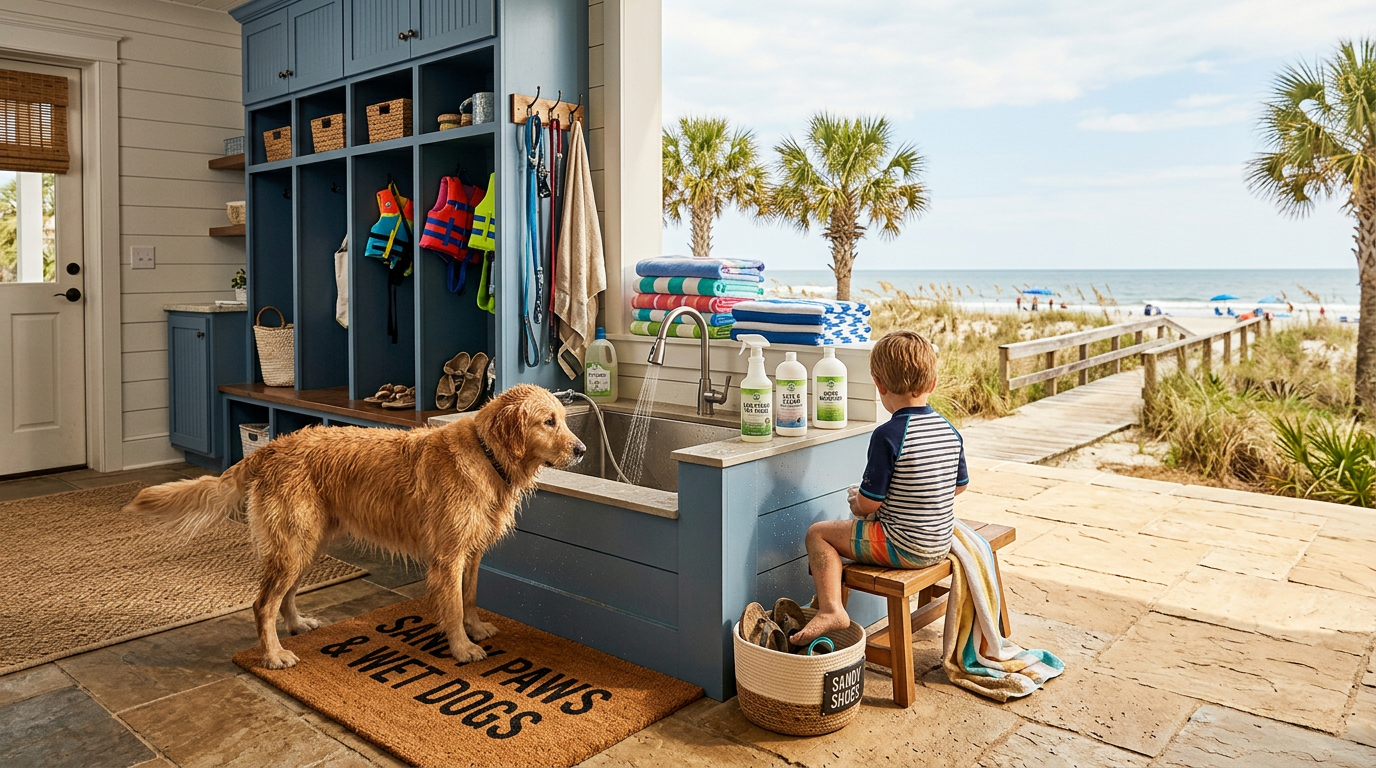
Grand Strand families know that the real boundary of a beach home isn't the front door, but the transition zone where sandy feet, wet paws, and damp beach gear converge. In our high-humidity Myrtle Beach climate, these entryways, mudrooms, and utility areas quickly become breeding grounds for mold, mildew, pet dander, and stubborn odors. Balancing the active lifestyle of children and pets with a clean, allergen-free home requires a strategic approach to cleaning these heavy-traffic zones. By implementing child-safe and pet-friendly protocols, local homeowners can keep their families healthy and their interiors pristine without resorting to harsh chemical residues.
The Anatomy of a Coastal Transition Zone: Why Entryways Trap Humidity
The physics of a coastal entryway make it highly susceptible to indoor air quality issues. Every time children and pets run inside, a surge of hot, humid Grand Strand air rushes through the door and collides with the cool air of your air-conditioned home. This rapid temperature change causes moisture to condense on surfaces, creating a sticky layer that acts like a magnet for loose pet hair, outdoor pollen, and fine beach sand. Without a structured maintenance routine, this entry point behaves like a sponge, locking in organic matter that decomposes rapidly in high-humidity conditions.
Within these transition zones, specific high-touch points require close attention from homeowners. Shoe cubbies, pet beds, low-level wall surfaces, and baseboards are constantly touched, rubbed, and leaned on by toddlers and family pets. This contact transfers body oils, sweat, and outdoor environmental contaminants to the physical structures of your home. Traditional cleaning products often fail to address these issues because they are designed for dry climates, whereas coastal home maintenance requires products that can break down organic oils without trapping extra moisture in the walls or flooring.
For homes with crawling babies, toddlers, and pets, selecting the right cleaning agents for these low-to-the-ground surfaces is critical. Because small children and animals live closer to the floor, they are highly sensitive to the chemical residues left behind by industrial-strength cleansers. Phenols, artificial fragrances, and strong bleach solutions can easily irritate paw pads, cause skin rashes on children, and trigger respiratory distress. Developing a specialized, non-toxic cleaning routine for your entryway is the most effective way to protect your family's health while preserving your home's interior.
- Incorporate a double-door mat system with one mold-resistant scraping mat outside and one absorbent microfiber mat inside.
- Wipe down low-level walls and trim weekly to remove accumulated pet oils and sticky handprints.
- Avoid using heavy chemical waxes on transition floors, as they trap fine sand particles permanently.
- Check under rug pads monthly for trapped moisture and sand that can damage floor seals.
Managing the Dual Assault: Wet Sand and Pet Hair Extraction
The unique combination of abrasive beach sand and fine pet dander presents a major challenge for coastal floor maintenance. When wet sand mixes with shedding pet hair, it forms a dense, abrasive paste that can wear down the protective seals on luxury vinyl plank, tile, and hardwood floors. Standard household vacuums often struggle in this environment because the moist, salt-laden sand can clog the filters, damage the brush rollers, and create a permanent, musty smell inside the vacuum collection bin.
To properly extract these elements without damaging your flooring or equipment, you must use a multi-step dry extraction process. Always allow wet sand to dry completely before attempting to vacuum it, as damp sand will clump deep inside carpet fibers or grout lines. Utilizing a stiff-bristled broom to sweep dry sand toward the center of the room is the best first step. This manual sweeping loosens the grains from the floor texture, making it far easier for a high-efficiency particulate air (HEPA) vacuum to lift the debris cleanly without scratching the floor surface.
Addressing pet hair in these damp transition zones requires a different approach than in dry carpeted living rooms. When pet hair becomes damp from coastal humidity or wet paws, it clings aggressively to baseboards, bench legs, and floor corners. Instead of dry sweeping, which can kick dander up into the air, utilize a damp microfiber cloth or a rubber squeegee tool. These materials create static friction that easily clumps wet hair together, allowing you to lift it from surfaces without spreading allergens throughout your indoor air.
- Let damp sand dry fully before vacuuming to protect your vacuum's motor and filters.
- Use a rubber squeegee tool on low-pile entry mats to lift deeply embedded pet hair.
- Sweep tile and luxury vinyl plank floors before vacuuming to avoid scratching the protective wear layer.
- Clean your vacuum filters weekly during the peak summer season to maintain strong suction.
Designing a Safe, Non-Toxic Rinse and Dry Station
Creating a dedicated staging area just inside your primary family entrance is the most effective way to prevent beach grime from reaching your main living spaces. This transition station should be equipped with low-toxicity cleaning agents, highly absorbent drying towels, and pet-safe paw wipes that are free of alcohol and synthetic perfumes. By organizing this space with clear, accessible cleaning tools, you can establish an easy-to-follow routine that even young children can participate in when returning from a day at the beach.
For cleansing sensitive skin and paws, choose mild, plant-derived ingredients that do not strip natural moisture. A simple spray bottle filled with warm water and a tiny splash of liquid Castile soap works exceptionally well for removing sticky salt residue and fine sand. It is critical to dry feet and paws thoroughly during this process, as residual moisture trapped between a dog's toes or on a child's damp feet can quickly lead to fungal skin irritations in our warm, humid Myrtle Beach climate.
Safety is paramount when organizing your entryway's cleaning supplies. All spray bottles, brushes, and wipes should be stored in secure, elevated cabinets or locked bins that are well out of reach of curious children and pets. Even natural, plant-based cleaning agents can cause stomach upset or eye irritation if handled directly, so maintaining a strict storage system keeps your family safe while keeping your transition zone clean and ready for daily use.
- Store all entryway cleaning sprays in high cabinets equipped with child-safety locks.
- Keep a basket of designated, highly absorbent microfiber towels strictly for quick paw and foot drying.
- Use a pet-safe, alcohol-free paw wash to remove stubborn salt and sand from sensitive paw pads.
- Rinse large beach toys, shovels, and dog toys outdoors before bringing them into the indoor transition zone.
Neutralizing Coastal Pet and Mildew Odors Naturally
The combination of high humidity and organic pet waste often leads to persistent, unpleasant odors in coastal entryways. When dogs get wet from ocean water or humid air, the natural oils on their skin become a breeding ground for harmless but smelly bacteria. Standard retail air fresheners and aerosol sprays only mask these odors with heavy synthetic chemicals. These chemical perfumes can irritate the sensitive nasal passages of pets and trigger asthma or allergy attacks in young children.
To neutralize these odors safely and permanently, look to natural, non-toxic compounds like sodium bicarbonate, commonly known as baking soda. Baking soda is an excellent, child-safe odor absorber that physically binds to acidic odor molecules and neutralizes them rather than covering them up. Gently sprinkling a light layer of baking soda over entryway rugs, pet beds, and inside shoe cubbies, letting it sit for twenty minutes, and then vacuuming it up will dramatically reduce stale coastal smells.
Distilled white vinegar is another powerful, non-toxic tool for managing coastal organic odors. A simple solution of equal parts white vinegar and warm water can be lightly misted onto hard surfaces, walls, and washable fabrics in your mudroom. The natural acidity of the vinegar breaks down organic odor compounds and kills mildew spores on contact. While the vinegar smell is strong initially, it dissipates completely within minutes, carrying the stubborn pet and mildew odors away with it.
- Sprinkle baking soda on entryway rugs, let sit for 20 minutes, then vacuum thoroughly with a HEPA vacuum.
- Mist hard surfaces with a 50/50 mixture of distilled white vinegar and water to eliminate mildew odors.
- Avoid synthetic plug-in air fresheners that release volatile organic compounds (VOCs) at child and pet levels.
- Place small, breathable linen bags filled with activated charcoal in shoe cubbies to absorb excess moisture.
Managing the Laundry Pile: Damp Towels, Life Jackets, and Beach Gear
Allowing wet beach towels, life jackets, and pet blankets to sit in a pile on your entryway floor is a recipe for rapid mold growth. In the Grand Strand's summer heat, mold spores can develop on damp fabric in as little as twenty-four hours. This creates an immediate respiratory hazard for young children and pets who spend time in these areas. Damp fabric piles also trap humidity in the room, making it harder for the space to dry out naturally.
To combat this, install heavy-duty wall hooks at various heights throughout your transition zone. Hanging damp items immediately keeps them off the floor and allows air to circulate around each piece of fabric, which dramatically reduces drying time. Assigning a specific hook to each child encourages them to take responsibility for their own gear, ensuring that wet towels and sandy swimsuits never spend the night crumpled in a corner.
When washing these heavily soiled coastal items, opt for a fragrance-free, hypoallergenic liquid detergent. Adding one cup of distilled white vinegar directly to the washing machine's rinse cycle helps strip away built-up salt, fine sand, and fabric-softener residues. This keeps your beach towels highly absorbent and free of the chemical residues that can cause skin irritation, itching, and rashes on children's sensitive skin and pets' bodies.
- Install heavy-duty, corrosion-resistant wall hooks to keep wet beach gear off the floor.
- Wash towels and pet blankets on a hot sanitizing cycle with an extra rinse to remove fine sand.
- Skip fabric softeners, which leave a chemical coating that traps moisture and pet dander.
- Dry life jackets and harness gear in a shady outdoor area before storing them in the house.
Hard-Surface Floor Care: Safe and Effective Maintenance
The flooring in your transition zone must be highly durable to withstand the wear and tear of active kids and pets. Whether your home features luxury vinyl plank, ceramic tile, or sealed concrete, these hard surfaces require frequent cleaning to remain safe and hygienic. Because toddlers crawl on these floors and pets often eat dropped food directly off of them, using highly toxic, chemical-heavy floor cleaners poses a direct health risk to your family.
A safe, effective mopping routine involves using a damp microfiber mop head and a mild, plant-derived soap solution. Microfiber is uniquely structured to trap microscopic dander, fine sand, and bacteria without requiring harsh chemical assistance. Avoid using traditional, soaking wet cotton string mops, which tend to push dirty water and sand grains deep into grout lines and floor joints, creating hidden pockets of moisture where mold can easily take root.
Excess moisture on transition floors also creates an immediate physical safety hazard. Wet tile and vinyl plank floors become incredibly slick, leading to slips and falls for excited children and running pets. Always follow your damp mopping pass with a dry microfiber pad to absorb any remaining standing water. This step not only ensures the floor is safe for immediate use, but it also prevents moisture from seeping into flooring seams and causing long-term structural warping.
- Mop floors with a damp microfiber pad rather than a soaking wet cotton string mop.
- Use a mild, plant-based dish soap and warm water solution to clean floors without leaving toxic residues.
- Perform a dry-wipe pass immediately after mopping to eliminate slip hazards and standing water.
- Clean tile grout lines with a paste of baking soda and water using a stiff-bristled utility brush.
Enhancing Airflow and Humidity Control in heavy-Traffic Entryways
Mechanical ventilation is a critical component of maintaining a healthy coastal mudroom or entryway. Because this zone is subject to constant drafts of warm, humid air, keeping the air moving is essential for drying out wet surfaces. Running a small, dedicated dehumidifier in your utility room or mudroom can dramatically lower the indoor relative humidity, preventing the damp conditions that allow dust mites, mold, and mildew to thrive.
Controlling humidity directly impacts the behavior of indoor allergens like pet dander and pollen. High humidity causes these microscopic particles to stick to walls, floors, and fabrics, making them much harder to vacuum up. By keeping your home's relative humidity below fifty percent, you create an environment where dander remains dry and easy to extract, protecting your children and pets from breathing in concentrated airborne irritants.
Placing a compact air purifier equipped with a true HEPA filter in your main family transition zone can significantly improve overall indoor air quality. These units capture airborne dander, fine dust, and pollen right at the source before these particles can drift into your kitchen, living room, or bedrooms. Remember to check and wash the pre-filters on these units regularly, as they will quickly fill with the fine sand and hair typical of Grand Strand active living.
- Run a small dehumidifier in your mudroom to maintain relative humidity below fifty percent.
- Install a ceiling fan or a wall-mounted fan to promote constant, drying air circulation.
- Place a HEPA air purifier near the main pet entry point to capture airborne allergens immediately.
- Replace your home's HVAC filters monthly during the busy summer season to manage the extra dust load.
Professional Deep Cleaning Support for Busy Grand Strand Homes
Even the most organized and dedicated families can find it challenging to keep up with the constant influx of sand, pet hair, and moisture during the peak coastal seasons. Over time, microscopic dander and fine beach sand accumulate in areas that are hard to reach with standard household cleaning tools, such as under heavy washing machines, inside deep grout pores, and behind baseboard heating registers.
When daily cleaning routines aren't enough to keep the musty coastal smells at bay, seeking professional cleaning support is a smart option. Homeowners should look for local, family-owned cleaning services that understand the unique environmental challenges of the Grand Strand. A professional deep clean once or twice a year strips away the built-up organic residues that daily vacuuming and light mopping miss, restoring your home to a clean, fresh baseline.
Professional deep cleaning services utilize high-extraction equipment and specialized, family-safe products to sanitize hard-to-reach areas. This targeted care removes allergens, deep-seated sand, and mold spores at their source without leaving behind harmful chemical residues. Partnering with a professional team allows you to enjoy the coastal lifestyle with your kids and pets, knowing that your home remains a clean, safe, and healthy sanctuary.
- Schedule a professional deep clean twice a year to clear out accumulated sand and dander.
- Ensure your cleaning partner uses child-safe and pet-friendly cleaning agents.
- Inquire about deep grout extraction to remove trapped moisture and mold spores from tile floors.
- Ask for professional rug cleaning to pull deep-seated coastal sand out of high-traffic fibers.
Key takeaway
Keeping your coastal home clean doesn't mean sacrificing the fun of beach days with your kids and pets. By establishing a dedicated transition zone and using child-safe, pet-friendly cleaning techniques, you can successfully manage sand, dander, and humidity. If your Grand Strand home needs a deep reset to clear out stubborn allergens, call A2Z Cleaning & Linen Services at 843.800.2788 to schedule a professional, family-friendly clean today.
Keep Reading
Coastal Living
The Coastal Kids' Toy Bin and Beach-to-Playroom Asset Decontamination Protocol: Mitigating Humid Saliva Biofilms, Pet-Dander Adhesion, and Sand-Friction Scratches in Grand Strand Homes
ReadCoastal Living
Coastal Family Chaos: Managing Sand, Pet Dander, and Humidity-Driven Odors in Grand Strand Homes
ReadCoastal Living
Defeating the Salt-Air Film: How to Protect Grand Strand Home Interiors
ReadReady for a spotless property?
Call 843.800.2788 or request a free quote from A2Z Cleaning & Linen Services.