Coastal Living
The Cost of Restoring Coastal Designer Draperies and Custom Window Sheers: Mitigating Salt-Damp Fabric Rot, Mildew Spores, and Material-Safe Professional Extraction in Grand Strand Homes
Discover the true costs of restoring high-end coastal draperies and sheers damaged by salt-damp air, how to choose a safe professional service, and why DIY attempts often ruin custom fabrics.
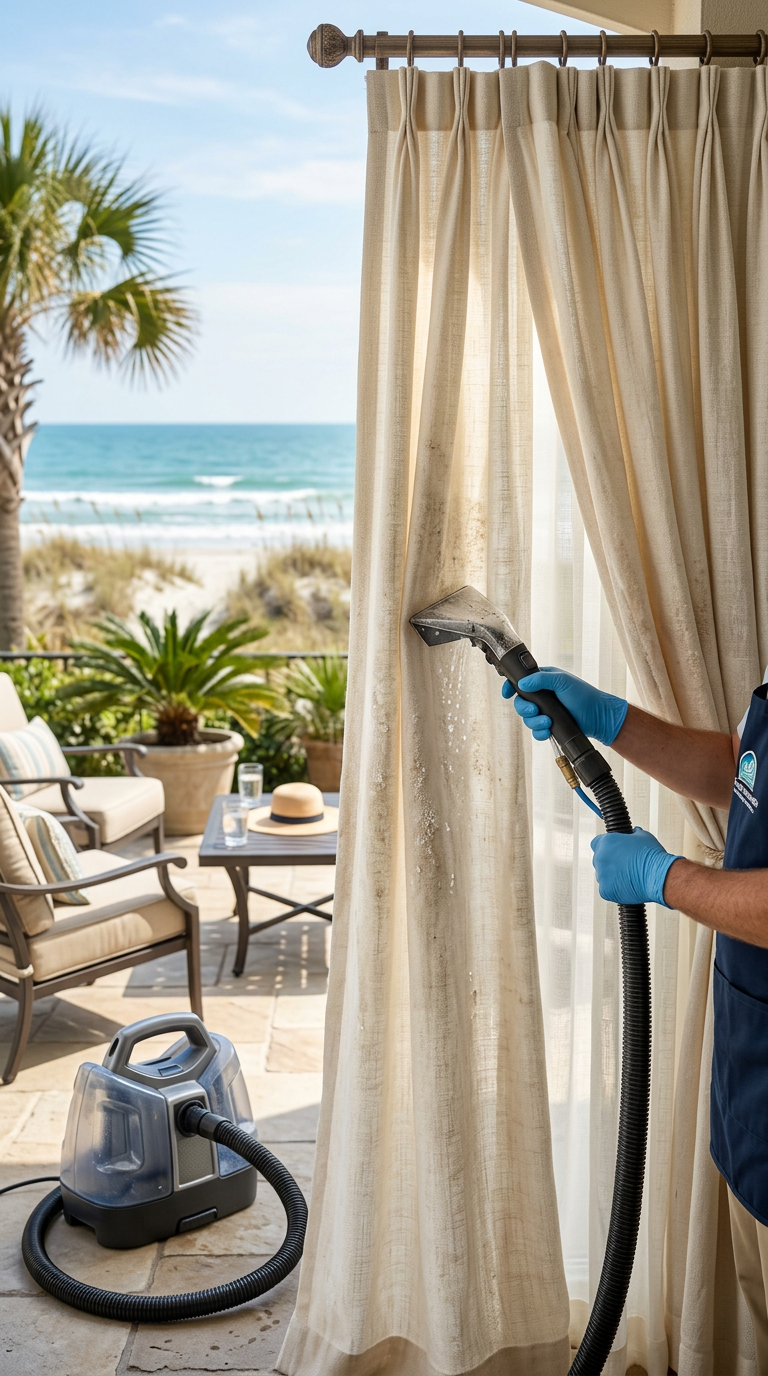
Living along the Grand Strand offers breathtaking ocean views, but the very breeze that makes coastal living so appealing carries microscopic salt crystals and high humidity into your home. These airborne elements settle directly onto custom window treatments, slowly degrading delicate fibers and attracting moisture. Over time, high-end designer draperies and custom sheer panels can develop dry rot, yellowing, and mold if not properly maintained. Understanding the costs, risks, and proper restoration methods for these valuable home assets is essential for preserving both your interior aesthetic and your indoor air quality.
The Anatomy of Coastal Drapery Damage: Salt, Moisture, and UV
Ocean air is heavily laden with salt, which is naturally hygroscopic, meaning it continuously draws moisture out of the air. When these airborne salt particles settle into the deep folds and tight weaves of your custom draperies, they form an invisible layer that traps humidity directly against the fibers. This constant moisture retention softens fiber structures, leaving them susceptible to environmental wear that inland homes rarely experience.
Sun exposure drastically accelerates this degradation process along our South Carolina coast. The Grand Strand's intense UV rays bake the salt crystals embedded deep within the fabrics, initiating a chemical reaction that weakens the cellulose structures of natural fibers like cotton, linen, and silk. This process, known as dry rot, causes once-luxurious drapes to become brittle, thin, and prone to tearing along the pleats and hems under the slightest tension.
To make matters worse, the trapped moisture and salt create an ideal breeding ground for biological growth. Dust and organic pollen settle onto the damp fabric, providing a food source for mold and mildew spores carried in by the ocean breeze. This manifests as dark gray speckling, yellow staining, and a musty odor that regular home ventilation cannot resolve, requiring professional intervention to sanitize the fabric without destroying its integrity.
DIY vs. Professional Drapery Cleaning: The High Stakes of Shrinkage and Water Rings
Many Grand Strand homeowners attempt to wash their custom draperies at home to save on maintenance costs, often with disastrous results. Placing high-end fabrics or structured linens into a standard household washing machine can cause catastrophic shrinkage, sometimes shortening panels by several inches. Furthermore, the agitation can ruin delicate weighted hems, tear intricate pleat buckram, and cause delicate cotton or silk linings to shrink at different rates than the face fabric.
Using a home hand-held steamer is another common DIY pitfall that can permanently ruin your window treatments. When you apply steam directly to salt-saturated fabrics without first extracting the dry particulates, the heat dissolves the salt and pushes it to the outer boundaries of the damp area. As the fabric dries, it leaves behind prominent, unsightly brown water rings and tide lines that are incredibly difficult to remove and often require intensive restoration.
Professional drapery restoration technicians utilize specialized low-moisture or dry-solvent extraction systems specifically engineered for delicate window treatments. These systems safely dissolve and extract embedded salt, atmospheric soils, and allergens without saturating the fibers. This process protects the fabric's dimensional stability, preserves custom linings, and prevents the color bleeding, puckering, and fabric shrinkage that routinely ruin DIY attempts.
The Cost Metrics of Coastal Drapery Restoration vs. Replacement
Investing in custom window treatments for a coastal home is a significant financial commitment, with designer draperies and sheer panels often costing between $1,000 and $3,500 per window. This price reflects high-quality designer fabrics, specialized blackout linings, precise pleating, and professional installation. Given these high initial replacement costs, safeguarding your investment through routine professional cleaning is a highly cost-effective strategy.
Professional onsite drapery cleaning typically costs between $150 and $350 per panel, depending on the fabric composition, overall length, and degree of soil accumulation. For heavily soiled fabrics or those affected by severe mold and mildew, offsite plant cleaning may be required, which ranges from $200 to $450 per panel. This specialized process includes detailed dry-soil removal, controlled immersion cleaning, and hand-finishing to restore the original shape of the fabric.
When you compare the cost of professional cleaning to the price of full replacement, the long-term financial benefits are clear. Spending a fraction of the replacement cost every two to three years on professional restoration can extend the lifespan of your custom draperies by up to a decade. This maintenance schedule prevents the fiber rot and structural failures that force premature, expensive replacements.
- Average replacement cost per custom window: $1,000 to $3,500+
- Average professional onsite cleaning cost per panel: $150 to $350
- Average offsite deep-restoration cost per panel: $200 to $450
- Lifespan of professionally maintained draperies: 10 to 15 years
- Lifespan of neglected coastal draperies: 3 to 5 years
Essential Questions to Ask a Professional Drapery Cleaning Company
Before hiring a cleaning company to handle your high-end window treatments, it is crucial to ask detailed questions about their specific methods and experience. Homeowners should inquire whether the company performs onsite low-moisture cleaning or if they require the draperies to be taken offsite. Onsite cleaning is highly preferred for custom-hung panels, as it minimizes handling and eliminates the risk of drapes stretching out of shape during transport.
Always ask the provider if they perform fiber identification and colorfastness testing prior to starting the cleaning process. Different materials—such as linen, silk, rayon, and synthetic blends—require highly specific chemical formulations and moisture levels to clean safely. A reputable company will always test a hidden seam or hem to ensure the cleaning solutions will not cause color migration, fiber distortion, or lining damage.
Finally, confirm that the technicians are certified in fine fabric care and that the company carries comprehensive liability insurance that covers high-value home furnishings. In the rare event that a delicate fabric reacts poorly to treatment, having an insured, certified professional gives you peace of mind that your financial investment is fully protected. Avoid companies that treat draperies with the same aggressive cleaning methods used for standard carpets.
Fabric Safety and Botanical Chemistries: Protecting Indoor Air Quality and Fibers
Traditional dry-cleaning methods often rely on harsh, synthetic solvents such as perchloroethylene, which can leave chemical residues on fabrics. When these treated draperies are hung back up in a coastal home, the heat and humidity can cause these solvents to slowly off-gas into your living areas. This can degrade your indoor air quality and pose potential health risks to children, pets, and family members with respiratory sensitivities.
The modern professional standard utilizes safe, biodegradable surfactant systems and pH-balanced solutions that break down salt and soils without releasing volatile organic compounds (VOCs). These botanical and eco-friendly chemistries are highly effective at neutralizing acidic salt deposits and lifting stubborn organic soils from fabric fibers. They clean thoroughly while preserving the home's breathing zone, ensuring a safe indoor environment.
Using pH-neutral solutions also protects the structural integrity of natural fibers over time. Highly acidic or alkaline cleaners can weaken delicate linen and silk threads, accelerated by the coastal sun, causing fibers to break and fray. Safe, balanced chemistries gently restore the fabric's natural pH, preserving the softness, texture, and elegant drape of your custom window treatments for years to come.
The Onsite Low-Moisture Extraction Protocol
The professional onsite restoration process begins with a meticulous dry-soil extraction step. Using specialized HEPA-filtered vacuum systems equipped with soft, natural horsehair brush attachments, technicians gently vacuum the draperies from top to bottom. This step removes loose sand, salt crystals, dust, and pollen from the pleats, hems, and linings without snagging delicate fibers or pulling threads.
Next, technicians perform a detailed pre-treatment on any areas showing heavy soil accumulation, water staining, or mildew spots. A specialized, low-moisture cleaning solution is misted onto the fabric, designed to suspend embedded dirt and salt particles. Technicians use soft brushes to gently work the solution into the weave, taking extra care around sun-weakened areas and delicate seams to ensure a safe, thorough clean.
Finally, a specialized injection-extraction tool is used to rinse and extract the suspended soils and cleaning solutions. This tool applies a fine, controlled mist of warm water and immediately vacuums it away, preventing the fabric from becoming oversaturated. This process completely removes dissolved salt, dust, and allergens, leaving the draperies clean, sanitized, and dry to the touch within just a few hours.
Long-Term Preventive Maintenance: Stretching the Lifespan of Your Coastal Window Treatments
To protect your custom draperies between professional cleanings, implementing a regular preventive maintenance routine is highly recommended. Homeowners should gently vacuum their window treatments every month using a low-suction upholstery attachment to prevent salt and dust from settling into the fabric. Pay close attention to the tops of the pleats and the bottom hems, where airborne debris is most likely to collect.
Managing your home's indoor humidity levels is another key factor in extending the lifespan of your draperies. Keeping indoor humidity below 55% using air conditioning and high-capacity dehumidifiers prevents salt-laden air from bonding with the fibers and limits mold growth. On high-humidity days, avoid keeping windows open for long periods to minimize the amount of salt and moisture that enters your home and settles on fabrics.
Lastly, scheduling a professional inspection and maintenance clean every 18 to 24 months will stop environmental damage before it becomes irreversible. If you notice early signs of salt stiffening, yellowing, or a musty odor, do not wait for the damage to spread. Contacting a professional cleaning service like A2Z Cleaning & Linen Services at 843.800.2788 can help you address these issues early, saving your beautiful draperies.
Key takeaway
Protecting custom draperies from the harsh effects of coastal salt, moisture, and UV exposure requires specialized, professional care. By choosing safe, low-moisture extraction methods over high-risk DIY attempts, Grand Strand homeowners can preserve their high-value window treatments, maintain excellent indoor air quality, and avoid expensive replacement costs. Regular, professional maintenance is the key to keeping your beautiful coastal home fresh, clean, and elegant for years to come.
Keep Reading

Coastal Living
The Coastal Family Toy Bin, Pet Toy Basket, and Plush Plaything Decontamination Protocol: Mitigating Drool Yeast, Humid Sand-Grit, and Kid-Safe Botanical Care in Grand Strand Homes
ReadCoastal Living
The Cost of Restoring Coastal Kitchen Cabinets and Custom Millwork: Mitigating Salt-Damp Grease Bind, Polyurethane Softening, and Material-Safe Chemistry in Grand Strand Homes
ReadCoastal Living
The Cost of Restoring Coastal Outdoor Performance Fabrics: Mitigating Salt-Air Mildew, Sunscreen Sebum, and Chemical-Stripping Damage in Grand Strand Homes
ReadReady for a spotless property?
Call 843.800.2788 or request a free quote from A2Z Cleaning & Linen Services.