Coastal Living
The Coastal Family Toy Bin, Pet Toy Basket, and Plush Plaything Decontamination Protocol: Mitigating Drool Yeast, Humid Sand-Grit, and Kid-Safe Botanical Care in Grand Strand Homes
A practical guide to sanitizing children's and pets' toys in coastal climates, eliminating humid sand-grit, drool yeast, and allergens using safe, botanical protocols.
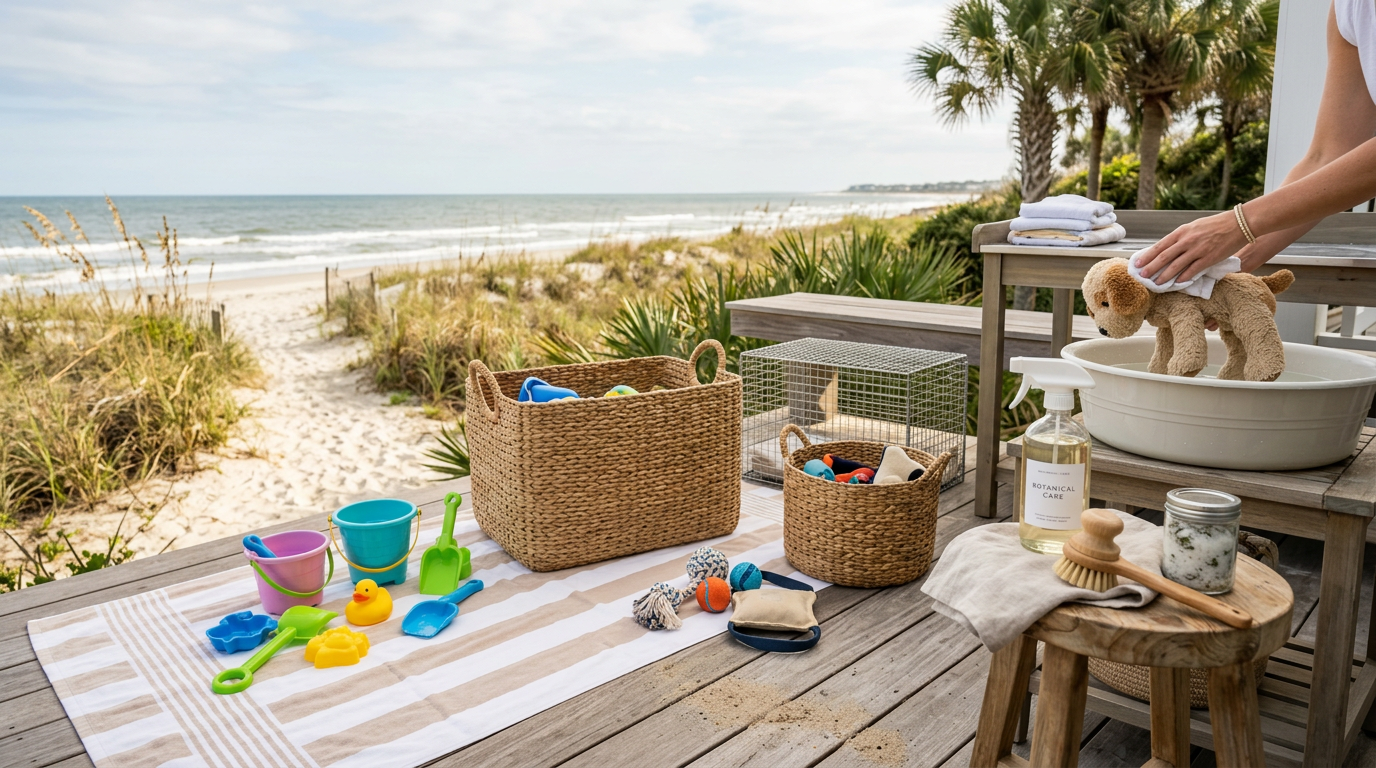
Families living along the Grand Strand enjoy an enviable coastal lifestyle, but our unique environment presents distinct challenges for household hygiene. Between beach days at Cherry Grove and backyard play in Myrtle Beach, children's toys and pet playthings constantly accumulate a mixture of damp sand, salty moisture, dog drool, and environmental allergens. When left in dark toy bins or wicker baskets, these items become breeding grounds for yeast, mold, and dust mites. Establishing a systematic, child-safe decontamination routine is essential for protecting your family's health while preserving the lifespan of these high-contact items.
The Coastal Toy Contamination Challenge: Sand, Drool, and High Humidity
The combination of high humidity and coastal wind creates an ideal sticky surface on every toy in your home. When your dog carries a tennis ball across the dunes or your child drops a plastic toy in the damp yard, those items absorb a combination of salt-air moisture and organic matter. Back indoors, this mixture settles deep into toy bins, where the lack of airflow allows bacteria and mold to thrive. Over time, these forgotten storage zones turn into active sources of indoor allergens and unpleasant yeast odors.
Pet saliva acts as a powerful binder, gluing fine beach sand to fabrics and plastics alike. When mixed with the natural yeast present on dogs' paws and muzzles, this residue forms a stubborn biofilm on pet toys. If children share play spaces with these pets, they easily touch these surfaces, transferring bacteria and allergens. This cross-contamination makes a dedicated decontamination protocol a health priority for Grand Strand families, rather than a superficial aesthetic concern.
Standard quick-fix cleaning methods, such as a light dusting or spraying with conventional aerosol disinfectants, are ineffective against coastal grime. Chemical residues can leave sticky films that actually attract more sand and pet hair, while failing to penetrate porous fabrics or reach the inside of hollow toys. To break the cycle of mold, yeast, and dust mites, families need a systematic approach that neutralizes pathogens safely without exposing children and pets to harsh chemical irritants.
Material-Specific Risks: Plastic, Wood, and Plush Fabric Vulnerabilities
Different toy substrates react uniquely to the salt-damp conditions of the Grand Strand, requiring tailored cleaning chemistries. Hard plastic and silicone toys are highly durable but feature tiny seams, textures, and screw holes where moisture easily pools. Bath toys and hollow squeeze playthings are particularly notorious for trapping stagnant water inside, which rapidly transforms into toxic black mold in our humid climate.
Natural wooden toys possess natural antimicrobial properties, but they are highly vulnerable to coastal humidity. Excessive moisture causes wood to swell, warp, splinter, and harbor mold spores within its grain. Harsh chemical disinfectants can strip away protective non-toxic finishes, leaving the wood raw, vulnerable, and unsafe for toddlers who explore their world by putting things in their mouths.
Plush stuffed animals, fabric dolls, and canvas pet ropes act as literal sponges for salt-damp air, pet dander, and microscopic sand-grit. The fibers trap moisture deep within their stuffing, creating a perfect microclimate for dust mites and mildew. Failing to thoroughly wash and dry these textiles at the proper temperatures allows allergens to accumulate, contributing to nighttime coughing and allergy flare-ups in sensitive children.
Sorting and Pre-Treating: The Dry-Sifting and Sand-Removal Phase
Before applying any liquid cleaning solutions, you must completely remove dry sand-grit from toys and storage containers. Wetting sand turns it into an abrasive paste that can scratch plastic surfaces, ruin wooden finishes, and lodge permanently into textile fibers. Begin your protocol by gathering all toys onto an outdoor patio or porch to prevent transferring the grit back into your living room carpets.
For soft toys, canvas playthings, and pet ropes, utilize a simple dry-sifting technique to shake loose the heavy particles. Place these items inside a large mesh laundry bag and give them a vigorous shake outdoors, allowing the fine sand to fall free. Use a stiff-bristled brush to sweep out deep-seated grit from fabric seams, zipper tracks, and velcro closures before proceeding to the washing phase.
For hard plastic and wooden toys, use a dry micro-vacuum attachment or a clean, dry microfiber cloth to wipe away surface dust and loose sand. Inspect each toy for stubborn, dried-on mud, pet drool, or food residue. Gently scrape away these deposits with a plastic scraper or an old toothbrush, ensuring the surfaces are free of loose debris before introducing any sanitizing moisture.
The Plush Toy and Canvas Chew-Toy Laundering Protocol
Plush toys and fabric pet playthings require deep thermal and chemical sanitization to eliminate dust mites, yeast, and mold spores. Always place delicate stuffed animals inside zippered mesh washing bags to protect plastic eyes, felt details, and stitching from the mechanical agitation of the washing machine. Group similar items together, keeping heavily soiled pet toys separate from children’s favorite bedtime companions.
Select a gentle, fragrance-free laundry detergent formulated for sensitive skin, avoiding fabric softeners which coat fibers and lock in pet odors. For children's plush toys, add a half-cup of baking soda to the wash cycle to naturally neutralize acidic drool and musty odors. Wash on a warm water setting; while hot water is ideal for allergen reduction, warm water protects synthetic plush furs from melting or matting.
Drying is the most critical step in a humid coastal environment to prevent mold from developing inside the stuffing. Tumble dry the toys on a low-heat setting with several clean, dry tennis balls or wool dryer balls to help fluff the stuffing and speed up the drying process. Once the cycle finishes, inspect the center of each toy; if it feels slightly damp, hang it in a well-ventilated room with a dehumidifier running until completely bone-dry.
- Always use zippered mesh laundry bags to protect delicate toy components during wash cycles.
- Skip chemical fabric softeners, which leave residues that attract sand and lock in yeast odors.
- Add a half-cup of baking soda to the wash cycle to naturally neutralize organic odors and acid residues.
- Use wool dryer balls to break up clumps in toy stuffing and ensure uniform drying throughout the item.
- Never store a plush toy that is even slightly damp; utilize a dehumidifier to complete the drying process.
Botanical Sanitization for Rigid Plastic and Silicone Toys
For hard plastic and silicone toys, avoid harsh bleach solutions, which can degrade plastic over time and leave dangerous residues. Instead, opt for EPA-approved botanical disinfectants featuring active ingredients like thymol (derived from thyme oil) or citric acid. These natural compounds effectively kill 99.9% of household bacteria and mold while remaining completely safe for children and pets.
Fill a clean basin or sink with warm water and a small amount of botanical dish soap to remove greasy films, sunscreen oils, and sticky residues. Submerge the hard toys and use a non-scratch sponge to scrub all surfaces, paying close attention to ridges, wheels, and battery compartment seams. Rinse each toy thoroughly under clean, running water to ensure no soapy film remains.
To sanitize, spray the toys thoroughly with a botanical disinfectant or submerge them in a diluted solution of distilled white vinegar and water for ten minutes. For hollow squeeze toys, squeeze them repeatedly while submerged to pull the solution inside, shake vigorously, and squeeze the liquid out. Place the sanitized toys on a clean, dry towel in a single layer to air-dry completely.
- Choose botanical disinfectants with thymol or citric acid for kid-safe, pet-safe sanitizing power.
- Scrub seams, crevices, and textured surfaces with a soft-bristled brush to lift stubborn skin oils.
- Purge hollow squeeze toys by filling them with vinegar-water, shaking, and squeezing dry.
- Rinse thoroughly to remove any soapy residues that could attract airborne dust and pet dander.
- Allow toys to air-dry completely on a clean, dry towel in a well-ventilated room before storage.
Preserving and Disinfecting Natural Wood and Eco-Friendly Playthings
Wooden toys require a delicate touch because they cannot tolerate submersion or saturation, which ruins the structural integrity of the wood fibers. To clean wood safely, prepare a mild solution of equal parts distilled white vinegar and warm water in a spray bottle. Vinegar is a gentle, natural disinfectant that kills common molds and neutralizes odors without stripping natural wood finishes.
Lightly mist a clean microfiber cloth with the vinegar solution until it is damp but not dripping wet. Wipe down each wooden toy individually, paying special attention to edges, corners, and areas where little hands hold them most frequently. Never spray the solution directly onto the wood, as this can lead to localized pooling, swelling, and eventual cracking.
Once wiped clean, immediately dry the wooden toys with a second, dry microfiber cloth to remove any residual surface moisture. Set the toys to cure in a warm, dry area with good airflow, such as near a dehumidifier or out on a covered porch away from direct, harsh sunlight. Direct coastal sunlight can bleach natural wood colors and dry out the grain too quickly, causing splinters.
Decontaminating the Containers: Canvas Baskets, Wicker, and Plastic Bins
Cleaning the toys themselves is futile if you place them back into dirty, dust-filled storage containers. Toy boxes, canvas bins, and wicker baskets are major collection points for loose sand, pet dander, shed fur, and dust mites. Empty all containers completely and take them outdoors to shake out the heavy sand accumulation before applying any cleaning techniques.
For plastic storage bins, wipe the interior and exterior down with a botanical disinfectant spray and a clean microfiber cloth. Pay close attention to molded handles, stackable grooves, and plastic lids where dust and hair tend to collect. Allow the bins to dry completely in the sun for fifteen minutes, as natural UV rays help eliminate any residual musty coastal odors.
Woven wicker and fabric baskets require careful handling to prevent mold growth within their porous structures. Vacuum woven baskets using a brush attachment to pull sand and pet hair out of the tight weaves, then mist lightly with a botanical sanitizing spray. To prevent future moisture buildup, place a clean, dry towel or a specialty moisture-absorbing packet at the bottom of each bin.
- Empty all storage containers completely and shake them outdoors to remove heavy sand deposits.
- Vacuum woven wicker and fabric baskets with a brush attachment to pull grit out of the fibers.
- Wipe plastic storage bins with botanical sanitizers and allow them to dry in the sun.
- Apply a light mist of botanical sanitizing spray to fabric bins and dry them thoroughly.
- Place a dry barrier, like a small towel, at the bottom of storage bins to catch falling grit.
The Weekly Maintenance Schedule: Keeping a Busy Coastal Household Clean
Maintaining a clean, allergy-friendly home along the Grand Strand requires consistency rather than marathon cleaning sessions. Establish a simple weekly rhythm where you quickly assess the state of high-touch toys and storage bins. Wipe down plastic toys that have been taken outdoors, shake out the main pet toy basket, and wash any plush toys that show signs of heavy drool or dirt.
Integrate quick daily habits to prevent moisture from settling into toy storage zones. Encourage children to dry off bath toys and place them in a ventilated mesh bag rather than a solid plastic bin. Keep a clean towel by the entryway to wipe your dog’s paws and muzzle before they grab their favorite toys, reducing the amount of sand and yeast brought into the house.
For busy families, balancing school, work, and beach trips can make deep cleaning feel overwhelming. Enlisting professional cleaning support ensures your home’s air quality and high-contact surfaces remain pristine. A2Z Cleaning & Linen Services provides thorough, deep-cleaning solutions that target hidden dust, pet dander, and sand-grit, keeping your coastal home fresh, healthy, and safe for everyone.
Key takeaway
Keeping children's toys and pet playthings clean in a humid coastal environment requires a dedicated approach that balances safety with thoroughness. By implementing a systematic, botanical-based decontamination routine, you can protect your family from allergens, yeast, and mold. For comprehensive home cleaning support customized for Grand Strand families, contact A2Z Cleaning & Linen Services at 843.800.2788.
Keep Reading

Coastal Living
The Coastal Family Car Seat and Beach Stroller Decontamination Protocol: Mitigating Sand-Silt Wear, Spilled Organic Biofilms, and Salt-Air Mildew in Grand Strand Homes
ReadCoastal Living
The Coastal Multi-Sectional Decontamination Protocol: Mitigating Pet Sebum, Organic Kid Spills, and Humidity-Trapped Allergen Reservoirs in Grand Strand Homes
ReadCoastal Living
The Cost of Restoring Coastal Kitchen Cabinets and Custom Millwork: Mitigating Salt-Damp Grease Bind, Polyurethane Softening, and Material-Safe Chemistry in Grand Strand Homes
ReadReady for a spotless property?
Call 843.800.2788 or request a free quote from A2Z Cleaning & Linen Services.