Coastal Living
The Coastal Multi-Sectional Decontamination Protocol: Mitigating Pet Sebum, Organic Kid Spills, and Humidity-Trapped Allergen Reservoirs in Grand Strand Homes
Discover how to safely clean and decontaminate your family's favorite coastal sectional, targeting pet oils, child spills, and humidity-driven allergens with family-safe methods.
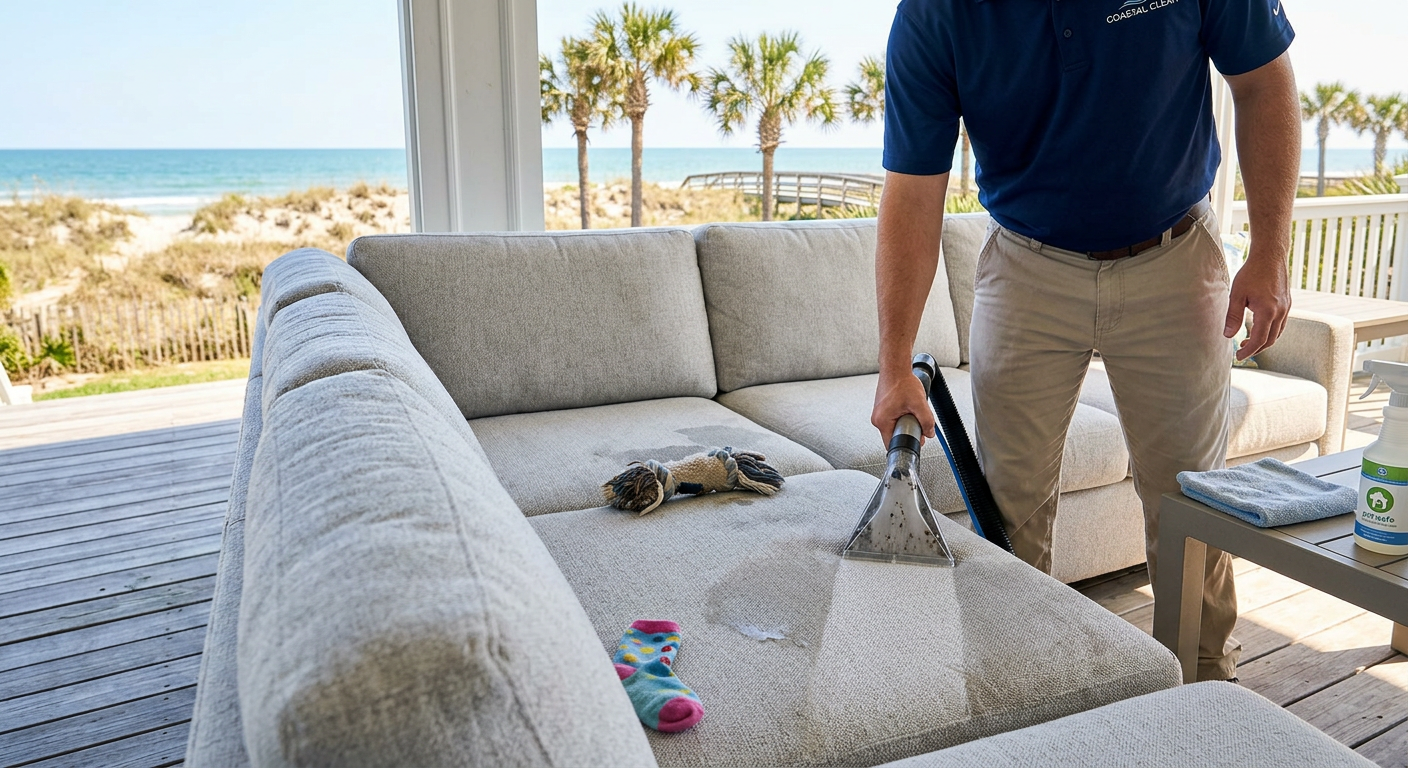
In busy Grand Strand households, the living room sectional is the undisputed hub of family life, serving as a gathering spot for children, pets, and sandy beachgoers. However, the combination of high coastal humidity, pet body oils, food crumbs, and microscopic beach sand turns these large upholstered pieces into hidden reservoirs for allergens and yeast. Traditional cleaning methods often fall short in our humid environment, either leaving fabrics overwet or using harsh chemicals that are unsafe for young children and pets. This guide outlines a highly effective, child-safe protocol designed specifically to deep-clean, sanitize, and preserve your family's hard-working coastal furniture.
The Chemistry of Coastal Sofa Contamination: Pet Sebum, Salt Air, and Organic Spills
In Myrtle Beach, the family sectional is more than just furniture; it is the ultimate landing zone for sandy kids, wet pets, and exhausted adults. The coastal climate introduces a unique variable to upholstery maintenance: high relative humidity. When pets rest on these damp fabric surfaces, their natural body oils, known as sebum, transfer directly onto the fibers. This sticky lipid barrier acts as an adhesive, trapping fine airborne sand, pet dander, and household dust that ordinary vacuuming cannot easily dislodge.
To compound the issue, atmospheric salt air acts as a natural humectant, continuously pulling moisture from the coastal air into the sofa's fibers. This constant state of micro-dampness prevents the trapped pet sebum from drying out, keeping it sticky and active. When children drop organic matter like milk, juice, or cracker crumbs onto the sofa, these food particles dissolve and integrate into the damp sebum matrix, creating an ideal breeding ground for bacteria, dust mites, and localized mold spores.
Over time, this chemical and organic buildup creates a distinct, musty odor that is characteristic of coastal homes with active families. Simply masking these odors with synthetic fabric sprays only adds chemical layers to the sticky matrix, compounding the irritation for allergy-prone family members. True decontamination requires breaking down these lipid bonds and extracting the embedded organic matter without introducing excess moisture that can trigger mold growth within the cushion cores.
High-HEPA Dry Extraction: Removing the Sand-Grit and Dander Base
Before any liquid cleaner touches the sectional, a meticulous dry extraction process must be executed. Introducing moisture directly to a fabric loaded with fine beach sand and pet dander creates an abrasive slurry that can permanently stain the fabric and wear down the upholstery fibers from the inside out. Standard household vacuum cleaners often lack the suction and filtration necessary to draw out the ultra-fine sand particles that migrate deep into the weave of the fabric.
A certified HEPA-filter vacuum equipped with a motorized upholstery brush head is the ideal tool for this initial stage. The technician or homeowner must work systematically, utilizing slow, overlapping vertical and horizontal strokes across every square inch of the sectional. Pay special attention to the seams, tufts, and crevices where pet dander and sand collect in heavy concentrations. This dry phase should remove up to eighty percent of loose soils, preventing them from turning into mud during subsequent wet cleaning steps.
Remove all detachable cushions and vacuum all six sides of each cushion, paying close attention to the zipper seams and welt lines where dust mites congregate. Next, vacuum the internal deck of the sectional, using a crevice tool to clear out the tight corners where the modules connect. This mechanical action loosens the interlocking pet hairs from the fabric fibers, lifting them to the surface where they can be successfully captured by the HEPA filtration system.
- Remove all detachable cushions to vacuum all six sides, zippered edges, and welt lines systematically.
- Vacuum the internal deck of the sectional frame, paying close attention to the metal mechanism tracks of reclining models.
- Use slow, overlapping vertical and horizontal passes with a motorized HEPA upholstery tool to extract deeply embedded sand.
- Run a rubber squeegee or specialized pet-hair detailing tool over fabric surfaces to pull up static-locked pet fur.
- Empty the vacuum canister frequently to maintain optimal suction power and airflow throughout the dry extraction phase.
Neutralizing Pet Odors at the Source: Avoiding the Ammonia and Bleach Traps
Eliminating pet odors from coastal upholstery requires targeting the organic compounds responsible for the smell, rather than masking them with artificial perfumes. Harsh chemicals like ammonia-based cleaners or chlorine bleach should be strictly avoided in busy family households. Ammonia-based solutions chemically mimic the scent of pet urine, which can actually entice dogs or cats to re-mark the sectional, while bleach can destroy fabric dyes, weaken fibers, and emit dangerous fumes that irritate sensitive young lungs.
Instead, family-safe, enzymatic cleaners or mild, pH-neutral surfactant solutions are the standard for pet-odor mitigation. Enzymatic formulas contain specific biological enzymes that physically digest the urea, proteins, and lipids found in pet saliva, dander, and accidents. When applied, these enzymes break down the odor-causing molecules into harmless, odorless carbon dioxide and water, leaving the sofa clean at a molecular level that is entirely safe for toddlers and pets alike.
For heavy pet sebum buildup on armrests and headrests, apply a mild, botanical surfactant solution and gently agitate the fabric with a soft-horsetail upholstery brush. This action suspends the oils without damaging delicate fabric structures. After a brief dwell time of five to ten minutes, the suspended oils must be thoroughly blotted or extracted with clean water, ensuring no soapy residue remains to attract future dirt and sand.
The Organic Spill Extraction Protocol: Caring for Cushions Without Spreading Stains
Spills from busy children are an inevitability in any Grand Strand home, ranging from high-acid fruit juices to complex organic matrices like chocolate milk or yogurt. When a spill occurs, the immediate reaction is often to scrub vigorously, but this pushes the liquid deeper into the cushion foam and spreads the stain outward. Instead, immediately blot the liquid with a clean, dry white microfiber cloth, pressing firmly to absorb as much moisture as possible from the surface.
Work from the outside edge of the spill toward the center to prevent the liquid from migrating and forming a permanent water-ring border as it dries. For protein-based spills like milk or baby formula, use a lukewarm, child-safe soapy solution—never hot water, which can permanently cook the proteins into the fabric fibers. For colorful fruit juices or sports drinks, a dilute mixture of distilled white vinegar and water can safely neutralize the dyes without bleaching the base fabric.
The key to preventing mold growth within the cushion is low-moisture extraction. Once the stain is treated, blot the area with a dry towel and place a heavy object on top to draw out the deep-set moisture. In our high-humidity coastal climate, utilizing a portable carpet spotter with strong extraction capabilities or setting up a high-velocity floor fan directly facing the treated cushion will accelerate drying times, ensuring the core dries within a safe twenty-four-hour window.
Mitigating Dust Mites and Mold in Humid Microclimates
The hidden spaces between and beneath sectional modules are notorious microclimates where high coastal humidity meets stagnant air. When a sectional is pushed against an exterior wall in a Myrtle Beach home, the lack of air circulation creates a cool, damp pocket that is highly susceptible to mold spore colonization and dust mite proliferation. These microscopic pests thrive on the human and pet dander that naturally filters down through the gaps between the cushions.
To combat these invisible allergen reservoirs, families should pull sectional modules apart at least once a month to vacuum the hidden framework and dust the floor underneath. Treating these hidden fabric areas with a botanical, low-VOC disinfectant containing thyme oil or citric acid sanitizes the fabric without releasing harmful VOCs into your indoor breathing zone. These child-safe botanicals effectively neutralize mold spores and dust-mite allergen proteins on contact while keeping your family's living spaces chemical-free.
In addition to targeted sanitization, maintaining your home’s indoor relative humidity below fifty-five percent is critical to stopping dust mites and mold in their tracks. Running your air conditioning system consistently and utilizing a dedicated dehumidifier in the living room helps dry out the core of your upholstered furniture. This dry air deprives these microscopic pests of the moisture they need to survive, significantly reducing the allergen load in your home.
- Pull apart individual sectional modules at least once a month to expose hidden fabric panels and the flooring underneath.
- Apply a light mist of a botanical, thyme-based or citric-acid-based disinfectant to sanitize hidden spaces without releasing VOCs.
- Position high-velocity floor fans near the sectional after any wet cleanup to ensure rapid, thorough drying of cushion cores.
- Keep home relative humidity levels below fifty-five percent using air conditioning and dedicated dehumidifiers.
- Vacuum the dust-mite reservoirs around zipper tracks and seam lines where skin cells and dander accumulate.
Fabric-Specific Safe Solutions: Microfiber, Linen, and Performance Weaves
Grand Strand families often select sectional fabrics based on durability, but cleaning protocols must be tailored strictly to the specific fiber type. Before applying any cleaning solution, locate the manufacturer's care tag, typically found on the deck under the seat cushions or on the inside frame. If the tag reads "W," the fabric can safely tolerate water-based cleaning agents; "S" indicates that only dry-cleaning solvents should be used; "S/W" allows for both; and "X" means the fabric must only be vacuumed and brushed.
Microfiber sectionals are incredibly popular for family homes due to their stain resistance, but they are highly prone to trapping pet hair and developing water spots if cleaned improperly. For "W" or "S/W" microfiber, a light misting of isopropyl alcohol or a specialized low-moisture upholstery shampoo can lift stains when agitated with a soft sponge. Once dry, the stiffened fibers must be gently brushed with a soft nylon brush to restore the fabric’s original soft texture.
On the other hand, natural linen and cotton blends require extreme caution in coastal environments. These natural fibers absorb large amounts of water and dry slowly, making them highly susceptible to browning, water-staining, and mildew growth if over-wetted during cleaning. For these delicate fabrics, professional low-moisture encapsulation cleaning or highly controlled solvent extraction is recommended to preserve the fiber structure, prevent shrinkage, and eliminate musty odors safely.
Structuring a Weekly and Monthly Maintenance Cycle for Busy Families
Keeping a busy coastal household clean requires a structured, realistic maintenance cycle that fits into a parent’s hectic schedule. On a weekly basis, a quick five-minute dry vacuum of the sofa's seat cushions and main armrests using a HEPA-equipped vacuum will prevent sand-grit and pet hair from grinding into the fabric. Keep a lint roller or a specialized rubber pet-hair brush nearby for rapid, daily touch-ups after your pets have rested on the sofa.
On a monthly basis, commit to a deeper maintenance session where you rotate the seat cushions, vacuum the internal deck, and check the crevices for dropped toys or organic crumbs. This is also the ideal time to apply a gentle, botanical deodorizing mist to the entire sectional, allowing it to air-dry completely while a ceiling fan runs overhead. Keeping a small, dedicated upholstery spot-cleaning kit stocked with microfiber cloths, distilled water, and an enzymatic spotter makes responding to sudden spills effortless.
Establishing clear family boundaries can also dramatically extend the life of your sectional. Designating the sofa as a "no-food zone" for children and utilizing stylish, washable pet throws on the specific cushions where your dog or cat prefers to sleep can catch the bulk of sand, sebum, and dander before they ever reach the underlying upholstery fabric. These throws can be easily tossed into the weekly laundry loop, saving you hours of intensive deep-cleaning.
Professional Upholstery Restoration: When to Call the Grand Strand Experts
While routine maintenance can manage surface-level soils, a professional deep extraction is essential once or twice a year for busy, pet-friendly coastal households. Homeowners should look for professionals who utilize high-temperature truckmount extraction systems that can safely heat water to over two hundred degrees Fahrenheit. This intense heat sanitizes the upholstery and melts away stubborn pet sebum and body oils without relying on harsh chemical detergents that leave sticky residues behind.
Furthermore, professional truckmount vacuums pull significantly more moisture out of the fabric and underlying cushion foam than residential rental machines. This powerful extraction is vital in the humid Grand Strand climate, as it reduces fabric drying times to a mere four to eight hours, eliminating the risk of sub-surface mold or mildew growth. When vetting local providers, ask specifically if they use child-safe, pet-friendly, non-toxic cleaning agents and offer low-moisture drying protocols.
At A2Z Cleaning & Linen Services, we understand the unique demands that busy families, sandy pets, and high coastal humidity place on your living room furniture. Our highly trained technicians specialize in safe, deep-extraction upholstery restoration across the Myrtle Beach and Grand Strand area, using eco-friendly, family-safe products that leave your home fresh and allergen-free. For a customized upholstery cleaning consultation or to schedule a service for your home, call our local team today at 843.800.2788.
Key takeaway
Maintaining a clean, allergy-friendly sectional in a busy coastal household is entirely achievable with the right combination of dry HEPA extraction, child-safe enzymatic cleaners, and moisture control. By implementing a systematic maintenance loop and scheduling professional deep extractions, you can protect your investment and keep your living spaces healthy. For expert, family-safe upholstery restoration, contact A2Z Cleaning & Linen Services at 843.800.2788.
Keep Reading
Coastal Living
The Coastal Sliding Screen and Pet-Door Decontamination Protocol: Mitigating Nose-Print Oils, Pollen-Dander Reservoirs, and Sand-Grime in Grand Strand Homes
ReadCoastal Living
The Grand Strand Playroom and Toy Decontamination Protocol: Neutralizing Pet Saliva, Sand-Grime, and Allergen Bio-Films with Child-Safe Chemistry
ReadCoastal Living
The Coastal Window Treatment and Blackout Drapery Sanitization Protocol: Mitigating Humid Mold Spores, Pollen Reservoirs, and VOC-Free Allergen Release in Grand Strand Homes
ReadReady for a spotless property?
Call 843.800.2788 or request a free quote from A2Z Cleaning & Linen Services.