Coastal Living
The Coastal Family Window Bench, Reading Nook, and Built-In Daybed Decontamination Protocol: Mitigating Humid Pet-Hair Felting, Organic Crumb Rot, and Kid-Safe Botanical Sanitization in Grand Strand Homes
Discover how to safely clean and sanitize coastal window benches, reading nooks, and built-in daybeds from humid pet hair, sand, and food spills using kid-safe botanical protocols.
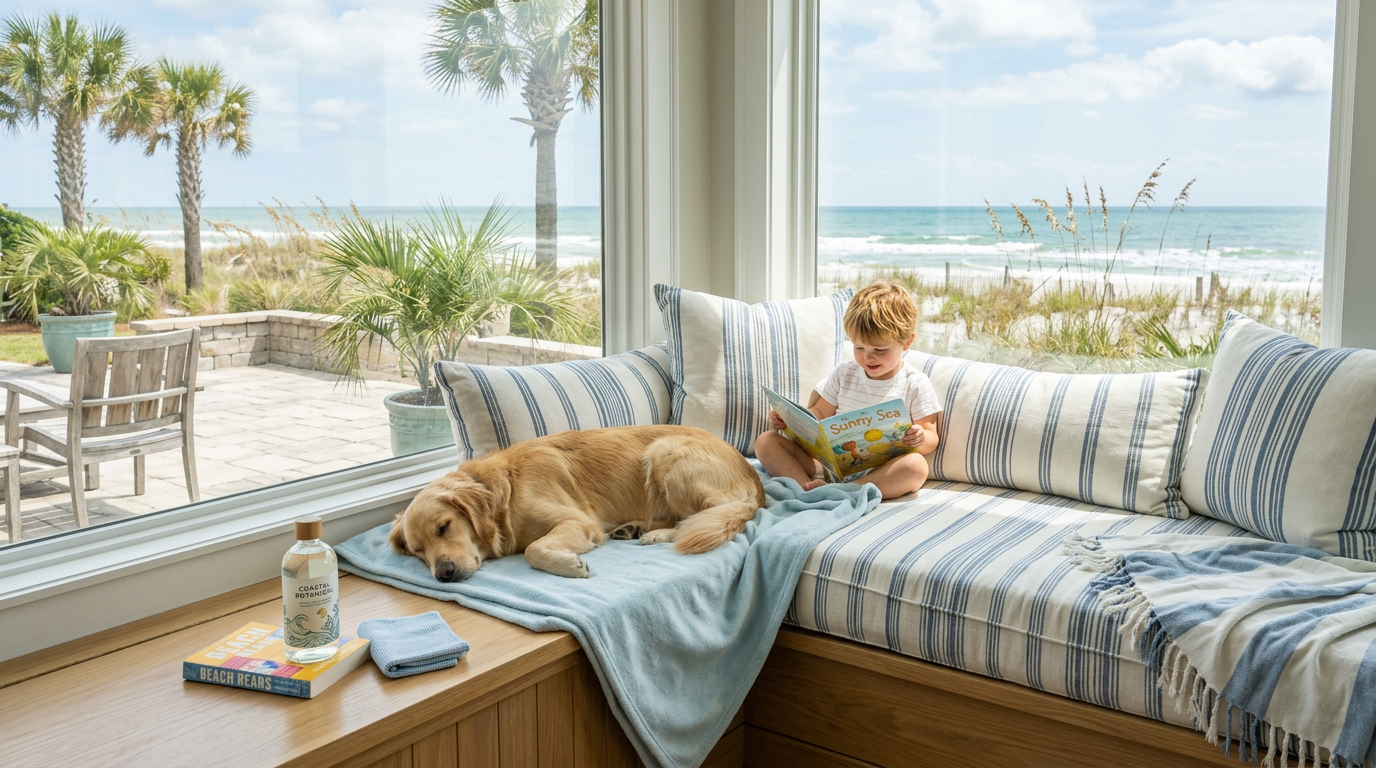
Window benches, reading nooks, and built-in daybeds are beloved architectural features in Grand Strand homes, offering a scenic spot to watch the ocean or unwind after a day on the beach. However, because these cozy spaces are shared constantly by children, dogs, and cats, they quickly become magnets for humid pet hair, outdoor sand, dropped snacks, and sweat. The high coastal humidity binds pet dander and organic food crumbs into the upholstery fibers, creating a breeding ground for dust mites and mildew. To preserve these high-use family zones without resorting to harsh chemical residues, local families need a structured, botanical cleaning routine.
The Anatomy of Coastal Nook Contamination: Pet Hair, Sand, and High Humidity
Coastal nooks and window seats face a unique set of environmental challenges that standard inland furniture does not experience. The primary culprit is the combination of high ambient humidity and fine Grand Strand sand-grit. When children jump onto a window bench straight from the beach or backyard, they deposit micro-fine sand particles that sink deep into the upholstery weave. Pets then follow, shedding hair that becomes physically bound to the damp fabric fibers due to the moisture in the air.
This mixture of pet hair and sand creates a phenomenon known as felting, where the hair fibers interlock with the textile weave and become nearly impossible to remove with simple vacuuming. Underneath this felted layer, the salty air acts as a humectant, pulling moisture from the atmosphere directly into the cushion cores. Over time, this moisture reacts with pet sebum and skin cells, developing that distinct, musty dog odor that characterizes neglected coastal furniture.
For families with young children who crawl and play on these benches, this buildup represents more than just an aesthetic issue. Dust mites thrive in humid environments where there is an abundance of shed skin cells and pet dander. Without targeted intervention, these cozy nooks become primary allergy triggers, causing sneezing, skin irritation, and respiratory discomfort for the home's youngest residents.
- Micro-fine beach sand acts as an abrasive, grinding down cushion fabric fibers under weight.
- Humid air acts as a physical binder, locking pet dander and hair deep within the textile weave.
- Pet sebum and body oils oxidize over time, producing stubborn, sour odors.
- Dust mites colonize damp cushion foam, exacerbating childhood allergies and asthma.
The Dangers of Conventional Cleaners in Close-Contact Family Spaces
When confronted with stubborn pet odors and stained upholstery, many homeowners instinctively reach for heavy-duty commercial deodorizers and chemical stain removers. However, many of these conventional products contain volatile organic compounds (VOCs), synthetic fragrances, and quaternary ammonium compounds. Because children and pets spend hours pressing their skin and faces directly against these cushions, these chemical residues pose a direct exposure risk.
Harsh chemical residues can easily absorb through a toddler's sensitive skin or be ingested by a pet licking their paws after resting on the bench. Synthetic fragrances do not actually eliminate odors; they merely mask them with chemical masking agents that can trigger asthma attacks and allergic contact dermatitis. Furthermore, chemical residues left behind by low-grade cleaners act as a sticky magnet for future soil, accelerating the re-soiling process.
To protect the health of your family and prolong the life of your built-in furniture, a transition to botanical-based, non-toxic cleaning chemistry is essential. By utilizing natural enzymes, food-grade isopropyl alcohol, and plant-derived surfactants, you can achieve professional-level sanitation. These biodegradable alternatives break down organic soils at the molecular level without leaving behind hazardous vapors or sticky chemical films.
The Mechanical Pet Hair Extraction Process: Defeating the Felting Effect
Before applying any moisture or liquid cleaners to your reading nook, you must first remove the dry soil load, specifically the embedded pet hair. Standard vacuum attachments often slide right over felted pet hair because the static charge and humidity hold the fibers in place. To break this bond, you must utilize mechanical friction tools designed to pull the hair out of the weave without damaging the underlying fabric.
Start by using a natural rubber squeegee or a specialized silicone pet hair brush across the surface of the cushion in short, firm strokes. The rubber creates a static charge that pulls the hair up to the surface, forming easy-to-grab clumps. For delicate fabrics like linen or cotton blends, a pumice stone or a textured upholstery sponge can be lightly swept across the surface to gather stubborn undercoat fur that vacuums miss.
Once the hair is gathered into piles and removed, follow up with a high-efficiency particulate air (HEPA) vacuum equipped with a motorized brush roll. Run the vacuum in a cross-hatch pattern—first vertically, then horizontally—to open up the fabric weave and extract the fine sand-grit hiding beneath the surface. This dual-action extraction prevents the sand from turning into a muddy paste when liquid sanitizers are subsequently applied.
The Kid-Safe Enzyme Sanitization Protocol for Spills and Organic Crumb Rot
Children love to snuggle into window benches with juice boxes, crackers, and snacks, which inevitably leads to spills and crumbs falling into the deep crevices between the cushions and the wood frame. In the warm Grand Strand climate, these organic crumbs quickly rot, attracting household pests and generating sour, yeasty odors. To combat this, a kid-safe enzyme cleaner is your most powerful tool.
Select a high-quality, fragrance-free enzymatic formula designed to target proteins, starches, and fats. Before applying, vacuum out the crevices using a narrow crevice tool to remove all loose crumbs. Spray the enzyme solution lightly over the affected areas, ensuring it penetrates any spot where a spill occurred. The live enzymes will actively consume the organic matter, breaking it down into harmless carbon dioxide and water.
Allow the enzyme cleaner to dwell on the fabric for at least fifteen to twenty minutes, keeping children and pets out of the area during this active phase. Gently blot the area with a clean, dry microfiber cloth—never scrub, as scrubbing can distort the fabric fibers and push the liquid deeper into the cushion core. This targeted enzymatic action eliminates the food source for both bacteria and pests, permanently resolving the odor.
- Clear out all loose debris from structural seams using a high-suction crevice tool.
- Apply a fragrance-free enzyme spray to digest food spills, milk sugars, and saliva.
- Avoid scrubbing; use a blotting motion to lift dissolved soils out of the weave.
- Ensure the area is kept clear of family members until the enzymes have completed their cycle.
Decontaminating the Wood Frame and Beadboard Trim
While the focus is often on the cushions, the wood frame, surrounding beadboard, and window sills of a built-in bench also require deep cleaning. These wooden elements are highly vulnerable to salt-air dampness, sticky finger marks, and pet drool. If left untreated, the moisture can degrade the paint or clear coat, leading to wood rot, mildew growth, and stubborn discoloration.
To clean the wooden substrates safely, prepare a mild solution of warm water, a few drops of plant-derived dish soap, and a splash of white distilled vinegar. Vinegar acts as a natural mild disinfectant and cuts through greasy handprints and pet sebum without stripping the wood's finish. Dampen a microfiber cloth in the solution, wring it out thoroughly until it is barely damp, and wipe down all wooden surfaces.
Pay special attention to the corners, joints, and any decorative beadboard grooves where dust and pet hair tend to accumulate. Once the wood is clean, immediately follow up with a dry microfiber cloth to remove all remaining moisture. Never allow water to pool in the seams of built-in wooden furniture, as this can cause the wood to swell, warp, and ruin the custom craftsmanship.
The Salt-Air Dehumidification and Drying Protocol
In the coastal Grand Strand, moisture control is the single most important factor in keeping family furniture fresh and allergen-free. Even after a thorough cleaning, if the cushions remain damp for more than twenty-four hours, mold and mildew spores will begin to colonize the foam. To prevent this, you must implement a structured drying protocol every time you clean or wet-treat your nooks.
Remove the cushions from the built-in frame and prop them up on their edges in a well-ventilated room. Position a portable dehumidifier nearby and run a high-velocity fan directly across the cushions to accelerate evaporation. If the weather is dry and sunny, you can place the cushions in a clean, shaded outdoor area to dry, but avoid direct mid-day sunlight, which can fade fabrics and degrade foam integrity.
Ensure the wooden bench cavity is also completely dry before returning the cushions to their positions. Running your home's central HVAC system on the "cool" setting rather than "fan only" helps extract moisture from the indoor air. Never rush this step; verified dry cushions are your primary defense against the return of musty coastal odors.
- Prop cushions vertically on their edges to maximize air exposure on all sides.
- Use a dedicated dehumidifier to lower the room's relative humidity below fifty percent.
- Utilize high-velocity fans to create a continuous cross-breeze across the wet substrates.
- Verify that both the cushion foam and the wooden support base are bone-dry before reassembly.
Selecting Pet-Friendly and Kid-Safe Fabrics for Coastal Benches
If you are building a new reading nook or reupholstering an existing window bench in your Grand Strand home, choosing the right textile is crucial for long-term maintenance. Standard delicate cottons, silks, and heavy linens absorb moisture rapidly and stain easily. Instead, opt for performance fabrics engineered to withstand the rigors of coastal family life while remaining completely safe for children.
Solution-dyed acrylics and high-performance polyesters are excellent choices because they resist moisture absorption, UV fading, and stain penetration. Many of these modern performance fabrics are woven without the use of toxic perfluorinated chemicals (PFAS), making them safe for kids to lounge on. They can be cleaned with mild soap and water, and many are even bleach-cleanable for extreme sanitize cycles.
Another great option is commercial-grade polyurethane faux leather. This material is completely waterproof, meaning pet drool, spilled juice, and damp swimsuits cannot penetrate into the cushion foam beneath. It can be wiped clean in seconds with a damp cloth, making it one of the most hygienic, low-maintenance options for busy households with multiple pets and active children.
A Sustainable Weekly Maintenance Routine for Busy Grand Strand Families
Keeping up with pet hair, sand, and dust mites does not have to be an overwhelming chore. Establishing a simple, five-minute weekly maintenance routine will prevent deep soil buildup and keep your family's favorite nooks continuously fresh. Consistency is key when dealing with the high-traffic demands of a coastal household.
Every Friday or Saturday morning, make it a habit to remove the cushions and vacuum the bench cavity. Use a lint roller or a rubber brush to quickly sweep the top of the cushions to catch any loose pet hair before it has a chance to felt into the fabric. Spray a light mist of a DIY linen freshener made of water, a splash of rubbing alcohol, and a few drops of child-safe lavender essential oil over the dry cushions to naturally deodorize.
By integrating these small steps into your regular cleaning routine, you prevent the accumulation of allergens that trigger asthma and sneezing fits. If your family's favorite reading nooks or custom daybeds require professional extraction or a deep seasonal refresh, the team at A2Z Cleaning & Linen Services is always ready to help at 843.800.2788.
Key takeaway
Maintaining a clean, allergy-friendly window seat or reading nook in a busy coastal home requires balancing moisture control with non-toxic, pet-safe sanitizing methods. By extracting embedded sand and hair mechanically and using plant-derived enzymes for spills, you preserve both your custom furniture and your family's health. For professional cleaning assistance, contact A2Z Cleaning & Linen Services at 843.800.2788.
Keep Reading

Coastal Living
The Coastal Family Washable Sofa Slipcover and Accent Cushion Decontamination Protocol: Mitigating Humid Sand-Grit Infusion, Pet Sebum Odors, and Child-Safe Botanical Care in Grand Strand Homes
ReadCoastal Living
The Coastal Family Car Seat and Beach Stroller Decontamination Protocol: Mitigating Sand-Silt Wear, Spilled Organic Biofilms, and Salt-Air Mildew in Grand Strand Homes
ReadCoastal Living
The Coastal Multi-Sectional Decontamination Protocol: Mitigating Pet Sebum, Organic Kid Spills, and Humidity-Trapped Allergen Reservoirs in Grand Strand Homes
ReadReady for a spotless property?
Call 843.800.2788 or request a free quote from A2Z Cleaning & Linen Services.