Coastal Living
The Coastal Family Car Seat and Beach Stroller Decontamination Protocol: Mitigating Sand-Silt Wear, Spilled Organic Biofilms, and Salt-Air Mildew in Grand Strand Homes
Discover how to safely clean, sanitize, and de-sand child car seats and strollers in the humid Grand Strand climate using child-safe, pet-friendly techniques.
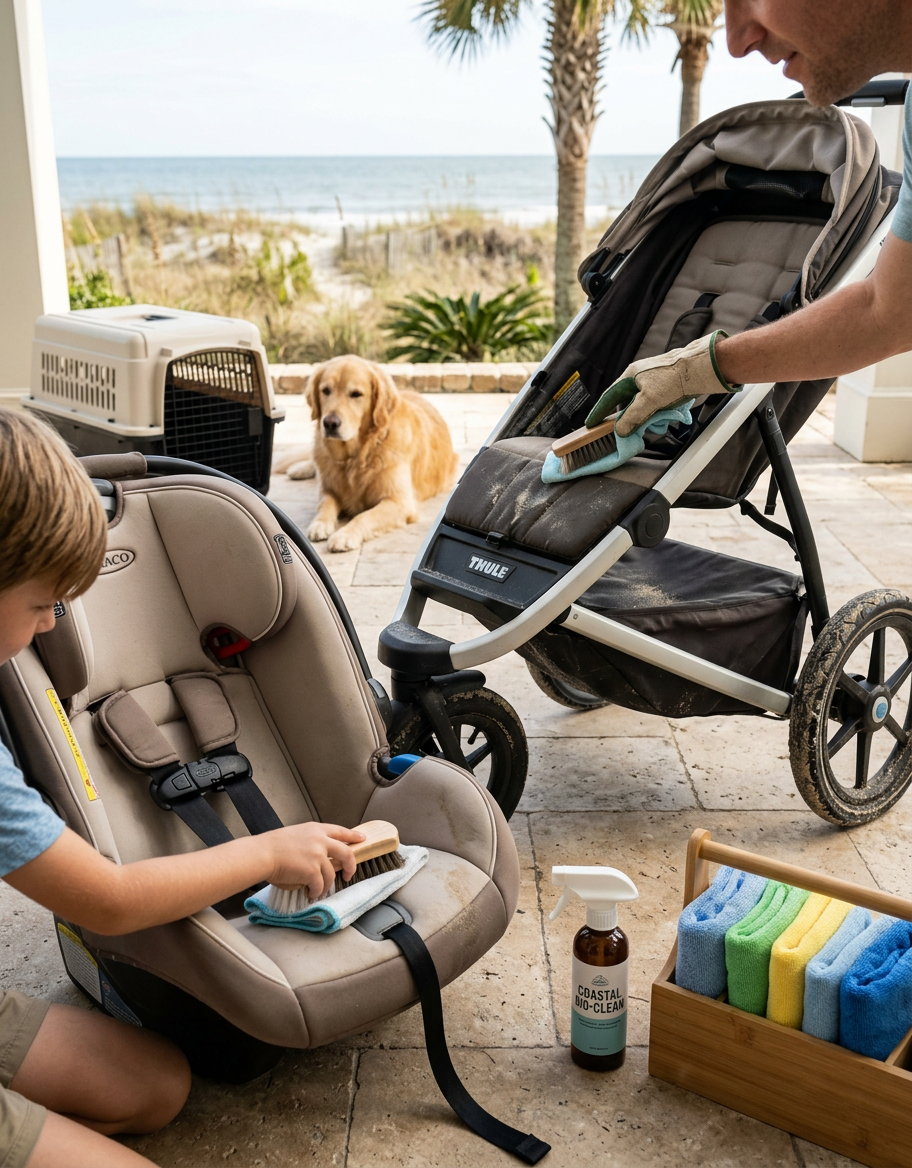
Active families on the Grand Strand understand how quickly outdoor adventures turn into indoor cleaning challenges. From afternoon trips to Savannah's Playground to sunny mornings at Myrtle Beach State Park, our child car seats and strollers bear the brunt of coastal living. The combination of salt-damp air, abrasive sand-silt, spilled snacks, and pet dander creates a breeding ground for allergens and mold if left unchecked. Keeping this high-touch gear clean requires specialized, safety-conscious protocols that protect both your children's health and the structural integrity of the equipment.
The Coastal Biofilm Threat in High-Touch Family Gear
In the sub-tropical climate of Myrtle Beach, relative humidity levels regularly climb above eighty percent, creating an environment where organic matter degrades rapidly. When children spill milk, juice, or organic snacks onto car seats and stroller fabrics, these liquids quickly penetrate the porous textiles and foam padding underneath. The high moisture content in our coastal air prevents these spills from drying completely, leading to the formation of a sticky, microbial biofilm. This film traps airborne dust, pollen, and pet dander, locking them into the fabric layers where children sit and breathe.
Compounding this issue is the fine sand-silt characteristic of the Grand Strand coastline. Unlike inland dust, coastal sand consists of tiny, sharp quartz and shell fragments that easily find their way into the seams and crevices of car seats and strollers. When sand mixes with spilled liquids and high humidity, it creates an abrasive paste. As your child moves, this gritty mixture rubs against the synthetic fibers of the safety harness and fabric covers, causing premature wear, fraying, and structural degradation of critical safety components.
Furthermore, multi-pet households introduce pet saliva, dander, and oils into this mix, which further binds the sand and allergens to the fabric fibers. This combination not only produces a persistent, musty odor but also triggers asthma and allergy flare-ups in sensitive children. Addressing this complex layer of organic waste and mineral grit requires a structured, step-by-step cleaning approach rather than a superficial wipe-down, ensuring that deep-seated allergens are completely extracted without damaging the gear.
Selecting Child-Safe and Pet-Safe Cleaning Chemistries
When cleaning items that come into direct contact with your child's sensitive skin and your pet's paws, selecting the correct chemistry is paramount. Harsh industrial degreasers, chlorine bleach, and heavy synthetic fragrances should be strictly avoided. These chemicals leave behind volatile organic compounds and chemical residues that can cause contact dermatitis, respiratory irritation, and long-term health concerns. Instead, Grand Strand families should opt for plant-based, biodegradable surfactants that break down organic biofilms without leaving toxic residues behind.
Look for products utilizing alkyl polyglucosides, which are gentle surfactants derived from coconut and corn sugars. These agents are highly effective at emulsifying sticky food residues and body oils without degrading the flame-retardant coatings engineered into modern child car seats. For sanitizing purposes, isopropyl alcohol diluted to seventy percent with distilled water provides a rapid-evaporating, residue-free kill-step for common bacteria and mold spores, making it an excellent choice for non-porous frame components and hard plastics.
To neutralize stubborn organic odors from sour milk, pet accidents, or damp sweat, avoid masking agents and heavy perfumes. Instead, utilize active enzyme-based cleaners that specifically target and digest proteins, starches, and lipids. Ensure the enzyme formula is certified as child-safe and pet-safe, and allow it to air-dry completely so the microbes can finish their digestion process. This scientific approach to chemistry ensures a deep, sanitary clean while maintaining a non-toxic environment for your family's most vulnerable members.
The Textile De-Sanding and Extraction Sequence
Before applying any liquid cleaners, you must completely remove dry sand and silt from the fabric covers. Applying liquids to sand-filled fabric turns the grit into a stubborn mud that penetrates deeper into the weave. Begin by removing the car seat or stroller cover entirely from its frame, following the manufacturer's disassembly guide. Take the textiles outdoors and give them a vigorous shake, then use a stiff-bristled utility brush to loosen embedded sand from the seams, piping, and cup holders.
Once loose debris is brushed free, utilize a high-velocity vacuum equipped with a crevice tool and a rotating brush attachment. Vacuum every square inch of the fabric, paying special attention to the deep crevices where the seat back meets the bottom cushion. If your vacuum has a HEPA filter, this step will also capture fine pollen, pet dander, and dust mite allergens, preventing them from blowing back into your home's indoor air during the cleaning process.
For the washing phase, submerge the removable covers in cold water using a gentle, fragrance-free botanical laundry detergent. Avoid hot water, as it can shrink synthetic fabrics and strip away flame-retardant treatments. If you encounter stubborn pink or orange stains caused by avobenzone in family sunscreens, pre-treat the area with a specialized rust-releasing agent or a mixture of lemon juice and salt before washing, as standard chlorine bleach will react with the sunscreen ingredients and turn the stain permanently bright pink.
The Critical Car Seat Harness and Buckle Safety Protocol
A common and dangerous mistake made during family gear cleaning is washing the car seat harness straps in a washing machine or soaking them in harsh chemicals. The load-bearing straps of a child's car seat are made of tightly woven polyester or nylon fibers designed to stretch slightly and distribute forces during a collision. Soaking these straps in water, using bleach, or subjecting them to the heat and agitation of a washing machine degrades these fibers, significantly reducing their tensile strength and putting your child at risk in an accident.
To clean the harness straps safely, use a dry, stiff toothbrush to flick away dried food and sand-silt. Next, mix a micro-diluted solution of warm water and a mild, plant-based Castile soap. Dampen a clean microfiber cloth in this solution, wring it out until it is barely damp, and gently wipe down the length of the straps. Do not scrub aggressively, and never submerge the straps. Wipe them dry with a clean towel and allow them to air-dry completely in a well-ventilated indoor space away from direct sunlight.
The crotch buckle mechanism frequently becomes clogged with sand, crumbs, and sticky juice, preventing it from latching securely. To clean the buckle, submerge only the plastic-and-metal buckle housing in a cup of warm water and agitate it gently. This will dissolve sticky sugars and flush out trapped sand without washing away the factory-applied lubricants inside the upper housing. Click the tongue plates in and out of the buckle several times while submerged to ensure smooth operation, then shake out the excess water and let it air-dry.
- Never submerge harness straps in water or place them in a washing machine.
- Avoid bleach, vinegar, or harsh solvent cleaners on any load-bearing webbing.
- Clean the crotch buckle by rinsing under warm running water to flush out grit.
- Do not use lubricants like WD-40 inside the seat belt buckle mechanism.
- Inspect the webbing for signs of fraying, curling, or thinning after cleaning.
- Allow straps to dry naturally without using high-heat blow dryers.
Frame, Wheel, and Axle Salt-Air Corrosion Prevention
Strollers pushed along the boardwalk, beach paths, or sandy parks face constant exposure to salt spray and humidity, which accelerates rust on steel fasteners and corrodes aluminum frames. To protect your stroller's structural integrity, start by spraying down the entire frame with a low-pressure stream of fresh water from a garden hose to rinse away salt residue. Avoid using high-pressure sprayers, as they can force water deep into sealed wheel bearings and folding joints, leading to internal rusting.
After rinsing, dry the frame thoroughly with a clean towel. Pay close attention to folding hinges, brake linkages, and metal screws. To prevent rust from taking hold in these moisture-prone areas, apply a thin layer of a dry PTFE (Teflon) lubricant or a silicone spray. Avoid petroleum-based lubricants like standard WD-40 on moving parts, as these formulas leave a sticky, oily residue that acts as a magnet for sand-silt, creating an abrasive paste that will quickly wear down wheel hubs and folding joints.
For stroller wheels, remove them from the axle spindles if your model allows. Wipe down the axle pins with a dry microfiber cloth to remove old grease, sand, and pet hair. Apply a small amount of marine-grade lithium grease to the spindles before sliding the wheels back on. This specialized grease resists water washout and salt-air corrosion, ensuring your stroller glides smoothly across beach paths and coastal terrain without squeaking or binding.
Eradicating Pet Hair, Dander, and Saliva Residues
For families with dogs or cats, pet hair and dander present a continuous cleaning challenge. Because car seat and stroller fabrics are often made of brushed polyester, they carry a slight electrostatic charge that attracts and locks in pet hair. Standard vacuuming often fails to release these tightly wedged hairs. To solve this, use a rubber-bladed squeegee, a rubber pet hair brush, or even a damp rubber glove. Dragging the rubber surface across the fabric pulls the hair into manageable clumps that are easily vacuumed away.
Pet saliva and dander contain proteins that bind to fabrics and emit a distinct, stale odor when exposed to coastal humidity. To eliminate these organic contaminants, use a child-safe enzymatic cleaner formulated to break down proteins. Spray the enzyme solution lightly over the affected areas, allowing it to remain damp for fifteen to thirty minutes so the enzymes can actively digest the organic matter. Blot the area with a clean, dry towel to lift the dissolved residue.
For deep-set dander and allergens that hide within the internal polyurethane foam pads of car seats, a low-moisture steam extractor can be highly effective. Ensure the steamer is held at a safe distance to avoid overheating and melting synthetic fibers. The dry steam heat kills dust mites and neutralizes pet allergens instantly, while the low moisture levels ensure the foam dries rapidly, eliminating the risk of interior mold growth in our humid climate.
High-Humidity Drying Protocols to Prevent Mold
In the Grand Strand, high outdoor humidity means that simply hanging wet car seat covers on an outdoor clothesline can lead to disaster. If fabrics remain damp for more than twenty-four to forty-eight hours, mold and mildew spores will colonize the damp fibers, leaving black spots and an unhygienic, musty odor. To prevent this, implement a controlled indoor drying protocol utilizing air movement and moisture extraction.
Once textiles are washed and thoroughly squeezed of excess water, hang them indoors in a small room with an active dehumidifier and an oscillating fan. The dehumidifier pulls moisture directly from the air, while the fan maintains constant air circulation across the wet fabric surfaces, accelerating evaporation. This setup typically dries heavy car seat covers and stroller pads in under twelve hours, completely bypassing the mold-risk window.
Avoid placing synthetic covers in a standard clothes dryer on high heat, as this can melt safety backings, warp elastic bands, and damage critical velcro attachments. If you must use a dryer, select a 'no heat' or air-fluff setting and check the items every fifteen minutes. Ensure every component, especially deep foam inserts and harness webbing, is completely bone-dry before reassembling the gear, as trapping even a small amount of moisture inside a plastic car seat shell will quickly spark mold growth.
The Busy Grand Strand Family Maintenance Blueprint
Keeping up with family gear maintenance doesn't have to be an overwhelming chore. Establishing a simple, preventative routine can keep your car seats and strollers clean and safe with minimal effort. We recommend a quick 'Sunday Sweep' after your weekend beach trips or park visits. Keep a stiff-bristled brush, a pack of baby wipes, and a small handheld cordless vacuum in your trunk or mudroom to catch sand and minor spills before they settle into the fabric.
Instruct children to shake off sand and leave wet beach towels in the trunk rather than bringing them into the main cabin of the vehicle, reducing the amount of moisture and grit that reaches the car seats. For strollers, a quick spray-down of the wheels with fresh water after a beach walk takes less than two minutes but saves hours of future rust mitigation and wheel bearing repairs. This small habit extends the lifespan of your stroller significantly.
If you find yourself facing deep-seated mold, stubborn sand accumulation, or a busy schedule that leaves no time for deep cleaning, reaching out to a professional service can restore your peace of mind. At A2Z Cleaning & Linen Services, we specialize in handling the unique cleaning challenges of coastal living. From deep allergen extraction to meticulous de-sanding, we use safe, effective techniques to keep your family's essential gear hygienic and ready for your next Grand Strand adventure.
- Perform a quick weekly brush-down to remove dry sand before it settles into fabric.
- Keep child-safe, fragrance-free wipes in your car for immediate spill cleanups.
- Rinse stroller wheels with fresh water immediately after visiting the beach.
- Store family strollers indoors or in a dry garage rather than on a damp porch.
- Schedule a seasonal deep clean of all car seats and strollers to extract allergens.
- For professional gear restoration and allergen removal, call us at 843.800.2788.
Key takeaway
Maintaining clean, safe baby and family gear in our coastal environment requires protecting safety-critical fabrics and metals from sand, moisture, and harsh chemicals. By adopting child-safe botanical chemistries, dry-cleaning harness straps, and ensuring rapid indoor drying, you protect both your child's health and your gear's lifespan. For busy families needing expert support, A2Z Cleaning & Linen Services is always ready to help at 843.800.2788.
Keep Reading
Coastal Living
The Coastal Multi-Sectional Decontamination Protocol: Mitigating Pet Sebum, Organic Kid Spills, and Humidity-Trapped Allergen Reservoirs in Grand Strand Homes
ReadCoastal Living
The Coastal Family Bath and Pet-Wash Station Decontamination Protocol: Mitigating Humid Mildew, Sand-Clay Cling, Pet-Wash Hair Clogs, and Child-Safe Disinfection in Grand Strand Homes
ReadCoastal Living
The Coastal Sliding Screen and Pet-Door Decontamination Protocol: Mitigating Nose-Print Oils, Pollen-Dander Reservoirs, and Sand-Grime in Grand Strand Homes
ReadReady for a spotless property?
Call 843.800.2788 or request a free quote from A2Z Cleaning & Linen Services.