Coastal Living
The Coastal Family Nursery Glider, Nursing Pillow, and Crib-Adjacent Area Rug Decontamination Protocol: Mitigating Humid Milk-Spill Yeast, Pet Hair Felting, and Infant-Safe Botanical Sanitization in Grand Strand Homes
Discover a child-safe, pet-friendly protocol to eliminate humid milk-spill yeast, pet hair, and sand-grit from nursery gliders, nursing pillows, and area rugs in Grand Strand homes.
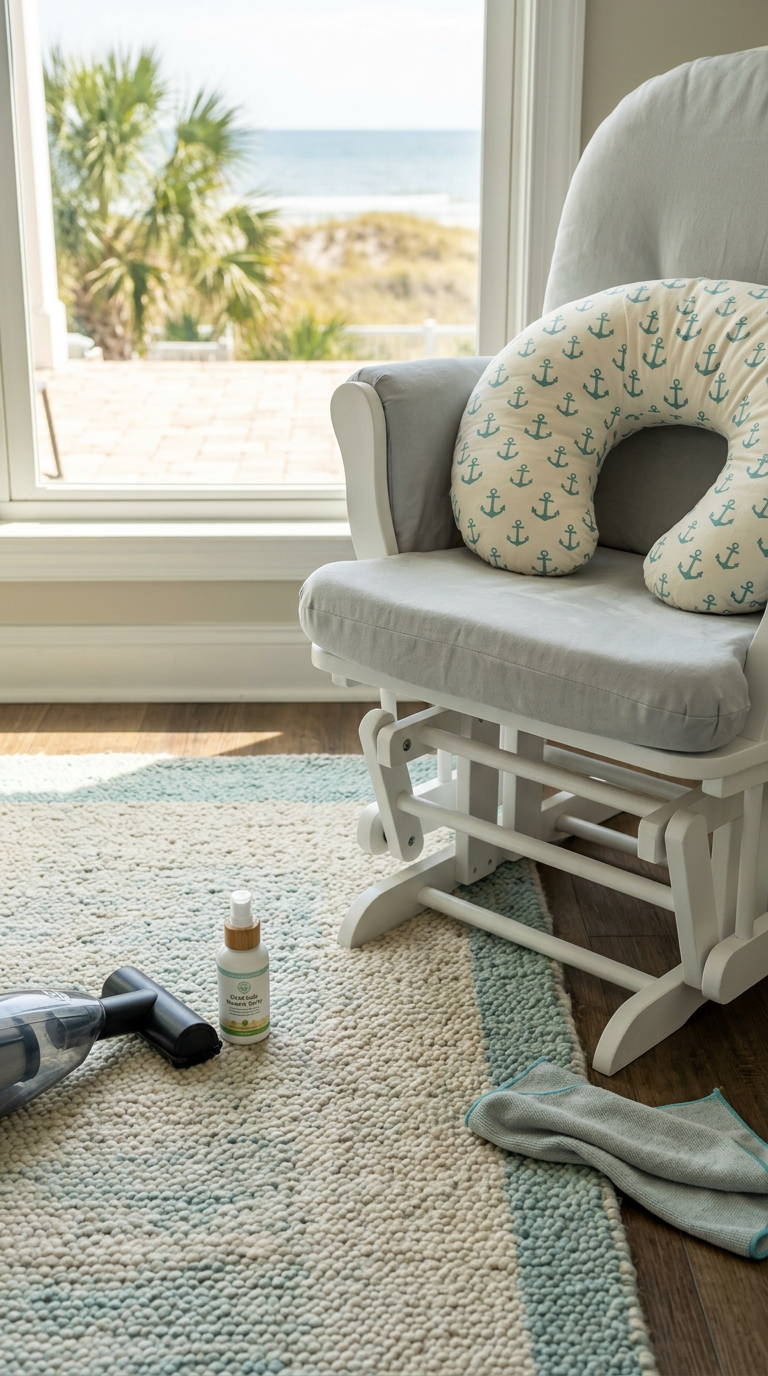
Creating a healthy, allergen-free nursery along the Grand Strand requires a careful balance between aggressive soil extraction and strict chemical safety. High coastal humidity, combined with fine beach sand and pet dander, creates a unique indoor environment where organic spills can quickly lead to yeast and mold growth. This protocol provides Myrtle Beach families with a practical, step-by-step framework to decontaminate nursery gliders, nursing pillows, and crib-adjacent rugs without introducing toxic residues. By implementing these targeted botanical cleaning routines, you can protect your child's developing respiratory system while maintaining a fresh, clean home.
The Coastal Nursery Microclimate: Sand, Sebum, and Spills
Coastal homes in areas like Myrtle Beach and Surfside Beach face constant indoor relative humidity fluctuations, often lingering above fifty-five percent during the warm summer months. In a nursery, this humid air binds with organic residues like infant milk spit-up, saliva, and pet dander. The resulting sticky microscopic film acts as a magnet for fine coastal sand-silt and airborne mold spores, turning nursery surfaces into rapid breeding grounds for localized yeast and bacterial colonies.
Infants spend a significant amount of time near the floor or cradled on fabric surfaces, making their developing immune and respiratory systems highly sensitive to these localized allergens. Family pets often seek out these quiet spaces as well, rubbing their coats against glider skirts or curling up on the soft crib-adjacent rug. This introduces sebum—the natural oil in pet skin—which binds tightly to carpet fibers and upholstery weaves, locking in stubborn, musty odors.
Standard household dust contains a mixture of outdoor sand-grit and skin flakes, but in our coastal Grand Strand environment, it also contains microscopic salt crystals. These crystals absorb moisture directly from the air, keeping nursery fabrics slightly damp even in air-conditioned spaces. Breaking this binding cycle requires specialized, non-toxic cleaning protocols that prioritize infant safety while aggressively extracting organic soils before they can degrade fabric fibers.
The Nursery Glider Protocol: Extracting Deep Sebum and Milk Residues
The nursery glider is the centerpiece of comfort, but its fabric cushions bear the brunt of frequent feedings, diaper mishaps, and pet contact. To begin decontamination, vacuum the glider thoroughly using a HEPA-certified vacuum equipped with a clean, motorized upholstery brush. Pay special attention to the deep crevices between the seat cushion, armrests, and backrest, where abrasive sand-grit and pet hair naturally settle over time.
For pet hair that has become felted into the woven fibers of the upholstery, a rubber squeegee or a specialized pet-hair detailing brush must be used before applying any liquid cleaning agents. Drag the rubber edge firmly across the fabric in short, unidirectional strokes to pull up deep-seated undercoat hairs that suction alone cannot dislodge. Wetting the fabric before this step will only lock the hair deeper into the weave, making extraction much more difficult.
Once dry mechanical soils are removed, treat milk and spit-up stains using a mild, enzyme-based spot cleaner formulated for delicate fabrics. Apply the solution to a clean microfiber cloth and gently blot the stain from the outside edges inward to prevent spreading the spot. Never oversaturate the glider's foam cushioning, as excess moisture trapped deep within polyurethane foam will lead to interior mold growth in our humid climate.
Nursing Pillow Decontamination: Tackling Yeast and Spit-Up Safely
Nursing pillows are in direct contact with infant skin, wet milk, and frequent drool, creating a warm, damp environment where yeast can thrive. While outer covers are usually machine-washable, the inner dense foam or polyester fiberfill inserts require careful handling to avoid clumping or structural damage. Always unzip the protective covers weekly and inspect the inner core for deep staining or sour odors that indicate biological penetration.
Wash removable cotton or bamboo covers on a sanitizing cycle with an extra rinse to ensure all detergent residues, which can irritate sensitive baby skin, are completely flushed. Avoid commercial fabric softeners, as they leave a hydrophobic chemical coating that actually locks in biological odors and reduces the natural absorbency of the fabric. Instead, use half a cup of distilled white vinegar in the rinse cup to neutralize milk enzymes naturally.
For the inner pillow core, spot-treat soiled spots using a safe, diluted isopropyl alcohol solution or a food-grade hydrogen peroxide spray. If the insert is machine-washable, tumble dry it on low heat with several clean wool dryer balls to prevent the filling from clumping. In the Grand Strand's high humidity, ensure the inner core is completely dry before reassembling, as any residual core dampness will rapidly trigger mildew.
- Inspect nursing pillow covers weekly for yellowing milk spots and immediate zipper wear.
- Launder removable covers on a hot sanitizing wash cycle with an extra rinse phase.
- Replace standard commercial fabric softeners with distilled white vinegar to neutralize odors.
- Treat the inner core with child-safe hydrogen peroxide sprays rather than harsh bleach.
- Ensure the inner core is completely dry using wool dryer balls to prevent internal mold.
Crib-Adjacent Area Rugs: Mitigating Sand-Grit and Pet Hair Felting
The rug directly adjacent to the crib is a high-traffic zone for both parents and pets. In coastal South Carolina homes, fine sand acts like tiny saws underfoot, cutting carpet fibers and creating micro-abrasions that trap pet dander and dander-associated proteins. To protect crawling babies, these rugs must be cleaned with a dual-action approach: deep mechanical agitation followed by thorough particulate extraction.
Begin by vacuuming the rug in a slow, cross-hatch pattern, passing the vacuum head both vertically and horizontally across the fibers to release trapped sand grains. If the rug is double-sided or low-pile, flipping it over and vacuuming the backing can release deep-seated grit onto the floor for easy sweeping. This crucial step prevents the sand from forming a cement-like paste when liquid cleaners are applied later.
For deep washing, use a low-moisture hot-water extraction method with a neutral-pH rinse. High-alkaline detergents leave sticky residues that attract new dirt and pet hair at an accelerated rate, which is especially hazardous for infants playing on the floor. Maintain indoor climate controls during and after cleaning, using fans or a dehumidifier to ensure the rug dries completely within four to six hours to prevent mold spore germination.
Botanical Chemistry Selection: Child-Safe and Pet-Friendly Agents
Traditional commercial sanitizers often rely on quaternary ammonium compounds or synthetic phenols, which leave behind chemical residues that can trigger pediatric asthma and dermal allergies. In a coastal family home, where kids and pets spend hours on the floor, transitioning to botanical chemistries is a necessary step for maintaining indoor air quality. These natural formulations degrade quickly into harmless compounds while still providing exceptional sanitizing power.
Look for cleaning agents utilizing active ingredients like thymol, citric acid, or food-grade hydrogen peroxide. These compounds break down the cellular walls of bacteria and fungi without releasing volatile organic compounds into the nursery air. They are highly effective at neutralizing pet saliva proteins and milk yeast, leaving behind no synthetic perfumes or endocrine-disrupting chemicals that could affect a developing child's health.
Essential oils should be used with extreme caution around infants and pets, as concentrated tea tree, lavender, or eucalyptus oils can be toxic to cats and dogs and irritating to a baby's lungs. Stick to fragrance-free, EPA Safer Choice, or Green Seal-certified botanical disinfectants. When applying any botanical sanitizer, follow the label's precise dwell time to ensure pathogens are completely eliminated before wiping or allowing the surface to air-dry.
- Avoid quaternary ammonium compounds and synthetic phenols in the nursery environment.
- Select botanical formulas containing thymol, citric acid, or hydrogen peroxide.
- Eliminate synthetic perfumes and fragrance oils to protect infant respiratory pathways.
- Verify products carry EPA Safer Choice or Green Seal certifications for peace of mind.
- Allow botanical sanitizers to meet their required wet dwell time for complete disinfection.
Allergy-Friendly Maintenance: Managing Grand Strand Humidity and Dust
Managing allergens in a Grand Strand nursery requires a structured weekly routine that addresses the relationship between humidity, dust mites, and pet dander. Keep your home’s relative humidity strictly between forty-five percent and fifty percent using a dedicated dehumidifier or a properly sized HVAC system. High coastal humidity acts as an accelerant for dust mite reproduction and mold growth, particularly in soft nursery furnishings.
Establish a weekly dust-down routine starting from the highest surfaces—like ceiling fans and window sills—and working down to the floor. Use damp microfiber cloths rather than dry feather dusters, which simply scatter allergens back into the infant breathing zone. This top-down approach ensures that any falling pet dander or sand-grit is captured by the final vacuuming pass on the nursery rug and glider base.
Launder all crib sheets, wearable blankets, and glider slipcovers weekly in hot water to kill dust mites and denature pet allergens. If your family pet frequently rests in the nursery, consider placing a washable, organic cotton blanket over their favorite spot on the rug. This sacrificial layer can be easily thrown in the wash, protecting the primary home fabrics from heavy sebum and hair accumulation.
Professional Deep Extraction: When to Call the Grand Strand Specialists
Despite diligent weekly maintenance, deep-seated sand, stubborn pet sebum, and micro-particles of dried milk can accumulate beyond the reach of residential cleaning equipment. Standard consumer spot-cleaners and vacuums lack the lift-power and water-lift capacity of professional-grade extraction systems. Over time, this unresolved organic soil can lead to permanent fiber degradation, deep odors, and a compromised indoor environment for your family.
Professional deep extraction utilizes heated water and specialized vacuum systems to flush out contaminants from deep within gliders and area rugs without leaving damp residues behind. This process sanitizes fabrics at a molecular level while removing the microscopic sand-grit that acts as an abrasive saw on delicate rug fibers. The result is a clean nursery that looks fresh, smells neutral, and provides a safe environment for your children and pets.
At A2Z Cleaning & Linen Services, we specialize in caring for Grand Strand homes with family-safe, botanical sanitization protocols tailored to our unique coastal climate. Our highly trained team understands how to balance tough stain removal with child and pet safety, ensuring your nursery remains a healthy, clean sanctuary. Contact us today at 843.800.2788 to schedule a professional deep cleaning for your upholstery, rugs, and nursery furnishings.
Key takeaway
Maintaining a healthy nursery in the humid Grand Strand climate requires a dedicated routine of low-moisture mechanical extraction and child-safe botanical sanitization. By proactively addressing milk spills, pet dander, and abrasive sand, you protect both your investment in quality furnishings and your family's respiratory health. For deep, professional-grade extraction that keeps your coastal home safe and clean, trust the family-focused experts at A2Z Cleaning & Linen Services.
Keep Reading
Coastal Living
The Coastal Family Orthopedic Pet Bed, Indoor Dog Crate, and Washable Travel Mat Decontamination Protocol: Mitigating Humid Sebum-Saturated Odors, Sand-Flea Larvae Risks, and Child-Safe Botanical Sanitization in Grand Strand Homes
ReadCoastal Living
The Coastal Family Pet Feeding Station, Elevated Bowls, and Automatic Food Dispenser Decontamination Protocol: Mitigating Humid Kibble-Oil Rancidity, Saliva-Slime Biofilm, and Child-Safe Botanical Sanitization in Grand Strand Homes
ReadCoastal Living
The Coastal Family Screened Porch, Pet Door Flap, and Indoor-Outdoor Transition Rug Decontamination Protocol: Mitigating Humid Pollen-Pet Sebum Binding, Sand-Silt Wear, and Child-Safe Botanical Care in Grand Strand Homes
ReadReady for a spotless property?
Call 843.800.2788 or request a free quote from A2Z Cleaning & Linen Services.