Coastal Living
The Cost of Restoring Coastal Kitchen Cabinets and Custom Millwork: Mitigating Salt-Damp Grease Bind, Polyurethane Softening, and Material-Safe Chemistry in Grand Strand Homes
Learn how the coastal climate degrades kitchen cabinetry, the costs of professional restoration versus replacement, and how to maintain your custom millwork safely.
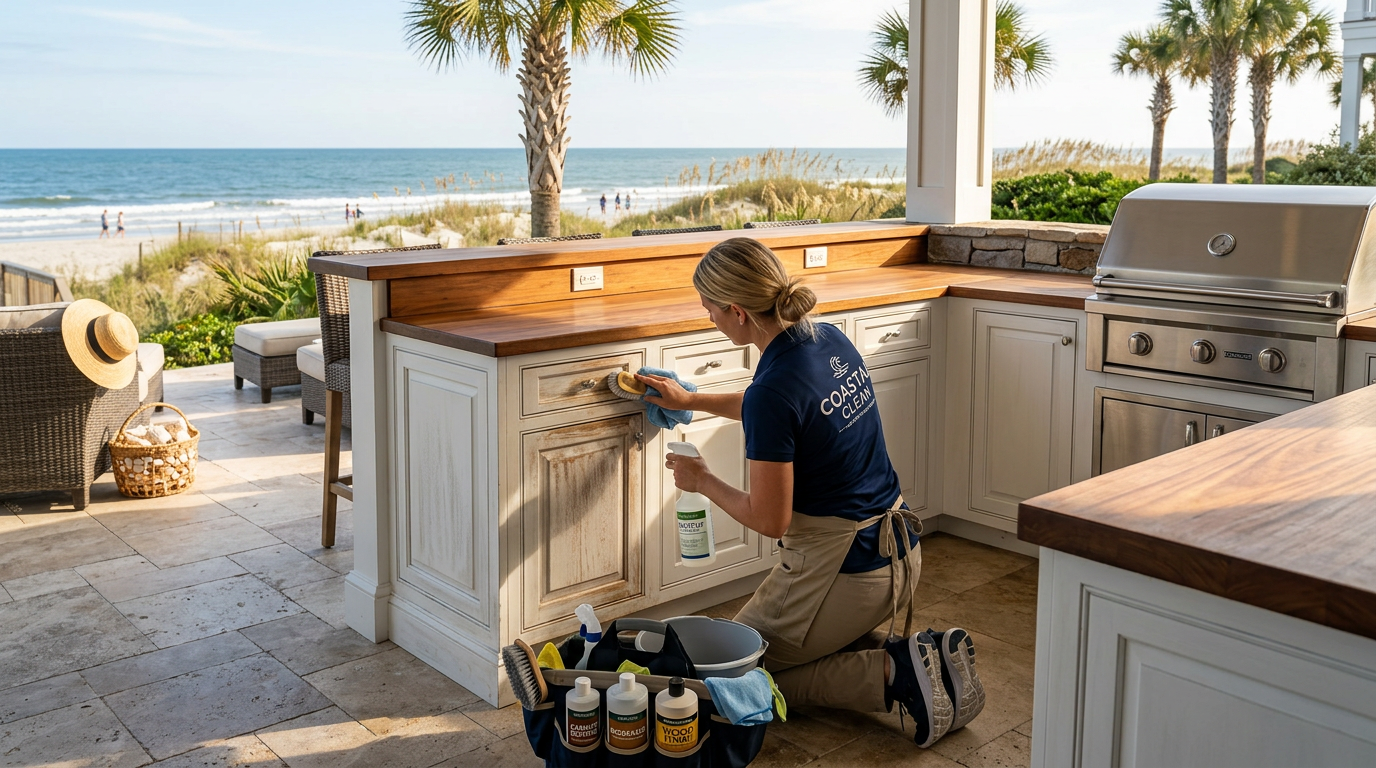
Coastal kitchens along the Grand Strand are beautiful spaces, but they face a constant, quiet environmental threat. The combination of salt-laden Atlantic air, indoor humidity, and airborne cooking oils creates a unique, sticky residue on wooden cabinets and custom millwork. Standard household cleaners often worsen this problem by stripping away protective sealants, leaving surfaces permanently tacky. Understanding the cost of proper maintenance, the risks of DIY methods, and how to select a professional preservation service can protect your home's value and avoid a premature, expensive kitchen remodel.
The Coastal Kitchen Cabinet Crisis: Anatomy of the Salt-Grease Bind
Homes along the Grand Strand enjoy beautiful ocean views, but the marine climate brings unique challenges indoors. Salt particles travel through open doors, windows, and HVAC units, settling on every exposed surface. In the kitchen, this fine airborne salt meets vaporized grease from cooking stovetops. Instead of evaporating, the coastal humidity binds these elements together, forming a resilient, sticky film across cabinet doors and drawer fronts.
This substance, known as "salt-grease bind," is more than an aesthetic nuisance; it is chemically active. The sodium chloride in the salt traps ambient moisture against the cabinetry finish, creating an acidic micro-environment. Over time, this mixture begins to digest the top layer of protective sealants, including lacquer, varnish, and paint finishes. Left untreated, the wood underneath becomes vulnerable to swelling, warping, and permanent discoloration.
The accumulation is most severe on upper cabinets flanking the range hood and lower drawers beneath the sink. Because these zones experience the highest heat and moisture fluctuation, the grease-salt mixture bakes into the wood grain. Homeowners often mistake this sticky layer for simple dust, only to find that dry wiping or light dusting does nothing to clear the adhesive residue.
The Chemistry of Polyurethane Softening and Veneer Delamination
Most modern cabinets are sealed with polyurethane, conversion varnish, or water-based acrylic lacquers. These finishes are designed to withstand normal wear, but they are highly susceptible to chemical breakdown from prolonged moisture exposure. Coastal humidity acts as a solvent accelerator when trapped beneath a layer of salt-grease. As the salt attracts moisture, it forces the protective polymer chains in the polyurethane to swell and lose their structural integrity.
Once the polyurethane softens, the cabinet surfaces become permanently sticky or gummy to the touch. This is a state of degradation where the finish itself has begun to dissolve. Touching the cabinets with greasy fingers transfers skin oils, which further accelerates the breakdown. If you try to scrub the surface at this stage, you will actually pull the weakened finish off the wood, exposing raw grain.
Veneered cabinets face an additional risk in the humid Myrtle Beach climate. When moisture penetrates past the softened clear coat, it reaches the adhesive layer binding the veneer to the core board. The humidity causes the adhesive to fail, leading to blistering, bubbling, and peeling along the edges. This structural damage cannot be wiped away; it requires professional woodwork restoration or complete panel replacement.
DIY Mistakes That Ruin Coastal Cabinets
Faced with sticky cabinets, many Grand Strand homeowners turn to strong household degreasers, vinegar, or abrasive scrub pads. This is where the most costly damage occurs. Popular DIY remedies like baking soda paste act as a heavy abrasive, scratching the softened clear coat and creating micro-grooves. These micro-grooves then collect even more grease and salt, accelerating future decay.
Using vinegar is another common mistake. While white vinegar is an excellent natural disinfectant, its acetic acid content is highly destructive to wood finishes. Acidic solutions strip the sheen off cabinets, turning satin or semi-gloss finishes dull and patchy. Similarly, alkaline cleaners like heavy ammonia or trisodium phosphate can chemically burn stained wood, leaving dark, irreversible blotches.
Even excessive use of dish soap can cause long-term issues. Dish soaps are formulated to emulsify grease on plates, but they leave behind a thick surfactant residue when applied to porous wood. If not completely rinsed with distilled water, this soapy film acts as a magnet for salt-laden air. Within weeks, the cabinet doors develop a cloudy, grey haze that resists standard cleaning attempts.
- Avoid steel wool, melamine sponges, and stiff bristle brushes that scratch the topcoat.
- Do not use undiluted white vinegar, lemon juice, or other highly acidic natural cleaners.
- Steer clear of commercial furniture polishes containing silicone, which build up and prevent future refinishing.
- Never saturate wood joints or door seams with liquid spray, as capillary action pulls moisture into raw wood.
Professional Restoration and Decontamination Protocols
Restoring sticky coastal cabinetry requires a delicate balance of chemical emulsification and dry extraction. Professional specialists do not scrub wood surfaces; instead, they use pH-neutral, chelating agents designed to break the ionic bonds of the salt and grease without disturbing the underlying finish. These professional-grade formulas gently float the contaminants to the surface, where they can be lifted away.
The process begins with a thorough inspection of the cabinet finish integrity to identify areas where the topcoat has already degraded. Technicians then apply heated, low-moisture micro-vapor to loosen the baked-on grease layers without saturating the wood grain. This is immediately followed by a wipe-down using ultra-plush microfiber cloths, which trap and lift the suspended grease rather than spreading it.
After the salt-grease bind is successfully extracted, the surface must be neutralized to prevent any chemical residue from lingering. A conditioning treatment formulated with natural wood oils is often applied to restore moisture balance to dried-out wood fibers. This meticulous process ensures that the protective barrier of the cabinets remains intact, extending the lifespan of your kitchen millwork by years.
Estimating the Financial Impact: DIY Costs vs. Professional Maintenance
Homeowners in the Grand Strand often underestimate the cost of cabinet neglect until they are quoted for a full replacement. A complete kitchen cabinet replacement for an average-sized home in North Myrtle Beach or Murrells Inlet typically ranges from $10,000 to over $30,000, depending on materials. In contrast, professional decontamination and restoration services represent a fraction of that investment, usually costing between $400 and $1,200.
Attempting a heavy DIY cleaning using improper chemicals can easily cross the line from a cheap project to an expensive mistake. Once the polyurethane coat is stripped or the paint is chemically burned, the cabinets must be professionally refinished. Sanding, priming, and painting cabinets in a coastal environment requires controlled facilities and specialized paints, costing upward of $3,000 to $7,000.
Routine professional maintenance acts as an insurance policy for your kitchen’s structural assets. By scheduling a deep cabinet decontamination once or twice a year, you prevent the salt-grease bind from reaching the point of structural finish failure. This minor operational expense preserves the aesthetic appeal and market value of your property, yielding significant long-term savings.
- Professional Cabinet Decontamination: $400 to $1,200 depending on kitchen size and soil level.
- Professional Cabinet Refinishing (Sanding and Painting): $3,000 to $7,000.
- Full Custom Cabinet Replacement: $10,000 to $30,000 or more.
- Average DIY chemical damage repair cost: $1,500+ for localized stripping and refinishing.
Critical Questions to Ask a Coastal Cleaning Specialist
Not all cleaning companies understand the unique physics of coastal environments or the delicate chemistry of wood finishes. When hiring a provider for your Grand Strand home, it is essential to ask highly specific questions to protect your cabinetry. A general cleaning service using standard kitchen sprays can cause permanent damage to high-end finishes within a single visit.
Start by asking what specific chemistry they use on wood and painted cabinets. If the company mentions using multi-surface sprays, ammonia, or dish soap as their primary cleaning agents, they lack the specialized knowledge required for coastal wood preservation. You want a partner who utilizes pH-neutral, surfactant-based wood cleaners designed specifically to lift salt-damp grease residues safely.
Next, inquire about their physical cleaning methods and moisture control protocols. Excess water is the natural enemy of wood, especially around seams, hinges, and raw edges. A reputable company like A2Z Cleaning & Linen Services (reachable at 843.800.2788) will explain their moisture-containment strategies, such as using damp microfiber extraction and avoiding direct liquid spraying on joints.
- Are your technicians trained in wood substrate protection and finish identification?
- What specific cleaning products do you use for painted cabinetry versus stained wood?
- Do you carry comprehensive liability insurance that covers damage to custom millwork and cabinetry finishes?
- How do you control humidity and moisture during the deep cleaning process?
Preventive Daily and Weekly Maintenance for Homeowners
While professional deep cleaning is necessary to address deep-seated salt-grease build-up, daily habits can significantly slow down the degradation process. The most effective daily practice is the immediate cleanup of cooking oils. Whenever you sauté, fry, or boil, use your kitchen's exhaust fan to capture airborne oils before they can drift and settle onto your cabinets. Keep the fan running for ten minutes after cooking ends.
For weekly maintenance, skip the heavy chemical sprays. Instead, mix a few drops of a mild, pH-neutral wood soap with warm, distilled water. Lightly dampen a high-quality microfiber cloth—ensuring it is barely damp, not dripping—and gently wipe the cabinet fronts. Focus on the areas around handles and knobs, where skin oils accumulate and combine with coastal salt.
Always follow a damp wipe with a completely dry microfiber cloth. Removing any residual moisture prevents water spots and ensures that salt-damp air cannot easily bond with the surface. This simple, two-step wipe-down routine takes less than ten minutes but forms a powerful barrier against the corrosive Grand Strand environment.
Product Safety and Environmental Considerations
Keeping your kitchen clean should not mean exposing your family or pet companions to toxic fumes. Many commercial degreasers emit high levels of Volatile Organic Compounds (VOCs), which can linger in closed, air-conditioned coastal homes for days. These chemical vapors can trigger respiratory issues, skin irritation, and headaches, especially in high-humidity environments where air exchange can be limited.
Safe, eco-friendly alternatives are highly effective when formulated correctly. Look for botanical surfactants derived from coconut or soy, which naturally break down grease without stripping protective coatings. These green formulas are biodegradable, non-toxic, and safe for food-preparation environments, providing peace of mind for parents and pet owners across the Grand Strand.
At A2Z Cleaning & Linen Services, we prioritize product safety alongside outstanding results. Our specialized cabinet decontamination protocols utilize eco-friendly, low-VOC solutions that protect both your home’s air quality and the integrity of your cabinetry's finish. By combining scientific precision with green chemistry, we deliver a cleaner, healthier coastal home environment.
Key takeaway
Protecting your kitchen cabinets from the damaging combination of salt-air and grease requires specialized knowledge and material-safe chemistry. Avoiding aggressive DIY cleaners and investing in professional decontamination can save you thousands of dollars in premature cabinet replacements. Contact A2Z Cleaning & Linen Services at 843.800.2788 to schedule a professional assessment and preserve your coastal home’s custom finishes today.
Keep Reading

Coastal Living
The Cost of Restoring Coastal Luxury Vinyl Plank Flooring: Mitigating Micro-Sand Abrasion, Salt-Film Haze, and Chemical Sealer Damage in Grand Strand Homes
ReadCoastal Living
The Cost of Restoring Coastal Plantation Shutters: Managing Salt-Damp Warping, Sand-Grit Louver Friction, and Material-Safe Chemistry in Grand Strand Homes
ReadCoastal Living
The Cost of Restoring Coastal Grasscloth Wallcoverings: Humidity-Driven Mold, Dye Bleeding, and Vetting Myrtle Beach Specialists
ReadReady for a spotless property?
Call 843.800.2788 or request a free quote from A2Z Cleaning & Linen Services.