Coastal Living
The Cost of Restoring Coastal Wood and Faux-Wood Plantation Shutters: Mitigating Salt-Damp Dust Cement, UV Yellowing, and Material-Safe Tension Restoration in Grand Strand Homes
Discover the costs, material safety protocols, and professional techniques required to restore salt-crusted and UV-damaged plantation shutters in Myrtle Beach and across the Grand Strand.
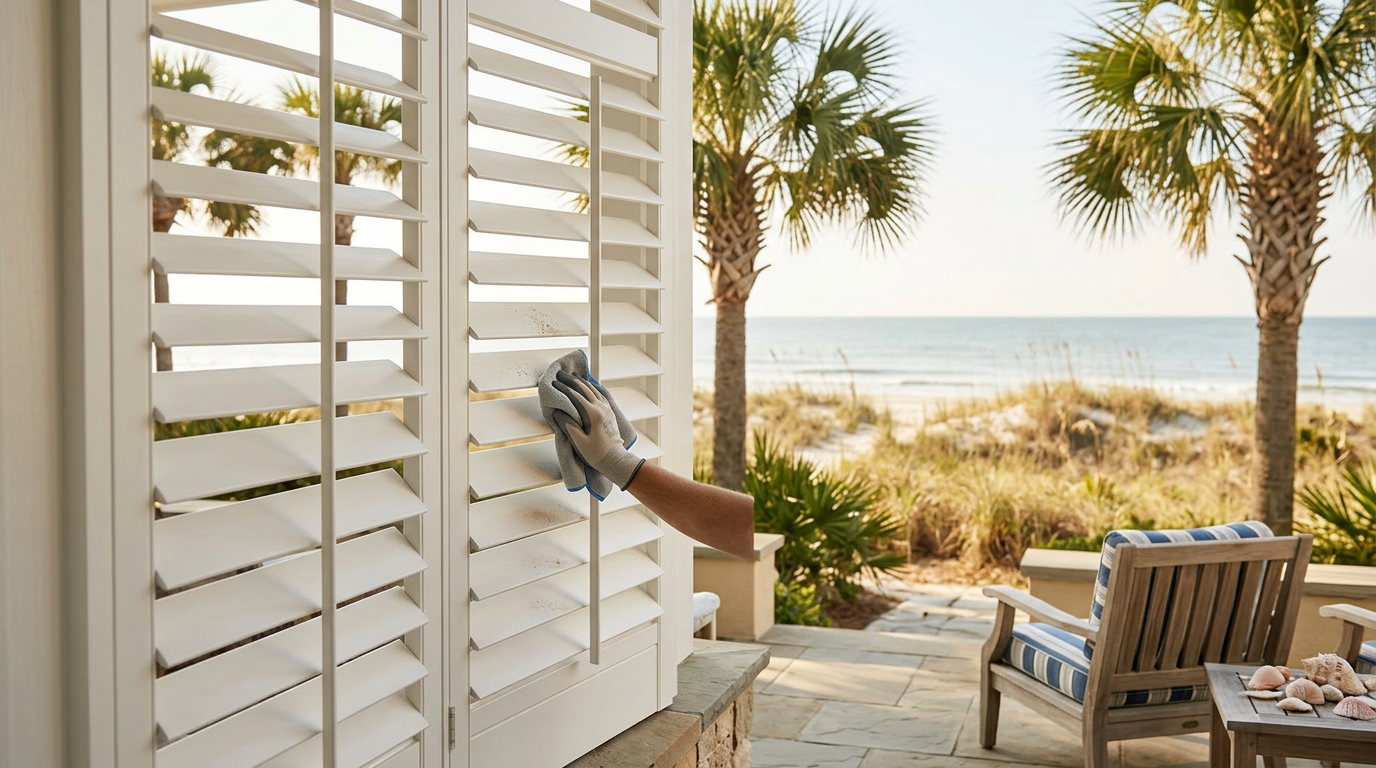
Plantation shutters are a defining architectural feature of Grand Strand homes, offering classic Southern charm, precise light control, and excellent insulation against the coastal heat. However, our beautiful marine environment poses unique challenges to these window treatments, as salt air, blowing sand, and intense humidity constantly bombard them. Over time, this combination creates a sticky, abrasive film that standard household dusting simply cannot remove without damaging the delicate wood or composite finishes. Understanding the true costs, product chemistry, and procedural differences between DIY attempts and professional restoration is key to preserving these valuable interior assets.
The Anatomy of Coastal Shutter Degradation: Salt-Damp Dust Cement
In coastal environments like Myrtle Beach and Pawleys Island, airborne salt spray travels miles inland, settling on every horizontal surface in your home. When this microscopic salt layer mixes with high indoor humidity and fine beach sand, it creates a sticky, hygroscopic film on your shutter louvers. Over time, as your air conditioning cycles and dries the air, this film cures into a hard, greyish-white crust known as salt-damp dust cement.
Attempting to scrub this abrasive crust with a dry cloth or a basic feather duster acts like sandpaper, micro-scratching the protective paint, lacquer, or vinyl surface. Once these microscopic scratches form, they trap future deposits of salt and humidity even deeper, accelerating the degradation of the shutter material and dulling its overall luster.
Furthermore, our region's high UV index causes significant chemical wear on window treatments. Real wood shutters suffer from paint chalking and finish embrittlement, while vinyl and composite shutters can experience rapid yellowing if treated with incompatible cleaning agents that react under direct sunlight. Professional intervention is often required to safely release this salt-damp bond without stripping the underlying protective UV-inhibiting coatings.
DIY Restoration vs. Professional Cleaning: Recognizing the Risks
Many homeowners attempt to tackle dirty plantation shutters with a bucket of soapy water and a sponge, but this approach introduces significant structural risks. For real wood shutters, excess liquid water easily penetrates the tension-pin holes, louvers, and frame joints. Once water is absorbed, the wood swells, warps, and cracks, which permanently ruins the alignment of the louvers and prevents them from closing tightly.
For faux-wood or vinyl shutters, using generic household dish soap or multi-surface cleaners leaves behind a microscopic, sticky surfactant residue. This invisible film acts like a magnet for airborne dust and salt, causing the shutters to become dirty again twice as fast as before. Additionally, wet DIY wiping can push water into the metal staples that connect the louvers to the center tilt rod, inducing rust and eventual hardware failure.
Professional restoration, by contrast, relies on a low-moisture, multi-step process that protects the structural integrity of the window treatments. Specialized technicians use dry particulate extraction, neutral-pH micro-surfactants, and custom microfiber detailing tools designed to lift salt and grease without soaking the wood or hardware. This preserves the delicate mechanical tension systems that keep your louvers functional.
- Warping risk: Excess water swells real wood joints and ruins flush alignments.
- Hardware corrosion: Moisture rusts tension screws and metal tilt-rod staples.
- Residue build-up: Standard soaps leave a sticky film that attracts sand-grit.
- Finish scratching: Dry wiping abrasive salt-crust creates permanent micro-scratches.
- UV degradation: Incorrect household chemicals degrade built-in UV-resistant coatings.
The Real Cost Spectrum: Shutter Restoration vs. Replacement
High-quality wood and composite plantation shutters are a major financial investment, often costing between $300 and $800 per window in the Grand Strand area, depending on the dimensions and material. Replacing a house full of damaged, warped, or yellowed shutters can quickly scale into a multi-thousand-dollar expense. Professional restoration and deep cleaning offer an incredibly cost-effective alternative to salvage and protect these assets.
On average, professional plantation shutter restoration ranges from $45 to $120 per window panel, depending on the shutter material, size, and the severity of the salt-damp buildup. Real wood shutters generally fall on the higher end of the spectrum due to the meticulous hand-detailing and wood-safe chemistry required, while faux-wood shutters are slightly more straightforward but still require careful chemical handling.
High-ceiling windows, arched shutter transoms, and clerestory window treatments require specialized ladders or scaffolding, which can add a height-access fee to the service cost. When balanced against the high cost of replacement, investing in a professional deep cleaning and re-tensioning service every 18 to 24 months easily pays for itself by doubling the lifespan of your custom window treatments.
Product Safety and Chemistry: Avoiding Solvent Pitfalls
Using the wrong chemicals on your plantation shutters can cause immediate, irreversible damage to their finish. Many popular household spray cleaners contain ammonia, heavy alcohols, or bleach. On vinyl or composite shutters, these strong solvents strip the factory-applied UV inhibitors, which triggers rapid yellowing, cracking, and chalking when exposed to the intense Grand Strand sun.
On painted or stained real wood shutters, highly alkaline cleaners soften the polyurethane or lacquer finish, leaving it sticky to the touch. Once a finish is softened, it permanently traps dust, making future cleaning impossible without completely stripping and repainting the wood. Furthermore, strong chemical fumes can linger in small window casings, compromising your home's indoor air quality.
Safe and effective shutter restoration requires neutral-pH, biodegradable surfactants that emulsify salt, grease, and dust without attacking the paint or composite substrate. These specialized formulas are completely safe for children and pets who touch the louvers. Once cleaned, a professional can apply a dry-touch, anti-static protective sealer that repels dust and resists salt-air bonding.
Crucial Questions to Ask a Professional Shutter Cleaning Service
Before hiring a cleaning company to restore your plantation shutters, it is essential to vet their methods to ensure they do not treat your delicate shutters like basic baseboards. Start by asking if their technicians are trained in substrate-specific cleaning, particularly the differences in chemical tolerance between painted basswood, poly-composite, and hollow vinyl shutters.
Inquire about their moisture control protocols and water safety. A reputable service provider should clearly explain how they avoid saturating the wood joints and what steps they take to keep the mechanical tilt rod staples dry. If they plan to use standard wet rags and bucket-water methods, look elsewhere to avoid warping and rust.
Additionally, ask if they inspect and calibrate the tension adjustment screws during the restoration process. A true shutter specialist will not only clean the surfaces but will also ensure that loose, droopy louvers are properly re-tensioned using manual adjustment tools. Always verify that the company is fully insured and bonded to perform work on high, hard-to-reach windows.
- Substrate training: Do your technicians know the difference between wood and vinyl care?
- Moisture control: What specific methods do you use to prevent water from entering wood joints?
- Tension calibration: Can you adjust and tighten loose, droopy louvers during the service?
- Chemical safety: Are the cleaning agents neutral-pH, botanical, and safe for coastal finishes?
- Insurance and safety: Are your workers fully insured for high-reach interior ladder work?
The Step-by-Step Professional Restoration Protocol
A professional shutter restoration begins with a comprehensive dry particulate extraction. Technicians utilize commercial HEPA-filter vacuums equipped with ultra-soft horsehair brush attachments to safely remove dry sand, salt crystals, and loose dust. This critical step ensures that no abrasive grit is dragged across the louvers during the subsequent liquid detailing phase.
Once the loose dry soil is removed, a fine, low-moisture mist of neutral-pH surfactant is applied to the shutters. Using custom-molded, dual-sided microfiber detail pads, the technician wipes each individual louver from hinge to frame. This process is repeated on both the front and back of the shutters, ensuring the hard-to-reach overlapping edges where salt-damp cement collects are completely cleared.
After cleaning the louvers, the technician carefully details the tilt bar, structural frames, and hinges, ensuring no cleaning solution pool-settles in the crevices. The final step involves inspecting the tension adjustment ports on the sides of the shutter panels. Using specialized hand drivers, the technician calibrates the internal tension screws to ensure the louvers hold their position perfectly, restoring like-new functionality.
Preventive Maintenance: Keeping Salt-Damp Dust at Bay
To extend the life of your professionally restored shutters, simple and consistent dry maintenance is key. Avoid the temptation to wipe your shutters with wet consumer cleaning wipes or damp household rags between professional cleanings. Introducing moisture on your own simply re-liquefies any residual salt on the surface, driving it deeper into the wood grain or vinyl seams where it will recrystallize and form new crust.
Instead, incorporate a dry static dusting routine once a week. Using a clean microfiber cloth or a high-quality static duster, tilt the shutter louvers almost fully closed in one direction and wipe downwards. Next, tilt the louvers in the opposite direction and repeat the process on the reverse side. This simple action disrupts the accumulation of salt air and dust before it can chemically bond.
If you encounter a localized sticky spot, such as sticky fingerprints or pet drool, spot-clean only. Use a barely-damp microfiber cloth with plain water, wipe the spot gently, and immediately dry the area with a separate clean cloth. For deep build-up or loose louvers, contacting a professional team like A2Z Cleaning & Linen Services at 843.800.2788 will keep your window assets pristine.
Key takeaway
Plantation shutters are a premium asset in Grand Strand homes that require specialized, low-moisture care to combat the damaging effects of salt air and UV exposure. By avoiding harsh DIY chemicals and investing in periodic professional restoration, you protect your home's structural beauty and preserve your financial investment. Contact A2Z Cleaning & Linen Services at 843.800.2788 to schedule a professional assessment and restoration for your shutters today.
Keep Reading

Coastal Living
The Cost of Restoring Coastal Plantation Shutters: Managing Salt-Damp Warping, Sand-Grit Louver Friction, and Material-Safe Chemistry in Grand Strand Homes
ReadCoastal Living
The Cost of Restoring Coastal Kitchen Cabinets and Custom Millwork: Mitigating Salt-Damp Grease Bind, Polyurethane Softening, and Material-Safe Chemistry in Grand Strand Homes
ReadCoastal Living
The Cost of Restoring Coastal Luxury Vinyl Plank Flooring: Mitigating Micro-Sand Abrasion, Salt-Film Haze, and Chemical Sealer Damage in Grand Strand Homes
ReadReady for a spotless property?
Call 843.800.2788 or request a free quote from A2Z Cleaning & Linen Services.