Coastal Living
The Cost of Restoring Coastal Plantation Shutters: Managing Salt-Damp Warping, Sand-Grit Louver Friction, and Material-Safe Chemistry in Grand Strand Homes
Discover the costs, risks, and proper restoration chemistry for coastal plantation shutters. Learn how to protect your investment from Grand Strand salt-air, moisture, and sand.
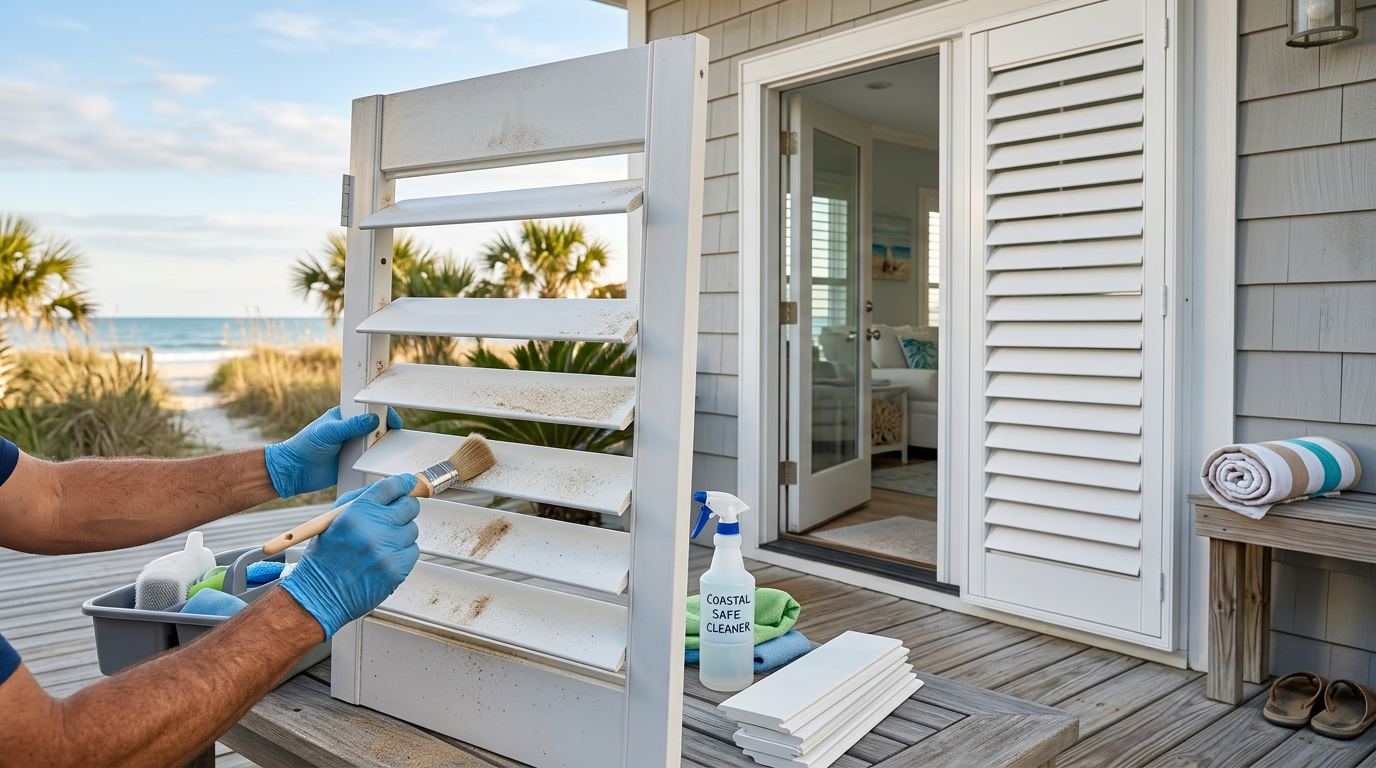
Plantation shutters are a signature design choice for homes across Myrtle Beach, Pawleys Island, and the wider Grand Strand, offering both timeless coastal aesthetic and exceptional light control. However, our unique environment of salt-laden ocean air, relentless humidity, and fine wind-borne sand poses a constant threat to these high-value window treatments. Without specialized care, the delicate mechanisms that operate your shutters can seize, and the finishes can degrade, warp, or discolor. This educational guide breaks down the real costs of restoration, compares DIY and professional methods, and outlines the precise product chemistry required to keep your shutters pristine.
The Coastal Plantation Shutter Threat Matrix
In our coastal climate, plantation shutters face a silent, continuous assault from natural elements. Salt-fog carries microscopic sodium chloride particles through window screens and open doors, depositing a thin, hygroscopic film across the louvers. Because salt naturally attracts moisture, this film keeps the shutter surfaces damp even when your indoor air conditioning is running, accelerating the breakdown of paint finishes and protective sealants.
Compounding the moisture issue is the fine quartz sand native to the Grand Strand. Carried by ocean breezes, this abrasive grit settles directly into the louvers' tension pins, hinges, and tilt rods. Every time you adjust the shutters, this trapped sand acts like coarse sandpaper, grinding down the moving parts, stripping away protective coatings, and creating deep micro-scratches where moisture can easily penetrate.
The reaction of the shutter material depends heavily on its composition. Real wood shutters, such as those made from basswood or poplar, will absorb this trapped moisture, leading to swelling, joint separation, and warped louvers that no longer close flush. Composite or poly-vinyl shutters, while impervious to rot, suffer from UV-catalyzed chemical yellowing and structural warping if the salt-crust is left to bake under our intense South Carolina sun.
The Cost of Neglect vs. Professional Restoration
Neglecting plantation shutters in a coastal environment is a costly mistake. Custom, high-quality plantation shutters typically cost between $300 and $800 per window to purchase and install in the Grand Strand area. If the louvers warp, the frame splits, or the internal tension mechanisms fail entirely, replacement is often the only option, easily totaling thousands of dollars for an entire home or condominium.
By contrast, professional deep cleaning and structural restoration are highly cost-effective. A specialized professional cleaning and preservation treatment generally ranges from $45 to $95 per window unit, depending on the shutter material, overall size, and the level of accumulated salt and grit. This process safely removes the abrasive elements and restores the factory finishes without risking water or chemical damage.
Investing in seasonal or annual professional restoration not only preserves your property's appraisal value but also protects your daily indoor air quality. Dusty, salt-crusty shutters act as a major reservoir for pollen, mold spores, and pet dander, which are constantly recirculated into your living spaces every time the HVAC system cycles or a coastal breeze passes through the windows.
DIY Shutter Maintenance: Safe Techniques and Common Mistakes
While routine dusting is an excellent DIY habit, many homeowners unwittingly damage their plantation shutters by using improper tools and wet cleaning methods. The most common DIY error is spraying shutters directly with liquid household cleaners or soaking them with wet microfiber cloths. On wood shutters, excess liquid quickly seeps into the unfinished joinery and dowel holes, causing the wood to swell, crack, and permanently lose its structural shape.
Another widespread mistake is using standard feather dusters. Rather than lifting the sand-grit and salt crystals, feather dusters simply push the abrasive particles across the surface, micro-scratching the clear coat and pushing the grit deeper into the hinge housings. Once these particles are lodged in the tension pins, they are nearly impossible to remove with standard home cleaning equipment.
For safe, routine DIY care, you should always start with a dry extraction method. Use a high-efficiency vacuum equipped with a soft horsehair brush attachment to gently lift away loose sand and dust from the louvers and frame corners. If wiping is necessary, use a barely damp, lint-free microfiber cloth misted with a pH-neutral, water-free cleaning solution specifically formulated for wood or high-grade polymers, wiping gently in the direction of the grain or material extrusion.
The Professional Restoration Protocol Explained
A professional shutter restoration goes far beyond a standard house cleaning wipe-down. At A2Z Cleaning & Linen Services, our specialized technicians follow a strict, multi-step protocol designed specifically for the challenges of Grand Strand properties. We begin with a complete visual inspection of the shutter frames, louver alignment, and mechanical tension systems to identify any structural weaknesses before cleaning begins.
Next, we utilize industrial HEPA-filtration vacuums with specialized, ultra-soft brush attachments to perform a complete dry extraction of all loose quartz sand and salt crystals. This critical step ensures that no abrasive particles are dragged across the shutter surfaces during the subsequent cleaning phases. We then use specialized dry-smoke sponges to lift bound, humid grease and airborne oils without introducing moisture to sensitive joint areas.
Once the dry soil is removed, we apply material-specific, low-moisture cleaning agents using microfiber detailing mitts. This allows us to clean every side of the individual louvers, including the hard-to-reach rear edges and tilt-rod connections. Finally, we apply a proprietary anti-static, UV-blocking protective barrier that repels dust and prevents salt-air adhesion, and we lubricate the tension pins with a dry-silicone agent that keeps hinges moving smoothly without attracting sand.
- Pre-restoration inspection of frame alignment, hinges, and tension pin integrity
- Comprehensive HEPA-vacuum dry extraction of abrasive coastal sand and salt crust
- Dry-smoke sponge extraction of humid grease films and airborne residues
- Low-moisture hand detailing of all louvers, tilt rods, and frame frames
- Application of a specialized anti-static, UV-protective surface barrier
- Precision dry-silicone lubrication of mechanical hinges and moving components
Critical Questions to Ask a Myrtle Beach Cleaning Company
Before hiring a local cleaning service to care for your home or vacation rental, it is vital to vet their understanding of coastal shutter care. Many general cleaning crews treat plantation shutters as a quick dusting task, using the same damp cloth across dirty windows, baseboards, and delicate wood louvers. This lack of specialization can lead to irreversible water damage and mechanical failures in your high-end window treatments.
When vetting a professional partner, ask them explicitly about their protocol for separating real wood shutters from poly-composite shutters. A qualified professional should immediately explain how their cleaning chemistry and moisture levels differ between the two materials. If a company suggests using standard multi-surface sprays or heavy water application, they do not possess the training required for coastal preservation.
Furthermore, inquire about their physical techniques for sand extraction. Ask if they use soft horsehair vacuum attachments prior to wiping, and confirm that they do not use abrasive pads or harsh chemical solvents. A professional company, such as A2Z Cleaning & Linen Services, will gladly walk you through their exact safety protocols, material-specific products, and technician training standards to give you complete peace of mind.
- Do your technicians receive specific training on distinguishing wood from composite shutters?
- What specific dry extraction tools do you use to remove sand before wiping the louvers?
- Are the cleaning solutions you use pH-neutral, solvent-free, and safe for manufacturer UV coatings?
- What is your company's policy and protocol if a delicate louver or tension pin is damaged during cleaning?
- Do you apply any protective anti-static barriers to help repel future salt and sand buildup?
Wood vs. Poly: Divergent Protocols for Coastal Properties
Real wood plantation shutters offer unmatched warmth and organic beauty, but they require the most conservative cleaning approach in the Grand Strand. Because wood is naturally porous, it acts like a sponge in our humid environment. Cleaning real wood requires a strictly low-moisture, pH-neutral technique. Water must never be allowed to pool in the louver joints, and drying must be immediate to prevent grain-raise, paint peeling, and structural warping.
Conversely, poly-vinyl and composite shutters are highly resilient against humidity and moisture, making them a popular choice for oceanfront Myrtle Beach condominiums. However, they are highly vulnerable to static electricity, which pulls fine beach sand and household dust directly to their surfaces. Cleaning poly shutters requires specialized anti-static surfactants that neutralize this charge, keeping them cleaner for significantly longer periods.
Additionally, while poly shutters can tolerate slightly more moisture during the cleaning process, they are far more susceptible to chemical yellowing from improper cleaning agents and UV exposure. Our team tailors the chemical profile of our cleaning agents to the exact material of your shutters, ensuring that wood receive nourishing, moisture-controlled care while poly receives powerful anti-static, yellowing-prevention treatments.
Long-Term Preservation Strategies for Grand Strand Homeowners
To maximize the lifespan of your plantation shutters between professional restoration services, establishing a simple yet effective home care routine is essential. Ensure that your home's indoor relative humidity is consistently maintained between 45% and 55% using your HVAC system or dedicated dehumidifiers. Keeping indoor humidity controlled prevents wood shutters from swelling and stops salt residues on all shutter types from drawing dampness from the air.
Make it a habit to close your windows during high-wind events, heavy surf warnings, or seasonal salt-fog incursions. Direct exposure to ocean breezes is highly beneficial for fresh air, but it carries a massive volume of corrosive salt and abrasive sand directly onto your window treatments. Keeping windows shut during these peak weather events significantly reduces the rate of salt-crust accumulation on your shutters.
Finally, partner with a trusted, locally-grounded professional team for annual deep cleaning and mechanical maintenance. Regular professional care ensures that minor issues, such as loose tension pins or early paint degradation, are caught and addressed before they turn into costly structural failures. For expert assistance with your plantation shutters or to schedule a professional assessment, contact A2Z Cleaning & Linen Services at 843.800.2788.
Key takeaway
Plantation shutters are a premium investment in your Grand Strand home that require specialized, low-moisture, and sand-safe restoration protocols to survive our salt-air environment. By avoiding harsh household chemicals, utilizing dry vacuum extraction, and partnering with trained local professionals, you can protect your shutters from warping and mechanical failure for decades to come.
Keep Reading

Coastal Living
The Cost of Restoring Coastal Luxury Vinyl Plank Flooring: Mitigating Micro-Sand Abrasion, Salt-Film Haze, and Chemical Sealer Damage in Grand Strand Homes
ReadCoastal Living
The Cost of Restoring Coastal Tile and Grout: Managing Oceanfront Alkaline Crusts, Humidity-Driven Mildew, and Penetrating Sealers in Grand Strand Homes
ReadCoastal Living
The Cost of Coastal Upholstery and Mattress Restoration: Fabric Safety, Dry Times, and Vetting Grand Strand Professionals
ReadReady for a spotless property?
Call 843.800.2788 or request a free quote from A2Z Cleaning & Linen Services.