Commercial & Hospitality
The Grand Strand Commercial Fitness, Spa, and Wellness Center Environmental Services Specialist Career Pathway: Biofilm Mitigation, Humidity-Safe Disinfection, and Technical Compensation Structures
Discover what it takes to build a career cleaning luxury spas and fitness centers on the Grand Strand, from specialized pathogen certifications to competitive wages and advanced training.
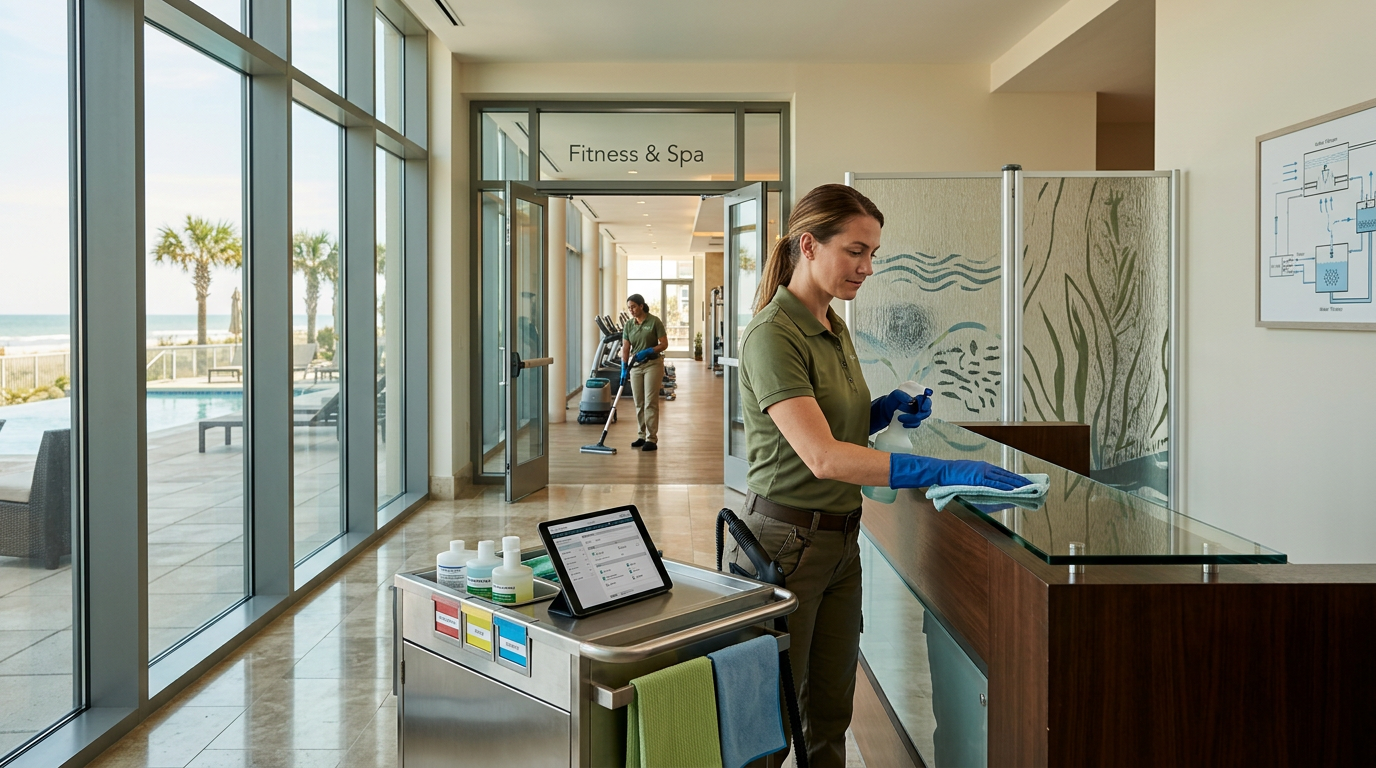
Maintaining commercial fitness centers, athletic clubs, and luxury day spas along the Grand Strand requires far more than basic janitorial work. The intersection of high coastal humidity, heavy tourist traffic, and constant moisture creates a demanding environment where pathogen control and material safety are paramount. Developing a career pathway in this specialized environmental services (EVS) sector offers competitive pay, stable year-round employment, and the opportunity to become a certified professional in sanitary science. This guide outlines the essential skills, training milestones, and hiring standards that define top-tier wellness cleaning specialists in our coastal community.
The High-Humidity Sanitization Paradigm in Coastal Wellness Facilities
Coastal South Carolina presents a formidable challenge for commercial fitness centers, athletic clubs, and luxury day spas. The intersection of high ambient humidity, salt-laden marine air, and intensive physical activity creates a microclimate where pathogens, mold, and odor-causing bacteria can thrive. Basic dusting and mopping are entirely insufficient for these high-traffic facilities along the Grand Strand. A professional EVS specialist in this niche must understand how moisture interacts with porous surfaces, equipment grips, and locker room grouting. They act as the primary defense against community-acquired infections.
To operate effectively, a specialist must distinguish between standard commercial soil loads and the biological contaminants unique to wellness spaces. Body oils, sweat, shed skin cells, and tracked-in beach sand combine to form a resilient biofilm on weight benches, yoga mats, and cardio consoles. Without precise chemical application and dwell times, these films harden into slip hazards and breeding grounds for dermatophytes and bacteria. Our local industry requires technicians who treat these environments with the scientific rigor of a clinical setting, recognizing that guest health directly depends on their labor.
Furthermore, the Grand Strand's seasonal tourism patterns introduce extreme swings in facility usage. During the peak summer months, oceanfront resort fitness centers and independent local gyms experience a massive surge in daily foot traffic. This seasonal pressure demands an EVS specialist who can maintain rigorous sanitization standards under tight operational windows. Understanding these localized dynamics is the foundation of a successful career in coastal wellness sanitation, elevating the role from simple custodial work to a highly respected hospitality and health service.
Core Competencies of a Professional Wellness EVS Specialist
A successful wellness environmental services specialist possesses a unique blend of technical knowledge, physical stamina, and acute attention to detail. Unlike standard office environments, a fitness or spa facility features a complex array of modern polymers, raw hardwoods, metals, and electronic interfaces. Specialists must possess the spatial awareness to spot hidden soil reservoirs, such as the undersides of weight-stack guides, the crevices of foam rollers, and the drainage channels of steam rooms. Missing these areas leads to rapid bacterial colonization and localized odor issues.
Professionalism in this role also requires high-level communication skills and discretion. Specialists often work in close proximity to luxury spa guests or club members during early morning or late-evening transitions. Maintaining a quiet, unobtrusive presence while executing rigorous sanitization protocols is a critical skill. Technicians must understand the sensory nature of spas, ensuring that chemical odors do not overpower relaxing aromatherapy profiles. This requires a deep understanding of odor-neutralizing chemistry versus heavy masking agents, preserving the serene atmosphere that coastal wellness clients expect.
Finally, self-direction and compliance discipline are non-negotiable traits. Because wellness cleaning often occurs during off-hours, specialists must hold themselves to the highest quality standards without direct supervision. They must meticulously document their cleaning logs, verify chemical dilution ratios, and monitor moisture levels in saunas and locker rooms. This high level of personal accountability is what separates entry-level cleaners from true environmental services professionals who command premium wages in the Grand Strand marketplace.
Technical Training and Certification Pathways
Entering this specialized field requires a structured path of training and certification to ensure safety and efficacy. Basic onboarding starts with OSHA Hazard Communication standards, focusing on Safety Data Sheets (SDS), personal protective equipment (PPE), and chemical spill responses. Because wellness specialists handle concentrated disinfectants and work around wet surfaces, understanding chemical safety is paramount. In the Grand Strand market, local employers look favorably on candidates who have completed foundational courses in bloodborne pathogens, as minor injuries and bodily fluids are routine hazards in athletic training spaces.
To advance into premium-tier positions, technicians should pursue industry-recognized certifications such as the Global Biorisk Advisory Council (GBAC) Trained Technician designation. This program teaches proper preparation, response, and recovery protocols for biohazard situations, emphasizing scientific disinfection principles. Additionally, training from the Institute of Inspection, Cleaning and Restoration Certification (IICRC) in hard-surface cleaning or odor control provides invaluable technical depth. These certifications demonstrate to high-end spa owners that the technician understands the molecular science of cleaning, not just the physical application.
Ongoing education is equally vital as fitness technology and spa amenities evolve. Modern clubs feature infrared saunas, cryotherapy chambers, and digital touchscreens on exercise equipment, all of which require specialized, non-abrasive cleaning protocols. A progressive career path involves continuous training in substrate preservation, learning how to safely disinfect delicate electronics without voiding manufacturer warranties. By committing to continuous learning, EVS technicians position themselves as indispensable partners to athletic directors and spa managers throughout Horry and Georgetown counties.
Structured Behavioral Interview Questions for Wellness EVS Candidates
Recruiting top-tier talent for Grand Strand wellness facilities requires a deliberate, behavioral-based interview process. Standard yes-or-no questions fail to reveal a candidate's practical problem-solving skills, physical endurance, or chemical literacy. Hiring managers should ask targeted questions that force candidates to describe past scenarios where they had to resolve complex cleaning challenges. For example, asking "Describe a time when you discovered a delicate surface, like a natural stone steam room wall, beginning to show signs of mildew. How did you select your cleaning agents to resolve the issue without damaging the stone?" reveals both chemical knowledge and critical thinking.
Another critical area to probe is the candidate's ability to manage physical pacing and high-stress shifts. An effective question is: "During the busy summer tourist season, how do you structure your workflow to ensure that thirty cardio machines are thoroughly disinfected without missing high-touch areas under tight time constraints?" The response should highlight their systematic approach, attention to ergonomic safety, and ability to prioritize high-risk touchpoints. This helps weed out applicants who may become overwhelmed by the intensive physical demands of fitness center turns.
Finally, evaluate their customer service mindset and discretion with a scenario-based question: "If you are deep-cleaning a locker room and a spa member enters to use the facilities, how do you handle the situation while maintaining safety and professionalism?" Excellent candidates will describe pausing their work, securing wet-floor signage, communicating politely, and ensuring the guest's comfort before resuming. These answers demonstrate the refined behavioral competencies required to protect the reputation of luxury wellness brands along the Grand Strand.
Managing Chemical Safety and Substrate Compatibility in Luxury Spas
Luxury spas along the coast feature delicate, expensive finishes that are highly susceptible to chemical damage. Natural travertine tile, cedar and hemlock sauna benches, brass fixtures, and acrylic massage tables require precise pH-balanced maintenance. Using highly acidic or alkaline commercial cleaners on these materials can cause permanent etching, wood rot, or surface cracking. A professional EVS specialist must be trained to read product labels and understand substrate compatibility, ensuring that sanitization does not come at the cost of structural degradation.
In wet areas like steam rooms and saunas, humidity accelerates chemical reactions. For instance, using bleach-based products in a cedar sauna can release toxic chlorine gas when the room heats up, while also stripping the natural oils from the wood, leading to premature splintering. Specialists utilize botanical, EPA-registered disinfectants that offer broad-spectrum kill claims without leaving harsh residues or dangerous fumes. This meticulous selection of chemistry protects the integrity of the spa's physical assets and safeguards the respiratory health of guests breathing deeply in those environments.
Additionally, the presence of hard, mineral-rich coastal water complicates cleaning protocols. Glass shower doors and chrome fixtures quickly accumulate scale and soap scum, which bind with body oils. Removing these deposits requires mild, chelating organic acids rather than aggressive abrasives that scratch delicate surfaces. The ability to execute these specialized restoration techniques without damaging high-end finishes is a key differentiator for professional cleaning crews, reinforcing their value to property managers who want to avoid costly replacement bills.
Compensation, Benefits, and Retention Trends in the Grand Strand Market
Compensation structures for professional wellness EVS specialists in the Myrtle Beach region have evolved significantly to reflect the technical nature of the work. Standard minimum-wage janitorial models are no longer sufficient to attract and retain the skilled technicians required for high-end facilities. Today, competitive hourly wages are paired with performance bonuses tied to quality assurance audits and client satisfaction scores. Providing a clear path to higher compensation based on technical certifications, such as IICRC or GBAC credentials, incentivizes staff to elevate their skills and professional standing.
Year-round stability is another crucial retention tool in our highly seasonal coastal market. Many cleaning operations face dramatic layoffs in the winter, but wellness facilities, local athletic clubs, and medical spas maintain consistent operations throughout the year. Offering guaranteed weekly hours, paid time off, and access to healthcare benefits helps build a committed, professional workforce. When technicians feel financially secure and valued as healthcare-adjacent professionals, their turnover rate drops dramatically, resulting in consistent, high-quality service for clients.
Furthermore, leading service providers offer career advancement pathways that lead to supervisory, inspector, or account management roles. Investing in professional development shows technicians that their work is not just a temporary job, but a viable career. Employers who provide uniform stipends, paid travel time between facilities, and modern, ergonomic equipment find that their teams are highly motivated, reducing call-outs and ensuring that Grand Strand wellness centers remain pristine and sanitary through every season.
Building a Cohesive, Accountable Wellness Cleaning Team
Building a reliable, high-performing wellness cleaning team requires a foundation of clear operational standards and robust quality assurance systems. Every team member must have access to clear, digital checklists customized for each unique facility. These checklists should detail specific protocols, such as verifying the PPM of sanitizer in locker room footbaths or checking the exhaust vents in steam rooms. Utilizing modern property management and scheduling software allows for real-time tracking of tasks, enabling managers to address issues instantly and maintain exceptional consistency across multiple locations.
Regular, constructive feedback loops are essential to keep the team aligned with client expectations. Field inspectors should conduct random ATP (adenosine triphosphate) bioluminescence testing on high-touch surfaces to verify biological cleanliness. Sharing these objective scientific results with the team fosters a culture of pride and friendly competition. When a technician sees that their specific sanitization protocol successfully reduced bacterial presence to zero, it reinforces the importance of their training and boosts their commitment to maintaining those clinical-grade standards.
Finally, fostering a supportive, family-oriented company culture builds long-term loyalty and reliability. Recognizing outstanding performance through peer awards, public praise, and financial incentives builds a sense of community and shared purpose. In a demanding field like wellness environmental services, knowing that leadership has your back and respects your labor makes all the difference. By blending strict technical standards with a caring, human-centric management style, we build resilient cleaning teams that protect the health and comfort of the Grand Strand community.
- Utilize digital checklists tailored to the unique physical layout of each fitness or spa facility.
- Perform regular, random ATP bioluminescence testing to verify sanitization scientifically.
- Establish immediate communication channels for real-time reporting of equipment damage or low inventory.
- Conduct weekly shift huddles to address safety protocols, chemical handling, and client feedback.
- Provide ongoing professional recognition and performance-based financial incentives to boost team morale.
Key takeaway
Building a career or hiring a team in commercial wellness and spa sanitation requires specialized knowledge of high-humidity chemistry, substrate safety, and certified disinfection practices. Partnering with a professional provider ensures that your fitness center or luxury spa meets clinical cleanliness standards year-round. For expert wellness facility cleaning and dedicated environmental services across the Grand Strand, call A2Z Cleaning & Linen Services at 843.800.2788.
Keep Reading
Commercial & Hospitality
The Grand Strand Commercial Post-Construction and Renovations Cleaning Specialist Career Pathway: Substrate Protection Certifications, Dust-Containment Audits, and Competitive Compensation Structures
ReadCommercial & Hospitality
The Coastal Resort Common-Area Custodial Specialist Career Pathway: Technical Floor-Safety Auditing, Sand-Slurry Mitigation, and Hospitality Compensation Models in Myrtle Beach
ReadCommercial & Hospitality
The Grand Strand Commercial Disinfection Specialist Career Pathway: Class-A Office Standards, Biohazard Mitigation Certifications, and Local Retention Models
ReadReady for a spotless property?
Call 843.800.2788 or request a free quote from A2Z Cleaning & Linen Services.