Commercial & Hospitality
The Grand Strand Hospitality Career Ladder: Structuring Pay, Certifications, and Retention for Year-Round Environmental Services Crews
Discover how structured training, fair compensation, and professional career ladders build the Grand Strand's most reliable commercial and hospitality cleaning teams.
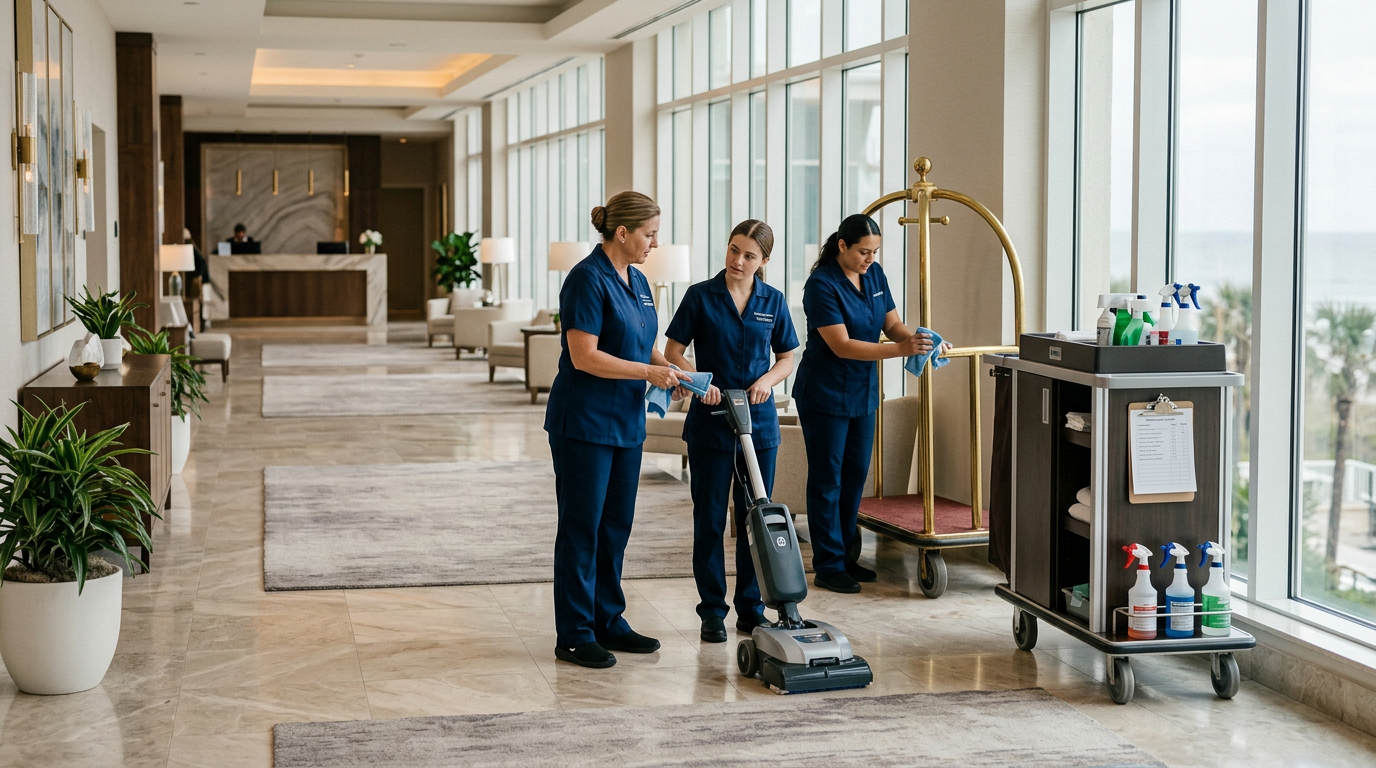
Operating a successful commercial cleaning or vacation rental management firm in the Grand Strand requires more than just hiring warm bodies before the summer rush. The hyper-seasonal nature of Myrtle Beach tourism creates a volatile labor market where inconsistent piece-rate pay often leads to high turnover and compromised standards. To build a reliable, high-performing hospitality crew, property managers and cleaning companies must treat environmental services as a skilled trade. This guide outlines how to structure competitive compensation, design professional training pathways, and vet candidates for long-term career success along our coast.
The Seasonal Compensation Conundrum: Transitioning from Piece-Rate to Year-Round W-2 Stability
For decades, the standard practice among many Myrtle Beach cleaning operations has been to rely on 1099 independent contractors paid on a piece-rate basis per clean. While this model seems cost-effective on paper during the frantic summer months, it actively undermines service quality and team loyalty. Piece-rate pay incentivizes speed over thoroughness, leading to rushed turnovers, missed details, and ultimately, negative guest reviews. When the autumn shoulder season arrives, these subcontracted workers are often left without income, driving them to exit the industry entirely.
Transitioning to a structured, year-round W-2 employment model is the single most effective way to secure elite cleaning talent. By offering a predictable hourly wage, employers can demand strict adherence to comprehensive cleaning protocols without workers feeling penalized for taking the time to do the job right. W-2 status also provides critical legal protections, workers' compensation coverage, and payroll tax contributions, which instantly positions an employer as a reputable, career-focused organization.
To combat the seasonal dip in vacation rental volume, forward-thinking Grand Strand employers guarantee a baseline of hours during the winter by cross-training staff. Technicians transition from fast-paced rental turnovers to deep cleans, commercial carpet restoration, tile and grout detailing, and post-construction cleaning projects. This steady, year-round income builds a loyal, highly experienced workforce that remains intact and ready to perform when the spring rush returns.
The Core Competency Matrix: Defining the Professional Environmental Services Technician
A great professional cleaner is not merely someone who can sweep and wipe down countertops; they are skilled environmental services technicians. The role requires an acute level of spatial awareness, physical stamina, and a deep understanding of sanitization chemistry. When hiring, we look for individuals who can distinguish between domestic tidying and professional-grade pathogen mitigation, particularly in high-occupancy coastal properties subject to humidity-driven mold and heavy sand tracking.
Time management under pressure is another vital competency for cleaners operating along the Grand Strand. During peak summer changeovers, technicians must execute complex cleaning checklists within a tight four-to-five-hour window. This requires systematic movement through a property, structured staging of linens, and a disciplined approach that ensures no steps are skipped, even when faced with unexpected guest delays or heavily soiled units.
Finally, professional cleaners must possess strong observational and communication skills. They serve as the eyes and ears of property managers and homeowners, identifying maintenance issues such as slow-draining tubs, loose railings, or salt-air HVAC corrosion. Documenting these issues before they impact a guest's stay requires a proactive mindset and a clear understanding of how cleaning integrates with overall property preservation.
The Hospitality Interview Blueprint: Behavioral Questions for Grand Strand Crews
Traditional job interviews often fail to reveal how a candidate will perform during a grueling Saturday turn in Cherry Grove or Surfside Beach. To vet for reliability, attention to detail, and grace under pressure, employers should utilize behavioral interviewing techniques. Asking candidates to describe specific past scenarios provides deep insight into their problem-solving abilities, their physical endurance, and their commitment to professional safety standards.
When interviewing for coastal hospitality roles, it is critical to explore how candidates handle logistical hurdles. The Grand Strand's heavy summer traffic, sudden schedule changes, and demanding property layouts present daily challenges. Candidates who can demonstrate resourcefulness and a calm demeanor when plans go awry are far more likely to succeed in a fast-paced commercial or vacation rental cleaning environment.
Additionally, technical aptitude and safety awareness must be evaluated during the initial conversation. A candidate's familiarity with safety data sheets, chemical dilution ratios, and cross-contamination prevention protocols reveals whether they have a foundational respect for the trade or if they require fundamental safety retraining from day one.
- Can you describe a time when you arrived at a property and found it in much worse condition than expected? How did you manage your time to complete the clean to standard?
- How do you plan your route and schedule to ensure you arrive on time when local summer traffic on Kings Highway or Ocean Boulevard is backed up?
- Describe a situation where you noticed a safety hazard or maintenance issue while cleaning. What steps did you take to report and resolve it?
- What is your process for preventing cross-contamination when moving from cleaning a high-use bathroom to preparing a kitchen prep area?
- Tell me about a time when a supervisor gave you constructive feedback on your work. How did you apply that feedback to your next assignment?
Standardizing Training Pathways: From Basic Onboarding to Industry Certifications
Relying on informal 'shadowing' or assuming an applicant knows how to clean based on residential experience is a recipe for operational inconsistency. A professional cleaning company must establish a formalized, classroom-and-field training curriculum. New hires should first master chemical safety, understanding the exact contact times required for disinfectants to kill pathogens, and the specific surfaces where acidic, neutral, or alkaline cleaners must be applied.
In our coastal climate, specialized training must cover humidity management, mildew mitigation, and sand removal. Technicians must learn why heavy chlorine bleach is not a cure-all for bathroom mildew and how to safely utilize EPA-registered fungicides instead. Training should also emphasize the proper use of high-efficiency particulate air (HEPA) vacuum filtration systems to capture microscopic allergens, dust, and fine sand from upholstery and flooring.
To elevate cleaning from a job to a career, employers should sponsor professional certifications through industry authorities like the International Sanitary Supply Association (ISSA) or the Global Biorisk Advisory Council (GBAC). Providing pathways to earn credentials as a Certified Professional Trainer or a Certified Environmental Services Technician gives workers a sense of professional pride and tangible career milestones that translate directly into superior service quality.
Building a Reliable Field Infrastructure: Technology, Auditing, and Team Leads
Managing a distributed workforce across a sixty-mile stretch of coastline requires a robust operational infrastructure. Relying on paper checklists or text messages leads to lost details and scheduling conflicts. Professional operations utilize dedicated field management software that tracks team check-ins, provides real-time GPS routing, and hosts interactive, photo-verified checklists customized for each commercial property or vacation home.
Quality control auditing is the backbone of team reliability. Every clean should be subject to a structured audit by a dedicated inspector or team lead using a standardized scoring rubric. These audits should not be merely punitive; they serve as an objective tool for continuous feedback, identifying areas where a technician may need additional training while highlighting and rewarding exceptional work.
To sustain growth, a clear promotional ladder must exist within the organization. Promoting top-performing technicians to Team Lead, Field Trainer, or Quality Inspector roles keeps experienced personnel engaged. These leaders provide invaluable field support, mentoring newer staff, troubleshooting on-site challenges, and ensuring that the company's established standards are maintained uniformly across all Grand Strand territories.
Physical Ergonomics and Safety: Protecting Coastal Cleaners from Burnout and Injury
Professional cleaning is physically demanding work that puts technicians at risk for repetitive strain injuries, slips, and heat-related illnesses. Employers have a duty of care to train their staff in proper body mechanics and ergonomics. This includes teaching correct lifting techniques for heavy commercial linen bags, the proper posture for operating backpack vacuums, and how to avoid shoulder strain when cleaning elevated surfaces like ceiling fans or high windows.
During the intense heat of South Carolina summers, indoor temperatures in vacant properties can climb rapidly. Safe operations implement mandatory hydration protocols and structured rest breaks. Technicians are trained to recognize the early signs of heat exhaustion and are empowered to pace themselves safely, ensuring they do not compromise their physical well-being to meet an unrealistic deadline.
Investing in lightweight, ergonomic equipment is another critical component of injury prevention. Switching from heavy, traditional mops to lightweight microfiber flat-mop systems reduces wrist and back strain. Similarly, selecting commercial vacuums with supportive, weight-distributing harnesses protects the operator's spine, reducing physical fatigue and lowering absenteeism rates across the entire cleaning team.
Retaining Elite Talent: Performance Incentives and Respecting the Profession
In a highly competitive coastal labor market, high retention is achieved by fostering a culture of mutual respect and clear professional boundaries. Elevating the public and internal perception of cleaning staff from 'maids' to respected hospitality professionals is essential. When leadership treats field technicians as vital partners in the company's success, employee engagement and work quality naturally rise.
Structured incentive programs align the goals of the individual technician with the overall success of the brand. Offering performance-based bonuses tied to positive guest reviews, perfect quality audits, and flawless attendance records during peak season provides clear, achievable financial rewards. This transparent approach ensures that high-quality work is directly reflected in the technician's paycheck.
Ultimately, open communication and supportive leadership keep teams together year after year. Conducting regular check-ins, actively listening to field feedback regarding difficult properties or equipment needs, and providing safe working environments are the hallmarks of a top-tier employer. By investing deeply in our people, we build the reliable, professional cleaning crews that Grand Strand businesses, homeowners, and guests depend on daily.
Key takeaway
Building a reliable cleaning team in Myrtle Beach requires moving away from seasonal, piece-rate models toward structured W-2 careers with professional training and competitive compensation. When cleaning technicians are treated as skilled hospitality professionals, they deliver the consistent, high-standard results that protect property values and guest reviews. For expert commercial and residential environmental services backed by a dedicated, professional team, contact A2Z Cleaning & Linen Services at 843.800.2788.
Keep Reading
Commercial & Hospitality
Professional Cleaning Careers in Myrtle Beach: What Defines a Top-Tier Hospitality Cleaner
ReadCommercial & Hospitality
The Grand Strand Commercial Disinfection Specialist Career Pathway: Class-A Office Standards, Biohazard Mitigation Certifications, and Local Retention Models
ReadCommercial & Hospitality
The Grand Strand Post-Construction Cleaning Specialist: Technical Dust-Extraction Certifications, Silica-Safety Audits, and Competitive Compensation Structures for New-Build Handover Teams
ReadReady for a spotless property?
Call 843.800.2788 or request a free quote from A2Z Cleaning & Linen Services.