Linens & Laundry
The Sunscreen Stain Solution: Protecting Myrtle Beach Rental Linens from Orange Rust Spots
Learn why chemical sunscreens turn white linens orange in coastal water, and discover the exact wash process to save your vacation rental sheets and towels.
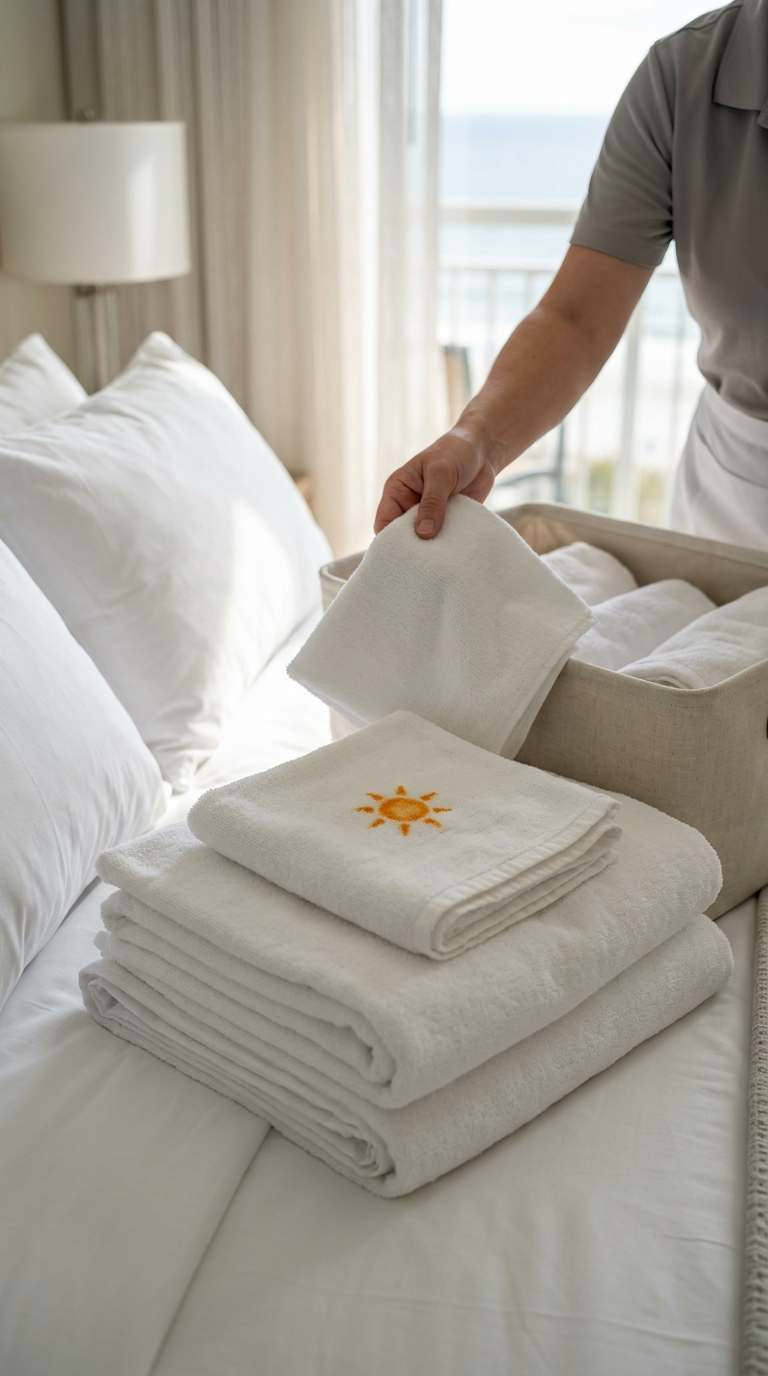
During the peak rental season along the Grand Strand, guests head straight from the beach to your rental's bathrooms and bedrooms, inevitably transferring layers of sunscreen to your sheets and towels. For property owners and managers, this often leads to a frustrating mystery: white linens developing stubborn, bright orange patches after being washed. Understanding the coastal water chemistry behind these stains is the key to saving your linen inventory from early retirement.
The Chemical Reaction Behind the Rust-Like Stains
Many property hosts assume that the orange discoloration on their white towels and sheets is mud, rust, or makeup. In reality, it is a chemical reaction triggered by avobenzone, a common active ingredient found in most chemical sunscreens. Avobenzone is an oil-soluble ingredient designed to absorb ultraviolet light, but it binds easily to synthetic and natural fibers alike.
When linens coated with sunscreen residue are washed in our local Myrtle Beach water, the avobenzone reacts with the iron and mineral content present in the water supply. This interaction acts exactly like a rust stain, oxidizing and binding to the fabric. If you add traditional chlorine bleach to the wash cycle hoping to whiten the sheets, the chlorine actually accelerates this oxidation, setting the orange or pinkish-yellow stain permanently into the cotton fibers.
Step-by-Step Pre-Treatment for Sunscreen Residue
To salvage your linens, you must treat the sunscreen residue before it goes through a standard wash and dry cycle. Once a stained sheet has been dried in a commercial dryer, the heat sets the chemical bond, making the stain nearly impossible to remove. Train your cleaning staff to inspect sheets and pillowcases under bright light during the strip-out process.
The first step in treating these marks is breaking down the oils in the sunscreen. Use a concentrated liquid dish soap or an enzyme-based laundry pre-treater directly on the dry, stained areas. Work the soap into the fibers with a soft-bristled brush and let it sit for at least fifteen minutes to loosen the synthetic oils.
- Inspect all sheets and towels for faint yellow patches before they enter the washing machine.
- Apply a grease-cutting liquid soap directly to the affected areas to break down the sunscreen oils.
- Gently work the pre-treatment into the cotton fibers using a soft laundry brush.
- Avoid using chlorine bleach on any linen suspected of carrying sunscreen residue.
Washing Strategies to Neutralize Coastal Water Minerals
Because the orange stain is essentially a form of rust, you must treat it with products designed to target mineral buildup. After pre-treating the oils, wash the linens in warm water using a heavy-duty laundry detergent combined with an oxygen-based bleach rather than chlorine bleach. Oxygen bleach breaks down organic compounds without causing the oxidizing reaction that turns avobenzone bright orange.
For severe staining, use a commercial rust remover or a laundry booster containing sodium hydrosulfite. These products neutralize the iron in the Grand Strand municipal and well water, preventing the minerals from bonding with the sunscreen chemicals. Always run a comprehensive rinse cycle to ensure all chemical residues are completely flushed from the linen fibers before transferring them to the dryer.
Proactive Guest Rules and Prevention Strategies
While you cannot control what your guests wear to the beach, you can influence how they treat your premium white linens. Implementing a few strategic changes to your property's amenities can drastically reduce the volume of stained sheets and towels your laundry team has to process each week.
Provide dedicated, dark-colored beach towels and place them in a highly visible basket near the main exit. Additionally, stock your bathrooms with dark makeup-remover washcloths clearly embroidered with text indicating their purpose. Guests are much less likely to wipe sunscreen or makeup off on your pristine white bath sheets when they have a soft, dark alternative readily available.
- Provide high-quality, dark-colored beach towels to discourage guests from taking white bath towels to the shoreline.
- Place clear, polite signage in the bathrooms reminding guests to use designated dark cloths for makeup and sunscreen removal.
- Keep a rotating inventory of linen sets so stained items can be held back for proper treatment without delaying turnover times.
Key takeaway
Managing sunscreen stains is a constant challenge for Grand Strand hosts, but with the right chemical approach, you can protect your linen investment. For professional turnarounds, commercial-grade laundry treatment, and reliable linen management, contact A2Z Cleaning & Linen Services at 843.800.2788.
Related services
Keep Reading
Linens & Laundry
The Coastal Duvet Insert and Protector Sanitation Protocol: Managing Body-Oil Yellowing, Sand-Grit Intrusion, and Mildew Spores in Grand Strand Vacation Rentals
ReadLinens & Laundry
The DHA and Bronzer Extraction Protocol: Salvaging Self-Tanner Stained Linens in Grand Strand Vacation Rentals
ReadLinens & Laundry
The Sunscreen Avobenzone and Chlorine Stain Extraction Protocol: Mitigating Iron-Reaction Pink Spots and Bleach-Lock Damage in Grand Strand Rental Towels
ReadReady for a spotless property?
Call 843.800.2788 or request a free quote from A2Z Cleaning & Linen Services.