Commercial & Hospitality
The Technical Interview Blueprint: Vetting, Hiring, and Retaining High-Performance Commercial Cleaning Teams in Myrtle Beach
Learn how to structure technical interviews, assess chemical literacy, and implement local retention strategies to build a reliable commercial cleaning team along the Grand Strand.
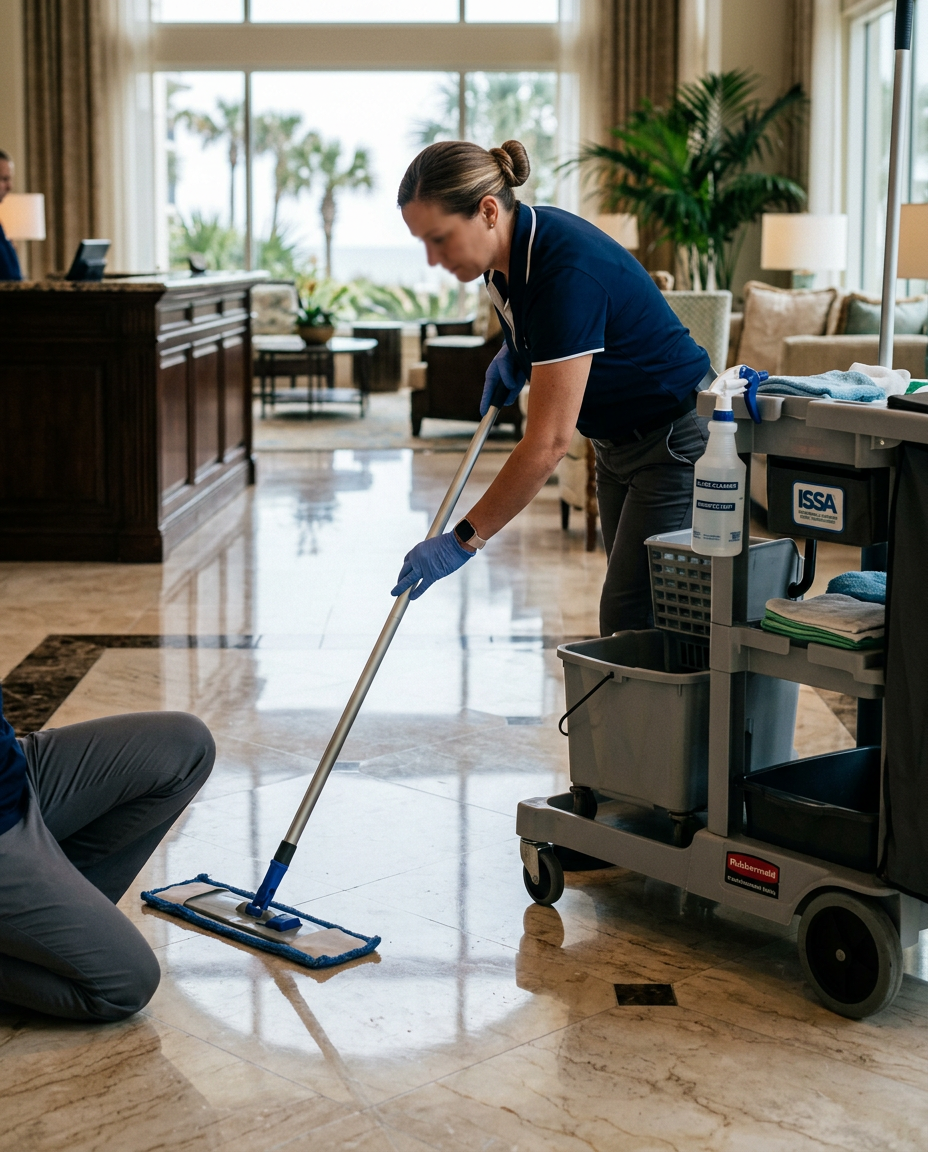
In the highly seasonal Grand Strand economy, finding reliable commercial cleaning talent requires moving past generic interview questions. Our local market is flooded with transient workers who view cleaning as a temporary summer gig, making year-round stability a major challenge. Building a resilient commercial team means identifying career-minded W-2 professionals who understand the unique demands of heavy foot-traffic facilities, retail hubs, and high-occupancy resorts along Ocean Boulevard and Highway 17.
Beyond the Standard Interview: Vetting for Coastal Technical Competence
In our coastal market, vetting commercial cleaning candidates must go far beyond checking references and asking if they mind physical labor. Hiring managers must actively assess whether an applicant understands commercial pacing, commercial-grade machinery, and the technical differences between residential dusting and high-volume commercial sanitization. Residential experience is a useful foundation, but commercial environments require a level of endurance, systematic routing, and strict adherence to facility security protocols that residential jobs rarely demand.
When interviewing, probe their experience with high-square-footage facilities and their ability to work independently under tight nighttime windows. A qualified candidate should be able to describe how they prioritize tasks when cleaning a large office building or a retail storefront, demonstrating an understanding of flow, zone cleaning, and time-allocation strategies. Vetting for this structured mindset early in the interview process ensures you hire professionals who require minimal oversight once deployed.
Furthermore, coastal commercial cleaners must possess high situational awareness to protect client facilities. They are often the eyes and ears of a building during off-hours, meaning they must be able to spot and report issues like leaking HVAC lines, compromised window seals, or early signs of pest intrusion. Vetting for this proactive, asset-protection mindset ensures your cleaning crew delivers value far beyond standard surface cleaning, helping local property managers protect their physical investments from the humid coastal elements.
The Safety and Literacy Assessment: Evaluating SDS and Chemical Dilution Skills
Safety Data Sheet (SDS) literacy and chemical safety are non-negotiable in commercial environments. Hiring managers must determine if a candidate understands the functional differences between cleaning, sanitizing, and disinfecting, along with the precise contact times required for various EPA-registered sanitizers. In a commercial setting, improper chemical application can permanently ruin expensive stone flooring, damage stainless steel fixtures, or pose major respiratory hazards to building occupants.
During the interview, hand the candidate a standard SDS for a common commercial disinfectant and ask them to locate the personal protective equipment (PPE) requirements and first-aid measures. This practical test immediately screens out candidates who present a high liability risk. A professional cleaner should also demonstrate a solid grasp of chemical dilution ratios, explaining how to mix concentrates safely using automated dispensing systems or manual measuring tools without relying on dangerous guesswork.
In the Grand Strand, where humidity accelerates microbial growth, technicians must also understand how to use mold and mildew inhibitors safely. This means knowing how to apply products without creating toxic vapor buildup in enclosed oceanfront spaces. Testing a candidate’s understanding of chemical compatibility—such as the lethal danger of mixing bleach with ammonia-based cleaners—is a critical safety step that protects your staff, your clients, and your brand's reputation.
Core Certifications to Look For (Or Build In-House)
While hands-on experience is invaluable, formal industry certifications indicate a true commitment to the cleaning profession. When hiring for commercial accounts, prioritize candidates who hold credentials from recognized bodies or show an eagerness to earn them. These certifications verify that the technician understands the scientific principles of cleaning, including soil types, fiber identification, and cross-contamination prevention.
Additionally, OSHA 10-Hour General Industry training is highly desirable for commercial cleaners working in industrial, medical, or educational facilities along the Grand Strand. This training ensures the technician is well-versed in slip-and-fall prevention, ladder safety, bloodborne pathogen protocols, and electrical safety when operating heavy machinery. Investing in candidates with these credentials—or providing a clear pathway to earn them—raises the professional baseline of your entire service team.
Local employers should establish an in-house training program modeled after national standards to build a highly skilled workforce. By aligning your onboarding curriculum with industry-recognized standards, you create a structured career path that attracts high-caliber workers. This educational approach transforms a simple labor job into a technical career, which naturally reduces turnover and improves overall service quality for commercial clients.
- IICRC (Institute of Inspection, Cleaning and Restoration Certification): Essential for advanced floor care and water damage awareness.
- GBAC (Global Biorisk Advisory Council) Trained Technician: Validates expertise in infectious disease prep and response.
- OSHA 10-Hour General Industry Certification: Focuses on workplace safety, hazard communication, and PPE usage.
- ISSA CMI (Cleaning Management Institute) Certified Custodial Technician: Covers basic and advanced cleaning chemistry and equipment operation.
Practical Skills Auditing: The Working Interview Protocol
Resume reviews and verbal interviews only tell half the story; a working interview is the most effective way to evaluate a cleaner’s actual skill level. This protocol involves bringing the candidate into a controlled environment, such as a training room or an office, and asking them to perform specific tasks. It is essential to fully compensate candidates for their time during these working audits to comply with federal and South Carolina labor laws.
During the practical audit, observe their systematic approach to cleaning a space. Do they work from top to bottom and left to right to avoid re-contaminating clean surfaces? How do they handle high-touch points like light switches, door handles, and phone keypads? Watch their attention to detail; a true professional will notice dust on baseboards and fingerprint smudges on glass entryways without needing to be prompted.
This audit also reveals their physical stamina and understanding of body mechanics. Commercial cleaning is physically demanding, requiring repetitive bending, lifting, and pushing. Watching how a candidate paces themselves and utilizes ergonomic techniques—such as maintaining a straight spine while vacuuming or using the correct mop posture—helps predict their long-term viability and reduces the risk of future workplace injuries.
The Myrtle Beach Compensation Reality: W-2 Infrastructure vs. 1099 Shortcuts
The Grand Strand’s cleaning labor market is historically volatile, with many local operators relying on independent contractors (1099 workers) to cut costs. However, this model introduces massive liability and quality control risks for commercial properties. Building a reliable, high-performance team requires a committed W-2 employment structure. Under W-2 employment, you can legally direct training, set strict schedules, mandate specific cleaning protocols, and enforce uniform standards.
To attract top-tier talent in Horry and Georgetown counties, employers must offer competitive compensation packages that look beyond basic hourly wages. While the local entry-level rate fluctuates, offering a clear path to higher wages based on certifications and performance is key. Providing benefits like paid time off, healthcare stipends, and year-round guaranteed hours—even during the winter tourism drop—creates a loyal workforce that resists seasonal poaching.
Investing in W-2 employees also builds deep trust with your commercial clients. Clients do not want a rotating door of unvetted, sub-contracted strangers accessing their secure offices, medical facilities, or retail spaces after hours. By hiring background-checked, insured, and properly compensated W-2 professionals, you provide peace of mind and consistent cleaning quality, which translates directly to long-term contract retention.
Structured Interview Questions for Commercial Cleaning Candidates
To uncover a candidate’s true problem-solving abilities and professional ethics, hiring managers should utilize structured, situational interview questions. Move away from generic prompts like 'Do you mind hard work?' and instead ask targeted questions about real-world scenarios. For example, ask: 'Describe a time when you arrived at a commercial site and found an unexpected biohazard, such as bodily fluids or chemical spills. What steps did you take to manage it safely?'
Another excellent situational question is: 'If your commercial floor buffer or backpack vacuum malfunctions halfway through your shift at an office park, what is your immediate course of action?' This question tests their resourcefulness, equipment troubleshooting skills, and communication habits. A professional cleaner will explain their process for securing backup equipment and notifying supervisors, rather than simply skipping the task.
Additionally, ask questions that evaluate their attention to detail under pressure: 'How do you ensure consistent quality when you are assigned to a large facility with a very tight cleaning window?' Listen for answers that mention systematic routing, checklists, and prioritizing high-traffic zones. Their responses will quickly differentiate between experienced commercial technicians and applicants who underestimate the complexity of professional cleaning.
- How do you determine the correct dilution ratio when mixing a concentrated disinfectant for a public restroom?
- Can you walk me through the steps you take to prevent cross-contamination between a restroom and an office breakroom?
- What is your protocol for securing a commercial building after completing a late-night cleaning shift?
- Describe a time when you noticed a maintenance issue (like a water leak or broken lock) while cleaning. How did you document and report it?
Overcoming the Off-Season Slump: Retention Strategies for Year-Round Teams
The seasonal drop-off in tourism along the Grand Strand presents a major hurdle for retaining skilled commercial cleaners. Many hospitality cleaning companies lay off staff in November, only to struggle to find reliable workers when demand spikes in spring. To build a stable, year-round commercial team, you must diversify your client portfolio to include institutions that require consistent, year-round maintenance, such as medical offices, banks, and corporate headquarters.
During the slower winter months, shift your team's focus to deep-cleaning projects that are difficult to execute during peak seasons. This includes commercial carpet hot-water extraction, tile and grout restoration, high-ceiling dusting, and window washing. Booking these specialty services during the off-season keeps your W-2 staff fully employed while delivering exceptional value to property managers who want to refresh their spaces.
Cross-training your staff is another powerful tool for off-season retention. Ensure that every member of your commercial team is certified in multiple disciplines, such as hard-floor care, commercial laundry operations, and post-construction cleaning. This flexibility allows you to reallocate labor dynamically as local economic demands shift, keeping your core team fully employed, financially secure, and loyal to your company.
The Equipment and Ergonomics Check: Vetting for Professionalism and Physical Safety
A candidate’s familiarity with professional-grade equipment and basic ergonomic principles is a strong indicator of their industry experience. During the interview process, take the candidate to your equipment room and ask them to perform a pre-use inspection on a commercial backpack vacuum or an automatic floor scrubber. A seasoned professional will automatically check the cord for fraying, inspect the filters, and ensure the recovery tank is clean.
Understanding ergonomics is also vital for preventing injury and maintaining a high pace of work. Observe how the candidate handles heavy tools. Do they use their leg muscles instead of their back when lifting commercial mop buckets? Do they adjust the harness on a backpack vacuum to distribute the weight across their hips? Vetting for these safe physical habits protects your workers from chronic strain and keeps your team operating at peak efficiency.
Finally, ask candidates about their experience with specialized machinery, such as carpet extractors, high-speed burnishers, and electrostatic sprayers. Understanding how to operate, clean, and store these expensive tools is a key indicator of professional-grade competence. Hiring individuals who respect and maintain their equipment ensures your operational costs remain low, your machines last longer, and your service delivery remains exceptionally high.
Key takeaway
Building a reliable, professional commercial cleaning team in Myrtle Beach requires moving beyond casual hiring practices to implement structured technical vetting, safety literacy testing, and W-2 employment stability. By investing in certifications, structured onboarding, and year-round compensation models, you protect your commercial property and ensure consistent, high-standard care. For professional commercial cleaning services backed by a highly trained, certified team, contact A2Z Cleaning & Linen Services at 843.800.2788.
Keep Reading
Commercial & Hospitality
The Grand Strand Commercial Disinfection Specialist Career Pathway: Class-A Office Standards, Biohazard Mitigation Certifications, and Local Retention Models
ReadCommercial & Hospitality
The ISSA CIMS-GB Commercial Custodial Standard: Transitioning Grand Strand Facilities to High-Performance, Low-Emission Sustainable Cleaning Systems
ReadCommercial & Hospitality
The OSHA Bloodborne Pathogen Standard for Coastal Hospitality and Commercial Facilities: Implementing Exposure Control Plans, EPA List Q Disinfectants, and Post-Incident Workflows in Myrtle Beach
ReadReady for a spotless property?
Call 843.800.2788 or request a free quote from A2Z Cleaning & Linen Services.