Commercial & Hospitality
Implementing ISSA CIMS-GB Standards in High-Volume Coastal Operations: Dilution Control, Green Chemistry, and OSHA HazCom Compliance
Discover how national cleaning industry standards like ISSA CIMS-GB, closed-loop dilution control, and OSHA HazCom compliance elevate safety and quality in Myrtle Beach commercial properties.
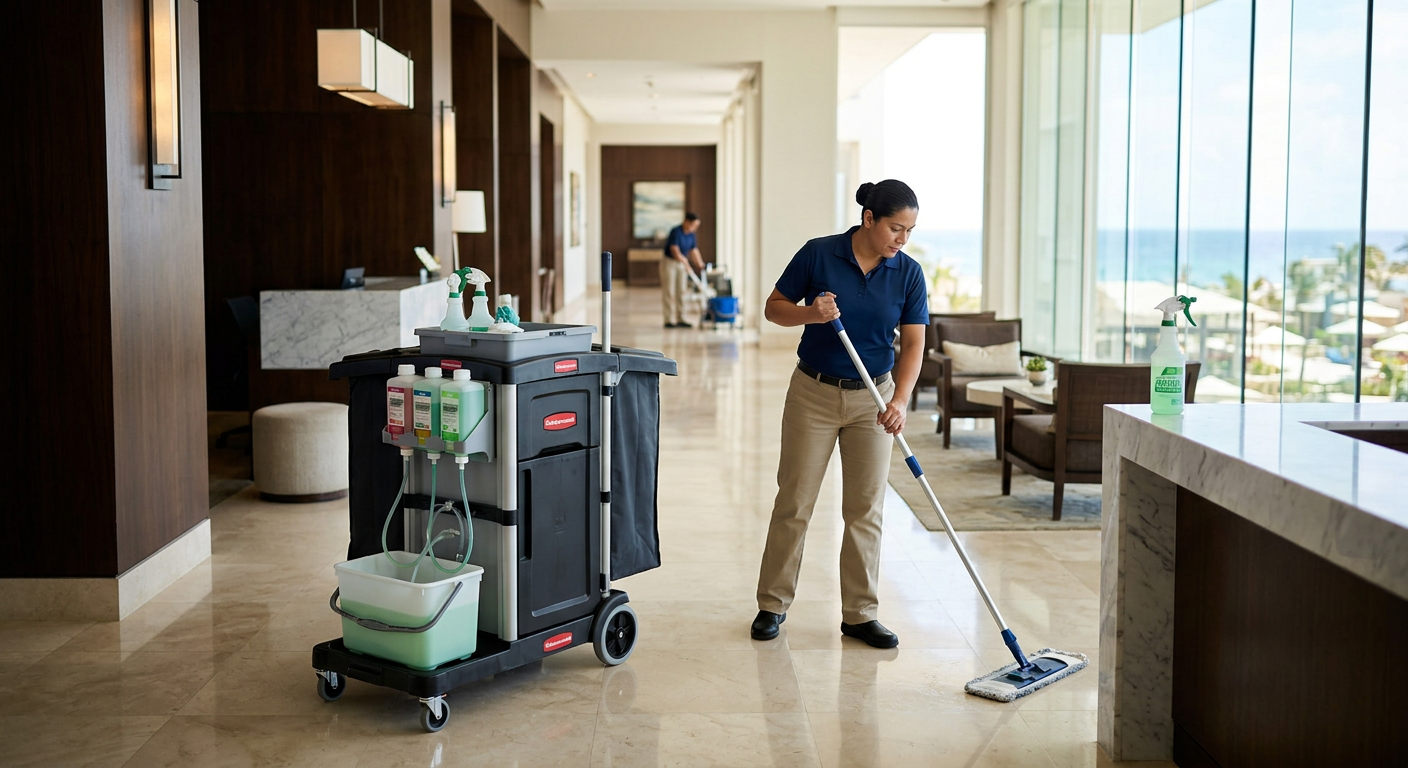
In the high-stakes hospitality and commercial sectors of Myrtle Beach, maintaining cleaning quality requires more than just hard work. Leading national operators rely on rigorous frameworks established by the International Sanitary Supply Association (ISSA) to guarantee safety, consistency, and environmental responsibility. By integrating these professional standards into local operations, property managers and commercial clients can protect their assets, staff, and guests. Understanding the science of clean—from automated dilution control systems to OSHA Hazard Communication standards—is essential for any world-class facility program along the Grand Strand.
The National Standard: Understanding ISSA CIMS-GB for Grand Strand Facilities
The Cleaning Industry Management Standard for Green Buildings, or ISSA CIMS-GB, represents the absolute pinnacle of operational excellence in the environmental services sector. Rather than simply evaluating how a single room looks, CIMS-GB audits the entire management framework of a cleaning organization. It focuses on six core areas: quality systems, service delivery, human resources, health and safety, environmental stewardship, and management commitment. For Grand Strand commercial properties and high-density resorts, partnering with an operator that adheres to these rigorous benchmarks elevates cleaning from a subjective chore to a highly systematic, repeatable engineering process.
Operational scaling is the greatest challenge faced by coastal property managers during the peak summer tourist rush. Without structured systems, the sudden influx of high occupancy leads to rapid service degradation, missed cleanings, and safety shortcuts. Implementing CIMS-GB standards ensures that documented Standard Operating Procedures (SOPs) govern every task, from room disinfection to waste diversion. This procedural consistency ensures that even when cleaning crews are operating at maximum capacity, the safety protocols, chemical applications, and quality checks remain completely uncompromised.
The environmental stewardship aspect of CIMS-GB is particularly critical for coastal ecosystems. The standard mandates structured policies for green cleaning, waste reduction, and indoor air quality (IAQ) management. By aligning local cleaning operations with these national guidelines, commercial properties along the Grand Strand can actively reduce their ecological footprint. This disciplined approach safeguards our sensitive local waterways while providing a healthier, chemical-residue-free indoor environment for visitors and local employees alike.
- Quality Systems: Standardized inspection rubrics and corrective action policies.
- Service Delivery: Clear, written service level agreements and customer feedback systems.
- Human Resources: Standardized hiring, vetting, and performance tracking.
- Health, Safety, & Environment: Comprehensive regulatory compliance and hazard reduction.
- Green Building: Strict criteria for sustainable cleaning products and resource conservation.
Closed-Loop Dilution Control: Mitigating Chemical Waste and Staff Exposure
Leading national operators have long abandoned the outdated practice of free-pouring chemical concentrates, often referred to as the 'glug-glug' method. Instead, professional environmental services rely on closed-loop dilution control systems. These systems utilize sealed, concentrated chemical cartridges that lock securely into a wall-mounted or portable dispensing unit. The dispenser automatically mixes water and chemical concentrate to the precise ratio specified by the manufacturer, completely eliminating human error and ensuring the chemical performs exactly as engineered.
Manual mixing of cleaning chemicals carries significant financial and operational risks. When staff over-concentrate solutions, they leave behind sticky chemical residues on luxury vinyl plank (LVP), tile, and stone floors. These residues act like magnets for fine beach sand and organic soil, causing surfaces to re-soil rapidly and look dirty shortly after cleaning. Conversely, under-diluted solutions fail to reach the necessary parts-per-million concentration of active ingredients, leaving surfaces improperly sanitized and exposing guests to cross-contamination hazards.
From a risk management perspective, closed-loop systems are a critical tool for workplace safety. Raw chemical concentrates are highly corrosive and can cause severe chemical burns to the skin and permanent eye damage upon contact. By sealing concentrates in tamper-proof containers that only dispense inside the enclosed unit, operators eliminate the risk of chemical splashes and inhalation of concentrated fumes. This protects the health of the frontline workforce and dramatically reduces workers' compensation liability for the property owner.
Green Chemistry and Coastal Wastewater Systems
The delicate marine environments of the Grand Strand, from our saltwater marshes to the Atlantic Ocean, require careful chemical management. National cleaning industry trends show a decisive shift toward third-party certified green chemistry. Products carrying certifications from Green Seal, UL Ecologo, or the US EPA Safer Choice program are verified to be readily biodegradable, low in volatile organic compounds (VOCs), and completely free of known carcinogens, reproductive toxins, or heavy metals.
The magic of green chemistry lies in surfactant design. Traditional cleaning chemicals often rely on alkylphenol ethoxylates (APEs), which do not break down easily and are highly toxic to aquatic life. Modern green formulas replace these persistent compounds with bio-based surfactants derived from natural, renewable resources like coconut, corn, and soy. These bio-surfactants break down rapidly in municipal wastewater treatment systems, preventing harmful chemical accumulation in our local marine habitats and preserving our coastal water quality.
Beyond outdoor ecological protection, green chemistry directly improves the indoor air quality of confined beachfront condos and commercial office buildings. High-VOC products release harmful gases that linger in the indoor air long after the cleaning team has departed, which can trigger asthma, respiratory irritation, and headaches. By switching to certified low-emission green products, commercial operators ensure that arriving guests and building occupants enjoy a truly clean environment free of harsh, artificial chemical odors.
Ergonomics and Equipment Engineering in High-Volume Hospitality
National labor statistics highlight a high rate of musculoskeletal injuries among professional cleaning staff due to repetitive motions, heavy lifting, and awkward postures. To combat this issue, progressive cleaning companies invest in ergonomically engineered equipment. These tools are designed to reduce physical strain, minimize fatigue, and increase operational productivity. In high-volume markets where workers clean multiple properties a day, ergonomic tools are essential for maintaining a healthy, stable workforce.
Upgrading from traditional upright vacuums to lightweight, commercial backpack vacuums is a prime example of ergonomic engineering. Backpack vacuums utilize supportive, weight-distributing waist harnesses that transfer the unit's weight to the operator's hips, reducing lower back strain by over 50 percent. Furthermore, studies show that backpack vacuums clean up to two and a half times faster than traditional upright models, allowing staff to work more efficiently without overexerting their bodies.
Similarly, transitioning from heavy cotton string mops and wringer buckets to lightweight microfiber flat-mop systems protects workers from repetitive twisting injuries. Microfiber flat-mops require significantly less water to operate, reducing the physical effort needed to push and pull the mop across large floor surfaces. The telescoping handles of modern flat mops allow workers of different heights to maintain an upright, neutral posture, protecting their shoulders and back during intensive floor cleaning tasks.
The Science of Microfiber and Cross-Contamination Prevention
Microfiber is not just a cleaning cloth; it is an engineered textile designed for high-performance infection control. Traditional cotton fibers are round and push dirt and moisture around a surface. In contrast, high-quality polyester and polyamide microfiber strands are split to be 100 times thinner than a human hair. These split fibers create millions of microscopic hooks and channels that physically grab, trap, and hold onto fine sand, grease, and over 99 percent of bacteria from surfaces.
To maximize the sanitizing power of microfiber, professional operators implement a strict, color-coded cross-contamination prevention protocol. This system assigns specific cloth and mop colors to dedicated areas of a building. For example, red microfiber is strictly reserved for high-risk sanitary fixtures like toilets and urinals, blue is used for low-risk glass and dusting, and green is designated for kitchen and food-preparation areas. This visual control system ensures that biological contaminants are never transferred from a bathroom to a kitchen counter.
The laundering of microfiber also requires precise, industrial wash formulas to preserve its structural integrity. Microfiber must be washed separately from cotton to prevent cotton lint from clogging the split fibers. Additionally, high heat and fabric softeners must be avoided, as heat melts the delicate synthetic fibers and fabric softeners coat the microscopic hooks, rendering the cloth ineffective. Adhering to these national laundry standards ensures that microfiber tools maintain their electrostatic charge and soil-trapping capabilities for hundreds of washes.
- Red Microfiber: Reserved exclusively for high-risk restroom fixtures and toilets.
- Yellow Microfiber: Used for low-risk restroom surfaces like sinks, tile, and chrome.
- Green Microfiber: Dedicated to kitchen counters, dining areas, and food-prep surfaces.
- Blue Microfiber: Utilized for general dusting, glass cleaning, and common area surfaces.
- Dedicated Laundering: Separated from cotton and washed without fabric softeners.
Quality Assurance Technology: Auditing and Real-Time KPI Tracking
Subjective quality assessments—where a supervisor walks a property and pronounces it 'looks clean'—are no longer acceptable in professional facility management. Modern industry leaders utilize sophisticated digital auditing software to perform structured, objective quality assurance inspections. These mobile platforms guide supervisors through customized, room-specific checklists, requiring time-stamped, geotagged photographs of critical inspection points, high-touch areas, and floor-to-ceiling details.
Digital inspection systems convert qualitative observations into quantitative Key Performance Indicators (KPIs). If a specific cleaning team or facility consistently scores below established thresholds in a particular category, such as carpet extraction or dust mitigation, the system flags the issue and automatically schedules targeted retraining. This data-driven feedback loop prevents quality drift and ensures that cleaning standards remain consistently high throughout the year, regardless of seasonal staffing fluctuations.
For commercial and hospitality clients, these digital auditing systems provide absolute transparency. Property managers receive comprehensive, automated cleaning reports complete with high-resolution photos immediately upon project completion. This level of verification builds deep trust, eliminates the need for property managers to conduct physical double-checks, and provides solid, objective evidence of cleanliness that can be used to resolve any potential guest disputes or compliance audits.
Supply Chain Resilience: Strategic Sourcing for Peak Tourist Seasons
The seasonal nature of the Grand Strand commercial market places extreme stress on regional supply chains. During the height of the summer season, localized shortages of trash liners, paper products, and hand sanitizers are common. National industry leaders avoid these disruptive shortages by moving away from retail sourcing and establishing direct, contracted partnerships with national commercial distributors who guarantee priority inventory allocation.
Establishing rigorous inventory benchmarks is key to supply chain resilience. Professional operators utilize a '3-par' inventory model for high-occupancy commercial facilities. This means maintaining one par of supplies in immediate use, one par in on-site storage as a backup, and a third par in a centralized distribution hub. This inventory buffer mitigates the impact of localized delivery delays caused by peak-season traffic, holiday weekends, or coastal weather events, ensuring that facilities never run out of critical sanitation supplies.
Standardizing products through a single manufacturer line also streamlines the supply chain and enhances operational efficiency. When cleaning teams use the same dispensers, chemicals, and paper products across an entire commercial portfolio, purchasing power is maximized and inventory tracking is simplified. It also reduces staff training time, as employees do not have to learn how to operate multiple different dispenser styles or adjust to varying chemical concentrations across different job sites.
Key takeaway
Implementing national ISSA CIMS-GB and OSHA safety standards transforms commercial cleaning from an unpredictable chore into a precise, reliable science. By investing in automated dilution control, green chemistry, and digital quality auditing, local properties can achieve unmatched levels of safety, environmental responsibility, and guest satisfaction. To partner with an organization that brings these world-class operational standards to the Grand Strand, contact A2Z Cleaning & Linen Services at 843.800.2788.
Keep Reading
Commercial & Hospitality
The OSHA Bloodborne Pathogen Standard for Coastal Hospitality and Commercial Facilities: Implementing Exposure Control Plans, EPA List Q Disinfectants, and Post-Incident Workflows in Myrtle Beach
ReadCommercial & Hospitality
The National Color-Coded Zone Cleaning Standard: Cross-Contamination Mitigation and Microfiber Chemistry in Myrtle Beach Commercial Facilities
ReadCommercial & Hospitality
The Science of Floor Safety: ANSI Standards and Slip Prevention in Coastal Commercial Facilities
ReadReady for a spotless property?
Call 843.800.2788 or request a free quote from A2Z Cleaning & Linen Services.