Coastal Living
Sanitizing Coastal Soft Surfaces: Child-Safe Pet Bed, Toy, and Play Area Maintenance in High-Humidity Myrtle Beach Homes
Protect your family from coastal allergens and mold with our child-safe, pet-friendly guide to sanitizing soft surfaces in humid Grand Strand homes.
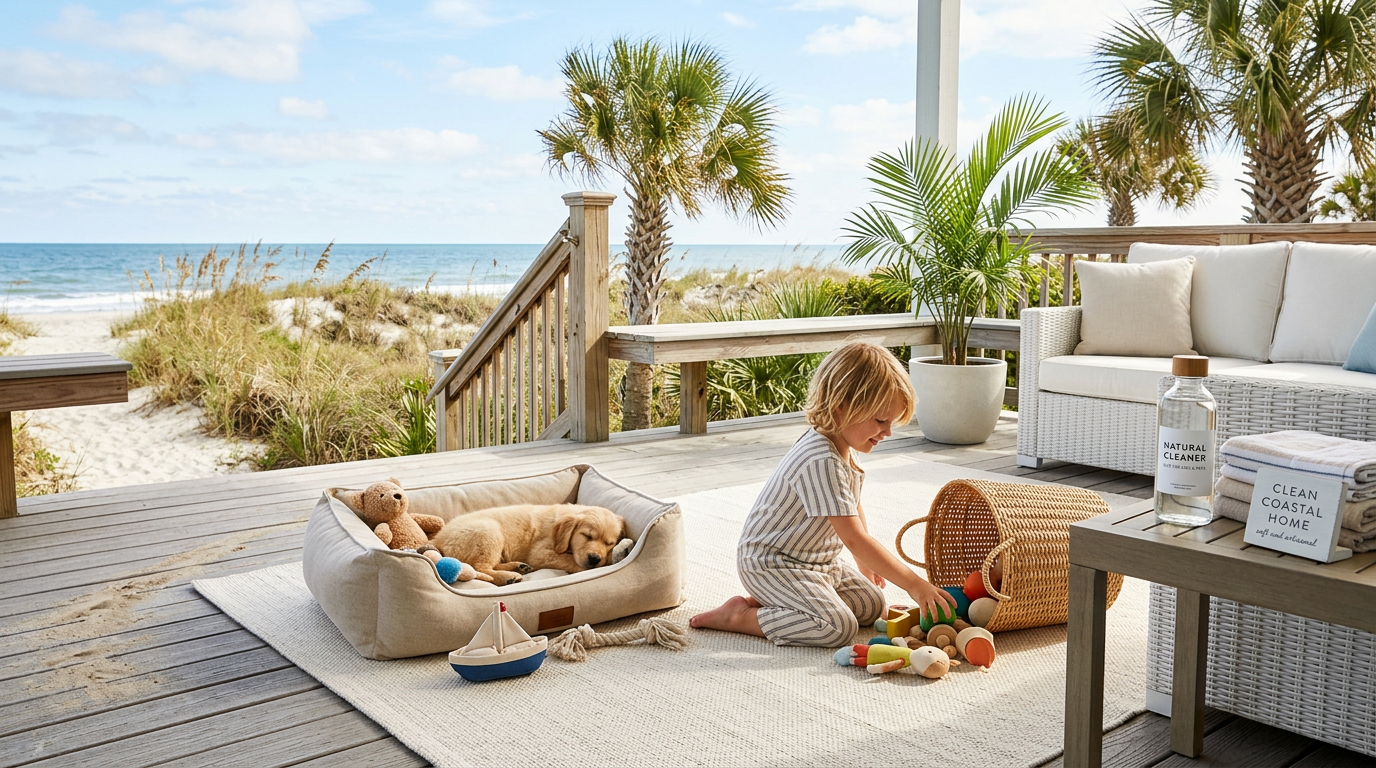
In coastal South Carolina, our homes face a constant environmental challenge that inland residences rarely encounter. High relative humidity combined with active kids, sandy pets, and soft fabrics creates a perfect storm for mold, dander, and deep-seated odors. Managing these soft surfaces requires a specialized, family-safe approach to ensure our living spaces remain clean and healthy. At A2Z Cleaning & Linen Services, we understand how to protect your loved ones from hidden allergens without introducing harsh chemical residues into your home.
The Soft Surface Humidity Trap along the Grand Strand
Unlike inland communities where dry air easily evaporates moisture, the Grand Strand's coastal environment presents unique indoor air challenges. Relative humidity levels in our region regularly exceed 70 percent during the summer months, putting constant pressure on home climate control systems. Inside coastal homes, soft, porous surfaces like pet beds, plush toys, and fabric play mats act as environmental sponges, absorbing ambient moisture directly from the air. When this moisture combines with organic residues like pet dander, child sweat, and saliva, these items quickly become micro-environments where odor-causing bacteria and mold spores thrive.
The physics of soft fabrics make them highly vulnerable to mold colonization compared to hard flooring or plastic toys. Microscopic fibers trap moisture deep within their weave, drastically slowing down natural drying times and preventing airflow. If a plush toy or a thick pet bed insert remains damp for more than 24 hours, mildew begins to establish itself within the stuffing. For young children with developing respiratory systems or pets with sensitive skin, this hidden dampness creates a constant source of allergens and dermal irritation.
The salt-rich air of the Myrtle Beach area further compounds this moisture retention cycle. Salt is naturally hygroscopic, meaning it attracts and holds water molecules from the surrounding atmosphere. When kids and pets return from a day at the beach, they carry microscopic salt particles on their skin, fur, and clothing. These salt residues transfer directly to soft surfaces in your living room and bedrooms, locking in humidity and preventing the fabrics from ever truly drying out without intervention.
The Physics of Coastal Bio-Decomposition in Pet Bedding
Pet beds are designed for comfort, often utilizing dense foam, poly-fill, or shredded memory foam to support your animal's joints. However, these dense materials are excellent insulators of both body heat and moisture, trapping warmth and humidity beneath your sleeping pet. When a dog or cat sleeps, they release body oils, dander, and breath moisture directly into the bedding core. In our humid coastal climate, this creates a warm, sealed environment that accelerates the natural decomposition of organic matter.
The characteristic 'sour pet bed' smell is not just a minor cosmetic nuisance; it is the volatile organic compounds produced by bacteria and fungi digesting trapped body oils. Regular washing of only the outer fabric cover is usually insufficient to resolve this issue. The inner foam core acts as a reservoir, retaining biological contaminants and moisture that migrate back to the surface once a clean cover is replaced. This cycle keeps the odor active and allows mold to colonize the center of the bed.
For households with young children who play on the floor, contaminated pet beds present a real environmental hazard. Children frequently come into direct contact with these beds during play, exposing them to dust mites and mold spores that easily become airborne when compressed. To break this cycle, homeowners must address the inner core of pet bedding using sanitizing methods that do not compromise the safety of vulnerable family members.
Child-Safe Sanitizing Agents vs. Harsh Coastal Remediation
When faced with stubborn musty odors, many homeowners instinctively reach for heavy-duty chemical disinfectants, chlorine bleach, or aerosolized fabric fresheners. However, these products often contain volatile organic compounds, synthetic fragrances, and harsh residues like quaternary ammonium compounds. In a home with crawling toddlers and self-grooming pets, these chemical residues can cause skin contact dermatitis, respiratory flare-ups, and accidental chemical ingestion via hand-to-mouth contact.
Effective sanitization can be achieved using gentle, biodegradable agents that break down into completely harmless byproducts. Isopropyl alcohol at a 70 percent concentration is an excellent contact sanitizer that evaporates rapidly, leaving absolutely no chemical residue behind. Distilled white vinegar, though mildly acidic, helps break down alkaline mineral deposits from salt air and neutralizes organic odor molecules without introducing toxic synthetic fragrances into your living space.
For pet-specific odors and saliva stains, high-quality enzymatic cleaners are indispensable in a coastal household. These formulas use safe, beneficial bacteria or enzymes to physically digest the organic proteins, starches, and lipids that cause odors, rather than simply masking them with perfume. Because they break down the biological source of the smell, they prevent pets from repeatedly marking the same soft surfaces, helping to keep your indoor air fresh and clean.
- Isopropyl Alcohol (70%): Best for rapid sanitization of non-washable soft surfaces without leaving chemical residues.
- Distilled White Vinegar: Natural deodorizer and mild acid that neutralizes alkaline salts and breaks down mineral deposits.
- Enzymatic Cleaners: Specifically designed to digest organic proteins from saliva, pet dander, and food spills.
- Baking Soda: Safe dry deodorizer that absorbs moisture and neutralizes acidic odors before being vacuumed away.
A Step-by-Step Protocol for Washing Plush Toys and Soft Play Mats
Children's stuffed animals and soft fabric play mats are prone to heavy soil, drool, and outdoor dirt. Before washing, inspect these items carefully for loose seams, glued-on plastic parts, or hidden battery compartments. Brush away loose coastal sand and pet hair using a stiff upholstery brush. Spot-treat food spills or drool stains with a diluted solution of liquid Castile soap and warm water, letting it sit for ten minutes to lift the organic proteins from the fibers.
Place plush toys in mesh laundry bags to protect delicate seams and limbs from mechanical damage during the wash cycle. Wash these items on a gentle cycle using cold or warm water and a fragrance-free, hypoallergenic liquid detergent. To sanitize without relying on high heat, add a half-cup of distilled white vinegar to the fabric softener dispenser. This helps strip away soap scum, salt residues, and lingering odor molecules while keeping the fabrics soft for close child contact.
Drying is the most critical step in our humid Grand Strand environment to prevent mold growth. Tumble dry on a low-heat setting with clean tennis balls or wool dryer balls to loft the stuffing and prevent damp clumps from forming. If air-drying is necessary, place the items in an air-conditioned room with high airflow from a ceiling fan or dehumidifier. Never leave damp plush toys outside to dry on humid days, as they will pull moisture from the air and mildew before drying.
- Step 1: Inspect items for battery compartments and brush away loose sand and pet hair.
- Step 2: Pre-treat visible organic stains with a mild, child-safe Castile soap solution.
- Step 3: Wash inside a mesh bag on a gentle cycle with fragrance-free detergent.
- Step 4: Add half a cup of white vinegar to the rinse cycle to neutralize salts and odors.
- Step 5: Dry completely on low heat with wool dryer balls to prevent internal clumping.
Managing Pet Bedding: Core Construction and Wash Cycles
Preventing odor and mold in pet bedding starts with choosing the right construction materials. Homeowners should look for pet beds featuring fully removable, machine-washable outer covers and waterproof inner liners that protect the internal foam core from moisture penetration. If the core is protected by a water-resistant barrier, it can simply be wiped down with a child-safe sanitizer while the outer cover is being laundered, preventing moisture accumulation.
Wash the outer cover in hot water (at least 130 degrees Fahrenheit) to kill dust mites and neutralize pet dander effectively. Use an unscented, plant-based detergent to prevent skin irritation in both your pets and your children who share the space. If the cover has a strong musty smell, add a half-cup of baking soda directly to the washing machine drum before starting the cycle, followed by a vinegar rinse to balance the pH of the fibers.
If the foam core of the pet bed becomes wet or soiled, it must be hand-washed in a bathtub with lukewarm water and a small amount of mild, baby-safe dish soap. Press down repeatedly on the foam to work the soapy water through the material, rinse thoroughly until the water runs completely clear, and squeeze out all excess moisture. Allow the core to dry completely in front of a dehumidifier or high-velocity fan before reassembling the bed.
Daily Maintenance Routines for Multi-Pet, Busy Family Homes
In a busy Grand Strand home, daily maintenance prevents organic matter from embedding deep within soft surfaces. Keep a dedicated rubber squeegee or a pet hair lifting tool near your main living areas. Running these tools over upholstery and dog beds takes less than two minutes but removes pet hair that standard vacuuming often misses, preventing the hair from breaking down and releasing oils into the fabric.
Controlling indoor humidity is your first line of defense against soft surface degradation. Keep your home's relative humidity below 50 percent using your air conditioning system or dedicated dehumidifiers. Run HEPA air purifiers in high-traffic family zones to capture airborne pet dander, mold spores, and sand dust before they have a chance to settle onto your soft furnishings, protecting your family's respiratory health.
Take advantage of dry, sunny days along the Grand Strand to naturally sanitize soft items. Ultraviolet rays from direct sunlight are highly effective at killing dust mites, bacteria, and mold spores. Placing pet beds, play cushions, and large plush toys outside in direct sunlight for two to three hours can eliminate stubborn musty odors without using any chemical agents, leaving them smelling fresh and clean.
Grand Strand Specialty Tips: Post-Beach Soft Surface Decontamination
Preventing beach residues from reaching your indoor soft surfaces is key to maintaining a clean home. Establish a strict transition zone at your primary entryway or garage. Use this space to thoroughly dry wet paws, brush out loose sand from pet coats, and strip off damp beachwear before anyone—human or canine—steps onto the living room rugs, couches, or play mats, keeping the sand and salt outside where they belong.
If a salt-covered towel or damp beach blanket accidentally spends the night on a fabric sofa, that spot will continue to feel damp because of the salt's moisture-attracting properties. Clean these areas immediately by misting them lightly with distilled water to dissolve the salt crystals, and extract the liquid with a clean, dry microfiber towel. Repeat this process until the fabric feels dry and clean to the touch.
When soft surfaces have been neglected or have absorbed years of coastal humidity and pet odors, a professional deep clean is necessary to restore a healthy baseline. The trained technicians at A2Z Cleaning & Linen Services can deeply extract embedded sand, dander, and oils from your home's soft surfaces using advanced, family-friendly techniques. Call us at 843.800.2788 to schedule a professional cleaning that keeps your home safe and fresh.
Key takeaway
Maintaining clean, safe soft surfaces in the humid Grand Strand climate requires consistent, moisture-conscious routines and non-toxic cleaning agents. By implementing child-safe sanitation protocols, you protect your family's health and prolong the life of your home's furnishings. For deep extraction of sand, dander, and persistent coastal odors, contact A2Z Cleaning & Linen Services at 843.800.2788.
Keep Reading
Coastal Living
The Coastal Window Treatment and Blackout Drapery Sanitization Protocol: Mitigating Humid Mold Spores, Pollen Reservoirs, and VOC-Free Allergen Release in Grand Strand Homes
ReadCoastal Living
The Coastal Dehumidifier and Condensate Drain Line Maintenance Protocol: Mitigating Bio-Sludge, Spore Reservoirs, and Indoor Air Quality Failures in Grand Strand Homes
ReadCoastal Living
The Coastal Family Hamper and Mudroom Laundry Loop: Mitigating Yeast, Sand-Wear, and Mildew in High-Humidity Grand Strand Homes
ReadReady for a spotless property?
Call 843.800.2788 or request a free quote from A2Z Cleaning & Linen Services.