Coastal Living
The Coastal Ceiling Fan Blade, Motor Housing, and Canopy Decontamination Protocol: Mitigating Humid Salt-Dust Cakes, Allergen Dispersion, and Safe Botanical Care in Grand Strand Homes
Discover how coastal humidity and salt-air transform ceiling fans into allergen engines, and learn our plant-based decontamination protocol to protect your home's air quality.
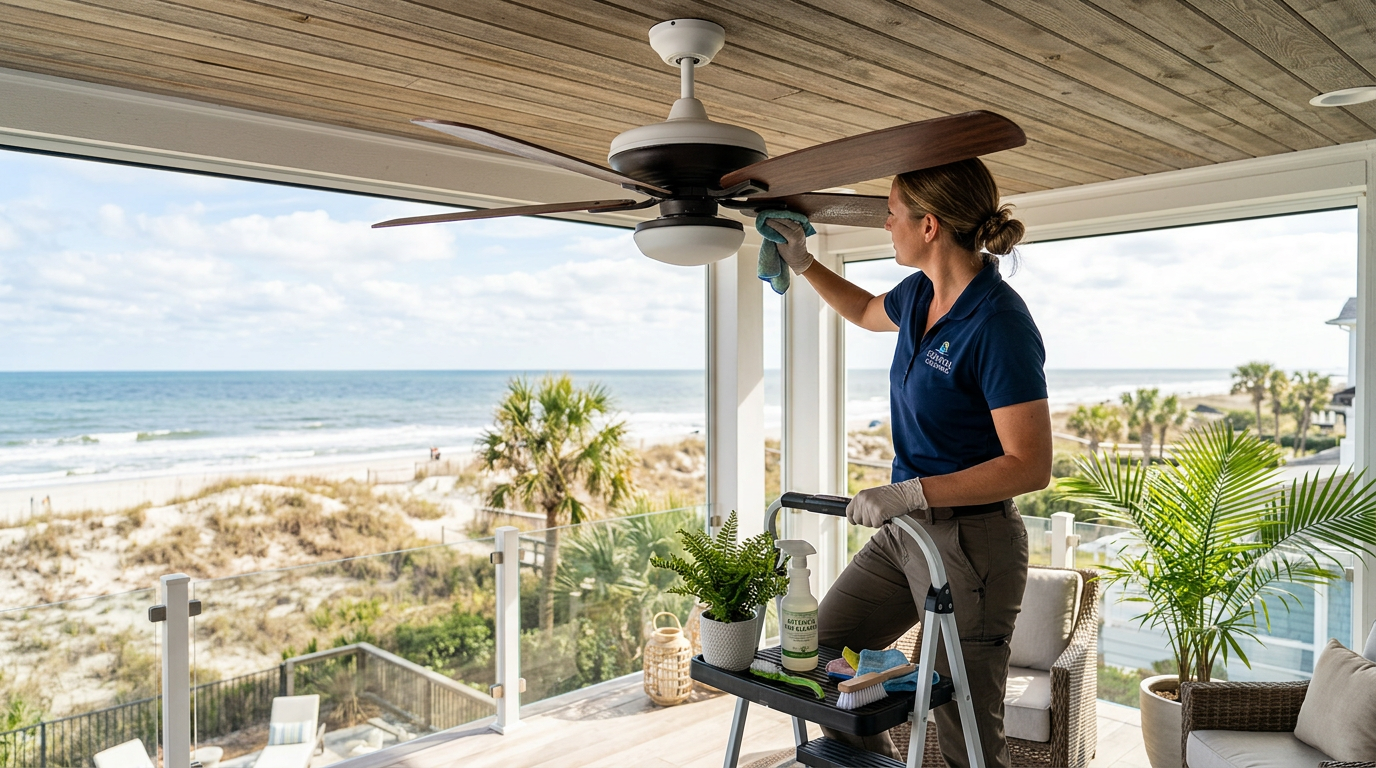
High relative humidity and persistent salt spray define the Grand Strand's coastal environment, creating unique indoor air quality challenges for Myrtle Beach homeowners. While many focus on air filters and ductwork, ceiling fans are often overlooked allergen-dispersal engines. Over months of continuous operation, fan blades accumulate a sticky, salt-bound electrostatic crust that harbors mold spores, pet dander, and dust mites. A2Z Cleaning & Linen Services (843.800.2788) has developed this comprehensive, eco-friendly protocol to safely decontaminate your ceiling fans, protecting your family’s respiratory health without introducing harsh synthetic chemicals.
The Physics of Coastal Fan Grime: Salt-Air Adhesion and Electrostatic Attraction
Grand Strand homes experience constant exposure to microscopic airborne sodium chloride particles carried by sea breezes. When indoor relative humidity levels exceed 60 percent, a micro-film of moisture settles on solid surfaces, including ceiling fan blades. This sticky moisture layer acts as an adhesive, trapping floating particulate matter that would otherwise drift past. This continuous cycle converts your fan blades into efficient traps for every microscopic airborne pollutant in your home.
As fan blades spin, the friction of their movement through the air generates a constant electrostatic charge. This static charge acts as a magnet for dry airborne soils, skin cells, pet dander, and textile fibers. The combination of electrostatic attraction and sticky salt moisture creates a highly resilient bonding effect on the leading edges of the blades. Over days of operation, this accumulation thickens, forming a visible dark line along the blade's edge.
Over time, this mixture cures into a dark, cement-like dust cake that resists traditional dry-dusting methods. Merely running a feather duster over these blades does not remove the crust; instead, it fractures the dried cake, sending thousands of concentrated allergen particles directly into your home’s air. Proper mitigation requires chemical breakdown of the salt binder. Without a liquid botanical surfactant to break these ionic bonds, dry dusting simply redistributes the contaminants.
The Health Hazards of Aerosolized Micro-Allergens and Mold Spores
When a ceiling fan with built-up grime is switched on, the physical force of the rotation shears off micro-particles from the leading edge of the blades. These particles are pushed downward into the living space, where they remain suspended in the breathing zone. This constant aerial showering of fine dust directly impacts your family's respiratory health. Instead of circulating clean, fresh air, the contaminated fan functions as an allergen dispersion machine.
The warm, humid environment of coastal South Carolina makes these dust cakes an ideal breeding ground for mold spores such as Aspergillus and Penicillium. When moisture levels rise, these dormant spores activate within the organic matter on the blades. Running the fan then disseminates viable mold spores throughout the room, where they can settle on carpets and upholstery. This airborne migration allows mold to colonize other soft surfaces in your home.
For individuals suffering from asthma, seasonal allergies, or chronic sinus congestion, this aerosolized allergen cycle causes ongoing irritation. Children, infants, and pets are particularly vulnerable as they breathe in air closer to floor level where these heavier particles eventually settle. Regular, deep decontamination of these fixtures is essential for maintaining safe, breathable indoor air. Clean fan blades directly correlate with a lower daily particulate load in your indoor breathing environment.
The Botanical Chemistry Portfolio: Eco-Friendly Surfactants vs. Harsh Synthetics
Cleaning coastal fan blades requires chemistry that can dissolve tough salt bonds without damaging the protective clear coats, paints, or natural wood veneers. Traditional household cleaners containing ammonia, isopropyl alcohol, or synthetic solvents dry out materials, cause paint to peel, and release high levels of volatile organic compounds (VOCs) into your living areas. These harsh chemicals compromise the indoor air quality you are trying to protect.
Our protocol relies on botanical surfactants derived from renewable, plant-based sources like coconut oil, palm kernel, and corn sugars. These natural surfactants lower the surface tension of water, allowing it to penetrate and lift the sticky salt-dust cake from the blade surface. This mechanical lifting action removes the soil completely without leaving a sticky chemical residue that would attract future dust. It represents a safer, highly effective approach to home maintenance.
For sanitization, we utilize EPA-registered botanical sanitizers formulated with thymol, a natural derivative of thyme oil. Thymol is highly effective at neutralizing mold spores, bacteria, and dust mite allergens on contact. It provides a safer, non-toxic alternative to chlorine bleach or synthetic phenolics, ensuring your family breathes clean air free of harsh chemical fumes. Using botanical sanitizers guarantees that your cleaning efforts do not introduce new chemical hazards.
- Thymol: A plant-derived active ingredient from thyme oil that neutralizes mold spores without toxic fumes.
- Alkyl Polyglucosides: Biodegradable surfactants sourced from coconut and corn sugars that lift greasy salt-dust bonds.
- Citric Acid: A natural chelating agent that breaks down mineralized salt deposits on outdoor and indoor metal fixtures.
- Sodium Citrate: A pH buffer that maintains the stability of plant-based cleaning solutions, protecting delicate blade finishes.
The Step-by-Step Blade Decontamination Protocol (The Pillowcase Technique)
Before beginning any ceiling fan cleaning, safety must be prioritized by turning off the wall switch and, ideally, the dedicated breaker in your electrical panel. Position a sturdy, slip-resistant A-frame ladder on a flat surface directly beneath the fixture. Never stretch or lean off the ladder, and ensure a second person is present to spot you if necessary. Taking these baseline safety precautions prevents accidental slips or electrical hazards during the cleaning process.
To prevent dust and mold from showering down onto your furniture, bedding, or flooring, utilize the pillowcase containment technique. Lightly mist the interior of a clean, cotton pillowcase with your botanical surfactant solution. Slide the pillowcase completely over a single fan blade, press the fabric firmly against the top and bottom surfaces, and pull it backward toward you. This method keeps the loose dust enclosed, protecting the surrounding room from contamination.
The damp interior fabric captures and traps the entire dust cake, pulling it cleanly off the blade and containing it inside the pillowcase. Repeat this process for each blade, using a fresh section of the pillowcase interior. Once the bulk debris is contained, follow up with a damp microfiber cloth to remove any remaining microscopic film. A final wipe with a clean dry cloth ensures no damp streaks are left behind.
- Disconnect electrical power at the main breaker panel to eliminate shock hazards before cleaning.
- Stabilize an A-frame ladder on a flat surface directly underneath the fan, ensuring all locking braces are engaged.
- Lightly mist the interior of a clean cotton pillowcase with a botanical, non-toxic surfactant solution.
- Slide the pillowcase over the blade, applying gentle pressure to slide the dust cake off into the fabric envelope.
- Execute a secondary wipedown with a dry microfiber cloth to remove lingering moisture and prevent spotting.
Cleaning the Motor Housing, Canopy, and Downrod
While the blades are the most visible source of dust, the fan motor housing, downrod, and ceiling canopy also accumulate substantial debris. The motor housing draws air inward to cool the internal electrical components, trapping dust, pet hair, and lint inside the vents. Over time, this buildup restricts airflow, causing the motor to overheat and wear out prematurely. Accumulations inside the housing can also pose a minor electrical hazard if left unaddressed.
To safely clean the motor housing, use a vacuum cleaner equipped with a HEPA filter and a soft brush attachment. Gently vacuum the exterior vents to draw out loose dust rather than blowing it deeper into the motor coils. Avoid spraying liquid cleaners directly into the motor housing vents, as this can cause electrical shorts or rust the internal bearings. A controlled, dry extraction is the safest approach for preserving the motor's integrity.
Next, wipe down the downrod and the ceiling canopy using a microfiber cloth lightly dampened with your botanical surfactant. These high surfaces collect rising warm air, which carries fine soot and kitchen grease. Cleaning them prevents these oily residues from binding with coastal humidity and forming a secondary layer of difficult-to-remove grime. Keeping these upper elements clean stops dust from drifting down onto the newly washed fan blades.
Specialized Care for Coastal Blade Materials: Natural Wood, Woven Palm, and ABS Plastics
Coastal homes often feature ceiling fans with diverse blade materials, each requiring specific maintenance considerations. Natural solid wood or wood veneer blades are sensitive to excess moisture, which can cause warping, swelling, or delamination. When cleaning wood, use a highly wrung-out microfiber cloth and dry the surface immediately with a soft towel to preserve the protective finish. Applying a natural beeswax polish can help repel moisture and retain the wood's luster.
Woven palm, rattan, or wicker blades are popular in Grand Strand decor but feature complex textures that easily harbor mold spores and dust in their crevices. For these materials, use a soft-bristled detail brush dampened with a thymol-based botanical sanitizer to gently agitate the woven fibers. Carefully blot the area dry with a clean microfiber cloth to prevent moisture pockets. This deep-crevice agitation is vital to fully eliminate hidden mold spores.
Modern ABS plastic and painted metal blades are highly durable and moisture-resistant, making them ideal for outdoor patios and high-humidity rooms. However, they are highly prone to static buildup. Applying a thin layer of a plant-derived anti-static spray after cleaning neutralizes the electrical charge, keeping dust from adhering to the blades for a longer period. This simple step dramatically extends the time between your scheduled cleaning intervals.
- Natural Wood: Use minimum moisture and immediately buff dry to prevent warping, fiber swelling, and finish damage.
- Woven Palm & Rattan: Agitate deep crevice patterns with a soft-bristled brush dampened with thymol-based sanitizer.
- ABS Plastics: Apply a natural, plant-based anti-static coating after cleaning to significantly repel airborne dust.
- Painted Metal: Check for early signs of salt-air oxidation and coat with a thin layer of natural protective wax.
Integrating Fan Care into Your Grand Strand Home Maintenance Calendar
To maintain optimal indoor air quality in Myrtle Beach, ceiling fan decontamination should be treated as a seasonal necessity rather than an annual chore. Because fans along the Grand Strand run almost continuously from early spring through late autumn, they require deep cleaning at least three times a year to prevent thick crust buildup. Regular cleaning keeps allergen levels low and ensures your fans operate with maximum mechanical efficiency.
Coordinate your fan cleaning with your scheduled HVAC filter replacements. Cleaning the fan blades will inevitably disturb a small amount of fine, airborne particulate matter; running your HVAC system with a high-efficiency MERV 11 or 13 filter immediately afterward helps capture these free-floating particles, ensuring they do not resettle on your freshly cleaned surfaces. This integrated approach maximizes the overall air purification process inside your home.
If navigating high ladders or handling detailed technical cleaning feels overwhelming, the team at A2Z Cleaning & Linen Services is here to help. Our trained professionals use specialized, HEPA-equipped tools and plant-based sanitizers to thoroughly decontaminate your fixtures. Contact us at 843.800.2788 to schedule a comprehensive healthy-home cleaning service. We provide the meticulous, plant-safe care your home needs to keep your family breathing clean, safe air.
Key takeaway
Maintaining clean ceiling fans is a crucial yet often overlooked component of protecting your Grand Strand home's indoor air quality. By employing botanical surfactants and containment-focused cleaning methods, you can eliminate sticky salt-dust crusts and mold spores without introducing toxic VOCs. Trust A2Z Cleaning & Linen Services to keep your coastal home healthy, comfortable, and beautifully clean year-round.
Keep Reading

Coastal Living
The Coastal Wicker, Rattan, and Woven Reed Furniture Decontamination Protocol: Mitigating Humid Mold Colonization, Allergen-Binding Crevices, and Fiber-Safe Botanical Restoration in Grand Strand Homes
ReadCoastal Living
The Coastal Louvered Door and Airflow Closet Decontamination Protocol: Mitigating Damp Dust Slats, Mold Spores, and Eco-Friendly Airway Protection in Grand Strand Homes
ReadCoastal Living
The Coastal High-Velocity Ceiling Fan and Vaulted Ceiling Decontamination Protocol: Mitigating Static-Cling Allergen Crust, Humidity-Driven Mold Spores, and Eco-Friendly Dust Capture in Grand Strand Homes
ReadReady for a spotless property?
Call 843.800.2788 or request a free quote from A2Z Cleaning & Linen Services.