Linens & Laundry
The 3-Par Linen Formula: Calculating Inventory Lifespans and Industrial Wash Formulas for Grand Strand Vacation Rentals
Discover how the physics of sand-grit abrasion, the chemistry of sunscreen stains, and a strict 3-par inventory system can save your Myrtle Beach rental property thousands in replacement costs.
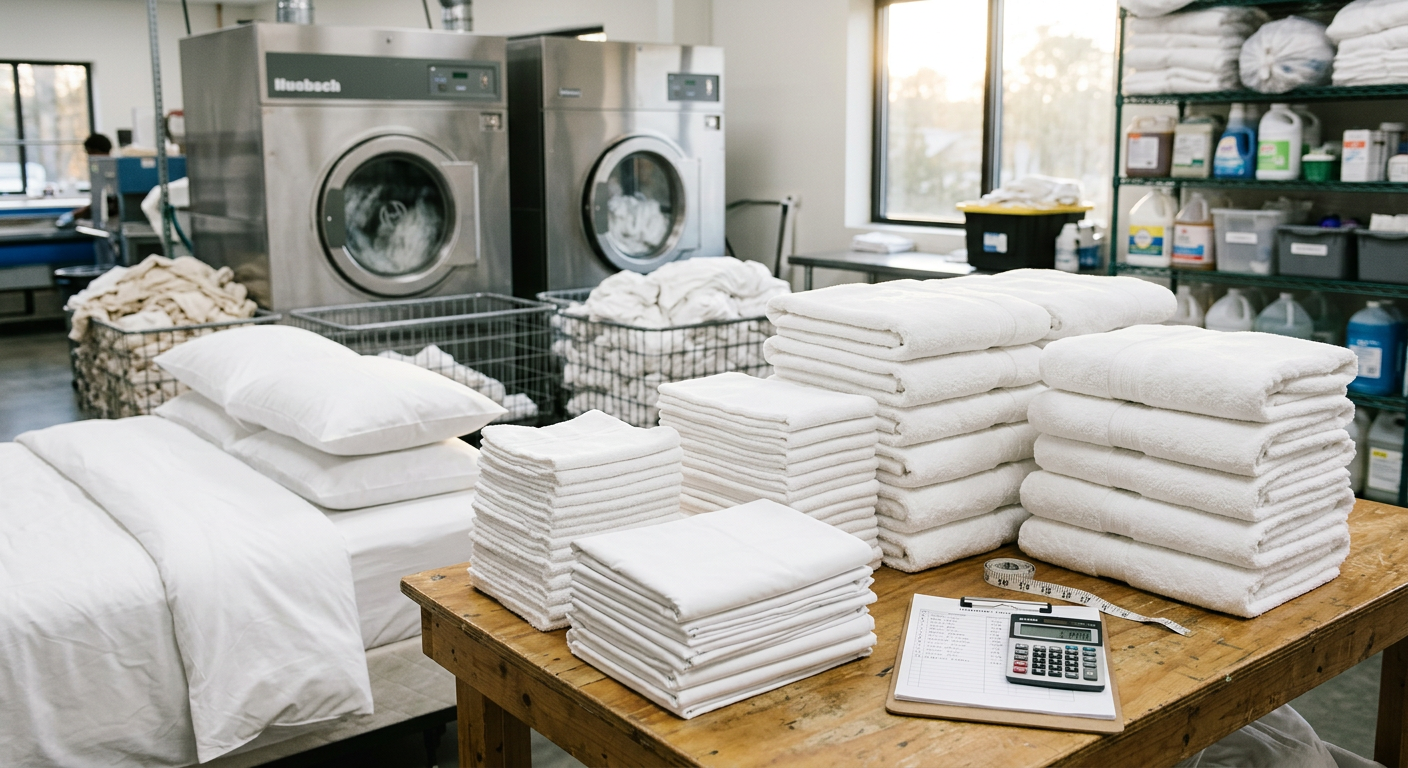
Operating a profitable vacation rental along the Grand Strand requires an operational backbone that guests rarely see but instantly judge: pristine, crisp, high-quality linens. From Cherry Grove down to Garden City, the combination of abrasive beach sand, sweat-inducing humidity, and chemical sunscreens creates a uniquely hostile environment for hospitality textiles. At A2Z Cleaning & Linen Services, we know that protecting your investment and ensuring five-star guest reviews demands more than standard household laundry routines. It requires a scientific approach to inventory management and commercial-grade laundering chemistry designed specifically for our coastal climate.
The Fundamentals of the 3-Par Linen System
In the hospitality industry, a 'par' refers to the total amount of linen required to fully dress all beds and bathrooms in a rental property. A common mistake among independent Grand Strand hosts is operating on a 1-par or 1.5-par inventory, assuming that cleaning crews can simply wash, dry, and replace the same sheets during a standard Saturday turnover window. This strategy creates an immediate operational bottleneck, forcing cleaners to rush wash cycles, leave linens damp, or delay guest check-ins.
To run an efficient vacation rental, a strict 3-par system is the industry standard. Par 1 is currently on the beds and in the bathrooms, welcoming your checked-in guests. Par 2 is clean, folded, and safely stored in the owner's locked closet, ready for the next turnover. Par 3 is off-site, undergoing professional laundering, sanitization, and quality inspections. This rotation ensures that your cleaning staff never has to wait for a dryer to finish, significantly reducing turn times and preserving guest satisfaction.
Beyond operational speed, a 3-par system directly extends the physical lifespan of your linens. Cotton fibers absorb moisture, sweat, and body oils during use, which stretches and weakens the threads. Allowing the fabric to 'rest' for several days between washes gives the cotton fibers time to dry completely, relax, and regain their natural tensile strength. Constantly washing and immediately reusing the same set of sheets accelerates fiber thinning, leading to premature tearing and a rough, scratchy texture.
The Math of Par Depletion: Tracking Stains and Wear
Linens are consumable assets that naturally degrade over time, but their lifespan in high-turnover coastal rentals is exceptionally short without careful tracking. Between permanent makeup stains, sunscreen damage, physical tears from guest jewelry, and occasional accidental loss, your linen inventory faces constant erosion. If you do not actively track and replenish your inventory, your 3-par system will quickly collapse into an emergency scramble.
A typical rental property along the Grand Strand experiences an average linen loss or ruin rate of 15% to 20% per peak summer season. This means that out of 100 towels in circulation, up to 20 will need to be permanently retired due to unmovable stains or physical wear before autumn arrives. To manage these costs, property owners must establish a proactive replacement budget rather than waiting for a guest to complain about threadbare sheets.
Establishing a bi-monthly physical audit is the most effective way to prevent inventory shortages. Your cleaning team or linen service should count every flat sheet, fitted sheet, pillowcase, bath towel, hand towel, and washcloth in circulation. Any item showing signs of fraying, graying, or permanent staining must be retired, and new stock must be introduced from your reserve to maintain a true 3-par level across all sizes.
- Par 1: In active use by current guests
- Par 2: Clean, dry, and locked in the property closet for the next turnover
- Par 3: In the commercial wash and sanitization cycle
- Average seasonal loss rate: 15% to 20% due to stains, tears, and wear
- Audit frequency: Recommended every two months during peak rental season
The Threat of Embedded Sand: Mechanical Abrasion in the Wash
Sand is composed of tiny, sharp-edged silica crystals. When guests return from a day on the beach, fine micro-grains of sand inevitably cling to their skin and transfer directly onto bedsheets, bath mats, and towels. If these linens are washed in a standard residential machine, this sand poses a dual threat: it destroys both the washing machine's internal components and the physical structure of the fabric itself.
Domestic washing machines lack the water volume, drum diameter, and high-G extraction force required to suspend sand particles and flush them completely out of the wash basin. Instead, the sand settles into the bottom of the drum, where it is repeatedly rubbed against the fabrics during the agitation cycle. This action behaves exactly like sandpaper, microscopic slicing through the delicate cotton threads and causing the fabric to pill, thin, and rip prematurely.
Commercial wash formulas address this issue by utilizing specialized high-water-level flush cycles at the very beginning of the wash process. By flooding the wash wheel and using high-ribbed lifters, the fabrics are opened up, allowing gravity and water flow to pull the heavy sand particles away from the textile fibers and wash them down specialized commercial drains before the chemical wash cycles even begin.
The Chemistry of Sunscreen Stains and Avobenzone
The single greatest cause of ruined linens in Myrtle Beach vacation rentals is sunscreen stains. Most waterproof sunscreens contain a chemical UV filter called avobenzone. When avobenzone comes into contact with body sweat and skin oils, it transfers to sheets and towels, leaving an invisible residue. The real trouble begins when these stained linens are washed in standard municipal water containing trace amounts of iron.
When iron-rich water meets avobenzone in a hot wash cycle, a chemical reaction occurs that is identical to the formation of rust. This reaction binds an orange-yellow stain directly to the cotton fibers, making the sheets look dirty, old, and completely unusable for incoming guests. If a housekeeper attempts to fix this yellowing by adding standard chlorine bleach, the chlorine acts as a catalyst, setting the rust stain permanently into the fabric.
Reversing and preventing avobenzone stains requires industrial laundry chemistry. This involves using specialized oxygen-based bleaching agents instead of chlorine, combined with low-pH 'souring' agents during the rinse cycle. The souring agent neutralizes the alkalinity of the wash water and dissolves the iron-avobenzone complex, allowing the rust-like discoloration to be safely rinsed out without degrading the strength of the cotton fibers.
Thermal and Chemical Sanitization Standards
In a high-occupancy vacation rental, clean-looking linens are not necessarily sanitary linens. With multiple families sharing the same beds and baths week after week, ensuring complete disinfection is critical for guest safety. Professional laundering goes far beyond removing visible dirt; it targets microscopic pathogens, dust mites, skin flora, and viral particles that can survive standard low-temperature residential washes.
True thermal sanitization requires a sustained wash temperature of at least 160 degrees Fahrenheit for a minimum of 25 consecutive minutes. Residential water heaters are almost always capped at 120 degrees Fahrenheit to prevent accidental scalding, meaning home machines simply cannot reach or sustain the temperatures required to kill resistant bacteria and pathogens. Attempting to run high-temperature cycles at home also dramatically increases utility costs and shortens appliance lifespans.
When dealing with delicate fabrics that cannot tolerate extreme heat, commercial laundry protocols employ precise chemical sanitization. This involves injecting EPA-registered sanitizing agents, such as peracetic acid or quaternary ammonium compounds, at exact stages of the wash cycle. These chemicals destroy pathogens at lower temperatures while remaining completely skin-safe and leaving no irritating chemical residues on the finished sheets.
Fiber Selection: Comfort, Breathability, and Tensile Strength
Choosing the right fabric composition for your rental linens is a delicate balancing act. While many homeowners are tempted to purchase 100% Egyptian cotton sheets with a high thread count, these are often poorly suited for commercial rental environments. High-thread-count sheets are woven tightly, which traps body heat and moisture—a recipe for guest discomfort during humid South Carolina summers—and they dry very slowly, increasing energy costs.
For the ideal balance of luxury and longevity, a 60/40 cotton-polyester blend with a thread count between 200 and 250 is often the industry sweet spot. The cotton provides essential breathability, softness, and moisture-wicking properties, while the polyester fibers inject incredible tensile strength, wrinkle resistance, and rapid drying capabilities. This blend can withstand the high-G extraction forces of commercial washers without tearing.
Avoid low-cost 100% microfiber linens. While microfiber is highly stain-resistant and extremely cheap to purchase, it is made of fine synthetic plastic fibers that trap body heat, glide uncomfortably against the skin, and rapidly develop a pill-textured surface after just a few washes. Discriminating guests paying premium beachfront rates expect the crisp, cool, substantial feel of a high-quality cotton-blend sheet.
Climate-Controlled Storage: Preventing the Coastal Musty Odor
The humid maritime climate of the Grand Strand presents a constant challenge for storing clean linen inventory. If sheets and towels are folded and packed into dark, unventilated owner closets or outdoor storage lockers, they act like high-efficiency sponges, absorbing moisture directly from the ambient salt air. Within days, this trapped humidity breeds mildew and a stale, musty odor.
To prevent mildew, linens must be dried to 0% residual moisture during the commercial drying cycle. Many residential dryers leave up to 3% to 5% moisture in thick towel seams and sheet hems to prevent static cling. If these slightly damp items are folded and stacked, mildew spores will bloom within 48 hours in a closed closet, requiring the entire batch to be re-washed before they can be placed on a bed.
Storage areas must be kept clean, dry, and climate-controlled, with active air circulation and a relative humidity level below 50%. Avoid storing linens in airtight plastic bins or bags, which can trap trapped moisture and off-gas chemicals that yellow white fabrics. Slatted wooden or wire shelving is highly recommended, as it allows air to circulate freely around and through the stacked linens.
The Realities of In-Unit Laundering vs. Commercial Outsource
Many property owners try to manage laundry inside the rental unit to save money, but this approach carries significant hidden costs. A standard stackable washer-dryer in a beachfront condo takes roughly 45 to 60 minutes per wash cycle and up to 90 minutes to dry a single load of heavy beach towels. During a tight summer turnover, a housekeeper might spend three to four hours simply waiting on appliances.
This idle time dramatically inflates labor costs. Property owners either pay their cleaners for extra hours spent waiting on laundry, or the cleaners are forced to rush other critical areas of the property to finish on time. Furthermore, the constant heavy load of beach towels rapidly burns out the heating elements, drums, and belts of residential dryers, leading to frequent appliance breakdowns and emergency repair fees.
Outsourcing your linen management to a professional commercial service like A2Z Cleaning & Linen Services eliminates these operational bottlenecks. Dirty linens are immediately bagged and removed from the property, replaced instantly with pre-sorted, commercially sanitized, and crisply folded par sets. Your cleaning staff can focus entirely on deep cleaning the property, ensuring a faster turn, higher quality control, and a superior guest arrival experience.
Key takeaway
Maintaining a successful vacation rental on the Grand Strand requires a meticulous 3-par linen strategy combined with professional, commercial-grade laundry chemistry. Protecting your inventory from sand abrasion, sunscreen stains, and coastal humidity preserves your bottom line and secures the glowing guest reviews your business depends on. To learn how we can streamline your turnover logistics and care for your property’s textiles, contact A2Z Cleaning & Linen Services today at 843.800.2788.
Related services
Keep Reading
Linens & Laundry
The DHA and Bronzer Extraction Protocol: Salvaging Self-Tanner Stained Linens in Grand Strand Vacation Rentals
ReadLinens & Laundry
The Coastal Duvet Insert and Protector Sanitation Protocol: Managing Body-Oil Yellowing, Sand-Grit Intrusion, and Mildew Spores in Grand Strand Vacation Rentals
ReadLinens & Laundry
The Benzoyl Peroxide and Active Cosmetic Damage Mitigation Protocol: Protecting Grand Strand Rental Linens from Chemical Bleaching and Graying
ReadReady for a spotless property?
Call 843.800.2788 or request a free quote from A2Z Cleaning & Linen Services.