Coastal Living
The Coastal Carpet and Rug De-Sanding and Pet Allergen Extraction Protocol: Balancing Child-Safe Botanicals, Electrostatic Release, and Humidity-Activated Odor Neutralizers in Grand Strand Family Homes
Discover how to effectively remove deep-seated beach sand, pet dander, and humid odors from family room carpets using safe, non-toxic, and child-friendly methods tailored for Myrtle Beach homes.
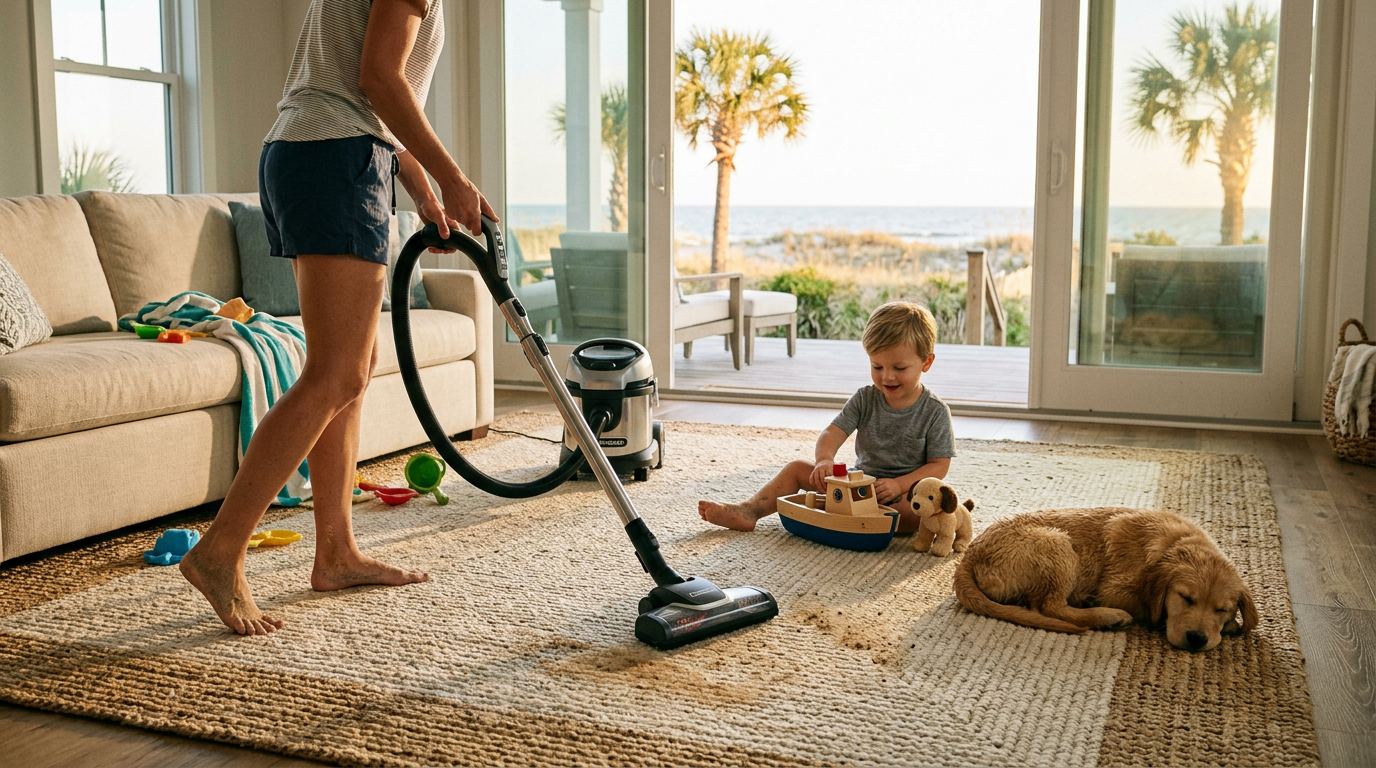
For families living along the Grand Strand, keeping living spaces clean is a continuous struggle against the elements. The combination of fine beach sand, active pets, busy children, and relentless coastal humidity creates a unique challenge for household hygiene. Standard cleaning routines often fail to reach the deep layers of carpet fibers where allergens and abrasive grit settle. This guide outlines a practical, family-safe protocol to extract deep-seated sand, neutralize stubborn pet odors, and maintain a healthy, allergen-free play environment for your children.
The Anatomy of the Coastal Humid-Zone Fiber Lock: Why Pet Dander and Sand Settle in Myrtle Beach Family Rooms
In the coastal Grand Strand, indoor environments face a unique thermodynamic challenge. Our ambient relative humidity regularly exceeds sixty percent, which interacts directly with the organic matter tracked into family living spaces. When family dogs and cats shed dander, the high atmospheric moisture causes these microscopic protein structures to swell and cling to carpet fibers. This creates a tacky, allergen-rich layer that ordinary dry vacuuming cannot easily dislodge, trapping allergens right where children play.
Compounding this issue is the continuous influx of fine coastal sand. Unlike indoor dust, which is light and easily airborne, Grand Strand beach sand consists of heavy, jagged quartz and shell fragments. When children and pets track this grit onto area rugs and carpets, the heavy particles slide deep into the backing of the carpet pile. Daily walking then acts like sandpaper, grinding down the base carpet fibers while locking in pet dander and skin oils.
The combination of moisture, dander, and abrasive sand creates an ideal micro-environment for dust mites and mold spores to thrive. For toddlers crawling on the floor, this biological matrix poses a direct respiratory and skin-irritation risk. To maintain a truly healthy play surface, families must move beyond superficial cleaning and address the physical bond between humid air, pet organic residues, and heavy silica particles.
The Electrostatic Pet-Hair Release Strategy: Mechanical Extraction Before Liquid Application
Attempting to vacuum wet or humid pet hair often results in the fibers smearing and twisting deeper into the carpet pile. To break this stubborn bond, homeowners must first utilize dry, mechanical electrostatic tools. Rubber squeegees, specialized pet-hair rakes, or textured rubber brooms create a static charge that physically pulls hair away from the synthetic fibers of nylon and polyester carpets without damaging the carpet structure.
Drag the rubber-edged rake across the carpet surface in short, firm strokes, moving toward your body. You will notice the pet hair gathering into tight, felted ropes that are easily lifted by hand. This mechanical lifting must be performed prior to any vacuuming or wet cleaning, as it prevents the hair from wrapping around brush rolls or clogging vacuum airways, which reduces suction performance.
For delicate area rugs, work from the center outward to avoid fraying the edge bindings or fringe. This step is particularly vital in homes with heavy-shedding breeds like Golden Retrievers or Labradors, which are highly popular along the Grand Strand. Removing this surface barrier allows subsequent cleaning agents and deep-vacuuming cycles to directly target the underlying sand and allergen layers.
Sand Extraction Physics: Overcoming the Deep-Pile Grit Trap on Kid-Level Floors
Standard upright vacuums often glide right over deep-seated sand, leaving the sharp grains at the base of the carpet where they can shear fibers and trap odors. To extract sand effectively, a dual-motor vacuum cleaner with a height-adjustable brush roll is essential. Set the brush roll low enough to vibrate the carpet backing, which bounces the heavy sand particles upward into the airflow, but high enough to maintain strong seal suction.
Speed is the critical variable in sand extraction. A quick pass only picks up light, floating dust; extracting heavy silica requires slow, deliberate movements. Standard protocols recommend moving the vacuum head at a rate of no more than one foot per second, performing overlapping cross-hatch patterns (north-to-south, then east-to-west) over the high-traffic zones where kids and pets spend most of their time.
Ensure your vacuum is equipped with a certified, sealed HEPA filtration system. Without a sealed HEPA filter, the tiny pet dander allergens and fine coastal dust particles will simply blow out of the exhaust, settling right back onto your furniture and toys. Empty the dust bin or replace the vacuum bag when it reaches half capacity to maintain maximum airflow and suction power.
- Adjust the vacuum's height setting to match your specific carpet pile depth for optimal brush-roll agitation.
- Maintain a slow, steady pace of about one foot per second to allow the suction to lift heavy sand grains.
- Implement a cross-hatch vacuuming pattern (north-to-south, then east-to-west) to agitate fibers from all angles.
- Empty the vacuum canister or bag when it reaches 50% capacity to avoid a drop in critical suction velocity.
- Exclusively use vacuums equipped with sealed HEPA filtration to prevent microscopic pet dander from recirculating.
Neutralizing the Humid-Yeast Pet Odor: Choosing Child-Safe Botanical Chemistry Over Harsh Oxidizers
High coastal humidity activates the natural yeast and bacteria residing on pet skin, producing that distinct "wet dog" odor that can permeate family rooms. Many commercial carpet fresheners rely on baking soda or heavy artificial fragrances to mask these smells. However, baking soda can damage carpet backing and vacuum motors, while synthetic perfumes often trigger asthma and skin allergies in young children.
Instead, family-focused households should utilize child-safe botanical chemistry. Zinc ricinoleate, derived from castor seed oil, acts as a natural odor absorber that chemically bonds with volatile organic compounds (VOCs) to neutralize them rather than covering them up. Combining this with botanical surfactants, such as those derived from coconut or corn, safely lifts the oily pet residues that lock odors into carpet fibers.
To apply, lightly mist the carpet with a diluted, non-toxic botanical solution. Avoid soaking the carpet; a gentle dampness is all that is required for the botanical agents to bind with the odor-causing proteins. This approach ensures your floors remain completely safe for bare feet, baby knees, and pet paws, without introducing harsh chemical residues or synthetic endocrine disruptors into your home environment.
The Grand Strand Low-Moisture Cleaning Loop: Ensuring Fast Dry Times to Prevent Mold and Spore Activation
Excess moisture in a humid climate is a recipe for mold growth, which can establish itself in carpet backing in as little as 24 to 48 hours. When wet-cleaning carpets in Myrtle Beach, standard steam-cleaning methods can leave fibers wet for days if not executed correctly. A low-moisture cleaning loop, using encapsulated botanical solutions or dry-extraction compounds, is much safer for busy family homes.
If using a consumer hot-water extraction machine, always perform secondary "dry passes." For every pass where you spray cleaning solution, make at least three slow passes with the vacuum motor running to extract as much liquid as possible. Use high-velocity floor fans or open windows to promote rapid cross-ventilation, aiming for a dry time of under four hours to prevent mold spore activation.
Run your home air conditioning or a dedicated dehumidifier alongside your fans during and after the cleaning process. This lowers the indoor relative humidity below fifty percent, forcing the moisture out of the carpet fibers and into the dry air. Keeping children and pets off the damp fibers during this rapid-drying phase prevents the immediate re-soiling of the freshly cleaned surfaces.
Establishing an Allergen-Safe Play Zone: Daily and Weekly Routines for High-Traffic Toddler Areas
Maintaining a healthy family room requires a structured cleaning schedule that adapts to the seasonal shifts of the Grand Strand. During the high-pollen and beach-going spring and summer months, daily high-traffic vacuuming is non-negotiable. Focus on the main travel lanes, entry thresholds, and the immediate perimeter around pet beds where dander and sand collect in high concentrations.
Weekly tasks should include washing pet bedding on a high-temperature sanitizing cycle and misting soft surfaces with a hypoallergenic allergen-neutralizing spray. Clean the entry mats inside and outside your main doors; these act as your first line of defense against the outdoor environment. Shake them out thoroughly, wash them if fabric-based, and vacuum the floor beneath them to capture escaped grit.
Monthly, schedule a deeper inspection of your carpet edges along baseboards, as dust and pet hair tend to settle there due to indoor air drafts. Use a crevice tool attachment to thoroughly clean these tight zones. This systematic routine prevents the slow build-up of microscopic irritants, ensuring that the floors where your children build block towers or watch movies remain clean and allergen-free.
- Daily: Vacuum high-traffic play zones and entryways to remove fresh sand and loose pet hair.
- Weekly: Wash pet beds in hot water and vacuum behind furniture where dander drifts settle.
- Weekly: Launder area rug entry mats and vacuum the subfloor underneath to eliminate trapped grit.
- Monthly: Use a crevice attachment along baseboard edges to extract hidden allergen buildup.
- Bi-Annually: Schedule a professional truck-mounted deep extraction to flush out fine sand and deep allergens.
Spot Treatment Protocols for Pet Accidents and Muddy Paws: Kid-Safe Biological Enzyme Application
Pet accidents, mud, and spilled food are inevitable in a busy coastal household. The key to preventing permanent stains and deep bacterial odors is immediate, correct intervention. Never scrub a spill, as this damages carpet fibers and drives the liquid deeper into the backing. Instead, blot the liquid using a clean, white microfiber towel to absorb as much volume as possible from the outside of the spot inward.
Once the excess moisture is removed, apply a child-safe biological enzyme cleaner. These products contain live, beneficial bacteria that produce enzymes designed to eat away organic materials like urine, saliva, and food proteins. Because they are natural proteins themselves, they break down the stain and odor at a molecular level, leaving no chemical residue behind that could irritate sensitive skin.
Cover the treated area with a damp white towel and let it sit for several hours. This keeps the enzymes active and prevents them from drying out too quickly in our warm climate. Once the enzyme treatment has digested the organic material, remove the towel, allow the carpet to air dry completely, and then vacuum the area to lift any remaining residue.
Professional Deep Extraction: When to Call the Grand Strand Specialists for Hot-Water Soil Extraction
While routine maintenance is essential, DIY equipment often lacks the extraction power needed to pull packed-down coastal sand and deeply embedded pet dander from the base of your carpet. Over time, these particles accumulate beyond the reach of standard vacuums. This is when professional, truck-mounted extraction becomes a critical service for preserving your family's indoor air quality and extending the life of your flooring.
Professional teams utilize high-cfm truck-mounted vacuums that generate far more suction than residential units. They apply specialized, non-toxic, child-safe pre-treatments that break the electrostatic and oily bonds holding pet hair and sand to the fibers. This high-temperature, pressurized extraction flushes the carpet clean and immediately recovers ninety-five percent of the water, ensuring rapid drying.
For families in Myrtle Beach, North Myrtle Beach, Surfside Beach, and across the Grand Strand, A2Z Cleaning & Linen Services provides specialized carpet and upholstery restoration. Our team is trained in child-safe, pet-friendly cleaning chemistry that neutralizes tough odors and extracts deep sand without leaving soapy residues. Contact our local office at 843.800.2788 to schedule a professional, deep-extraction service that keeps your coastal home healthy.
Key takeaway
Keeping a busy Grand Strand home clean requires a systematic approach to extracting abrasive sand and persistent pet allergens. By combining electrostatic hair removal, proper vacuuming physics, and child-safe botanical chemistry, you can protect both your children's health and your flooring investment. For deep, restorative extraction that standard household vacuums cannot achieve, trust the local experts at A2Z Cleaning & Linen Services by calling 843.800.2788.
Keep Reading
Coastal Living
The Coastal Multi-Sectional Decontamination Protocol: Mitigating Pet Sebum, Organic Kid Spills, and Humidity-Trapped Allergen Reservoirs in Grand Strand Homes
ReadCoastal Living
The Grand Strand Playroom and Toy Decontamination Protocol: Neutralizing Pet Saliva, Sand-Grime, and Allergen Bio-Films with Child-Safe Chemistry
ReadCoastal Living
The Kid-and-Pet Bedding Decontamination Protocol: Managing Sand-Grit, Pet Dander, and Humidity-Trapped Odors in Grand Strand Family Bedrooms
ReadReady for a spotless property?
Call 843.800.2788 or request a free quote from A2Z Cleaning & Linen Services.