Vacation Rentals
The Coastal Coffee Station and Beverage Center Turnover Protocol: Mitigating Hard-Water Scale, Yeast Biofilms, and Sticky Syrups in Grand Strand Vacation Rentals
An operational guide to sanitizing coffee makers, reservoirs, and beverage bars to prevent hard-water scale, mold, and pest-attracting syrups in Myrtle Beach turnovers.
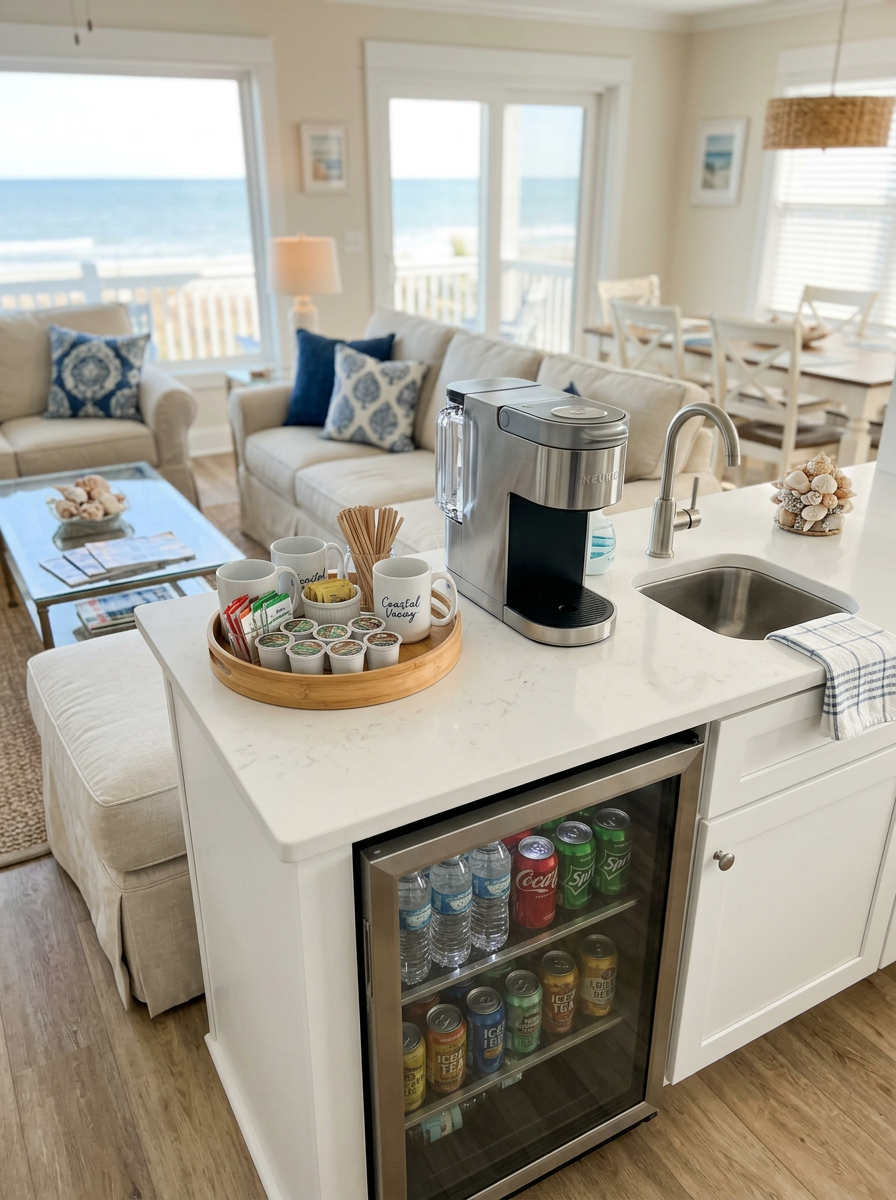
For arriving vacationers, the first morning of their stay sets the tone for the entire holiday. A pristine coffee station is not merely an amenity; it is a critical touchpoint that directly influences guest reviews and platform cleanliness ratings. In the humid, coastal environment of the Grand Strand, beverage centers require specialized maintenance to combat hard-water scaling, biological biofilms, and pest-attracting residues. This operational protocol details how property managers and hosts can standardize their beverage station turnovers to ensure immaculate presentation and flawless mechanical performance.
The Strategic Importance of the Coffee Station in Guest Reviews
In the short-term rental market, the coffee maker is often the very first appliance a guest interacts with after their arrival. A dusty drip pot, a scale-encrusted pod machine, or sticky syrup pumps can instantly shatter a guest's confidence in the overall cleanliness of the property. When a guest encounters a dirty beverage center, they immediately begin scrutinizing other areas of the home, looking for further cleaning oversights.
Major booking platforms like Airbnb and VRBO heavily penalize properties that receive low cleanliness marks, directly affecting search algorithm placement and occupancy rates. Cleanliness complaints regarding coffee makers are highly common and easily preventable. By treating the beverage station as a high-priority inspection zone during turnovers, hosts can eliminate negative reviews and foster a welcoming first-day experience.
A highly polished, meticulously organized coffee bar signals to the guest that the property is managed with care and professional precision. This attention to detail sets a standard of excellence, putting the guest at ease and providing a buffer of goodwill should any minor, unforeseen issues arise during their stay on the Grand Strand.
The Coastal Hard-Water and Calcification Challenge
Municipal water throughout Myrtle Beach and the surrounding Grand Strand carries a unique mineral profile that can quickly degrade heating elements. Over consecutive bookings, this mineral-rich water leaves behind white, chalky calcium carbonate deposits inside the internal plumbing of drip brewers and single-serve pod machines. This scale buildup restricts water flow and lowers brewing temperatures, resulting in weak, lukewarm coffee.
When heating elements are coated in scale, the machines must work twice as hard, which shortens their operational lifespan and increases utility consumption. Guests will notice if a single-serve pod machine takes several minutes to brew a cup or if the coffee tastes bitter and metallic. Simply wiping down the exterior of the machine during a turnover does nothing to address this internal performance barrier.
To mitigate this issue, turnover teams must implement a structured descaling schedule based on property occupancy. Rather than waiting for a machine to malfunction, running a food-grade citric acid or distilled white vinegar solution through the system every thirty days ensures the internal heating coils remain free of mineral scale and perform at peak efficiency.
- Inspect water reservoir bases for dry, white mineral crusting during every turnover.
- Use a 50/50 mix of distilled white vinegar and water for standard descaling cycles.
- Always run three consecutive cycles of clean, filtered water post-descaling to eliminate vinegar odor.
- Document descaling dates on a centralized property maintenance log to track appliance health.
Mitigating Water Reservoir Yeast and Mold Biofilms
The high humidity of coastal South Carolina creates an ideal breeding ground for microscopic mold spores and pink yeast. Water reservoirs that sit damp and sealed between guest stays quickly develop a slippery, invisible biofilm along their inner seams and intake valves. This biological buildup is a health hazard and a frequent source of musty odors that ruin the coffee's flavor profile.
Standard cleaning procedures must go beyond a simple water rinse. Cleaning technicians should remove the reservoir entirely from the machine during every turnover. Scrubbing the interior walls with a non-abrasive microfiber sponge and mild, unscented dish soap is essential for breaking up the physical biofilm without scratching the plastic surfaces.
After scrubbing, the reservoir must be thoroughly rinsed and dried. Trapping moisture inside a closed reservoir during a vacancy window invites rapid mold spore colonization. Technicians must use clean, lint-free microfiber cloths to dry both the interior and exterior of the reservoir, leaving the lid slightly offset to allow airflow if the property will be vacant for more than forty-eight hours.
Pod Chamber, Puncture Needle, and Drip Basket Sanitation
Single-serve pod machines feature a sharp puncture needle that penetrates coffee cups during the brewing cycle. This needle and the surrounding chamber accumulate wet coffee grounds, oils, and sticky residues. Over time, these organic materials decompose, leading to bacterial growth and clogged needles that cause water to back up and overflow during operation.
To clean the puncture needle safely, technicians must use a dedicated paperclip or a needle-cleaning tool to gently clear any compressed coffee grounds from the nozzle. The pod holder assembly should be removed, washed in warm, soapy water, and checked for cracks or mechanical wear that could cause leaking.
For traditional drip coffee makers, the filter basket is the primary accumulation point for rancid coffee oils. These oils bake onto the plastic, creating a bitter residue that affects subsequent brews. Wash the basket thoroughly after every guest, and inspect the glass carafe for baked-on stains. A mixture of coarse salt, crushed ice, and lemon juice can be swirled inside the carafe to lift stubborn stains without scratching the glass.
The Milk Frother and Steam Wand Decontamination Protocol
High-end properties frequently feature espresso machines or standalone milk frothers to attract premium bookings. While these amenities elevate the guest experience, they pose significant sanitation risks if not cleaned correctly. Dairy proteins dry rapidly, forming a hard, stubborn film that breeds dangerous pathogens in warm, coastal conditions.
Steam wands must be purged and wiped down immediately after every use, but during a turnover, a deep sanitation loop is required. Technicians must soak the steam wand tip in warm water mixed with a food-safe commercial milk cleaner to dissolve baked-on milk solids, then scrub the steam holes using a specialized pipe brush.
For automatic frothing pitchers, disassemble all removable parts, including the magnetic whisk and lid seals. These components must be washed in warm, soapy water and inspected for milk residue trapped in the crevices. Failing to clean these small parts can cause the next guest's milk to spoil instantly, leading to severe health complaints and immediate negative reviews.
- Never use metal scouring pads on frother interiors, as this damages the non-stick coating.
- Soak steam wand tips in food-safe cleaning solution for ten minutes to dissolve dried proteins.
- Use micro-bottlebrushes to clean the internal channels of frother lids and whisks.
- Sanitize frothing pitchers with an EPA-approved, food-contact surface sanitizer after washing.
Pest Mitigation: Syrup Pumps, Sweeteners, and Sugar Ant Controls
The Grand Strand's warm climate means that local pests, including sugar ants and palmetto bugs, are constantly searching for water and sugar sources. A single drop of flavored vanilla syrup on a countertop or a stray grain of sugar near the coffee bar can trigger a major pest infestation within a matter of hours.
Syrup pumps are notoriously prone to dripping after use, leaving sticky pools on the presentation tray. Turnover technicians must wipe down all syrup bottles, checking the pump nozzles for dried residue. Any decorative trays or risers used to hold the syrups must be washed and sanitized to remove sweet residues.
Sugar packets, creamer pods, and loose sweeteners must be stored in airtight, insect-proof containers rather than open bowls. Glass jars with silicone seals or tightly fitting acrylic boxes protect the dry goods from both coastal humidity—which turns sugar into solid, unusable bricks—and foraging insects, ensuring a clean and hygienic presentation.
Glassware and Mug Inspection: Eliminating Salt-Air Film and Water Spots
Salt-laden sea air can penetrate properties, leaving a thin, hazy film on glassware and ceramic mugs, especially those stored on open shelving or hanging racks. This salt film can make clean dishes look dirty, cloudy, and unappealing to arriving guests.
During the turnover inspection, every mug, glass, and teaspoon must be checked under direct lighting. Any item showing water spots, cloudy salt residue, or fingerprints must be pulled and rewashed. Even if the dishwasher was run by the departing guest, a quick hand-polish with a clean microfiber cloth is often necessary to achieve a sparkling finish.
Arrange mugs systematically in the cabinets or on the display racks, ensuring all handles point in the same direction for a neat, uniform appearance. When placing glassware on shelves, place them rim-down on clean, non-adhesive shelf liners to prevent dust and salt-air settling inside the cups before the guests arrive.
Restocking, Par Levels, and Presentation Standards for the Perfect Welcome
A well-designed coffee station should be both visually appealing and fully stocked with high-quality supplies. Property managers must establish clear par levels for all beverage consumables, including coffee pods, ground coffee, paper filters, sugar packets, stirrers, and non-dairy creamers. Running out of these basic items is a common guest complaint that is easily solved with a structured inventory tracking system.
Arrange the supplies symmetrically using shallow baskets, ceramic bowls, or dedicated acrylic organizers. Hide unsightly appliance cords by coiling them neatly behind the machine using hook-and-loop straps. Ensure that the trash bin near the beverage center is completely empty, clean, and lined with a fresh bag to handle coffee grounds and pod disposal.
For premium properties, consider adding a printed instruction card detailing how to operate the specific coffee makers, as guests often struggle with unfamiliar models. Partnering with a professional cleaning service ensures that these operational details are executed flawlessly during every turnover, leaving hosts free to focus on maximizing bookings and revenue.
To ensure your vacation rental's beverage centers and kitchens are kept to the highest standards of cleanliness, contact the local experts at A2Z Cleaning & Linen Services in Myrtle Beach at 843.800.2788. Our specialized turnover teams handle every detail, from deep sanitizing appliances to immaculate presentation, ensuring your property earns five-star reviews all year round.
Key takeaway
An immaculate coffee station is a cornerstone of a successful vacation rental turnover, directly influencing initial guest impressions and reviews. By standardizing the descaling, sanitizing, and restocking workflows, hosts can protect their appliances, prevent pest issues, and deliver an exceptional first morning for every guest.
Keep Reading
Vacation Rentals
The Coastal Smart-Fridge and Ice Maker Sanitation Protocol: Mitigating Hard-Water Scale, Seafood Odor Migration, and Chute Biofilms in Grand Strand Rental Turnovers
ReadVacation Rentals
The Grand Strand Kitchen Par-Level and Appliance Decontamination Protocol: Stopping Negative Reviews on Silverware Shortages and Dirty Small Appliances
ReadVacation Rentals
The Coastal Oceanfront Balcony and Balustrade Turnover Protocol: Mitigating Salt-Atmosphere Etching, Sticky Beverage Residues, and Guest First-Impression Failures in Grand Strand Vacation Rentals
ReadReady for a spotless property?
Call 843.800.2788 or request a free quote from A2Z Cleaning & Linen Services.