Linens & Laundry
The Coastal Commercial Laundry Technician Career Pathway: Technical Skill-Validation Matrices, Thermal-Chemical Safety Certifications, and Competitive Compensation Benchmarks for Grand Strand Hospitality Plants
Discover how to recruit, train, and retain elite commercial laundry technicians in Myrtle Beach. Learn standard-setting certification paths, technical vetting, and local wage structures.
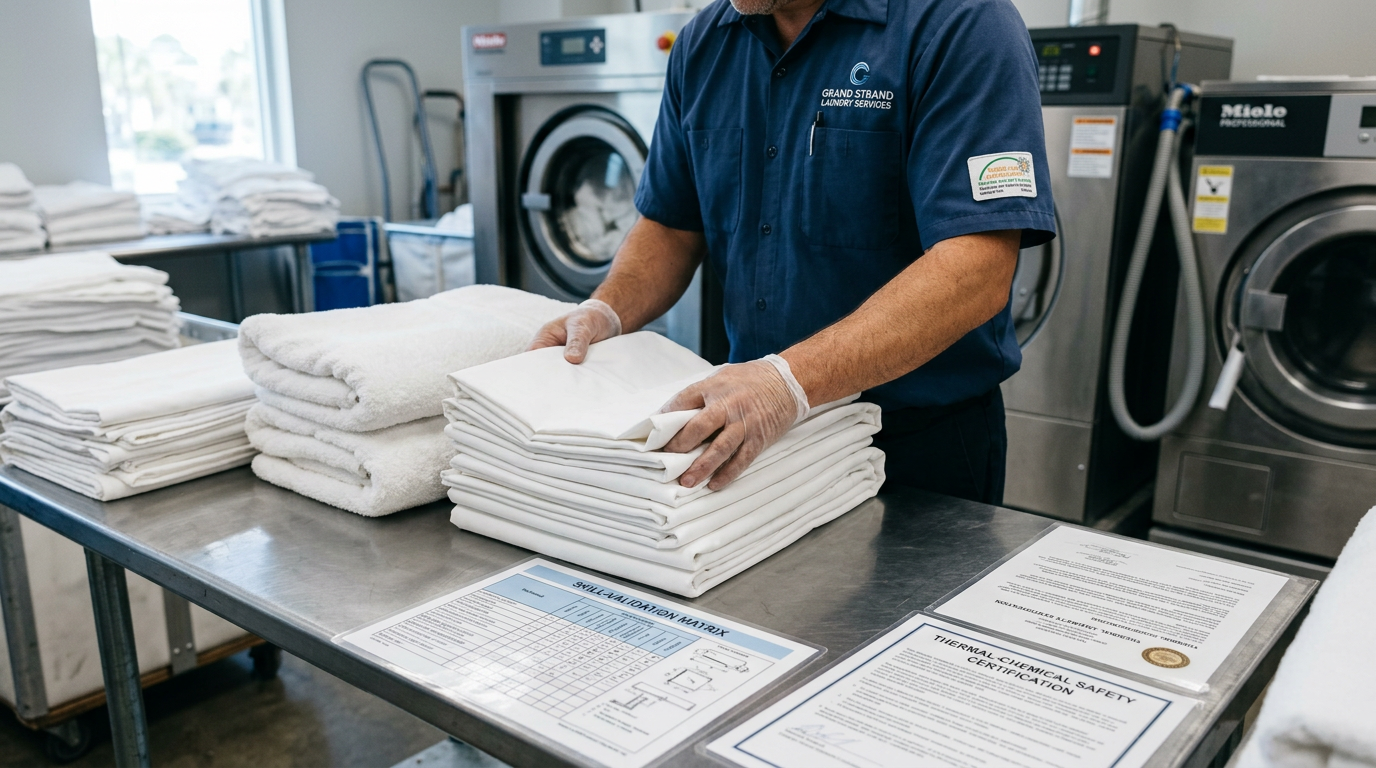
In the high-intensity hospitality market of Myrtle Beach and the surrounding Grand Strand, clean linens are the lifeblood of vacation rentals, hotels, and resorts. Behind every pristine sheet and fluffy beach towel is a dedicated commercial laundry technician operating sophisticated, high-capacity machinery. Building a reliable, professional laundry team requires moving beyond temporary seasonal labor and establishing structured technical career pathways. This guide outlines the essential certifications, skill-validation standards, and compensation benchmarks required to recruit and retain elite laundry professionals in our coastal community.
The Anatomy of an Elite Commercial Laundry Technician
A common industry misconception is that commercial laundry work is low-skill, repetitive labor. In reality, modern industrial laundry plants operate with complex, computerized tunnel washers, automated chemical injection systems, and high-speed flatwork ironers. An elite technician must possess a blend of mechanical aptitude, basic chemistry knowledge, and physical stamina. They must understand how variables like water hardness, fabric blends, and soil levels interact to alter processing times and textile longevity.
Beyond technical skills, professional technicians must demonstrate rigorous attention to detail and safety. Operating machinery that processes hundreds of pounds of linen per hour requires strict adherence to safety protocols, including machine lockout/tagout procedures and chemical handling safety. A great technician takes pride in maintaining the physical integrity of luxury sheets and resort terry, recognizing that their work directly impacts the guest experience across the Grand Strand.
At A2Z Cleaning & Linen Services, we treat our laundry staff as highly skilled environmental services professionals. By framing the role as a technical trade rather than a transient summer job, we cultivate a culture of precision and mutual respect. This professionalization of the workforce is essential for maintaining the high-volume output required during the peak summer tourist season along our coast.
Thermal-Chemical Decontamination and Soil Classification Mastery
A professional laundry technician must master the science of soil classification and wash chemistry. Unlike residential laundering, commercial processing requires segregating linens based on fiber content, weave, and the specific nature of the soil. Technicians must be trained to identify organic soils, sunscreen oils containing avobenzone, cosmetic staining, and environmental sand-grit, routing each category to its optimized wash formula to prevent permanent fabric yellowing or graying.
Thermal-chemical decontamination is a core competency that directly protects public health. Technicians must understand the precise temperature thresholds required to sanitize linens without degrading synthetic fibers or causing premature wear. This involves monitoring wash cycles that routinely reach 140°F to 160°F and ensuring that chlorine-based or oxygen-based bleaching agents are introduced at the exact moment of the wash cycle where they can maximize sanitization without trapping iron minerals from local coastal water supplies.
Understanding chemical dosing is equally critical. Modern plants utilize automated peristaltic pumps to inject alkalis, builders, surfactants, sours, and softeners. A certified technician must know how to read chemical safety data sheets (SDS) and manually verify that pump calibrations match the programmed wash formulas. This level of technical oversight prevents chemical carryover, ensuring that linens returned to Grand Strand guests are free of irritating residues.
Professional Training Paths and National Certifications
To elevate laundry plant operations, property managers and commercial laundry facilities should prioritize structured professional development. The Association for Linen Management (ALM) offers the Certified Laundry Technician (CLT) program, which serves as an industry gold standard. This certification provides formal training in washroom chemistry, linen safety, infection control, and machinery operations, giving team members a clear pathway to advance from entry-level operators to plant supervisors.
Another valuable certification path is through the Textile Services Association (TRSA). Their training programs focus on industry-specific safety standards, environmental sustainability, and production efficiency. For facilities handling healthcare-grade linens or vacation rentals with high-turnover hygiene demands, certifying staff in TRSA's Hygienically Clean protocols guarantees that technicians understand the rigorous microbiological testing requirements necessary to prevent cross-contamination.
Investing in these national certifications transforms seasonal jobs into stable, highly respected careers. When operators see that their employer is willing to fund their professional development, long-term retention rates soar. Providing a structured learning curriculum ensures that your plant operates with uniform, predictable protocols, significantly reducing textile damage and operational downtime.
The Technical Interview and Floor-Testing Rubric
Hiring managers must look beyond traditional resume reviews to identify high-potential laundry technicians. The interview process should feature structured technical and behavioral questions designed to assess an applicant's problem-solving capacity, spatial awareness, and safety focus. Asking candidates to explain how they handle unexpected machinery alerts or how they manage high-volume workloads under tight deadlines provides deep insight into their professional aptitude.
A practical, on-the-floor skills assessment is the most reliable way to validate a candidate's abilities. Vetting candidates through a hands-on floor test allows supervisors to observe their physical coordination, mechanical comfort, and adherence to safety guidelines in real-time. This practical audition is essential for weeding out individuals who may struggle with the fast-paced, physically demanding environment of a commercial laundry plant.
We recommend utilizing a standardized scoring rubric during the floor-test phase to ensure fair and objective evaluations. This approach ensures that every candidate is measured against the exact same benchmarks, such as their technique for loading industrial dryers, their efficiency at a folding station, and their natural compliance with hand hygiene and personal protective equipment (PPE) guidelines.
- Interview Question: 'Can you describe the physical safety precautions you take when clearing a linen jam from an active folder-stacker system?'
- Interview Question: 'How do you identify chemical carryover in finished linens, and what steps do you take to correct the pH level?'
- Practical Audit: Observe the candidate's posture and technique while lifting a 50-pound sling of wet sheets to assess injury-prevention habits.
- Practical Audit: Challenge the candidate to sort a mixed-use cart of terry and micro-fiber linens within a specific, realistic timeframe.
- Practical Audit: Evaluate the candidate's immediate response to a simulated mock chemical leak or system pressure drop.
OSHA Compliance and Bloodborne Pathogen Standards
Industrial laundry plants are subject to strict regulatory oversight, and technicians must be thoroughly trained in OSHA standards. The most critical of these is the OSHA Bloodborne Pathogens Standard (29 CFR 1910.1030). Because vacation rental linens in coastal tourist hubs can occasionally be contaminated with bodily fluids, technicians must know how to safely isolate, transport, and process biohazard linens without exposing themselves or contaminating the rest of the facility.
Compliance requires continuous education on the correct usage of Personal Protective Equipment (PPE), including fluid-resistant aprons, safety goggles, and heavy-duty nitrile gloves. Technicians must understand the concept of universal precautions, treating all soiled textiles as potentially infectious. Training programs must clearly detail the operational separation between the 'soiled' side of the plant and the 'clean' side, enforcing strict hand hygiene protocols at the physical barrier boundaries.
Furthermore, technicians must be trained in the safe disposal of sharps and foreign debris that guests frequently leave behind in bedsheets. Finding needles, razors, or broken glass in laundry carts is an operational hazard that requires specialized extraction protocols. Certified technicians know how to inspect linens safely during the sorting phase, minimizing the risk of puncture injuries and subsequent exposure to bloodborne pathogens.
Local Compensation Benchmarks and Retention Models
The seasonal nature of the Grand Strand resort market historically leads to high employee turnover and volatile wage competition. To build a highly reliable commercial laundry team, operators must shift away from minimum-wage models. Offering competitive, year-round hourly wages that reflect the technical skill required of a certified laundry technician is essential for stabilizing your workforce and maintaining consistent quality.
In addition to competitive base wages, incorporating night-shift differentials and performance-based production bonuses encourages technicians to maintain high standards of efficiency and safety. For example, rewarding teams for low fabric-damage rates or perfect safety records aligns their personal financial success with the operational goals of the commercial plant. Offering benefits like paid time off and health insurance options is a powerful differentiator in the local Grand Strand market.
Year-round stability is the ultimate retention tool in Myrtle Beach. While many hospitality operations downsize drastically in the winter, leading providers maintain core staff by transitioning them to deep-cleaning laundry maintenance, off-season equipment overhauls, and specialized textile restoration projects. This commitment to continuous employment secures loyalty and ensures that experienced, highly trained technicians are ready to go when the intense spring rental season begins.
Ergonomics and Safety Systems on the Plant Floor
The physical demands of a high-volume commercial laundry plant are significant, making ergonomics a critical focus for team safety and retention. Repetitive motions such as shaking out damp sheets, feeding ironers, and folding heavy beach towels can lead to musculoskeletal injuries if not properly managed. Implementing ergonomic workstations, such as adjustable-height sorting tables, spring-loaded cart bottom-lifters, and anti-fatigue flooring, is essential.
Technicians must be trained in proper body mechanics, including correct lifting techniques and the importance of micro-stretches during shifts. Rotating workers between different stations—such as moving from the sorting deck to the folding station or the machinery console—prevents repetitive strain on specific muscle groups. This cross-training not only protects the health of your team members but also creates a more versatile, resilient workforce.
At A2Z Cleaning & Linen Services (phone: 843.800.2788), we prioritize the safety and well-being of our operations staff. By monitoring daily production physical strains and proactively addressing ergonomics, we maintain an incredibly safe working environment. Investing in our team's physical comfort translates directly into lower absenteeism, higher daily throughput, and a more positive workplace culture.
- Install spring-loaded sorting bins that automatically raise linens to waist height to eliminate deep bending.
- Provide heavy-duty, anti-fatigue rubber mats at all stationary sorting, feeding, and folding locations.
- Implement a strict 30-minute rotation schedule to shift technicians between different physical movements.
- Provide lightweight, ergonomic utility carts to reduce shoulder strain during internal plant transport.
- Conduct regular safety audits to identify and correct poor posture habits or unsafe lifting maneuvers.
Building a Reliable Multi-Shift Team Structure
In peak summer seasons, Grand Strand laundry facilities often operate on a 24-hour, multi-shift schedule to meet the demands of thousands of vacation rental turnovers. Managing these demanding schedules requires a highly structured team hierarchy with clear communication channels. Establishing designated shift leads who can troubleshoot minor mechanical issues and manage workflow pacing ensures that operations run smoothly without constant managerial intervention.
Successful multi-shift operations rely on seamless communication handoffs. Implementing structured shift-overlap meetings where outgoing and incoming technicians discuss machinery status, pending specialized wash cycles, and urgent linen priorities prevents operational bottlenecks. Utilizing digital logbooks to track production metrics and maintenance needs ensures complete transparency across all working hours.
Ultimately, building a reliable team comes down to treating every technician as a valued professional. When employees have clear career paths, fair local compensation, and safe working conditions, they take ownership of their roles. Partnering with a professional, family-owned service provider like A2Z Cleaning & Linen Services ensures that your commercial laundry operations are backed by a dedicated team of certified, highly skilled local experts.
Key takeaway
Building an elite commercial laundry team along the Grand Strand requires treating laundry processing as a skilled technical trade. By offering structured training paths, prioritizing physical ergonomics, and paying competitive year-round wages, you secure the reliable talent needed to maintain pristine textile standards. For dependable, expert laundry solutions backed by a professional local team, contact A2Z Cleaning & Linen Services at 843.800.2788.
Keep Reading
Linens & Laundry
The Commercial Laundry Ozone Injection Standard: Implementing National ALM Wash-Cycle Paradigms, Thermal-Reduction Metrics, and Pathogen-Elimination Protocols in Grand Strand Hospitality Plants
ReadLinens & Laundry
The Coastal Percale and Sateen Tensile Strength Preservation Protocol: Mitigating Sand-Friction Shredding, High-Alkaline Wash Rot, and Industrial Calender Scorching in Grand Strand Rental Linens
ReadLinens & Laundry
The Coastal Pillow-Core and Protector Restoration Protocol: Mitigating Humid Yellowing, Mold Spores, and Keratin Accumulation in Grand Strand Vacation Rentals
ReadReady for a spotless property?
Call 843.800.2788 or request a free quote from A2Z Cleaning & Linen Services.