Coastal Living
The Coastal Consumer Guide to Restoring Capiz, Oyster Shell, and Beaded Chandeliers: Costs, DIY vs. Professional Care, and Material Safety in Grand Strand Homes
Discover how to safely clean and restore delicate shell and beaded chandeliers in the Grand Strand environment, including cost breakdowns, product safety, and DIY boundaries.
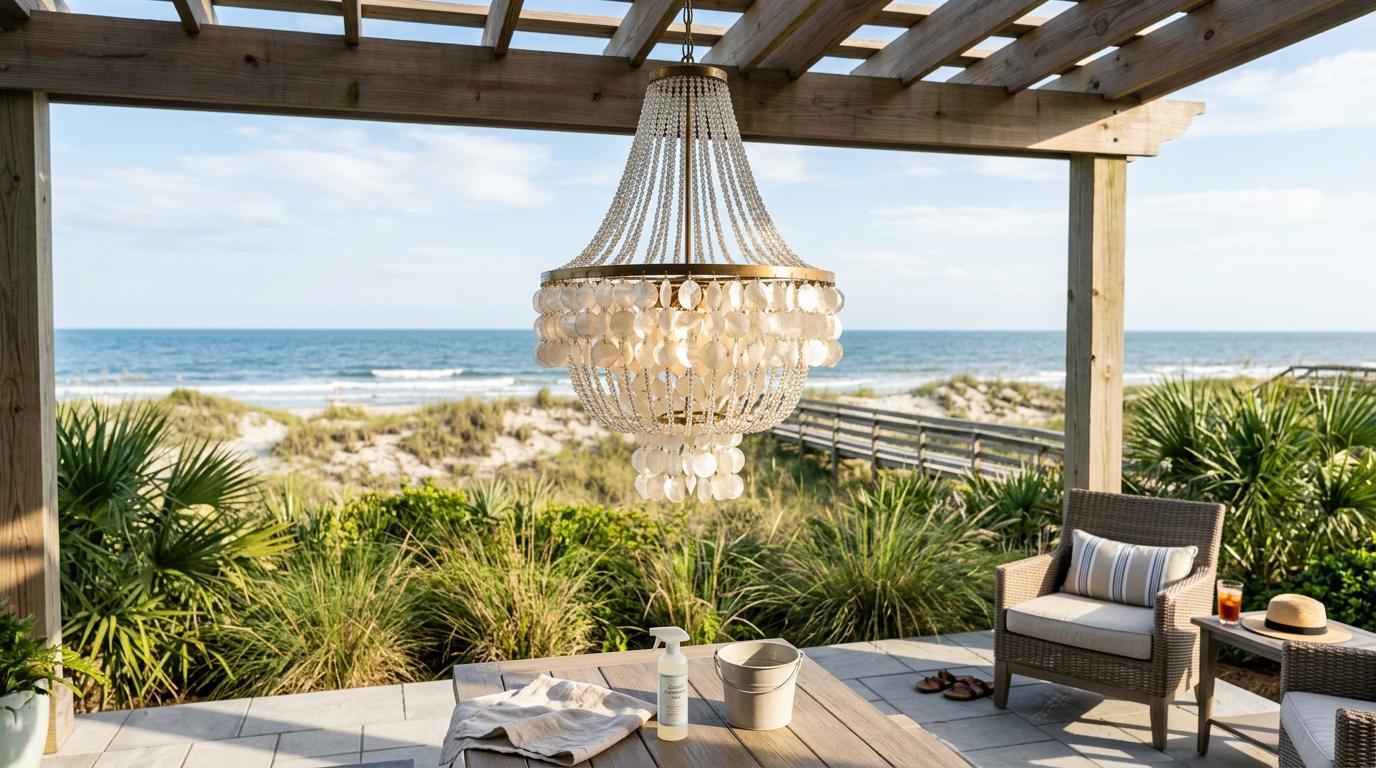
Porous oyster shell, delicate capiz, and intricate glass-beaded chandeliers are defining centerpieces of Grand Strand coastal design, bringing the organic beauty of Myrtle Beach indoors. However, the high-humidity salt air characteristic of our coastal environment quickly bonds with household dust to form a sticky, grey film across these highly sensitive materials. Cleaning these decorative fixtures requires a specialized understanding of material chemistry, as standard household cleaners can permanently erode natural shells and ruin delicate wiring. This consumer guide outlines realistic restoration costs, the boundaries of safe DIY maintenance, and the precise questions to ask a professional cleaning service to preserve your coastal investment.
The Grand Strand Coastal Challenge: Why Natural Shell Fixtures Degrade
In coastal communities stretching from Cherry Grove down to Pawleys Island, indoor air quality is constantly influenced by the ocean. Whenever exterior doors open, humid, salt-laden air enters the home and settles on interior surfaces, including your lighting fixtures. Natural decorative elements like oyster shell, capiz shell, and driftwood are highly porous and structurally sensitive. The microscopic salt crystals suspended in our coastal air act as a natural adhesive, attracting and binding fine silica sand and household dust directly to the surfaces of your delicate chandeliers.
Unlike smooth glass or metal fixtures in inland regions, natural shells are primarily composed of calcium carbonate. This chemical compound is highly reactive to moisture and environmental acids. When humid salt air settles into the crevices of an oyster or capiz shell chandelier, it initiates a slow chemical reaction that dulls the natural iridescence of the shell. Over several seasons, this moisture-dust bond hardens into a stubborn, cement-like crust that cannot be easily wiped away without risking severe physical damage to the fixture.
Furthermore, the structural integrity of these chandeliers relies on thin metal wire ties, usually made of brass, copper, or iron, which thread the individual shells or beads together. When humid salt-dust coats these wire ties, it triggers galvanic corrosion and oxidation. Homeowners often notice green copper oxide or orange rust beginning to bleed onto the pristine white shells. Without timely intervention, these wires weaken and snap, causing irreplaceable shell strands to fall and shatter.
- Salt-air adhesion: Airborne salt acts as a glue, bonding silica sand and dust to porous surfaces.
- Calcium carbonate vulnerability: Natural shells chemically react with acidic residues and moisture, losing their luster.
- Corrosion bleed: Oxidizing wire connectors leave permanent green or orange stains on white shells.
- Micro-abrasion risks: Loose sand particles act like sandpaper when wiped, scratching delicate capiz surfaces.
The Chemistry of Damage: Why Standard Household Cleaners Fail
When confronted with a dusty, dull chandelier, many homeowners reach for common household cleaners like glass sprays, all-purpose formulas, or homemade vinegar solutions. This is a critical mistake that can ruin a high-end coastal fixture in minutes. Vinegar is highly acidic (acetic acid) and immediately reacts with the calcium carbonate in oyster and capiz shells. This acid exposure etches the surface, stripping away the reflective, pearlescent nacre and leaving the shells looking chalky, brittle, and lifeless.
Similarly, popular alkaline multi-surface cleaners and ammonia-based glass sprays are highly destructive to natural coastal materials. These harsh chemicals strip away the natural organic binders and protective oils within the shells, making them incredibly fragile, yellowed, and prone to flaking. Furthermore, strong chemical solvents can quickly dissolve the delicate monofilament lines or specialized glues used to secure glass beads and decorative elements in modern coastal designs.
Standard spray cleaners also pose a major threat to the metal framework of the fixture. When wet cleaners are sprayed directly onto a chandelier, the liquid naturally runs down the strands and pools inside the tiny wire loops and electrical sockets. This trapped moisture accelerates rust and electrical corrosion, posing a fire hazard when the light is switched back on. Safe restoration requires pH-neutral, non-ionic chemistries specifically formulated to break the salt-grease bond without harming organic materials.
- Acid etching: Vinegar and acidic cleaners dissolve calcium carbonate, ruining shell iridescence.
- Alkaline brittleness: Ammonia and harsh multi-surface sprays strip natural oils, causing shells to flake.
- Solvent degradation: Commercial chemical solvents dissolve structural glues and monofilament lines.
- Pooled moisture corrosion: Liquid sprays settle in wire loops and sockets, causing rust and electrical shorts.
The DIY Cleaning Dilemma: Safe Homeowner Maintenance Boundaries
Homeowners can safely perform routine dry maintenance on their coastal chandeliers to prevent dust from cementing. The key to safe DIY care is avoiding moisture and friction. An extendable duster equipped with high-quality electrostatic microfibers or a soft-bristled goat-hair detailing brush is ideal for gently lifting loose dust. Homeowners should completely avoid cheap feather dusters, as the stiff quills can easily snag on delicate wire loops and pull down entire shell strands.
If a light film has started to form, a very mild, damp-wipe method can be used with extreme caution. Dampen a clean, high-density microfiber cloth with pure distilled water—do not use tap water, as the minerals can leave unsightly spots on the shells. Wrap the cloth around your fingers and gently pat or wipe each individual shell piece with light, supportive upward pressure. Never pull downward on the strands, and never spray water directly onto the fixture.
DIY efforts must stop when the cleaning requires climbing high ladders, working with vaulted ceilings, or addressing fixtures with heavy, sticky build-up. Attempting to balance on a ladder while cleaning a complex, multi-tiered chandelier in a foyer or great room introduces severe slip-and-fall risks. If the dust has already bonded into a grey crust, manual rubbing will scratch the shells, meaning it is time to call in a professional with touchless extraction equipment.
- Safe dry dusting: Use electrostatic microfibers or soft goat-hair detailing brushes to lift loose surface dust.
- Distilled water only: Avoid municipal tap water to prevent mineral spotting on reflective shells.
- Supportive pressure: Gently wipe individual shells with upward support; never pull downward on strands.
- Ladder safety limits: Leave vaulted ceiling, foyer, and complex multi-tier cleaning to trained professionals.
Professional Restoration Standards: The Technical Process
Professional restoration of coastal chandeliers is a meticulous, step-by-step technical process that prioritizes both material safety and electrical security. Before any cleaning begins, professional technicians locate the home's breaker panel and cut all power to the fixture, rather than relying solely on the wall switch. Technicians then construct stable, padded scaffolding or utilize insulated, non-conductive ladders and lay down heavy, absorbent drop cloths to protect the flooring and furniture below from run-off.
Instead of scrubbing by hand, professionals utilize specialized, low-pressure atomization equipment to apply a pH-neutral, non-ionic surfactant solution. This advanced chemistry is formulated specifically for historical preservation and delicate organic materials. The fine mist gently penetrates and emulsifies the sticky salt-and-dust film, lifting the soils away from the shells and metal wires without any physical friction. The encapsulated dirt then safely flows off the fixture into the drop cloths below.
Once the soil removal phase is complete, rapid drying is critical to prevent water spotting and metal oxidation. Technicians use professional, low-velocity heated air movers to thoroughly dry every wire loop, socket, and shell crevice. Once dry, technicians hand-detail the fixture, inspecting the wiring and using specialized tools to replace any rusted copper wire connectors with marine-grade stainless steel loops, ensuring the chandelier is both visually restored and structurally sound.
- Electrical lock-out: Technicians cut power at the main breaker and test the circuit before starting.
- Atomized low-pressure mist: Specialized equipment applies pH-neutral surfactants without friction.
- Soil encapsulation: Non-ionic formulas suspend salt-dust build-up, allowing it to rinse off safely.
- Rapid air drying: Low-velocity heated air movers prevent water spots and wire oxidation.
The Cost of Restoration: Grand Strand Market Rates
The cost of professional coastal chandelier restoration in the Myrtle Beach area is determined by three main variables: the size and complexity of the fixture, the height of the ceiling, and the level of salt-dust accumulation. Because these fixtures require delicate hand-detailing and specialized chemistry, reputable companies price these services based on the labor hours and safety equipment required to complete the project safely and effectively.
For a standard dining room oyster or capiz shell chandelier (typically 24 to 36 inches in diameter) suspended at a standard 8-to-10-foot ceiling height, homeowners can expect to invest between $250 and $450 for a complete professional restoration. This includes full electrical safety checks, chemical cleaning, drying, and light detailing of the metal wire connectors.
For larger, multi-tiered chandeliers located in two-story foyers or great rooms with 15-to-25-foot ceilings, the cost generally ranges from $600 to $1,200. These projects require specialized scaffolding, multiple technicians for safety, and significantly more labor-intensive hand-detailing. While this represents a notable investment, it is highly cost-effective compared to the thousands of dollars required to replace a high-end designer coastal fixture that has suffered irreversible environmental damage.
- Standard dining fixtures: Typically costs $250 to $450 for standard heights up to 10 feet.
- Foyer and great room fixtures: Ranges from $600 to $1,200 for vaulted ceilings requiring scaffolding.
- Replacement comparison: Professional restoration preserves fixtures valued from $1,500 to over $5,000.
- Maintenance intervals: Spending on restoration every 18 to 24 months prevents permanent structural failures.
Critical Questions to Ask a Cleaning Service Before Hiring
Because natural shell and beaded chandeliers are expensive and fragile, you should never hire a cleaning service without thoroughly vetting their qualifications. The first and most important question to ask is: 'What specific insurance policies do you carry to cover delicate, high-value interior decor?' A reputable coastal cleaning company will readily provide proof of general liability insurance and a specialized bailee's policy, ensuring you are fully protected in the rare event of damage.
Next, ask the provider: 'What specific cleaning chemistry and application methods do you use on natural shell fixtures?' If the company mentions using standard glass cleaners, vinegar solutions, pressure washers, or manual scrubbing brushes, do not hire them. They should immediately specify that they use pH-neutral, non-ionic surfactants applied via low-pressure atomization or highly controlled hand-wiping to protect the delicate calcium carbonate shells.
Finally, inquire about their safety protocols and technician training by asking: 'How do you ensure electrical safety and protect my floors during the cleaning process?' A professional provider will explain that they cut power at the breaker panel, use non-conductive fiberglass ladders or scaffolding, and lay down thick, waterproof drop cloths. This level of detail indicates a highly trained team that respects your home and prioritizes safety.
- Insurance verification: Ensure the company has general liability and bailee's policies covering fragile decor.
- Chemical screening: Confirm they use pH-neutral, non-ionic surfactants rather than acidic or alkaline cleaners.
- No-scrub techniques: Avoid companies that use stiff brushes, high-pressure water, or abrasive wiping.
- Electrical safety: Confirm they shut off power at the main breaker and use non-conductive equipment.
Preventative Care: Keeping Your Coastal Chandeliers Pristine
While professional restoration is essential for reversing deep environmental damage, Grand Strand homeowners can take several proactive steps to minimize salt-dust accumulation between cleanings. The most effective preventative measure is consistent indoor climate control. During hot, humid, or windy days, keep your windows and doors closed to prevent salty ocean air from carrying moisture and sand directly into your living spaces where it can settle on your fixtures.
Proper air filtration also plays a major role in keeping your light fixtures clean. Run your home's HVAC system with high-efficiency air filters (rated MERV 11 or higher) and replace them every 30 days during the peak summer season. This keeps airborne dust and silica particles to a minimum, ensuring there is less material available to bond with the moisture on your chandelier's delicate shell surfaces.
Additionally, keep an eye on nearby ceiling fans. Dirty ceiling fan blades act as dust catapults, throwing fine debris directly onto nearby chandeliers when operated. Clean your fan blades monthly to prevent this issue. Finally, establish a regular professional detailing schedule every 12 to 24 months. Regular maintenance keeps the cleaning process gentle, straightforward, and highly effective at preserving the brilliant shine of your coastal home.
- Climate management: Keep doors and windows closed on humid days to limit indoor salt-air exposure.
- HVAC filtration: Use MERV 11+ filters and change them monthly in summer to capture airborne dust.
- Ceiling fan hygiene: Keep nearby fan blades clean to prevent dust from being thrown onto chandeliers.
- Proactive scheduling: Arrange professional detailing every 12 to 24 months to prevent heavy build-up.
Key takeaway
Caring for delicate capiz, oyster shell, and beaded chandeliers in the Grand Strand requires specialized, pH-neutral care to prevent the devastating effects of salt-air corrosion. By understanding safe DIY boundaries, budget realities, and the technical standards of professional restoration, you can keep your home's coastal centerpieces beautiful for years to come. For expert assistance in protecting your coastal investments, contact A2Z Cleaning & Linen Services at 843.800.2788.
Keep Reading

Coastal Living
The Coastal Family Foam Play Couch, Climbing Block, and Sensory Table Decontamination Protocol: Mitigating Humid Yeast-Spill Mold, Pet Dander Static, and Child-Safe Botanical Care in Grand Strand Homes
ReadCoastal Living
The Coastal Louvered Door and Airflow Closet Decontamination Protocol: Mitigating Damp Dust Slats, Mold Spores, and Eco-Friendly Airway Protection in Grand Strand Homes
ReadCoastal Living
The Cost of Restoring Coastal Natural-Fiber Rugs: Mitigating Humidity-Driven Rot, Sand-Grit Fiber Shredding, and Water-Staining in Grand Strand Homes
ReadReady for a spotless property?
Call 843.800.2788 or request a free quote from A2Z Cleaning & Linen Services.