Coastal Living
The Coastal Family Foam Play Couch, Climbing Block, and Sensory Table Decontamination Protocol: Mitigating Humid Yeast-Spill Mold, Pet Dander Static, and Child-Safe Botanical Care in Grand Strand Homes
Discover how to clean, sanitize, and decontaminate foam play couches, climbing blocks, and sensory tables in Grand Strand homes using safe, pet-friendly, and child-safe protocols.
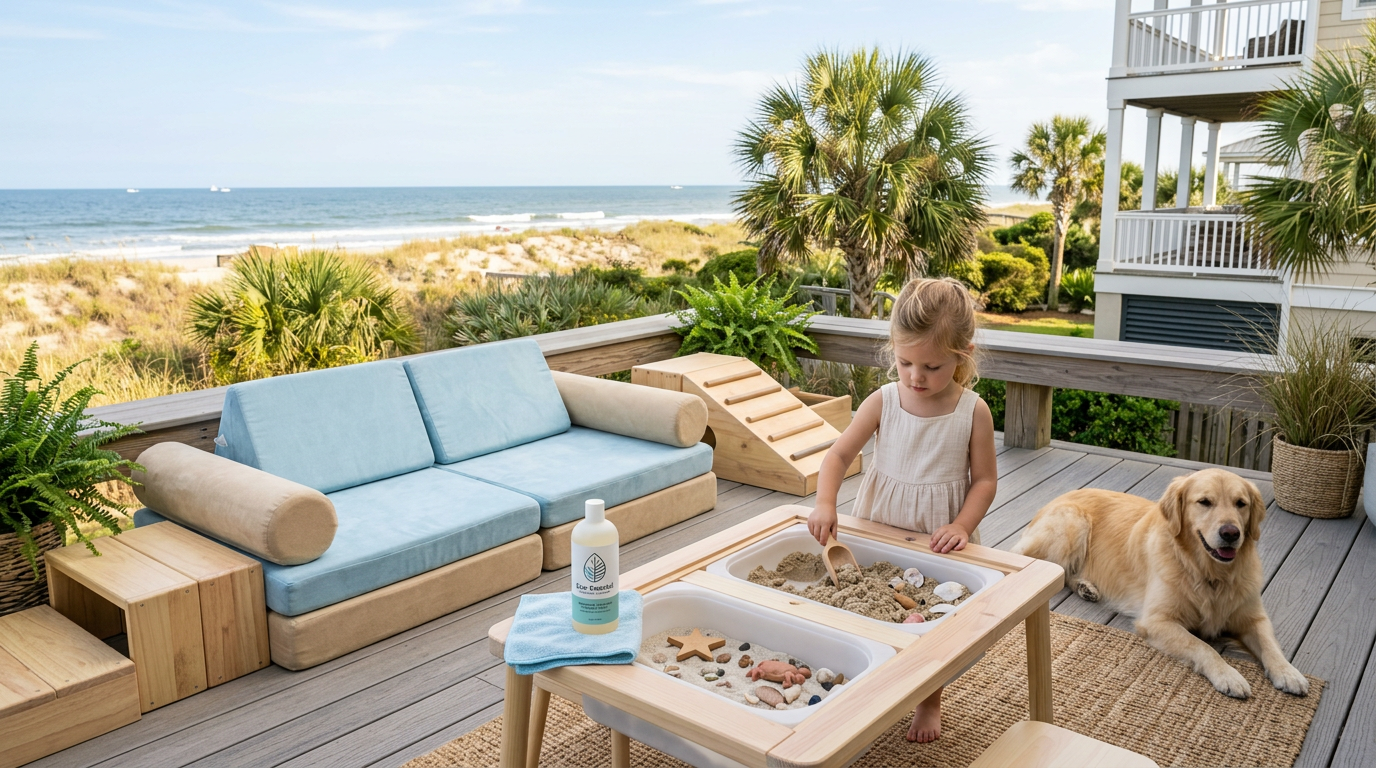
For active families along the Grand Strand, balancing high-energy indoor play with coastal hygiene is a daily challenge. Foam play couches, climbing blocks, and sensory tables are incredible tools for children, but they are also absolute magnets for sand, pet dander, spilled juice, and coastal humidity. Left unchecked in our warm Myrtle Beach climate, these items quickly become reservoirs for allergens, yeast, and mold. This guide provides a systematic, highly effective decontamination protocol to keep your family's favorite play gear fresh, sanitary, and completely safe for little hands and paws.
The Grand Strand Microclimate Challenge: Why Play Foam and Sensory Media Trap Humid Grime
In our coastal environment, indoor relative humidity levels frequently spike, turning dense polyurethane foam into a silent sponge for moisture. When children climb, jump, and build fortresses on play couches after a day at the beach or playing in the backyard, they transfer sweat, fine sand, and environmental moisture deep into the textile fibers. Over time, this moisture migrates into the underlying foam cores, creating a dark, compressed environment where yeast and mold can quietly colonize without immediate outward signs.
Compounding this issue is the pet factor common to so many active Myrtle Beach households. Dogs and cats shed fine hair and dander that carry a natural electrostatic charge, which causes them to cling stubbornly to synthetic fabrics like micro-suede or soft velvet. This organic matter, combined with microscopic sand-grit and occasional milk or juice spills, provides the perfect organic buffet for bacterial growth, leading to persistent, musty odors that standard fabric sprays simply mask rather than eliminate.
Traditional household cleaning methods can actually worsen these subterranean issues. Drenching raw foam with aggressive chemical cleaners or saturating it with water traps liquid deep within the cellular structure, leading to accelerated foam rot and stubborn odor issues. To protect your children, your pets, and your investment in premium play gear, you must implement a low-moisture, substrate-safe decontamination protocol tailored to the unique humidity levels of the Carolina coast.
- High humidity speeds up mold and yeast growth inside synthetic foam structures.
- Static electricity binds shedding pet fur to microfiber play couch covers.
- Sand-grit wears down fabric fibers, allowing organic spills to penetrate deeper.
- Standard wet-cleaning methods often trap moisture inside dense polyurethane cores.
Step-by-Step Deconstruction of Foam Play Couches: Stripping Covers and Managing Static Hair
Deconstructing these large foam installations requires a systematic process to prevent dander and sand from scattering throughout your living space. Begin by moving all play couch blocks, climbing steps, and wedges to a hard-surface floor, such as luxury vinyl plank or tile, which is far easier to sanitize than a carpeted area. Before unzipping any covers, use an upholstery vacuum equipped with a sealed HEPA filtration system to thoroughly sweep all exterior surfaces, paying special attention to the deep crevices, seams, and tufted corners.
Because static electricity acts like a glue holding pet hair to synthetic micro-suede or velvet covers, you must neutralize the charge to achieve a deep clean. Lightly mist the exterior covers with a mixture of distilled water and a few drops of vegetable-based glycerin or a natural, plant-derived fabric relaxer. Once misted, use a specialized rubber pet-hair squeegee or a silicone detailing brush in long, unidirectional sweeps to pull the embedded fur out of the weave and into manageable clumps for easy vacuuming.
With the exterior hair cleared, carefully unzip each cover section to expose the raw polyurethane foam or inner protective liners. Avoid pulling the zippers too quickly, as synthetic play fabrics are often sewn to tight tolerances and can easily catch on raw foam or inner zippers. Immediately vacuum the exposed foam cores with a soft brush attachment to remove the fine sand-grit that invariably filters through the cover weave during active play sessions.
Mitigating Yeast-Spill and Sweat-Induced Mold: Safe Spot-Treatment Chemistries for Raw Foam Blocks
Raw polyurethane foam is exceptionally sensitive to moisture and strong chemical agents. Standard chlorine bleach, ammonia, or heavy quaternary ammonium compounds will dry out the foam, causing the cellular structure to degrade, crumble, and lose its supportive elasticity. When addressing milk spills, juice spots, or sweat stains on the raw foam, you must use highly targeted, enzyme-based spot cleaners designed to break down organic proteins without oversaturating the underlying material.
To address active mold or mildew spots resulting from trapped humidity, use a seventy percent isopropyl alcohol solution lightly misted onto a clean, lint-free microfiber cloth. Gently blot the affected foam rather than rubbing, which can tear the fragile cells of the polyurethane. The alcohol sanitizes the substrate while evaporating rapidly, preventing the moisture accumulation that fuels further fungal growth and eliminating musty odors at their source.
After spot-treating, ensure the foam cores dry completely before attempting to reassemble the play couch. Set the foam blocks on their edges in a well-ventilated room with a dehumidifier running or directly beneath a high-speed ceiling fan. Avoid placing raw foam in direct Grand Strand sunlight for extended periods; while UV rays are natural sanitizers, they rapidly accelerate polymer degradation, causing the foam to yellow and weaken.
- Avoid chlorine bleach and ammonia to prevent structural degradation of the foam.
- Use 70% isopropyl alcohol on a cloth to blot away mold and mildew spots safely.
- Apply enzyme-based spot cleaners to break down organic milk and juice spills.
- Dry foam blocks on edge in a dehumidified room, keeping them out of direct sunlight.
Laundering Micro-Suede and Textured Covers: Salt-Air De-crystallization and Shrinkage Prevention
Laundering the outer covers of your child's play couch requires careful temperature and chemistry management to prevent shrinkage and fabric warping. If the covers shrink even slightly, re-fitting them over the dense foam blocks becomes nearly impossible and can tear the zippers. Always zip every cover completely shut before tossing it into the washing machine to protect the delicate zipper teeth and tabs from catching, bending, or tearing during the agitation cycle.
To dissolve sticky pet saliva, sweat, and dried salt-air crystals, wash the covers in cold water on a gentle cycle using a mild, dye-free, and fragrance-free liquid detergent. To neutralize odors naturally without leaving synthetic chemical residues behind, add a half-cup of sodium bicarbonate (baking soda) directly to the wash drum. Avoid liquid fabric softeners entirely, as they leave a waxy coating that clogs the fabric's breathability, traps pet dander, and makes future spills harder to clean.
Line drying is the safest method for preserving the shape and size of play couch covers, but if you must use a dryer, select the air-fluff or lowest possible heat setting. Remove the covers from the dryer while they are still slightly damp to the touch. Zipping them back onto the foam cores while slightly damp allows the fabric to stretch naturally over the foam, drying to a perfect, wrinkle-free fit without any structural stress.
Sensory Table Sanitation: Neutralizing Humid Mold and Bacterial Biofilms in Play Bins
Sensory tables filled with kinetic sand, dried rice, beans, or water are incredible for childhood development, but they can quickly transform into breeding grounds for bacteria and mold in our humid climate. A water bin left sitting in a warm room for more than twelve hours can develop a slick bacterial biofilm along the plastic perimeter. Dry sensory media like rice and beans naturally absorb ambient humidity from the coastal air, swelling and molding from the inside out.
Establish a strict protocol of emptying sensory bins completely at least once a week. Discard any organic materials like dried pasta, rice, or beans if they exhibit any signs of dampness, clumping, or a musty odor. Wash the empty plastic bins thoroughly in a sink with warm, soapy water, using a dedicated scrub brush to clean out the tight corner crevices where sticky finger residues and organic dust accumulate.
For kinetic sand, spread the sand onto a clean baking sheet in a thin layer and allow it to sit in a dry, air-conditioned room to drive out any trapped humidity before storage. Once the plastic play bins are washed and dried, mist them with a food-safe botanical sanitizer and let them air-dry completely before introducing fresh, dry play media back into the table.
- Empty water bins daily to prevent the formation of slippery bacterial biofilms.
- Inspect dry media like rice and beans weekly for clumping, swelling, or musty smells.
- Scrub empty plastic bins with warm, soapy water, focusing on tight corners.
- Sanitize empty bins with a food-safe botanical spray and let them dry completely.
Safe Botanical Disinfection: Ditching Harsh Quats and Bleach for Child- and Pet-Safe Antimicrobial Agents
When sanitizing play zones, the health of your children and pets must be the absolute priority. Young children spend hours with their skin in direct contact with these play surfaces, and pets frequently lick their paws after walking across them. Traditional commercial disinfectants often rely on harsh quaternary ammonium compounds (quats) or synthetic fragrances that leave behind toxic chemical residues, which can trigger skin irritation, allergic contact dermatitis, or respiratory sensitivity.
To achieve a high standard of cleanliness safely, utilize botanical disinfectants featuring thymol, a natural antimicrobial component derived from thyme oil. Thymol is highly effective at destroying common household bacteria, yeast, and mold spores, yet it breaks down cleanly without leaving behind toxic vapors or irritating chemical residues. Spray thymol-based solutions lightly over sanitized play surfaces, allow the recommended dwell time to elapse, and wipe clean with a fresh damp microfiber cloth.
Another excellent, residue-free sanitizing option is food-grade hydrogen peroxide. When misted onto clean, non-porous surfaces, hydrogen peroxide oxidizes bacteria and mold on contact, breaking down simply into pure water and oxygen. This makes it incredibly safe for homes with curious toddlers and pets, ensuring that their play areas remain hygienically clean without exposing them to synthetic chemical loads.
Establishing a High-Frequency Maintenance Schedule: Mitigating Daily Dander and Sand Build-up
Keeping a busy, pet-friendly Grand Strand home clean requires a proactive maintenance rhythm rather than a reactive one. Instead of waiting for visible dirt or odors to appear, implement a simple daily and weekly schedule to keep allergens from embedding deep into play cushions. A quick, two-minute vacuum sweep of the play area each evening prevents daily sand-grit and loose pet hair from being ground deep into the fabric fibers by busy feet.
Implement a firm 'no shoes' policy inside your home, especially in designated play zones. Coastal sand carries microscopic outdoor pollutants, mold spores, and lawn chemicals that can easily transfer to low-lying play mats and foam structures. Keep a basket of clean, non-slip grip socks near your primary entryway to make this transition convenient and comfortable for your family and guests.
On a monthly basis, perform a deeper inspection of your play items. Unzip the corners of the play couch to check for hidden dampness, completely refresh sensory table media, and wipe down the structural legs and frames of play equipment. This steady routine keeps mold spores from gaining a foothold, ensuring your indoor play spaces remain clean, welcoming, and healthy throughout the year.
Indoor Air Quality and Static Control: Utilizing HEPA Filtration to Repel Pet Fur
The overall air quality of your home plays a direct role in how clean your children's play surfaces remain. Operating a high-efficiency particulate air (HEPA) purifier in your main living or play area continuously filters airborne pet dander, fine salt-dust, and mold spores out of the environment before they can settle onto play couches and climbing blocks. This mechanical filtration step dramatically reduces the accumulation of allergens in your home's active play zones.
To combat the static electricity that turns synthetic play fabrics into pet-hair magnets, focus on managing your home's indoor humidity. During our hot, humid summers, keep indoor relative humidity levels between forty-five and fifty-five percent using your home's central air conditioning system or a dedicated whole-home dehumidifier. Maintaining this balanced range prevents the extreme dryness that fuels static buildup while keeping the air dry enough to inhibit mold growth.
Additionally, schedule regular grooming and deshedding sessions for your pets in an outdoor space or a designated, easy-to-clean area of the home far away from children's play zones. Brushing your pets with a high-quality undercoat rake captures loose fur before it can enter your indoor air currents, helping to preserve a clean, fresh, and allergy-friendly environment for the entire household.
- Run a HEPA air purifier continuously in play zones to capture airborne dander and dust.
- Maintain indoor humidity between 45% and 55% to minimize electrostatic cling.
- Brush and groom pets outdoors or in non-play areas to limit loose fur drift.
- Vacuum surrounding rugs and carpets daily to prevent hair transfer to play foam.
Key takeaway
Keeping busy, pet-friendly coastal play spaces hygienic doesn't require harsh chemicals that compromise your family's health. By implementing this structured, botanical decontamination protocol, you can protect both your children and your play gear from the unique challenges of Grand Strand humidity and sand. For expert assistance with deep cleaning, allergen control, and keeping your home beautifully refreshed, contact the local professionals at A2Z Cleaning & Linen Services at 843.800.2788.
Keep Reading

Coastal Living
The Grand Strand Family Playroom Foam Puzzle-Mat and Soft-Play Decontamination Protocol: Mitigating Humid Sweat-Salt Biofilms, Static Pet-Hair Cling, and Kid-Safe Allergen Control
ReadCoastal Living
The Coastal Family Hamper and Mudroom Laundry Loop: Mitigating Yeast, Sand-Wear, and Mildew in High-Humidity Grand Strand Homes
ReadCoastal Living
The Coastal Consumer Guide to Restoring Sunbrella Cushions and Outdoor Patio Fabrics: Mitigating Salt-Damp Mildew, Sunscreen-Stain Binding, and Color-Safe Extraction in Grand Strand Homes
ReadReady for a spotless property?
Call 843.800.2788 or request a free quote from A2Z Cleaning & Linen Services.