Coastal Living
The Coastal Family Hamper and Mudroom Laundry Loop: Mitigating Yeast, Sand-Wear, and Mildew in High-Humidity Grand Strand Homes
Learn how to manage damp beach wear, pet bedding, and micro-fine sand in your Grand Strand home with child-safe chemistry and a high-efficiency laundry routine.
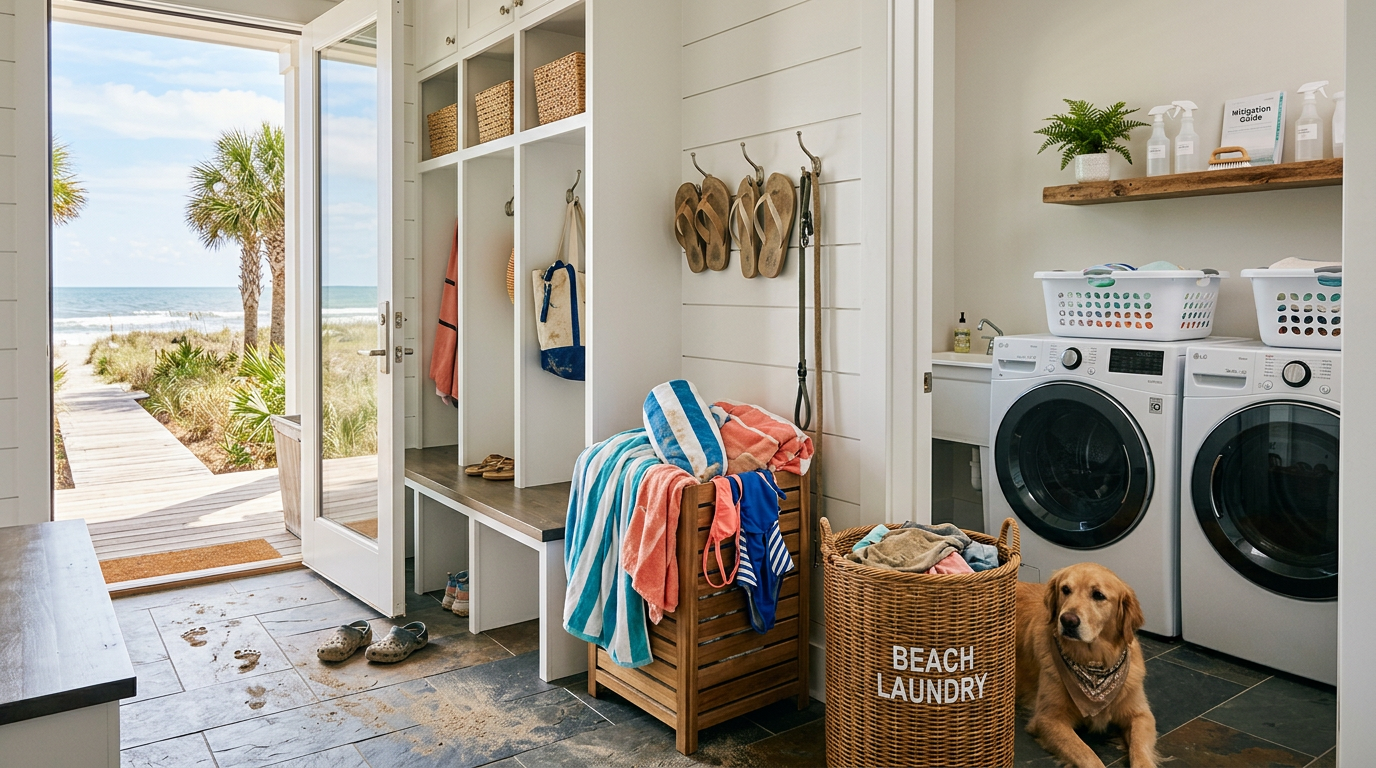
In a busy Grand Strand home, the mudroom and laundry area act as the primary defense line against the coastal elements. When pets, kids, and sandy beach gear collide with Myrtle Beach's intense summer humidity, standard laundry habits can quickly lead to mildew, stubborn yeast odors, and accelerated fabric wear. By establishing a targeted, family-safe decontamination protocol for your laundry room and hampers, you can protect both your household appliances and your children's sensitive skin. Here is how to structure a high-performance laundry loop designed specifically for our unique coastal environment.
The High-Humidity Hamper Trap: How Coastal Moisture Breeds Yeast and Mold
Inside a busy Grand Strand home, the laundry room often becomes a hidden incubator for biological growth. When kids dump damp towels, sweaty play clothes, and wet pet blankets into an enclosed hamper, they create a perfect storm of high humidity and organic soil. Myrtle Beach summers regularly push indoor humidity levels above 60 percent, allowing mold spores and skin-borne yeasts like Malassezia to colonize damp fibers in under twenty-four hours. This biological activity is the source of that sour coastal must that standard detergents fail to wash away.
To halt this rapid microbial colonization, homeowners must rethink their hamper infrastructure. Solid plastic, wood, or tight wicker hampers trap moisture and stagnant air, accelerating fungal growth on damp fabrics. Instead, transition to open-weave canvas bags suspended on metal frames, or highly ventilated plastic baskets that elevate clothes off the floor. Placing these hampers in well-ventilated areas rather than cramped, unconditioned closets ensures continuous airflow across damp fibers, preventing moisture from settling into the bottom of the basket.
Additionally, families should establish a strict segregation rule for incoming laundry to isolate damp items. Never toss dripping-wet swimsuits, water-logged dog towels, or sodden beach wear directly into the main hamper loop. Instead, install a dedicated hanging rack or heavy-duty pegboard in the mudroom where wet textiles can air-dry fully before they enter the washing queue. This simple step deprives mold spores of the standing moisture they require to feed on organic cotton fibers and dander, protecting both garments and indoor air quality.
- Avoid solid wood, wicker, or unventilated plastic hampers that trap moisture.
- Utilize elevated, open-weave canvas or wire baskets to maximize airflow.
- Install a dedicated wet-dry rack in your mudroom for damp beach towels and pet gear.
- Keep hampers in conditioned spaces rather than dark, unventilated closets.
- Process any damp fabrics within twenty-four hours to prevent yeast colonization.
The Sandy-Silt Pipeline: Protecting Washers and Dryers from Coastal Abrasives
Sand-grit is the natural enemy of modern laundry appliances and family textiles. When children and pets return from a day at Cherry Grove or Surfside Beach, their clothing, fur, and towels carry thousands of micro-fine quartz particles. If these items are thrown directly into the washing machine, the sand settles into the bottom of the outer drum, slowly grinding away mechanical seals, water pumps, and drain valves over time. Within a few seasons, this abrasive friction can cause costly pump failures and permanent leaks.
Beyond mechanical damage, sand acts as an abrasive saw against fabric fibers during agitation. As clothes rub together, trapped quartz crystals tear at cotton threads, synthetic elastics, and delicate seams, causing premature fraying, pilling, and fabric thinning. This is especially true for children's soft cotton pajamas and sensitive pet blankets that require gentle handling. To protect your textile investments, you must stop sand at the threshold before it ever reaches the wash cycle, preserving the longevity of your family's wardrobe.
Implement a simple two-step dry-extraction routine for all beachwear and pet gear prior to washing. First, hang sandy garments on an outdoor clothesline or porch railing and use a soft-bristled brush to sweep away loose, dry sand. Second, for deeply embedded grit, tumble dry the completely dry items on a no heat air-fluff cycle for ten minutes. The physical action of the tumbling drum pulls the sand out of the weave and deposits it safely into the lint trap, where it can be easily vacuumed.
- Brush off loose, dry sand outdoors before bringing clothes or pet gear inside.
- Run sandy, dry items through a ten-minute air-fluff cycle with no heat to extract grit.
- Vacuum your dryer's lint trap housing weekly to remove heavy sand deposits.
- Wipe down the inner washing machine drum with a damp microfiber cloth after sandy loads.
- Avoid washing heavily sanded items on delicate cycles that lack sufficient flushing water.
Child-Safe and Pet-Friendly Laundry Chemistry: Eliminating Harsh Enzymes and Synthetic Fragrances
Many conventional laundry detergents rely on heavy synthetic fragrances, optical brighteners, and harsh petroleum-based surfactants to mask odors and make clothes look cleaner. However, these chemical residues linger in fabric fibers long after drying. For toddlers with developing skin barriers and pets who groom themselves by licking their fur, these chemical deposits are highly irritating. They can trigger contact dermatitis, exacerbate childhood eczema, and cause severe skin redness or respiratory irritation in sensitive family dogs who spend hours resting on washed bedding.
To clean effectively without compromising safety, transition your laundry chemistry to plant-derived surfactants and natural mineral boosters. Sodium percarbonate, commonly known as oxygen bleach, is an incredibly effective, child-safe alternative to chlorine bleach. When dissolved in warm water, it breaks down into hydrogen peroxide and sodium carbonate, lifting organic stains and sanitizing fibers without leaving toxic residues. This compound is highly effective at breaking down stubborn toddler food stains, grass spots, and pet dander while remaining entirely biodegradable and safe for skin.
For natural softening and residue removal, replace commercial liquid fabric softeners with distilled white vinegar. Synthetic softeners coat fabrics in a thin layer of lipids, which clogs fabric pores, reduces towel absorbency, and locks in pet dander and odors over time. Pouring a half-cup of white vinegar into the fabric softener dispenser during the rinse cycle neutralizes alkaline detergent buildup, dissolves mineral deposits from hard Grand Strand water, and naturally softens clothes. The mild vinegar scent dissipates completely during drying, leaving fabrics breathable.
- Switch to fragrance-free, plant-based liquid detergents to protect sensitive skin and paws.
- Use sodium percarbonate (oxygen bleach) instead of chlorine bleach for fabric sanitization.
- Replace synthetic liquid fabric softeners with half a cup of distilled white vinegar.
- Add a second rinse cycle to ensure all soap residues are completely flushed from fabrics.
- Avoid scented dryer sheets, which deposit synthetic chemical films on family clothing.
The Pet Towel and Dog Bed Wash Protocol: Breaking Down Sebum and Saliva Enzymes
Dog bedding and pet towels accumulate a complex mix of hydrophobic sebum oils, saliva enzymes, sand-grit, and dander. Standard quick-wash cycles with cold water cannot break down these stubborn organic lipids, resulting in blankets that smell fresh initially but quickly release a heavy wet dog odor when exposed to body heat. To thoroughly decontaminate these items, you must run a dedicated heavy-duty cycle with a water temperature of at least 130 degrees Fahrenheit. This thermal threshold is necessary to denature salivary proteins and dissolve greasy sebum oils.
To boost the odor-neutralizing power of this cycle, add a half-cup of sodium bicarbonate, or baking soda, directly to the wash drum before loading the pet bedding. Baking soda chemically neutralizes acidic odor compounds, such as those found in sweat, urine, and wet fur, rather than simply masking them with synthetic perfumes. For heavily soiled pet blankets or items with noticeable saliva crusts, pre-soak the bedding in a warm water bath with a quarter-cup of borax for thirty minutes. This natural mineral compound acts as an excellent emulsifier.
Drying mechanics are equally critical when managing pet items. Avoid using high heat settings on pet bedding, as extreme heat can scorch synthetic fibers and permanently bake lingering sebum odors into the fabric structure. Instead, dry these items on a low-to-medium heat setting and toss in three or four 100 percent wool dryer balls. The wool balls physically bounce between the bedding layers, separating the heavy fabrics to improve airflow, reducing dry times by up to thirty percent, and naturally lofting fibers.
- Wash all pet towels and dog bedding at a minimum temperature of 130 degrees Fahrenheit.
- Add half a cup of baking soda directly to the drum to neutralize acidic organic odors.
- Pre-soak saliva-stained or heavily soiled blankets in a warm borax bath for thirty minutes.
- Dry pet bedding on low-to-medium heat to prevent setting organic odors into the fibers.
- Use 100 percent wool dryer balls to reduce drying times and loft fabrics naturally.
Managing the Damp Swimwear and Rash Guard Queue: Preventing Lycra Degradation and Mildew
Swimwear, rash guards, and UV-protective clothing worn by active kids are typically constructed from synthetic blends of nylon, polyester, and elastane. While these technical fabrics are excellent for moisture-wicking and sun safety, they are highly sensitive to pool chlorine, ocean salt, and organic body oils. When damp swimwear is left bunched up in a dark mudroom corner, the elastics degrade rapidly, and fungal spores colonize the synthetic fibers. This results in stretched-out, faded garments that carry a permanent, sour mildew smell that is difficult to extract.
To extend the life of these specialized coastal garments, establish an immediate cold-water rinse protocol as soon as kids step inside. Running swimwear under cool, clean tap water strips away highly corrosive salt crystals and chlorine molecules before they can weaken the delicate elastane fibers. Instruct children to hang their rinsed suits on a ventilated drying rack in the mudroom rather than throwing them into a hamper. This immediate step prevents the warm, dark, moist environment that mildew needs to establish its root systems.
When it is time to wash swimwear, avoid standard heavy wash cycles and hot water, which can melt or warp the delicate elastic fibers. Instead, hand-wash these items in a basin of cold water with a teaspoon of gentle, plant-based Castile soap. Gently agitate the garments by hand, rinse thoroughly with cool water, and finish with a short soak in a mild vinegar-and-water bath to neutralize any lingering chlorine odors. Lay the garments flat to dry on a clean towel away from direct sunlight.
- Rinse kids' swimwear with fresh, cold water immediately after pool or beach use.
- Hang rinsed suits to dry on a mudroom rack instead of tossing them in dark hampers.
- Hand-wash synthetic swimwear using a mild, plant-based Castile soap.
- Avoid using hot water or high-heat dryer cycles, which destroy elastane and Lycra fibers.
- Dry swimwear flat on a clean towel out of direct sunlight to prevent fiber degradation.
Decontaminating the Laundry Room Environment: Cleaning Wall Cavities, Vents, and Utility Sinks
The laundry room itself is often the primary source of musty odors in a humid coastal household. The combination of high-speed spin cycles, damp clothes, and warm dryer exhaust creates a localized tropical microclimate where mold spores thrive. A major culprit is the rubber door gasket of front-loading washing machines, which traps standing water, lint, and pet hair after every cycle. If left uncleaned, this dark, wet ring quickly develops a thick layer of black mold, which transfers directly onto your family's clean clothes and linens.
To decontaminate this high-risk zone, wipe down the washing machine's rubber gasket after your final load of the day using a microfiber cloth dampened with a safe, non-toxic sanitizing solution. A mixture of equal parts isopropyl alcohol and water, or a thyme-based botanical disinfectant, works exceptionally well at killing fungal spores without leaving toxic chemical residues behind. Additionally, leave the washing machine door cracked open when the appliance is not in use. This simple operational habit allows the drum to air out completely.
Do not forget the laundry room's hidden vectors: the dryer vent line and the utility sink. A clogged dryer vent traps hot, moist air inside the laundry room and forces the dryer to run longer, increasing indoor humidity and wear on your fabrics. Vacuum out the lint trap housing weekly using a narrow hose attachment, and inspect the utility sink drain for buildup of hair, pet fur, and sand-grit. Regularly flushing the utility sink drain with boiling water and baking soda prevents biological sludge from decomposing.
- Wipe the rubber gasket of front-loading washers daily with a non-toxic sanitizer.
- Leave the washing machine door cracked open between cycles to allow the drum to dry.
- Vacuum the dryer lint trap and inspect external vents to prevent heat and moisture buildup.
- Flush the mudroom utility sink drain with hot water and baking soda to prevent odors.
- Clean surrounding walls and shelving with botanical disinfectants to eliminate settled spores.
Structuring a High-Frequency Family Laundry Schedule to Outrun Coastal Biology
In the high-humidity environment of the Grand Strand, managing family laundry requires a strategic schedule to outrun biological growth. Allowing damp towels, dirty pet bedding, and sandy kids' wear to sit in laundry bins for a week is a recipe for mold colonization and permanent fabric odor. Families should adopt a "three-day maximum" rule, ensuring that no damp or heavily soiled item remains unwashed for longer than seventy-two hours. Breaking your laundry chore down into a daily, high-efficiency routine prevents massive, overwhelming piles.
To optimize this routine, dedicate specific days of the week to high-risk textile groups. For example, schedule pet towels, dog beds, and entryway mats for Monday mornings, followed by kids' beach towels and swimwear on Wednesdays, and standard family clothing on Fridays. This structured approach prevents cross-contamination, ensuring that heavily soiled pet items are never washed alongside delicate baby clothing. It also allows you to optimize your wash cycles, grouping heavy, high-temperature thermal loads together to conserve energy while achieving maximum sanitization.
Finally, streamline your sorting process by utilizing a multi-compartment hamper system labeled for light, dark, and damp items. When kids and family members pre-sort their laundry at the point of disposal, it eliminates the need to handle soiled, dusty, or dander-heavy clothes before washing, reducing the spread of allergens throughout the home. This simple, organized workflow keeps your utility spaces orderly, reduces the physical labor of laundry day, and ensures that high-priority, damp items are processed quickly before mold has the chance to set in.
- Implement a strict seventy-two-hour wash window for all damp beach and pet textiles.
- Establish dedicated laundry theme days to systematically isolate high-risk organic loads.
- Use labeled, multi-compartment hampers to encourage family-wide point-of-use sorting.
- Wash highly soiled pet items entirely separate from children's clothing and bedding.
- Run a monthly empty sanitizing cycle on your washing machine with oxygen bleach.
Professional Environmental Support: When to Call A2Z Cleaning & Linen Services
Maintaining a pristine, allergen-free laundry cycle while balancing a busy Grand Strand lifestyle can be an uphill battle, especially during the peak humid seasons. When deep-seated odors settle into your home's draperies, upholstery, rugs, or utility spaces, standard household cleaning routines may not be enough. That is where professional environmental cleaning services make a profound difference. Elevating your home's hygiene requires specialized equipment and expert protocols to neutralize deep-seated allergens, organic dander, and coastal humidity vectors that standard consumer tools cannot reach.
The team at A2Z Cleaning & Linen Services provides specialized residential cleaning solutions tailored directly to the unique challenges of coastal Grand Strand living. Our professionals use advanced extraction equipment, child-safe botanical sanitizers, and scientific protocols to thoroughly clean and decontaminate high-traffic utility zones, mudrooms, and living spaces. We understand the biological relationships between pet dander, coastal sand, and high humidity, and we are dedicated to restoring a fresh, healthy, and safe living environment for your entire family, including your beloved pets.
Do not let coastal humidity and busy family life compromise the air quality and comfort of your home. Whether you need a comprehensive deep clean of your utility areas, carpet and upholstery restoration, or structured seasonal sanitization, our family-owned team is ready to help you maintain a spotless household. Contact the local cleaning experts at A2Z Cleaning & Linen Services today at 843.800.2788 to schedule your specialized home cleaning service and experience the peace of mind that comes with professional care.
- Rely on professional-grade extraction to remove deep-seated sand, dander, and yeast.
- Benefit from child-safe, pet-friendly botanical sanitizing agents that leave zero residues.
- Restore a fresh, neutral odor baseline to damp utility rooms, mudrooms, and closets.
- Save time and reduce physical strain with family-focused professional deep cleaning.
- Ensure year-round defense against mold, mildew, and coastal humidity vectors.
Key takeaway
Keeping a busy Grand Strand home clean requires a proactive approach to handling moisture, pet dander, and sand at the laundry threshold. By adopting ventilated storage, child-safe mineral chemistry, and a strict washing schedule, you can protect both your fabrics and your family's health. For deep-cleaning support and expert allergen control in your home, trust the local specialists at A2Z Cleaning & Linen Services.
Keep Reading
Coastal Living
Sanitizing Coastal Soft Surfaces: Child-Safe Pet Bed, Toy, and Play Area Maintenance in High-Humidity Myrtle Beach Homes
ReadCoastal Living
The Coastal Kids' Toy Bin and Beach-to-Playroom Asset Decontamination Protocol: Mitigating Humid Saliva Biofilms, Pet-Dander Adhesion, and Sand-Friction Scratches in Grand Strand Homes
ReadCoastal Living
The Coastal Sliding Glass Door Track and Weep-Hole Decontamination Protocol: Mitigating Mold Bio-Sludge, Wind-Driven Allergens, and Chemical Runoff in Grand Strand Homes
ReadReady for a spotless property?
Call 843.800.2788 or request a free quote from A2Z Cleaning & Linen Services.