Coastal Living
The Cost of Restoring Coastal Natural-Fiber Rugs: Mitigating Humidity-Driven Rot, Sand-Grit Fiber Shredding, and Water-Staining in Grand Strand Homes
Discover the costs, risks, and proven restoration protocols for sisal, jute, and seagrass rugs facing the harsh, humid coastal environment of the Grand Strand.
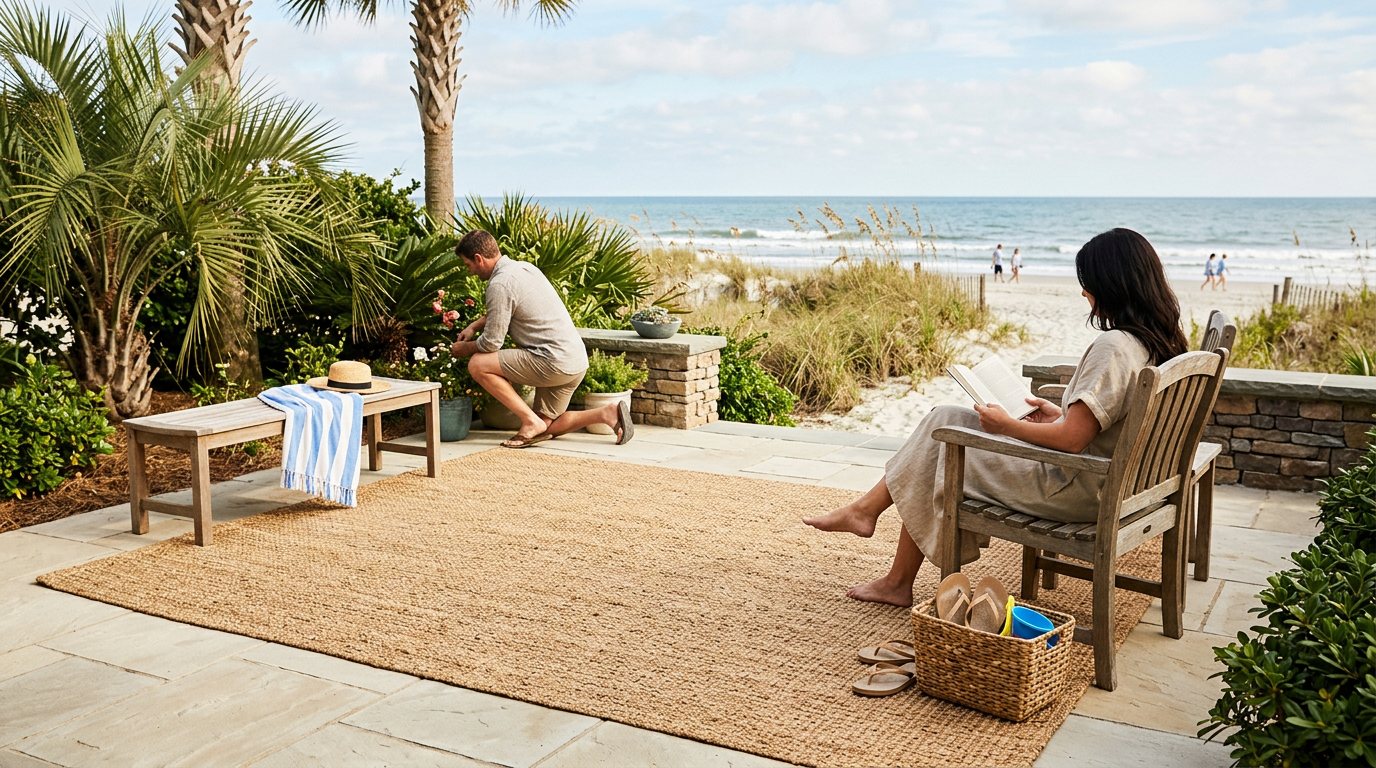
Natural-fiber rugs made from sisal, jute, and seagrass are beloved staples of coastal home design, bringing organic warmth and texture to properties across Myrtle Beach and the wider Grand Strand. However, the unique environmental factors of our coastline—dense atmospheric humidity, wind-driven salt air, and abrasive beach sand—can quickly degrade these delicate plant-based materials. Standard carpet cleaning methods will permanently ruin these rugs, leaving homeowners with unsightly discoloration, shrinkage, and rot. Understanding the balance between dry-chemical safety, physical wear, and professional restoration costs is essential for protecting your home investments.
The Vulnerability of Natural Fibers in a Coastal Environment
Sisal, jute, and seagrass rugs are highly hygroscopic, meaning they behave like structural sponges that actively absorb moisture directly from our humid coastal air. When relative humidity levels spike along the Grand Strand, these plant-derived fibers swell and retain moisture for extended periods. This sustained dampness creates an ideal microclimate for mold spores and mildew colonies to establish deep within the dense, woven backing. Unlike synthetic nylon or polyester fibers, natural materials lack inherent resistance to organic decay, making them highly vulnerable to rot.
Furthermore, airborne salt particles carried by sea breezes settle into the fibers of coastal rugs, compounding the moisture problem. Salt is naturally pulling in moisture from the air, which keeps the rug fibers slightly damp even when indoor air conditioning is running. Jute is particularly fragile, prone to dry rot and fiber darkening when exposed to persistent salt-damp conditions. Seagrass is slightly more resilient due to its smooth, naturally waxy outer skin, but its underlying cotton warp threads remain highly vulnerable to mold.
Understanding these distinct fiber behaviors is crucial for any homeowner or property manager along the coast. When natural rugs are left unchecked in high-humidity zones, they quickly lose their structural strength, emit musty odors, and begin to shed fine, organic dust. This dust can aggravate indoor allergies and ruin the crisp, clean feel of your living spaces. Managing these fibers requires specialized environmental awareness and a complete departure from conventional home floor care routines.
Why Standard Wet Extraction Methods Fail: Cellulosic Browning and Shrinkage
The most common mistake made by well-meaning homeowners is treating a natural-fiber rug like a standard synthetic carpet. Running a rental steam cleaner or a traditional hot-water extraction machine over sisal or jute triggers a destructive chemical reaction known as cellulosic browning. When plant fibers are saturated with water, the natural lignins and hemicelluloses dissolve and migrate to the surface as the rug dries. This leaves behind permanent, unsightly dark brown rings and yellow patches that cannot be vacuumed away.
In addition to severe staining, excessive water introduction causes natural plant fibers to shrink rapidly and unevenly. Once a jute or sisal rug loses its structural tension, it warp, buckles, and ripples across the floor, creating a permanent tripping hazard that is nearly impossible to flatten out. This water-induced warping also destroys the latex, canvas, or cotton bindings glued to the edges of the rug, leading to adhesive failure, delamination, and rapid fraying along the borders.
Standard household carpet detergents are also highly alkaline, which accelerates the breakdown of organic plant fibers. High-pH cleaning solutions strip the natural oils and structural proteins from the weave, leaving the fibers brittle, rough, and prone to snapping underfoot. To preserve the beauty and longevity of these expensive home accessories, wet cleaning methods must be strictly avoided in favor of low-moisture, pH-balanced restoration techniques.
Sand-Grit Fiber Shredding: The Silent Mechanical Threat
Myrtle Beach sand is composed of tiny, sharp quartz and shell fragments that act like microscopic saws once they enter your home. Because natural-fiber rugs feature loose, chunky, or ribbed weaves, heavy sand grains settle deep into the pockets of the rug's backing. Standard upright vacuums only clean the surface level, leaving this abrasive grit trapped deep within the structural warp and weft of the rug.
As family members, guests, and pets walk across the rug, their body weight presses the fibers down against these trapped sand grains. This continuous physical friction grinds away at the damp, swollen plant strands, slowly slicing through them from the inside out. Over time, this mechanical abrasion manifests as excessive shedding, broken fibers, and bald patches in high-traffic walkways, permanently ruining the texture of the rug.
Without specialized deep-vibration dust extraction, this sand remains locked in place, continuously degrading the rug's structural integrity. Simply vacuuming more frequently with a standard machine is not enough to stop this mechanical damage. It requires a systematic approach to dislodge the sand from the base of the weave before it can shear the fragile plant fibers apart.
DIY vs. Professional Restoration: Safely Managing Spills and Stains
When a spill occurs on a natural-fiber rug, quick action is vital, but the wrong technique will ruin the piece instantly. Homeowners can safely manage spot cleaning by blotting—never rubbing—with a clean, dry white cotton towel to pull up liquid. Rubbing pushes the stain deeper into the coarse fibers and twists them out of shape.
For dry spills and sand, a high-quality vacuum with a brush roll disengagement feature is essential. Beating natural fibers with aggressive brush rolls can cause severe fuzzing and fiber pull. A dry-extraction compound, which uses absorbent cellulose micro-sponges, is the only safe DIY deep-cleaning method.
Professional restoration is required when a rug suffers from mold, widespread pet urine saturation, or severe liquid staining. Professionals have access to specialized climate-controlled drying facilities, dry-compound agitation machines, and pH-balanced rinse agents designed specifically for cellulosic materials.
The Cost Breakdown of Professional Natural-Fiber Rug Restoration
Professional restoration and cleaning costs for natural-fiber rugs in the Grand Strand typically run between $4.00 and $8.00 per square foot, depending on the fiber type and soil severity. For a standard 8x10 area rug, homeowners should budget between $320 and $640 for a comprehensive off-site restoration. This range covers deep-vibration dusting, low-moisture chemical cleaning, and controlled, flat-bed drying.
Specialized treatments, such as pet urine decontamination or mold remediation, can add an additional $1.50 to $3.00 per square foot. These treatments require specialized odor counter-agents and prolonged sanitization cycles in drying chambers to ensure the delicate fibers are completely dry without warping. If pick-up and delivery services are required from oceanfront high-rises or gated communities, a flat transport fee of $50 to $100 is common.
While these costs may seem high compared to synthetic rug cleaning, they reflect the intensive labor and specialized equipment required. Attempting to save money with cheap, wet-cleaning alternatives usually results in a ruined rug that must be entirely replaced, costing far more in the long run. Professional care protects your high-end design assets and keeps them looking beautiful for years.
- Standard cleaning of sisal, jute, or coir: $4.00 to $6.00 per square foot.
- Premium cleaning of delicate seagrass or paper-shuck weaves: $5.50 to $8.00 per square foot.
- Pet urine extraction and enzyme sanitization: Additional $1.50 to $3.00 per square foot.
- Mold remediation and anti-fungal treatment: Additional $2.00 to $3.50 per square foot.
- Fiber-shield protector application (stain resistance): $1.00 to $2.00 per square foot.
Critical Questions to Ask a Grand Strand Cleaning Company
Before hiring a cleaning service to handle your natural-fiber rugs, you must vet their technical knowledge. Start by asking, "Do you use hot-water extraction or steam on jute and sisal?" If the company answers yes, politely decline their services, as this is a clear sign they do not understand cellulosic fiber care and will likely ruin your rug.
Next, inquire about their specific drying process and facilities. Ask, "Do you have a dedicated, climate-controlled rug drying room where temperature and relative humidity are monitored?" Rapid, controlled drying is essential to prevent mold growth and cellulosic browning after specialized cleaning. A company that dries rugs outdoors or in unconditioned warehouses cannot guarantee safe results in our humid climate.
Finally, ask if their technicians hold certifications from the Institute of Inspection, Cleaning and Restoration Certification (IICRC), specifically in rug cleaning (RCT) or carpet cleaning (CCT). Certified technicians understand the chemical limitations of natural plant materials and will carry the appropriate insurance for high-value textiles. Working with certified experts ensures your home investments are in safe hands.
Product Safety: Chemistries That Protect vs. Destroy Natural Weaves
Protecting your family and your rugs requires careful attention to the cleaning chemistries used in your home. Many commercial spot removers contain high-alkaline surfactants or chlorine bleach. These harsh chemicals strip the natural color from plant fibers, leaving permanent bleached patches and weakening the organic structure, which leads to premature fraying.
Safe spot-cleaning solutions should always be pH-neutral (between 6.0 and 7.5) and free of optical brighteners. Look for products certified by the Carpet and Rug Institute (CRI) or those utilizing safe, botanical-based dry-cleaning solvents that evaporate quickly without leaving chemical residues that attract dirt. These gentle formulas break down oily soils without introducing moisture.
For professional restorations, eco-friendly, low-moisture encapsulation products are highly effective. These products trap soil in microscopic crystals that are easily vacuumed away, avoiding the need for heavy rinsing while keeping your indoor air quality free of harsh volatile organic compounds. This ensures a clean, allergen-free home environment for your family and guests.
Proactive Maintenance Strategies for Coastal Homeowners
Daily and weekly maintenance is the key to extending the life of your natural-fiber rugs in the humid Grand Strand climate. Vacuum your rugs at least twice a week using strong suction but without the beater bar active. This lifts fine sand-grit before it can settle deep and begin shredding the fibers, preventing premature wear.
Use high-quality, breathable rug pads underneath your natural-fiber rugs. A proper pad provides a protective barrier against floor moisture, prevents the rug from sliding, and offers a cushion that absorbs foot traffic impact, reducing physical wear on the fragile plant fibers. Avoid solid rubber pads, which can trap moisture underneath the rug.
Additionally, rotate your rugs 180 degrees every six months to ensure even wear and sun exposure. In our sunny coastal homes, UV rays can fade natural fibers unevenly, and rotating them keeps the wear patterns balanced while helping you spot any hidden dampness or pest activity early, saving you from costly future restorations.
Key takeaway
Natural-fiber rugs bring undeniable coastal beauty to Grand Strand homes, but they require highly specialized, low-moisture care to survive the humid, sandy environment. Avoid the temptation of DIY wet cleaning or cheap steam services that cause cellulosic browning and rot. For professional, certified care that protects your valuable coastal interiors, reach out to A2Z Cleaning & Linen Services at 843.800.2788.
Keep Reading

Coastal Living
The Coastal Mini-Split and PTAC Evaporator Coil Decontamination Protocol: Mitigating Mold Spores, Salt-Damp Dust Loading, and Botanical Disinfection in Grand Strand Homes
ReadCoastal Living
The Coastal Sliding Glass Door Track and Weep-Hole Decontamination Protocol: Mitigating Mold Bio-Sludge, Wind-Driven Allergens, and Chemical Runoff in Grand Strand Homes
ReadCoastal Living
The Cost of Restoring Coastal Engineered Quartz Countertops: Mitigating Resin Yellowing, Chemical Etching, and Hard-Water Mineral Haze in Grand Strand Homes
ReadReady for a spotless property?
Call 843.800.2788 or request a free quote from A2Z Cleaning & Linen Services.